The emergence of turbojet engines at the beginning of World War II opened up new possibilities for the design and configuration of engine installations. Twin-engine jet aircraft were typically built with engines located under the wing, especially in relatively small fighter planes. Subsequently, in heavier aircraft like bombers, these engines began to be integrated into the wing structure.
For single-engine aircraft, the most popular configuration involved installing the engine in the middle of the fuselage. In this setup, air for the engine entered through a frontal air intake, and the jet exhaust exited from a nozzle positioned in the tail section of the fuselage.
A Pioneer with Innovative Propulsion
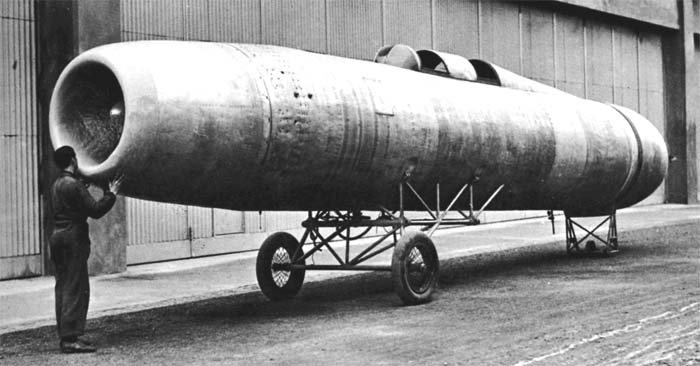
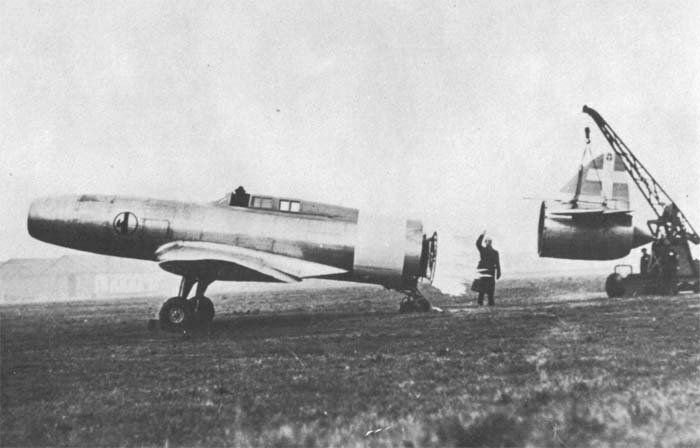
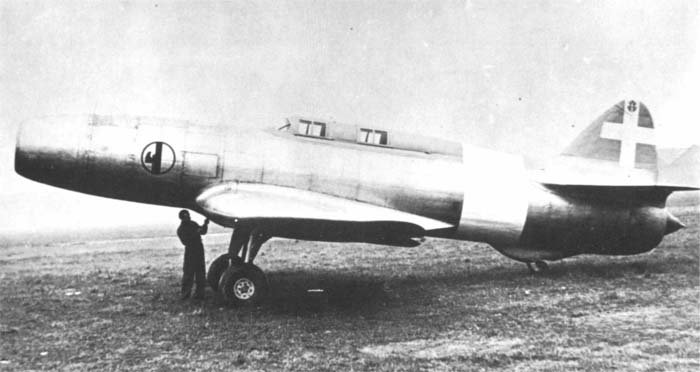
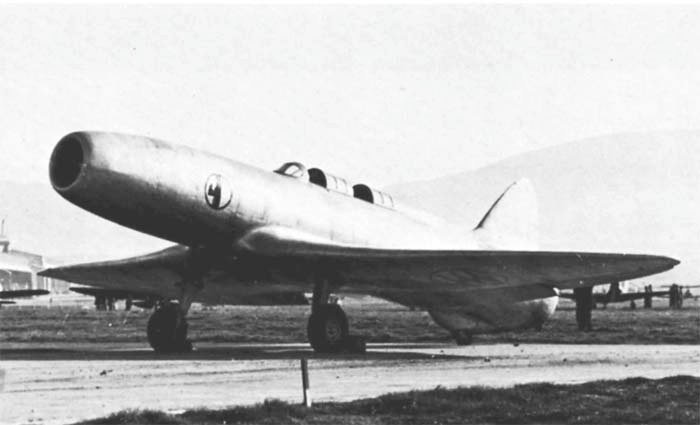
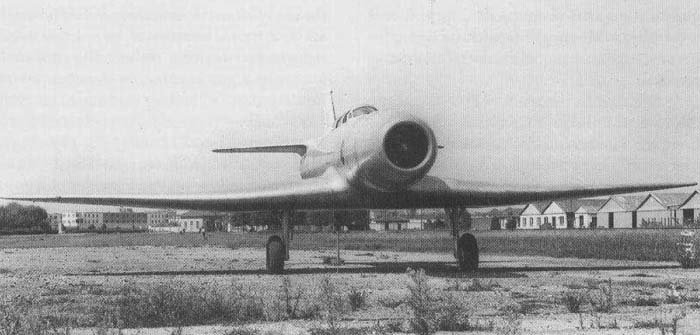
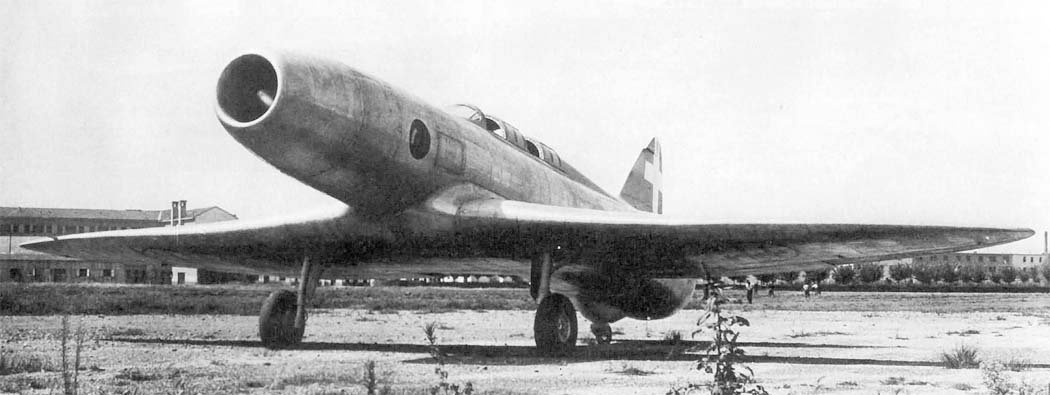
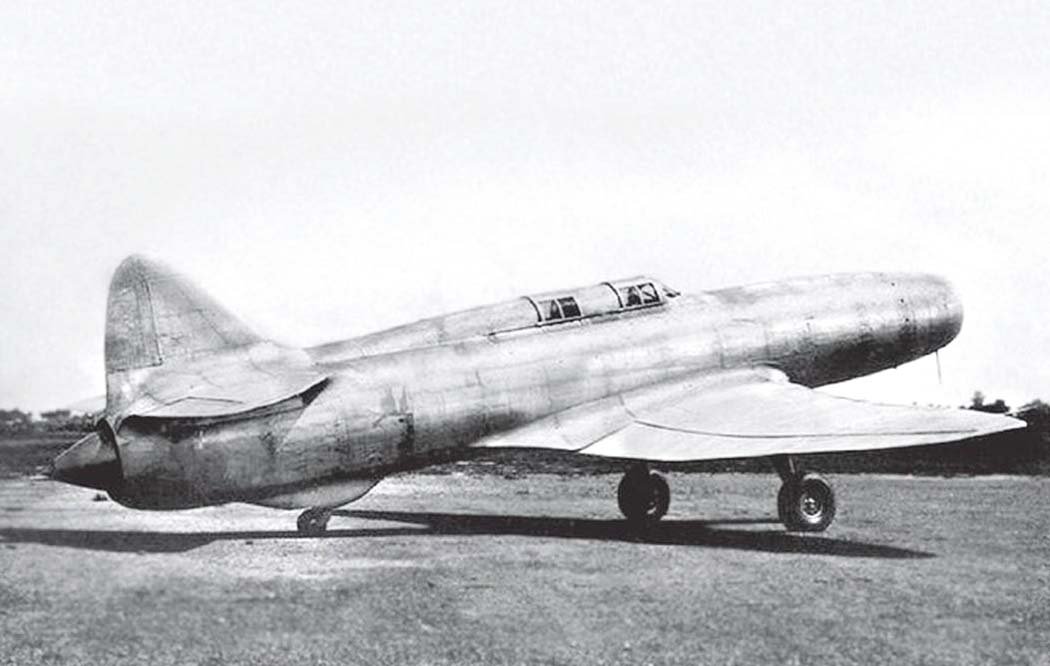
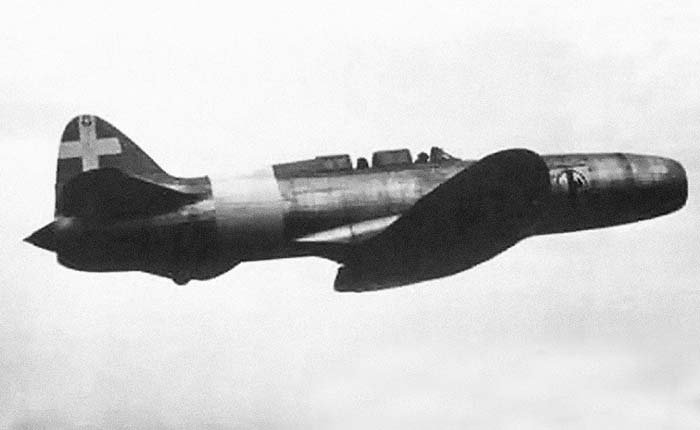
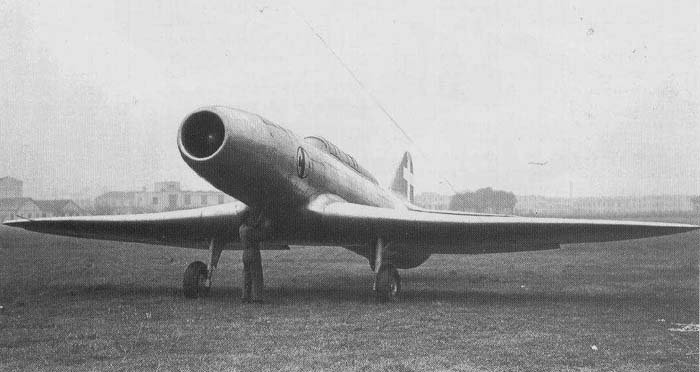
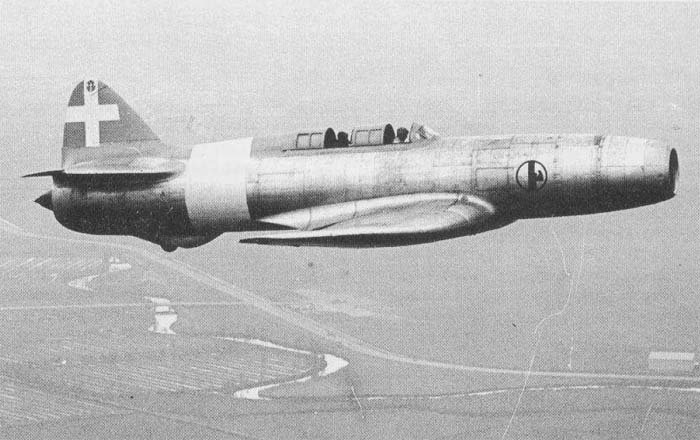
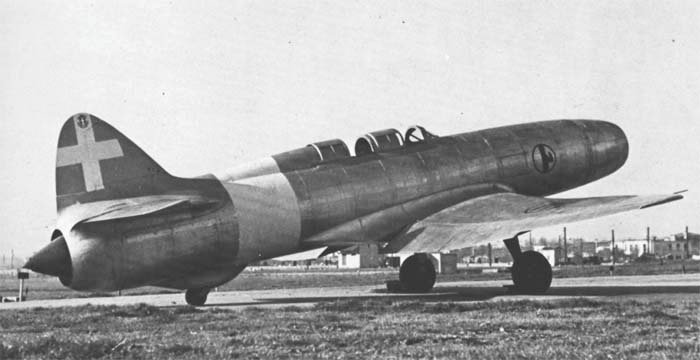
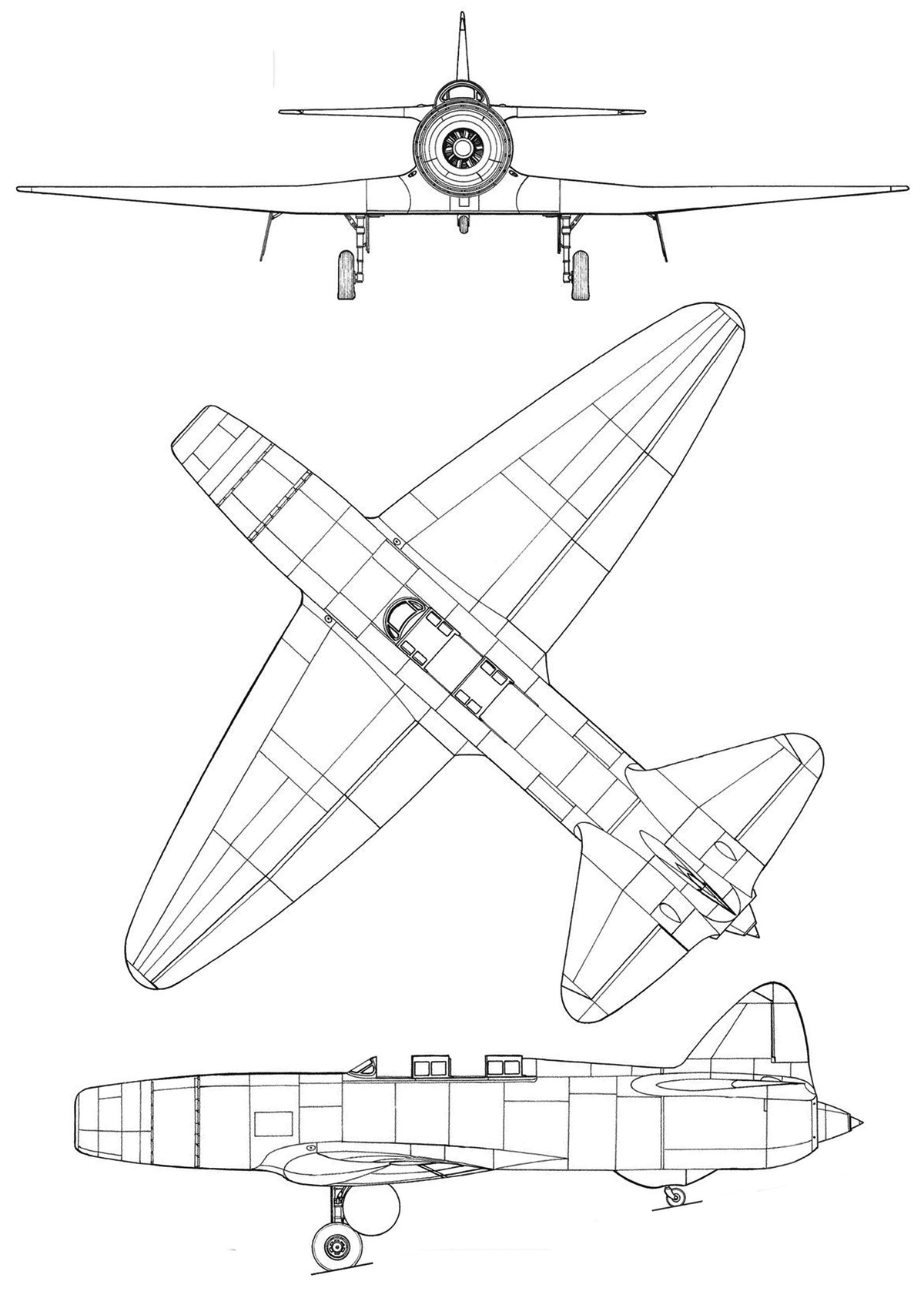
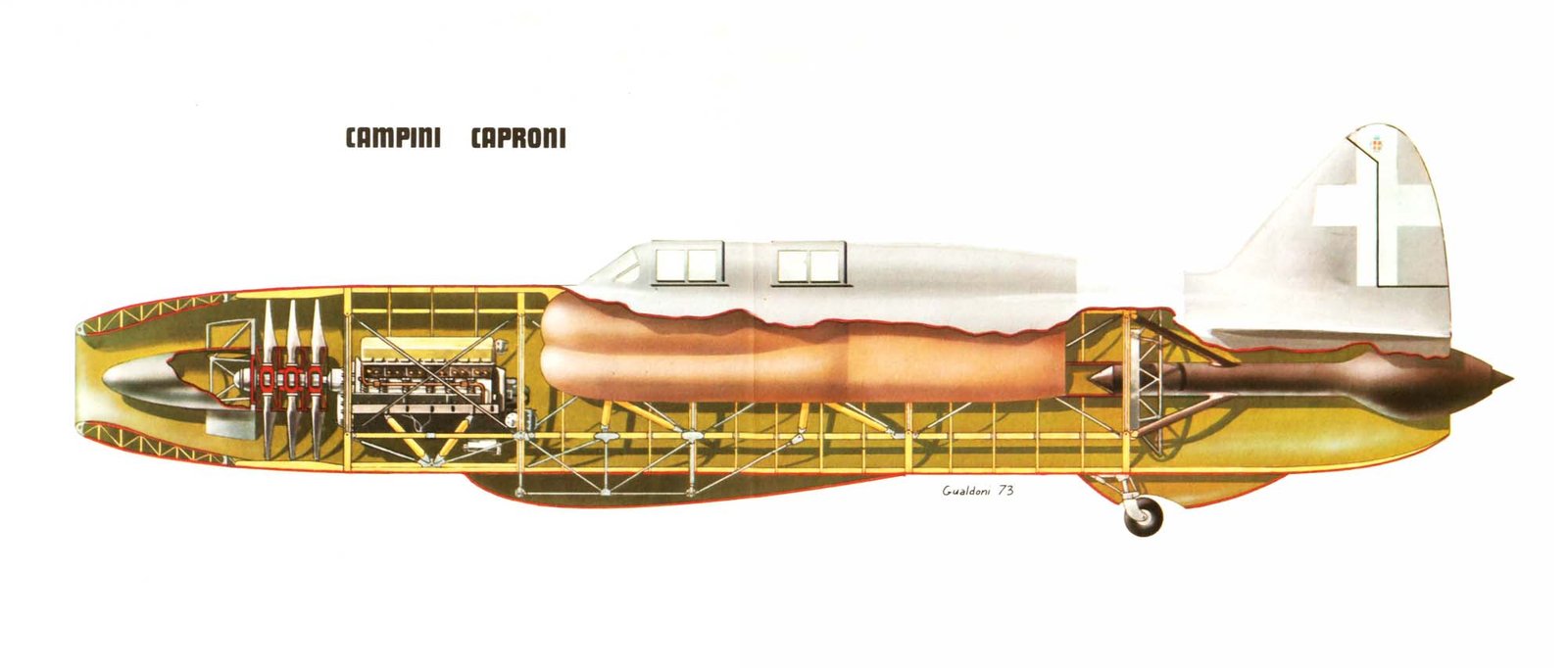
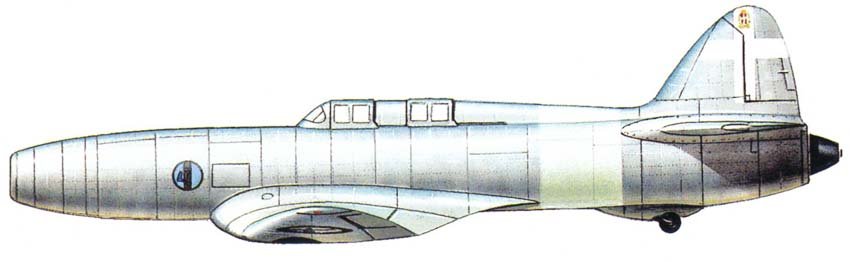
Interestingly, one of the first jet aircraft to fly in the world was the Italian Caproni-Campini N.1, created in 1940 (often mistakenly called CC-2). This aircraft, in reality, did not feature a turbojet engine. Its propulsion system, conceived by Secondo Campini, utilized an Isotta Fraschini L.121/RC.40 piston engine with 900 horsepower.
This engine powered a compressor, which supplied high-pressure air to a combustion chamber. Here, the compressed air mixed with fuel, ignited, burned, and exited through a reaction nozzle. In this sense, the Caproni-Campini N.1 was considered a twin-engine aircraft, although only one engine was used to create thrust.
Maiden Flight and Technical Details
The aircraft’s first flight took place on August 28, 1940, but it was perceived merely as a curious experiment. Due to a lack of interest from official circles, further work on the aircraft was halted. This two-seater aircraft had a wingspan of 15.85 m, a wing area of 36 m², and a takeoff weight of 4195 kg.
Its maximum speed was only 375 km/h, which was entirely uncharacteristic of the true jet aircraft developed soon after. One of the Caproni-Campini units has been preserved and is currently housed in the Museum of Science and Technology in Milan.
The Afterburner’s Legacy
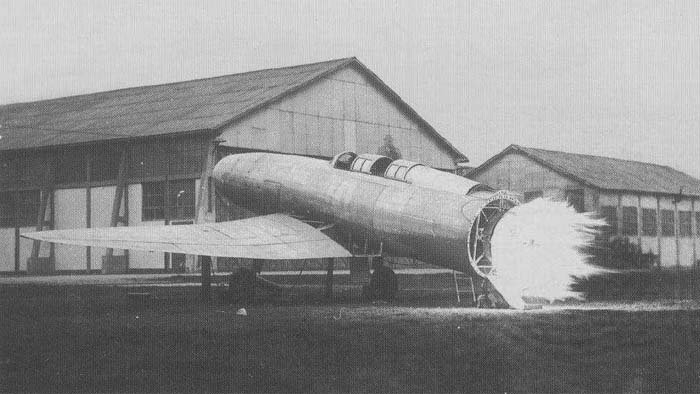
Despite its fate, the Caproni-Campini N.1 made a contribution to aviation development that perhaps not everyone fully realizes. It was in this aircraft that an afterburner chamber was used for the first time, where additional fuel burns in the exhaust flow, creating extra thrust. Without the afterburner, the Caproni-Campini’s maximum speed was only 330 km/h.
Afterburner chambers for jet engines found widespread application in combat aircraft starting from the 1950s. Therefore, while the Caproni-Campini’s trajectory ultimately proved unsuccessful, its significant contribution to aviation progress is undeniable and should be acknowledged.
Technical Specifications
| Modification | Caproni-Campini N.1 |
| Wingspan, m | 15.85 |
| Length, m | 13.10 |
| Height, m | 4.70 |
| Wing area, m2 | 36.00 |
| Empty weight | 3640 |
| Maximum takeoff weight | 4195 |
| Engine type | 1 Piston engine Isotta Fraschini L.121/RC. 40 |
| Thrust, kgf | 1 x 900 |
| Maximum speed, km/h | 375 |
| Practical range, km | 100 |
| Practical ceiling, m | 4000 |
| Crew, crew members | 2 |
Image gallery of the Caproni-Campini N.1 (CC.2)