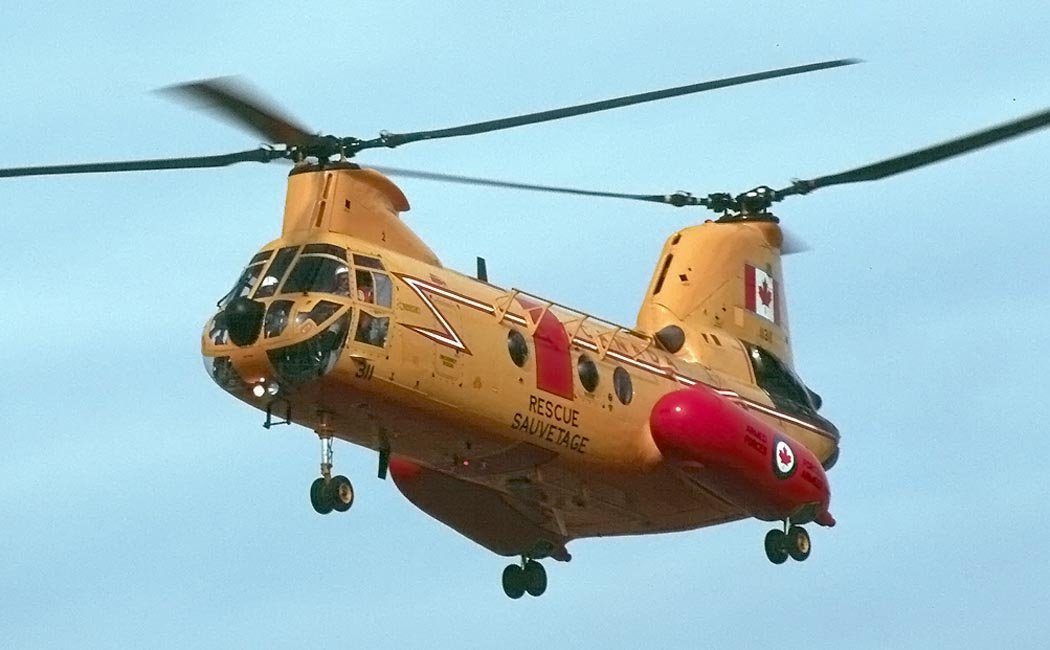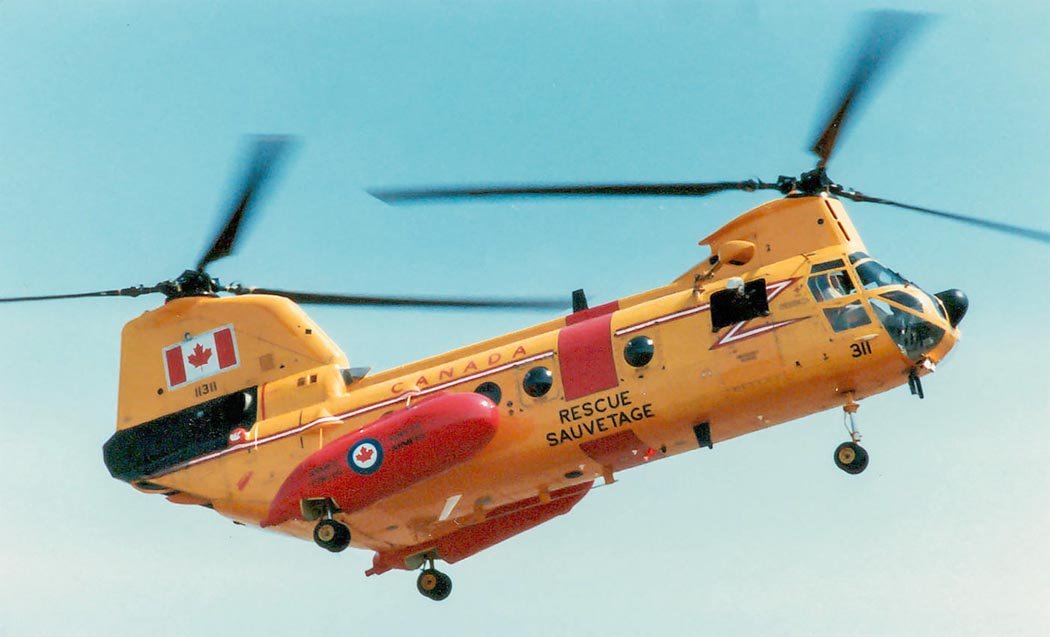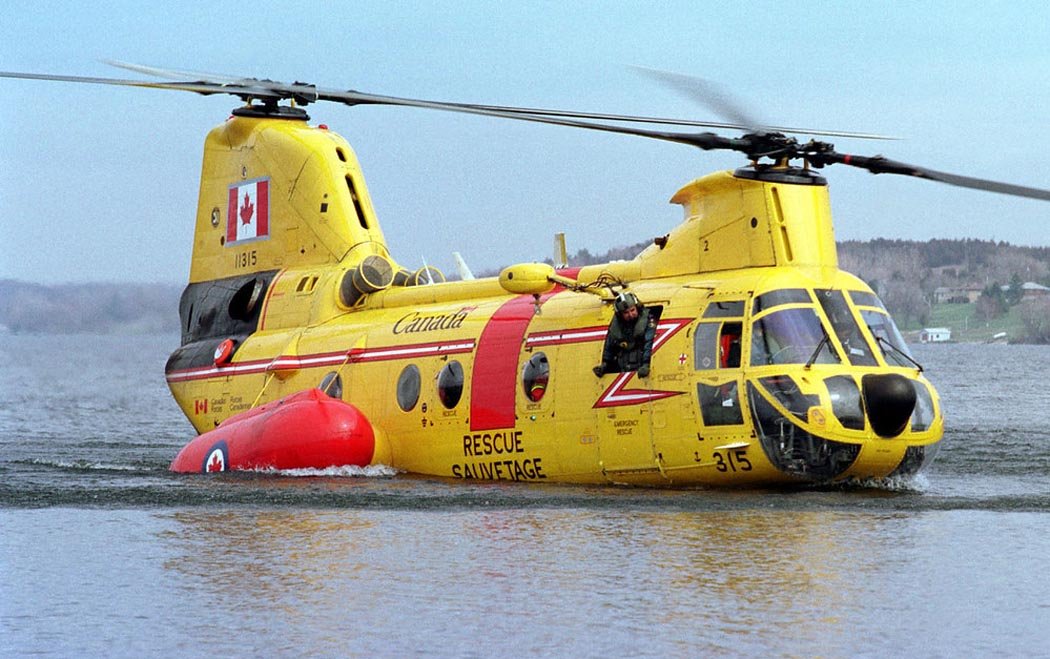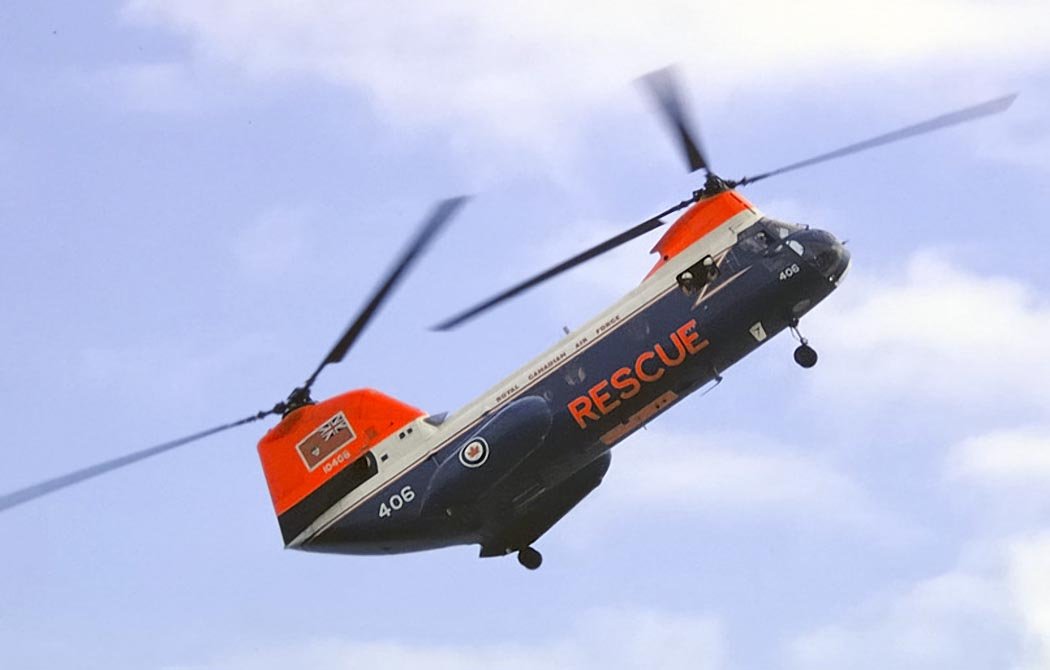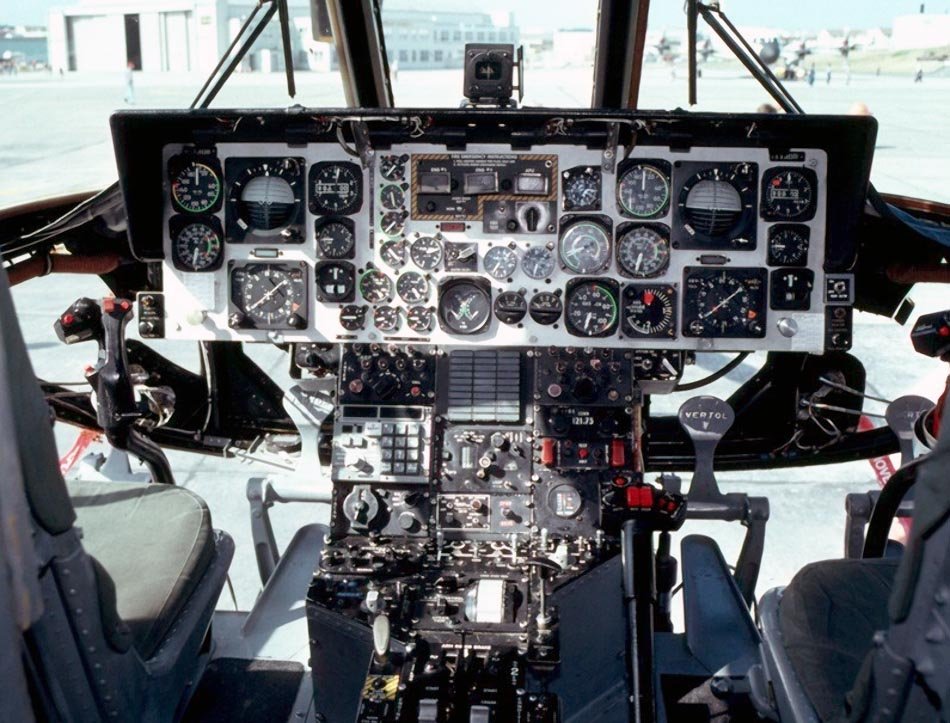
The CH-113 Labrador is a search and rescue helicopter developed by the American firm Boeing Vertol, based on the CH-46 Sea Knight transport helicopter. Six multi-purpose helicopters, almost identical to the CH-46A variant, were delivered to the Royal Canadian Air Force in 1963-64 under the designation CH-113 Labrador. Additionally, twelve similar machines were delivered to the Canadian Army in 1964-65, known as the CH-113A Voyageur.
Canadian Service and Variants
Boeing’s Canadian division received a contract to modify six CH-113 and five CH-113A helicopters by mid-1984. These modifications were carried out to meet an advanced Search and Rescue (SAR) standard. For these purposes, the helicopters were additionally fitted with a larger 3500-liter fuel tank, a rescue hoist, and first-aid medical equipment.
Modernization and Succession
These enhancements brought the helicopters to a significantly improved search and rescue standard. Starting in 2001, plans were initiated to replace these helicopters with the modern CH-149 Cormorant, marking the end of an era for the Labrador in Canadian service.
Technical Specifications
| Modification | CH-113 |
| Main rotor diameter, m | 15.24 |
| Length, m | 25.40 |
| Height, m | 5.09 |
| Empty weight, kg | 4780 |
| Maximum takeoff weight, kg | 9707 |
| Internal fuel, l | 3500 |
| Engine type | 2 General Electric T-58-GE-8F turboshaft engines |
| Power, hp | 2 x 1500 |
| Maximum speed, km/h | 275 |
| Cruising speed, km/h | 236 |
| Practical range, km | 1110 |
| Practical ceiling, m | 3180 |
| Static ceiling, m | 1920 |
| Crew, crew members | 2 + 3 |
| Payload | 18 passengers or 6 stretchers or 2727 kg of cargo in cabin or 5000 kg on sling |
Image gallery of the CH-113 Labrador