Vertol Aircraft Corporation began developing a commercial transport helicopter with two turboshaft engines shortly after its formation in March 1956. During the design phase, provisions were made for military use, should the U.S. Armed Forces show interest in the aircraft.
Assembly of the helicopter, which received the factory designation Vertol Model 107, began in May 1957, with its first flight on April 22, 1958. Successful testing and refinement, along with a promotional tour, attracted potential customers, leading to several contracts.
Development and Early Service
In July 1958, the U.S. Army ordered ten modified YHC-1A units for operational testing, with the first flying on August 27, 1959. However, the Army soon shifted its focus to a heavier-lift transport helicopter equipped with a powerful power plant.
In response to the new requirements, Vertol developed the Model 114 based on the Model 107, and the YHC-1A order (renamed YCH-46C) was reduced from ten to three aircraft. The third helicopter was equipped with General Electric T58-GE-6 turboshaft engines (1050 hp each) and larger main rotors, becoming the civilian Model 107-11, which first flew on October 25, 1960.
By this time, Vertol had become a division of Boeing. Following interest from the U.S. Marine Corps (USMC), one aircraft was upgraded to the Model 107M with two T58-GE-8 engines. Evaluation trials led to a contract for the supply of production HRB-1 Sea Knight helicopters (designated CH-46A from 1962).
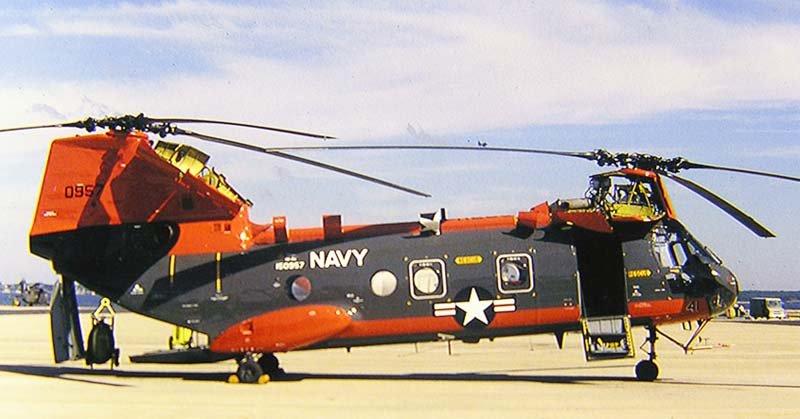
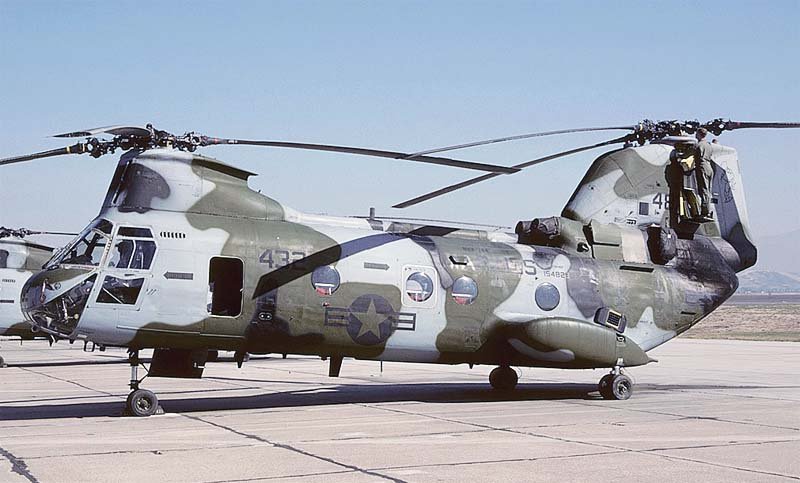
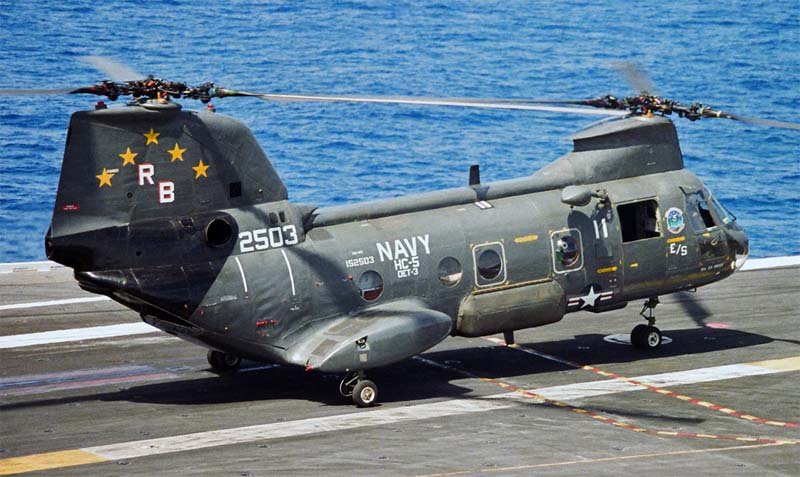
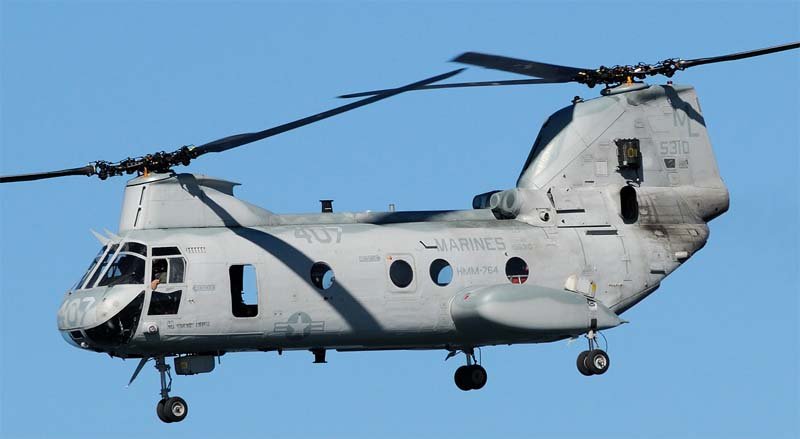
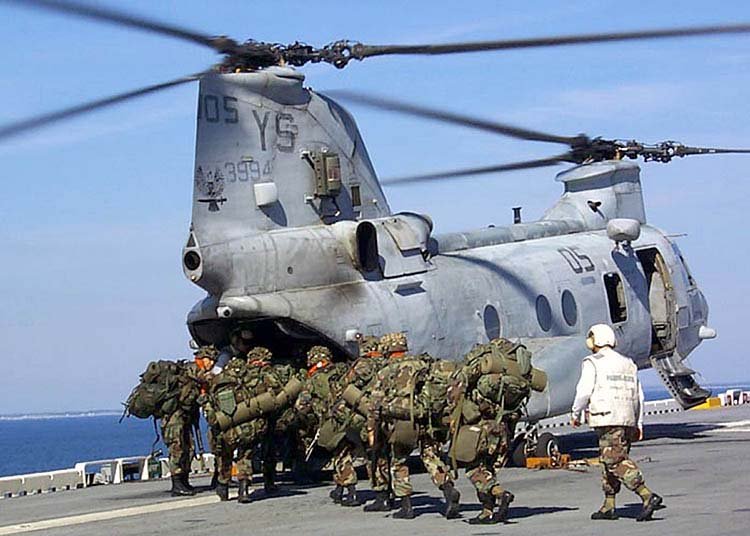
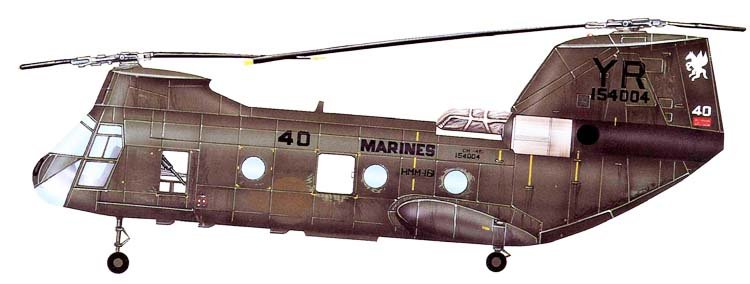
These Sea Knights were extensively used by the USMC, and from the 2000s, by the U.S. Navy, primarily for ship-to-ship and ship-to-shore transport of personnel and cargo. The first of 160 CH-46A helicopters flew on October 16, 1962, with trials continuing until 1964 and initial deliveries to Marine Corps operational units in early 1965.
Several modifications were developed from the initial production variant, including 266 CH-46D helicopters featuring a power plant of two T58-GE-10 engines (1400 hp each). The CH-46F, with 174 units built for the USMC, differed from the CH-46D only in its avionics suite. Fourteen UH-46A helicopters, similar to the CH-46A, were built for the U.S. Navy, with the first entering service with the 1st Utility Helicopter Squadron in July 1964; ten UH-46D helicopters, analogous to the CH-46D, were also supplied to the Navy.
The U.S. Marine Corps later modernized 273 of its previously built aircraft to the CH-46E variant, equipping them with 1870 hp T58-GE-16 engines, reinforced airframes, and composite rotor blades.
Combat Operations and Global Reach
CH-46 helicopters distinguished themselves in the Vietnam War, particularly during the arduous battles at Khe Sanh. Operating from coastal bases in challenging weather, they flew across the entire Khe Sanh area.
They consistently evacuated the wounded, delivered reinforcements and supplies, often flying by instruments and under heavy anti-aircraft fire. The prolonged operations around the Khe Sanh military base severely tested crews and ground personnel, contributing significantly to the Vietnamese lifting of the siege and subsequent retreat.
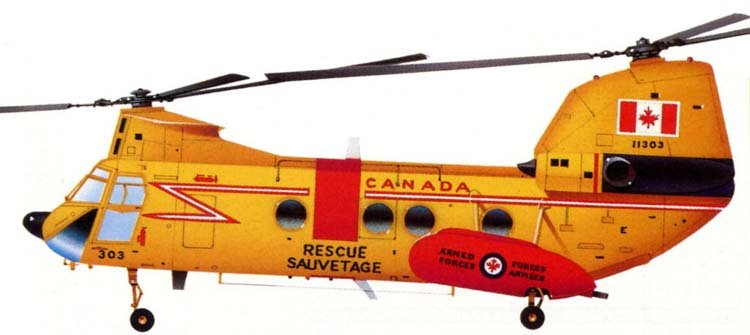
Six multi-purpose helicopters, nearly identical to the CH-46A, were delivered to the Canadian Air Force in 1963 as the CH-113 Labrador. An additional 12 similar helicopters were supplied to the Canadian Army in 1964-1965 as the CH-113A Voyageur. As part of the Canadian Armed Forces’ SARCUP project (“Search and Rescue Capability Uplift Project”), Boeing’s Canadian division was contracted in mid-1984 to modernize six CH-113s and five CH-113As for search and rescue roles.
Between 1962 and 1963, Boeing Vertol supplied Model 107-11 helicopters to the Swedish Air Force for search and rescue and to the Navy for anti-submarine warfare; both modifications were designated Hkp 4A in Sweden. In 1965, Japan’s Kawasaki secured a license agreement with Boeing Vertol for global production and sales rights of the Model 107-11.
The helicopter was mass-produced in Japan in several modifications until the 1990s as the Kawasaki-Vertol KV 107-11. Currently, these helicopters are retired from the Japan Self-Defense Forces, and the U.S. Armed Forces plan to replace their remaining units with V-22 Osprey tiltrotors.
Technical Specifications
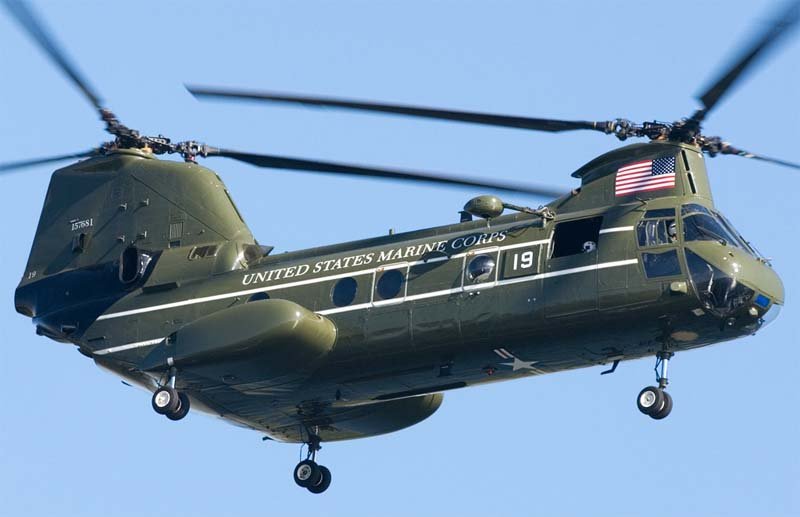
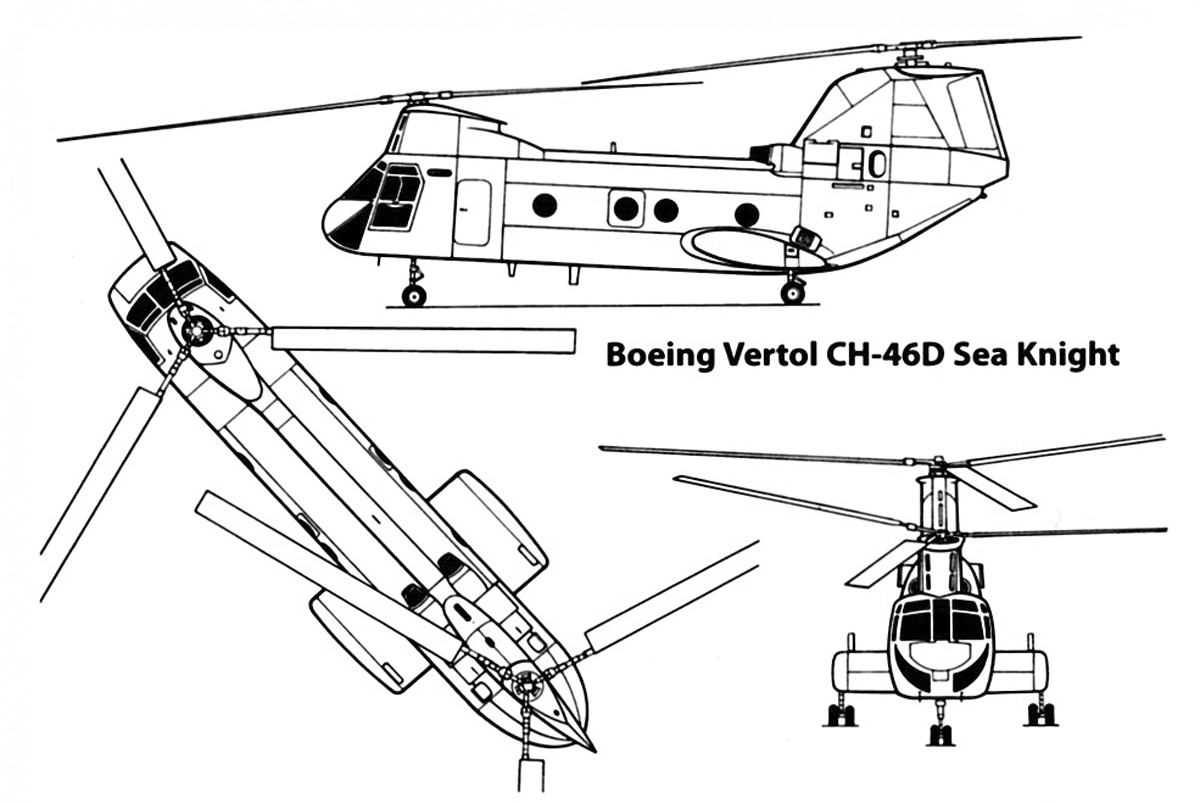
The CH-46 is a twin-rotor helicopter of longitudinal design, powered by two turboshaft engines, and features a tricycle landing gear. Its fuselage is an all-metal semi-monocoque structure, crafted from aluminum alloys, with loads from the main rotors, transmission, power plant, and landing gear distributed to reinforced frames.
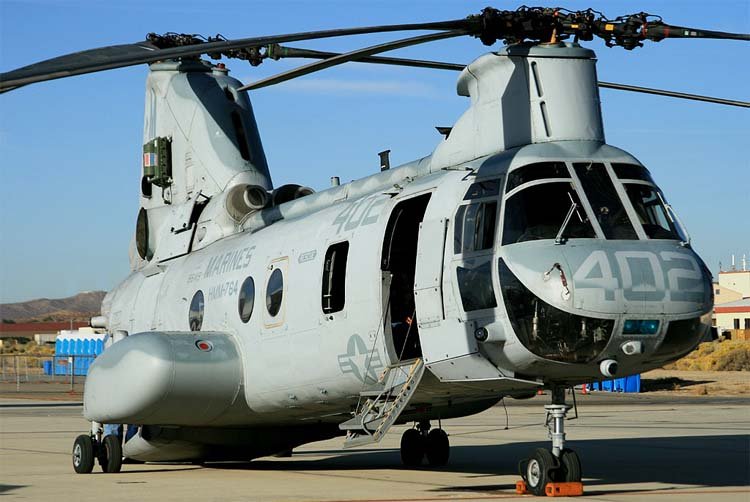
Multi-purpose, transport, and military variants are equipped with an extendable loading ramp that forms the lower surface of the rear fuselage. Passenger helicopters replace this ramp with a retractable baggage container capable of holding up to 680 kg of luggage. The crew cabin door is on the left side.
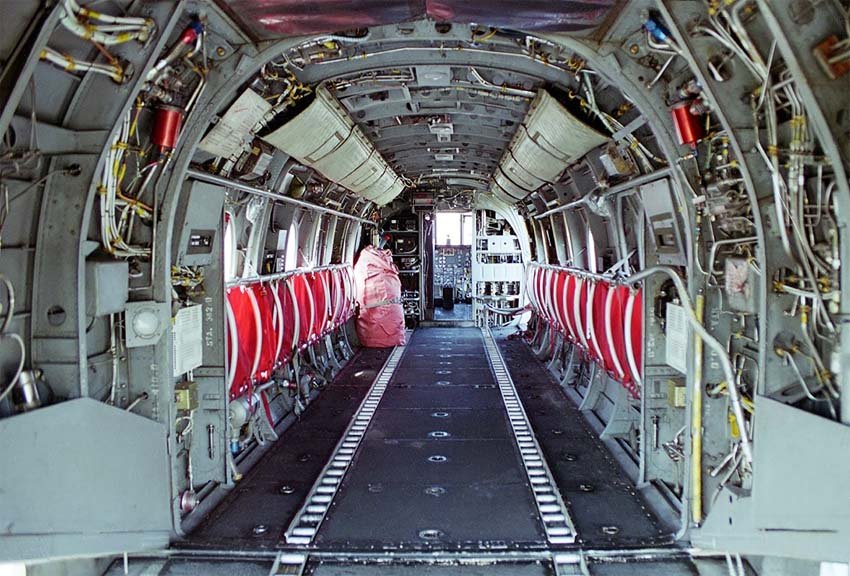
The passenger/cargo cabin features a combined-type door on the right side (sliding upper section, tilting lower section), measuring 1.6m high and 0.91m wide. The cabin is 7.37m long, with a maximum width of 2.1m and a height of 1.83m, offering a volume of 24.5m³ and a floor area of 13.47m².
In its transport configuration, the cargo cabin floor is designed for concentrated loads of up to 450 kg per wheel. It includes two rows of rollers for cargo movement and a winch capable of lifting loads up to 276 kg at 30m/min. An integrated hook on the floor allows for external sling loads up to 4535 kg.
The cabin can accommodate 25 paratroopers and a commander in the assault role, 15 litter-bound wounded patients and two medics in the medical evacuation variant, or 25 passengers. A standard heating system is installed in the cabin.
The fuselage is watertight to ensure buoyancy during water landings, with lateral stability provided by side fairings that also house the fuel tanks. The non-retractable tricycle landing gear includes a nose wheel and main supports with dual wheels, equipped with oil-air shock absorbers and disc brakes.
The wheels use tubeless tires pressurized to 1 MPa. The landing gear track is 3.34m, and the wheelbase is 7.59m; a ski landing gear can also be installed. The main rotors are three-bladed, with articulated blade attachments.
The blades are rectangular in plan, all-metal, bonded with an L-shaped spar, aluminum alloy ribs, and fiberglass skin. The blade profile is modified with a downturned leading edge, and the blade chord is 0.43m. Blade folding is performed via a hydraulic system.
The power plant consists of engines located side-by-side in the rear main rotor pylon. They feature annular air intakes with an anti-icing system that draws hot air from the compressor.
The fuel system includes two self-sealing tanks in the side fairings with a total capacity of 1325 liters. Extended-range variants feature additional tanks mounted on the fuselage sides, increasing total fuel capacity to 3785 liters. For other variants, an additional 632-liter cabin tank is provided, or a 3930-liter tank for further extended range.
Power from the engines is transmitted through clutches to an intermediate gearbox, and then to a rear connecting shaft, which drives the front and rear main rotors via another gearbox. The reduction ratio to the main rotors is 33.72:1.
The control system is duplicated hydraulic, with three hydraulic boosters providing control for each main rotor. The hydraulic system operates at 10.3 MPa for the control system and 20.6 MPa for other systems.
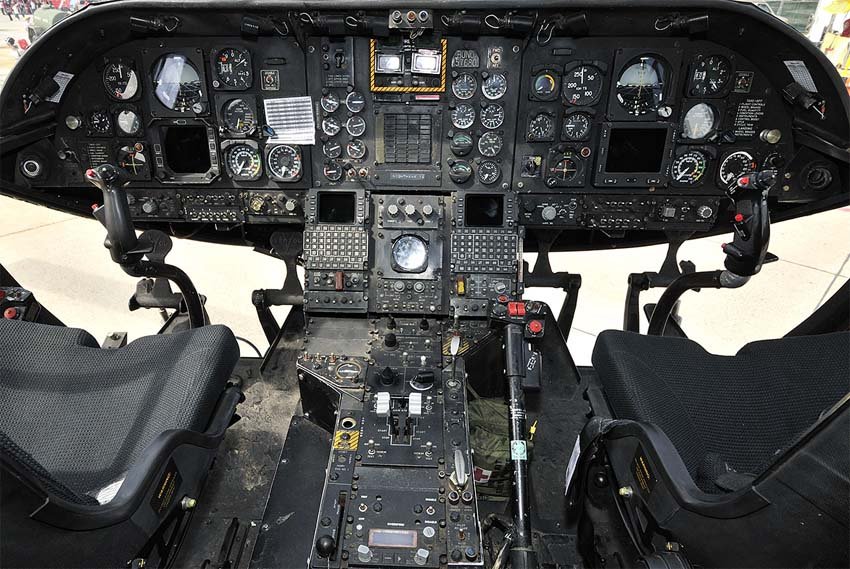
Additional equipment includes an automatic stabilization system, an automatic flight control system, a TACAN navigation system, a duplicated stability augmentation system, and an automatic balancing system. The electrical system comprises two 40 kVA AC generators and one 200 A DC generator. Electronic equipment includes standard instrument flight navigation gear and Doppler radar.
Technical Specifications
| Modification | СН-46Е |
| Front rotor diameter, m | 15.24 |
| Rear rotor diameter, m | 15.24 |
| Length, m | 13.66 |
| Height, m | 5.09 |
| Empty weight | 5255 |
| Maximum takeoff weight | 11022 |
| Internal fuel, l | 1325 |
| Engine type | 2 General Electric T58-GE-16 turboshaft engines |
| Power, kW | 2 x 1394 |
| Maximum speed, km/h | 267 |
| Cruising speed, km/h | 256 |
| Practical range, km | 1112 |
| Operational range, km | 1019 |
| Rate of climb, m/min | 523 |
| Service ceiling, m | 5180 |
| Static ceiling, m | 2895 |
| Crew | 2-3 crew |
| Payload | 25 soldiers or 3175 kg of cargo in cabin or on external sling |
| Armament (optional) | two 12.7-mm Colt-Browning M2 machine guns |
Image gallery of the CH-46 Sea Knight