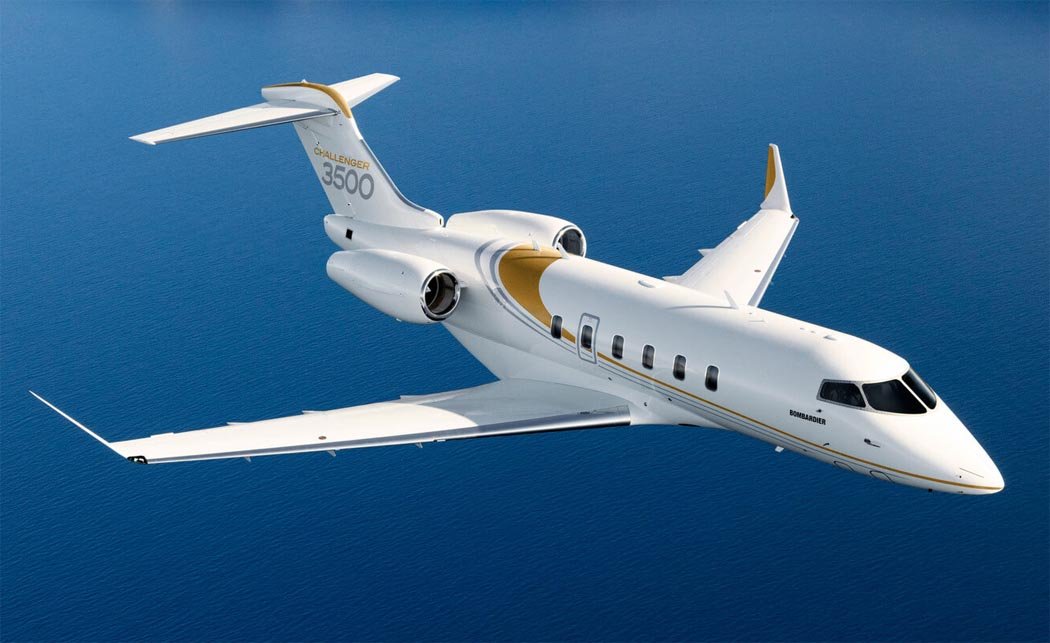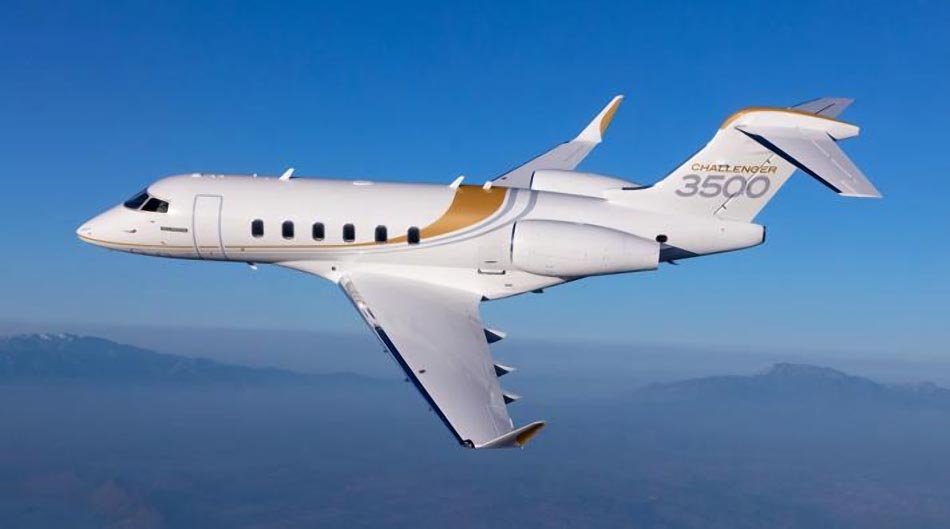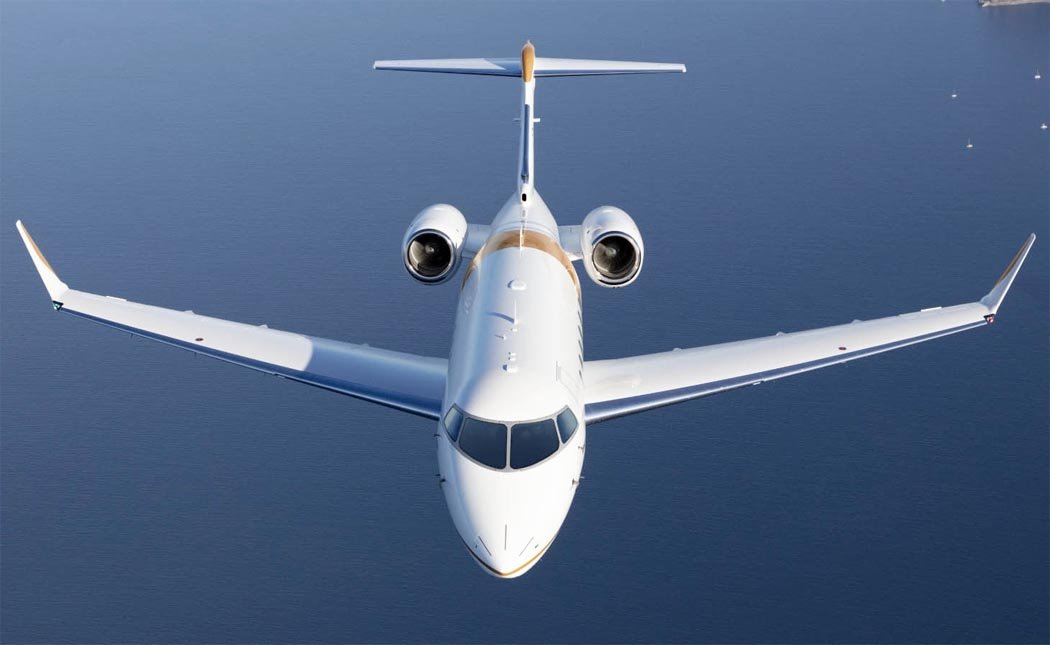
In 2021, the Canadian company Bombardier introduced its new model – the Challenger 3500. With it, Bombardier aims to rewrite the rules for super mid-size business jets. The aircraft manufacturer modernized its Challenger 350, taking some cabin features from its ultra-long-range flagship Global 7500 and applying them to this new mid-size version.
The main changes focused on the cabin, which is now the most technologically advanced in its class with productivity-enhancing features. Additionally, the cabin altitude will be reduced by 2,000 feet, a 31% improvement over the previous model. It boasts the industry’s first voice-controlled cabin for lighting, temperature, and entertainment systems.
Wireless chargers, ergonomic Nuage seats (carried over from the Global 7500), and a completely refreshed interior all await new users in the second half of 2022, at a similar existing price of $26.7 million. Bombardier upgraded the forward galley, adding features such as a transparent wine chiller and a crystal holder. The workspace was reconfigured to accommodate a large espresso machine alongside an oven that can be tucked away behind a door. Furthermore, new soft-close drawers make them easier to open.
Key Smart Cabin Features
Key elements of the “smart cabin” include a redesigned lighting scheme, soft-close galley drawers, storage for crystal and wine, and voice control for temperature, lighting, and entertainment. It also features 24-inch 4K displays, wireless charging, eco-friendly fabrics and coverings, and rapid cabin air exchange.
Performance and Efficiency
The Challenger 3500 is expected to cover 6,297 km (3,400 nautical miles) at Mach 0.77 with four passengers and two crew members, allowing for easy non-stop flights between Los Angeles and New York or London and Dubai. The aircraft will also be certified for steep approaches, such as those at London City, Aspen, and Toluca. The Challenger 3500 will retain the engines, avionics, and performance of its predecessor. However, a new auto-throttle will simplify operation and reduce pilot workload.
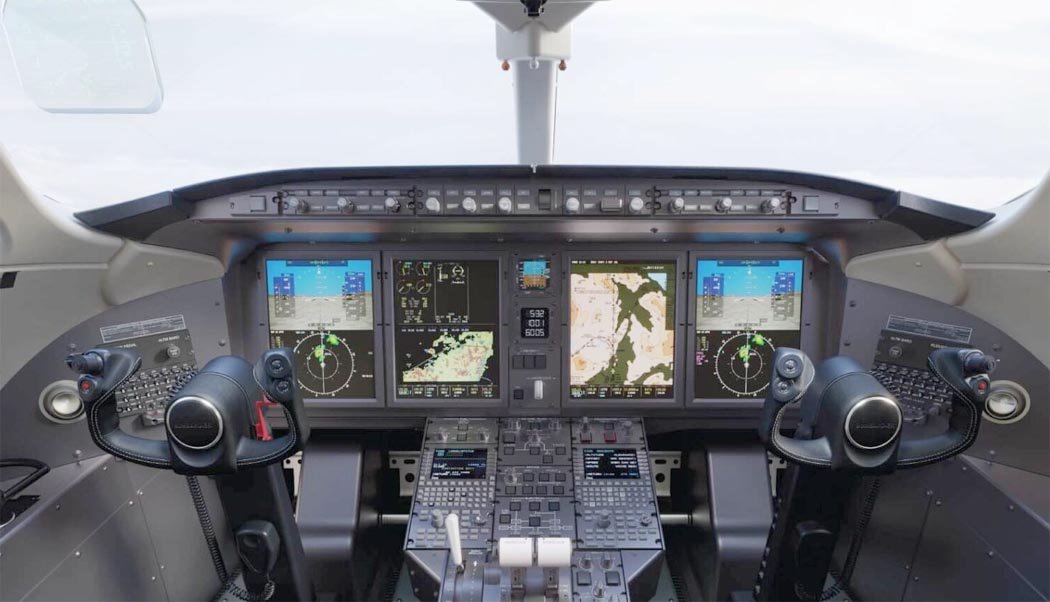
This includes an available Head-Up Display (HUD) with an Enhanced Vision System (EVS), advanced avionics with four large displays, and a dual Flight Management System with LPV and RNP approach capability. It also features a Synthetic Vision System (SVS), MultiScan weather radar, a dual Inertial Reference System (IRS), and dual SBAS/WAAS GPS.
According to the manufacturer, soundproofing will make the cabin the quietest in its class, as well as the widest in the super mid-size segment. The new model is designed with environmental requirements in mind and in line with Bombardier’s goals. Flight tests of the Challenger 3500 demonstrated zero carbon emissions through the use of sustainable aviation fuel and CO2 offset. The Global 7500 was the first aircraft to receive an Environmental Product Declaration (EPD), and the new Challenger 3500 is the second. Other environmental initiatives include the option for customers to select cabin finishes from a range of high-quality, eco-friendly materials.
The Bombardier Challenger 3500 is powered by two Honeywell HTF7350 engines, mounted in the rear. Each engine is capable of producing up to 33 kN of thrust. As a result, the Challenger 3500 boasts a takeoff distance of 1480 meters (at maximum takeoff weight). Furthermore, Bombardier states that the 3500 will have a minimum landing distance of just 720 meters. Compared to the outgoing Challenger 350, these figures remain identical.
However, not all performance metrics remain identical to the previous generation. The new model’s range is claimed to be increased to 3,400 nautical miles (6297 km). This is 200 nautical miles more than the previous Challenger 350. Thus, the 3500 can perform non-stop flights between Western Europe and the Eastern Seaboard of the United States.
Additionally, the 3500’s maximum cruising speed has been increased. Cruising speed has risen from 830 km/h to 870 km/h. While this is only a 40 km/h difference, over a multi-hour mission, it will provide significant time savings. Another important metric is the estimated hourly fuel burn. While the new 3500 features the same Honeywell engines as the previous 350 generation, fuel consumption is expected to decrease significantly. This is achieved through optimizing flight efficiency.
Optimal flight efficiency is achieved through Bombardier’s eco-app. This application allows crews to maximize fuel efficiency. The app works by using machine learning algorithms to continuously improve flight optimization models tailored to each operator’s specific characteristics and usage.
A Revolutionary Interior
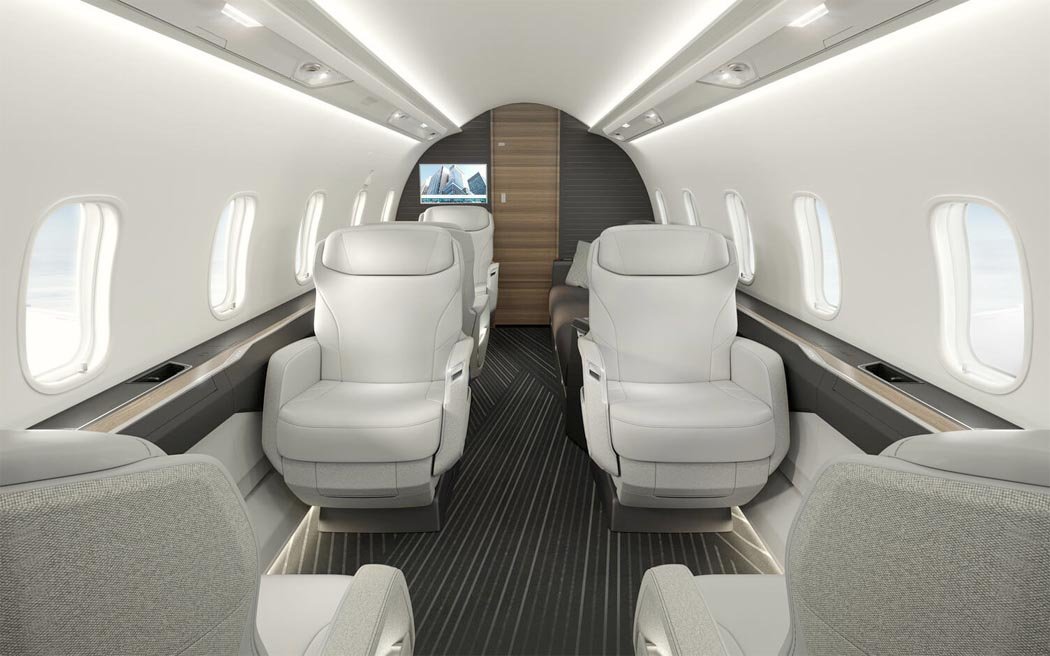
The Challenger 3500’s interior is where Bombardier clearly focused much of their development time. Inside the cabin are impressive features not typically found on aircraft of this size. The aircraft is equipped with advanced technology, the revolutionary Nuage seat, and a stunning interior. In Bombardier’s own words, all these factors combine to deliver “an unforgettable cabin experience”.
First, the Nuage seat. This, according to Bombardier, is the first new seat architecture in business aviation in over 30 years. The seat offers class-defining comfort along with the industry’s first zero-gravity position. Moreover, these seats are developed directly from the Global 7500, an aircraft designed for the longest missions. Therefore, if the seats are suitable for a flagship aircraft, they are more than suitable for this super mid-size offering.
The patented tilt-link system for the zero-gravity position ensures a neutral body posture to reduce pressure on the lower back. Additionally, this provides even weight distribution for effortless comfort and improved circulation. In the upright position, the Nuage seat’s leg rest features a swooping design, allowing passengers to tuck their feet under their knees for a more natural and comfortable sitting position.
Furthermore, Bombardier states that the Nuage seat is “engineered to move just as you do.” Thus, the seats feature a unique floating base with a trackless design and a constantly centered swivel axis for simple and intuitive positioning. Consequently, the seats are exceptionally easy to maneuver, whether you want to work, converse, dine, or relax. Finally, the Nuage seats are equipped with an exclusive tilt headrest. Designed with perfect ergonomics in mind, the tilt headrest provides optimal neck support and alignment in any position.
Next comes the onboard technology – an area where Bombardier has truly excelled. The cabin features the industry’s first voice-controlled cabin. While common in homes and cars, developing this for a business jet cabin presents significant hurdles. Nevertheless, Bombardier has managed to develop what they call “the industry’s smartest cabin”. Instead of operating the cabin via an integrated cabin management system, passengers can use their voice. For example, passengers can control lighting, temperature, entertainment, and flight information using voice commands.
Moreover, the voice control system was designed to work without an internet connection. Thus, the voice control system provides a fast, reliable, and private solution. An additional feature passengers will appreciate is the first-in-class wireless chargers, located throughout the cabin. This allows passengers to charge their compatible phones without power cables.
Furthermore, this fosters greater integration between the aircraft and the user’s personal devices. For instance, passengers can connect their phone, tablet, or other electronic devices to the cabin, enabling them to stream audio and video content directly. However, connectivity options don’t end there. An integrated media bay allows for connecting popular streaming devices and the latest gaming consoles.
Innovations in the Challenger 3500’s cabin don’t stop there. The 3500 model introduces the first use of haptic touch technology in a business jet. This is similar to the touch or vibration you feel when using a phone. Therefore, all 3500 cabin control switches provide haptic feedback upon press. As a result, the user interface is enhanced, and passengers receive instant feedback on successful command execution.
Technical Specifications
| Modification | Challenger 3500 |
| Wingspan, m | 21.00 |
| Aircraft length, m | 20.90 |
| Aircraft height, m | 6.10 |
| Wing area, m2 | 48.50 |
| Empty weight | 12791 |
| Maximum takeoff weight | 18484 |
| Fuel | 6418 |
| Engine type | 2 Honeywell HTF7350 Turbofan engines |
| Thrust, kN | 2 x 33.0 |
| Maximum speed, km/h | 979 |
| Cruising speed, km/h | 870 |
| Practical range, km | 6297 |
| Practical ceiling, m | 13106 |
| Crew, crew members | 2+1 |
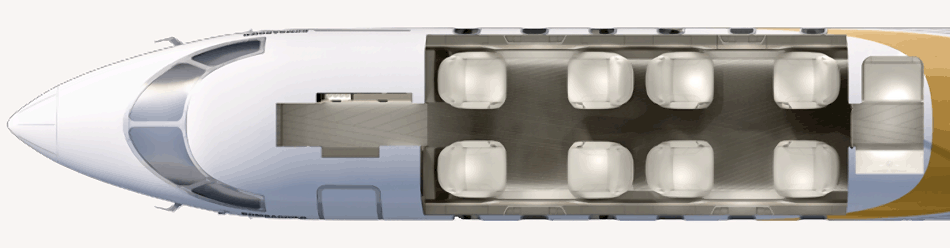
| Payload | 8-10 passengers |
Image gallery of the Bombardier Challenger 3500