Major General Cha was instrumental in helicopter manufacturing in Taiwan. A graduate of the Massachusetts Institute of Technology, he led Chinese aviation factories for a decade and a half. Specifically, he directed the factory in Yumman, where in the 1930s, Curtiss “Hawk III” fighters, North American AT-6 “Harvard,” Boeing PT-17, and Soviet I-15 aircraft were produced under license.
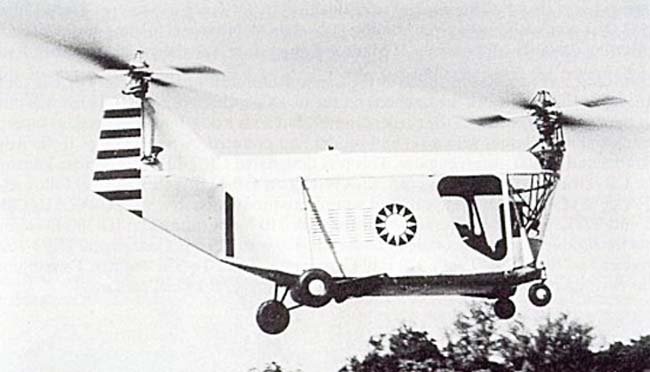
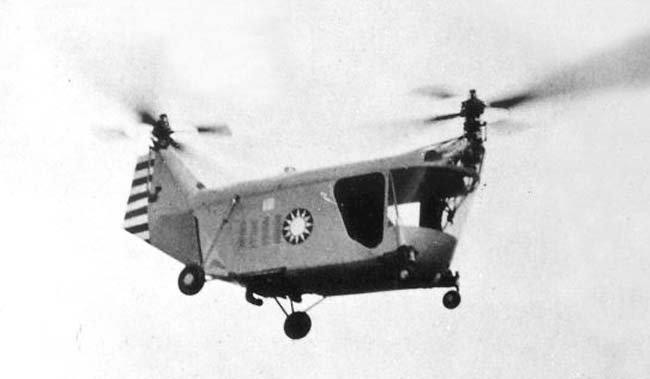
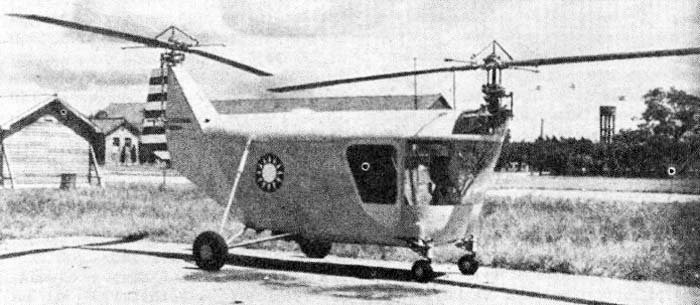
Cha also designed aircraft himself, and in 1944, his attention turned to helicopters. The first Chinese helicopter was a copy of the American coaxial “Humming Bed” machine. In the early 1950s, Cha designed the CJC-3, a small, elegant longitudinal-scheme helicopter.
The Pioneering CJC-3 Design
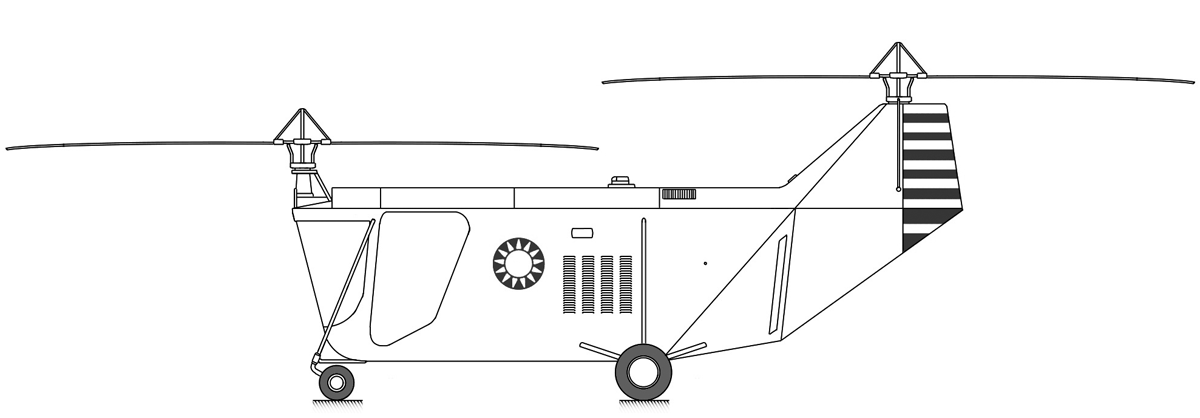
The CJC-3’s fuselage power frame was constructed from steel tubes and covered with metal skin. The pilot’s cockpit glazing featured a distinctive “negative” slant. Two pilots were accommodated side-by-side in the cockpit, and the helicopter’s controls were dual.
Technical Features and Performance
Its main rotors were two-bladed with stabilizing rods, and their planes of rotation significantly overlapped. It is highly probable that Cha utilized modified rotors from a Bell-47 helicopter. The landing gear was non-retractable and four-legged. A 190 hp Lycoming engine was installed in the fuselage near the helicopter’s center of gravity.
Flight tests for the CJC-3 helicopter commenced in the spring of 1954. Despite its original and quite appealing appearance, this machine was never transferred to serial production.
Technical Specifications
| Modification | CJC-3 |
| Main rotor diameter, m | 6. 47 |
| Length, m | 10.00 |
| Height, m | 3.00 |
| Empty weight | 680 |
| Maximum takeoff weight | 930 |
| Engine type | 1 Piston engine Lycoming |
| Power, hp | 1 x 190 |
| Maximum speed, km/h | 148 |
| Cruising speed, km/h | 134 |
| Practical range, km | 270 |
| Practical ceiling, m | 3660 |
| Crew | 2 |
Image gallery of the CJC-3 Helicopter