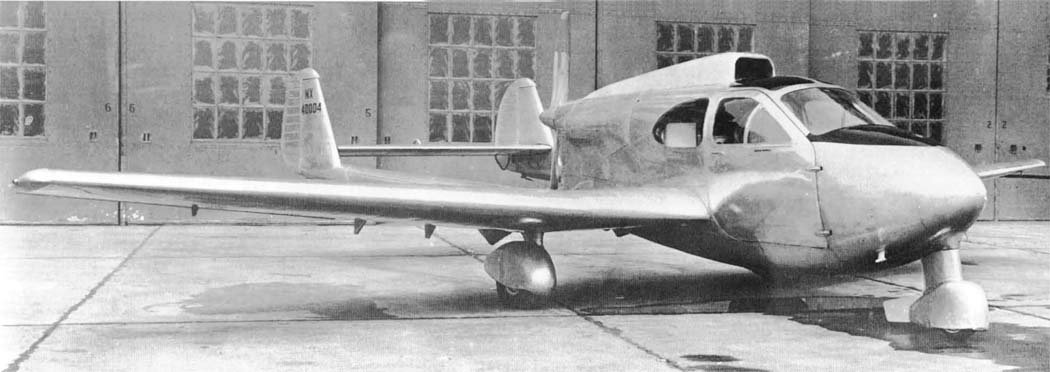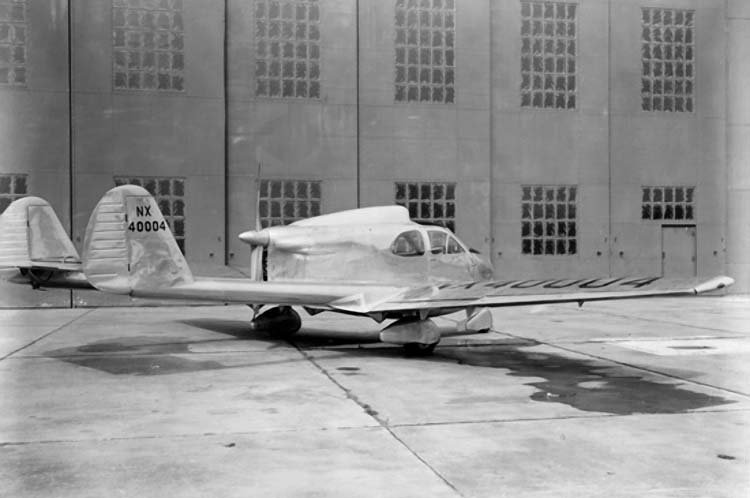
At the end of World War II, Convair’s Stinson Division built the “flying car” Convair Model 103. Immediately after the war, Stinson Division designers proposed their own version of a light four-seater aircraft.
This aircraft was intended for use as an air taxi or a tourist plane, showcasing an ambitious vision for post-war personal and commercial aviation.
Development and First Flight
The aircraft, designated Convair 106 Skycoach, took flight in April 1946. It was an all-metal, twin-boom mid-wing monoplane.
It was equipped with a six-cylinder Franklin 6A8-225-B8 engine producing 230 hp (170 kW), reflecting engine technology of the era.
Evaluation and Final Fate
The aircraft (NX40004) was delivered for testing to the San Diego research center. The results quickly revealed that the Skycoach had no viable commercial prospects.
Its flight characteristics were inferior to those of the best-selling light aircraft, the Beech Model 35 Bonanza, sealing its fate. The project was soon closed, and the sole prototype was scrapped in 1947.
Technical Specifications
| Modification | Convair 106 |
| Wingspan, m | 10.50 |
| Length, m | 7.10 |
| Engine type | 1 Piston engine Franklin 6A8-225-B8 |
| Power, kW | 1 x 230 |
| Maximum speed, km/h | 229 |
| Cruising speed, km/h | 195 |
| Crew | 1 |
| Payload | 3 passengers |
Image gallery of the Convair 106 Skycoach