A330-743L Beluga XL
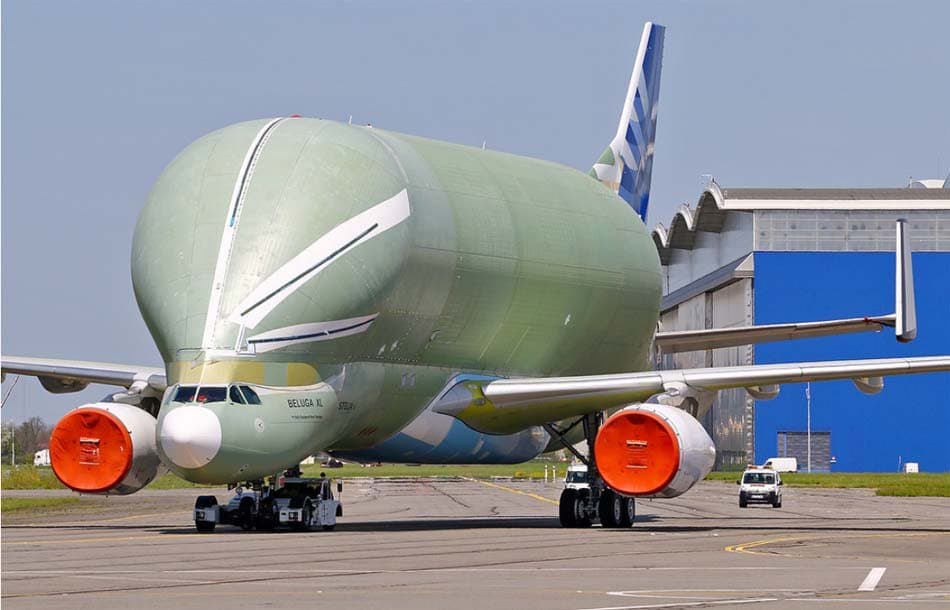
Due to the decentralized location of its manufacturing sites, the Airbus consortium required a transport aircraft to deliver components to its assembly lines. Initially, the Super Guppy, based on the Boeing 377, was used. However, its size eventually became insufficient, leading Airbus engineers to create their own A300-600ST Beluga transport aircraft in 1994, based on the Airbus A300, for carrying oversized cargo.
Even the A300-600ST Beluga’s capabilities eventually proved inadequate for Airbus’s evolving needs. The program to develop the new Airbus A330-743L Beluga XL cargo aircraft commenced in November 2014. It was based on the Airbus A330-200 freighter, maximizing the use of existing components and equipment.
Beluga XL: Design and Capabilities
The cabin, cargo bay, and tail section of the Beluga XL were entirely redesigned to meet the demanding requirements. The XL features a “bulged” fuselage, measuring 45 meters in length with an 8-meter internal diameter, and boasts a payload capacity of over 50 tons. This design provides a 30% increase in internal volume compared to its predecessor.
This enhanced capacity is sufficient to simultaneously transport two assembled wings from the Airbus A350 XWB. The A350 XWB possesses the largest wings among all single-deck aircraft, with each wing spanning an area of 443 square meters. Even these gigantic and complex components can be comfortably accommodated within the new Beluga XL.
For its propulsion, the Beluga XL is equipped with Rolls-Royce Trent 700 engines. The aircraft has a maximum takeoff weight of 227 tons and a payload capacity of 53 tons. It can cover distances of up to 4,074 km when fully loaded, with an overall length of 63 meters and a wingspan of 60 meters.
Operational Milestones and Future
The new Beluga XL model is set to replace the Beluga ST (Super Transporter), which is currently used for transporting large aircraft assemblies and fuselage sections between production sites across Europe and final assembly lines in Hamburg and Toulouse. This transition will significantly enhance Airbus’s logistical efficiency.
The fuselage of the first Beluga XL was assembled in December 2016, with the nose section and empennage completed in 2017. Over the following year, work progressed on body assembly and the debugging of mechanical and electrical systems. This was followed by a 6-month period of ground testing.
The aircraft made its maiden flight, lasting 4 hours and 11 minutes, on July 19, 2018. Under the command of Captain Christophe Cail, First Officer Bernardo Saez-Benito Hernandez, and Flight Engineer Jean-Michel Pena, the aircraft successfully took off and landed at 14:21 local time on the runway at Toulouse-Blagnac airfield in France.
Airbus plans to build a total of five Beluga XL transport aircraft. The first unit is scheduled to enter service in mid-2019, with the Beluga XL fleet projected to fully replace the A300-600ST Beluga by 2025.
Technical Specifications
| Modification | A330-743L |
| Wingspan, m | 60.30 |
| Aircraft length, m | 63.10 |
| Aircraft height, m | 18.90 |
| Wing area, m2 | 361.60 |
| Empty weight | 125000 |
| Maximum takeoff weight | 227000 |
| Engine type | 2 Rolls-Royce Trent 700 turbofan engines |
| Thrust, kN | 2 x 316 |
| Practical range, km | 4075 |
| Crew, crew members | 2 |
| Payload | maximum 53000 kg of cargo |
Image and diagram gallery of the A330-743L Beluga XL
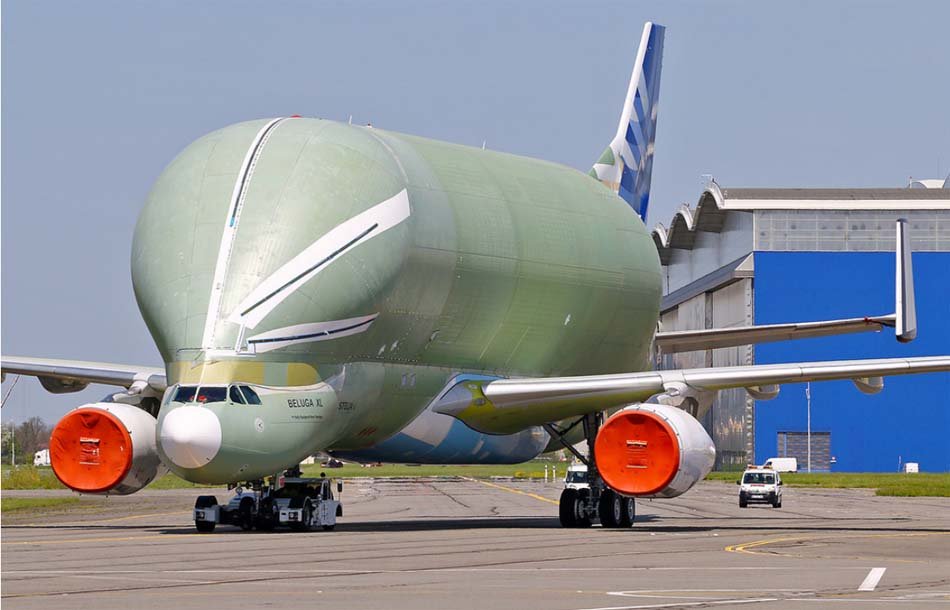 A330-743L Beluga XL |
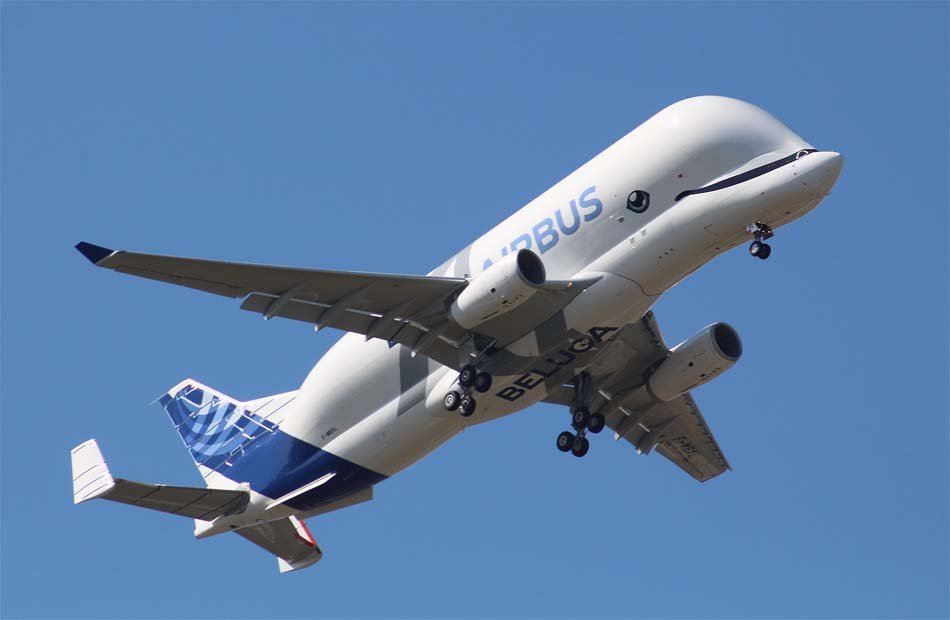 A330-743L Beluga XL |
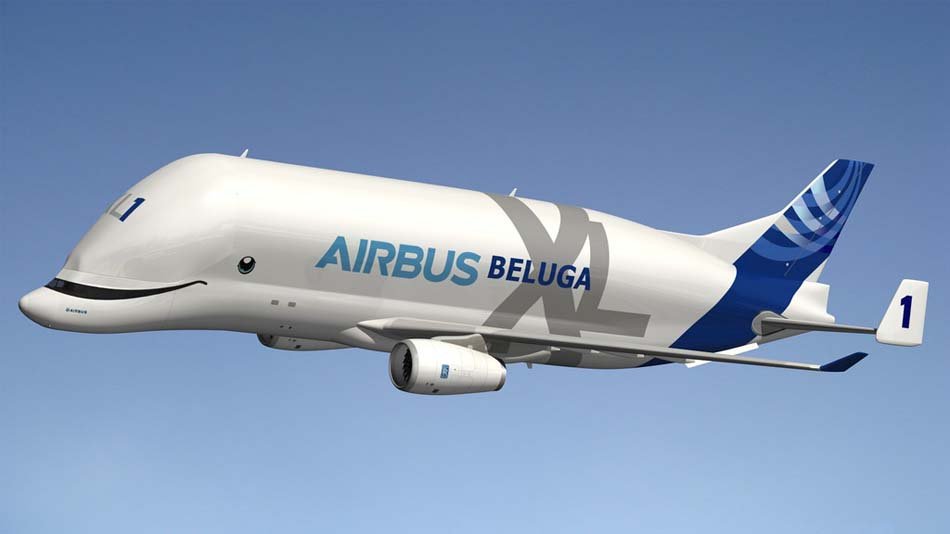 A330-743L Beluga XL |
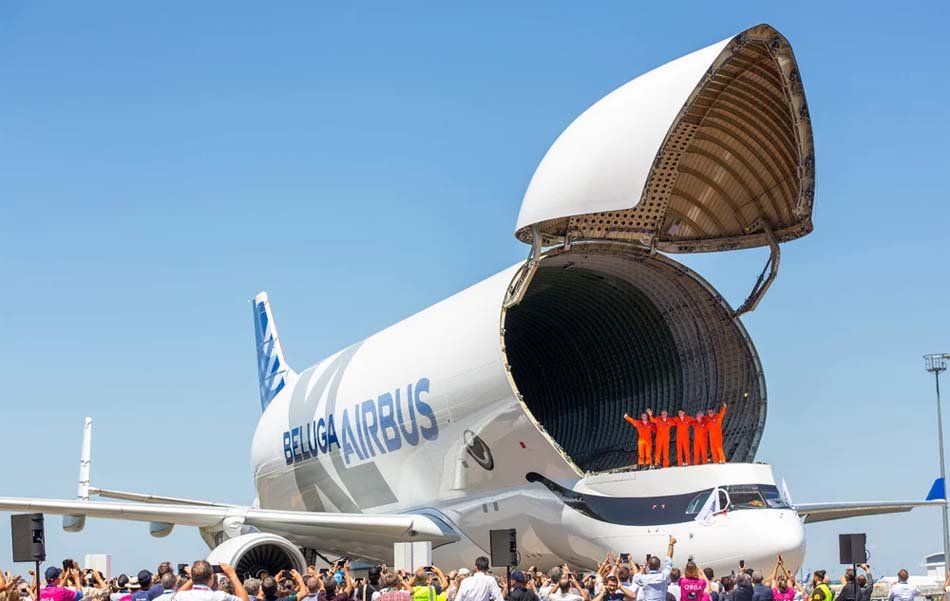 A330-743L Beluga XL |
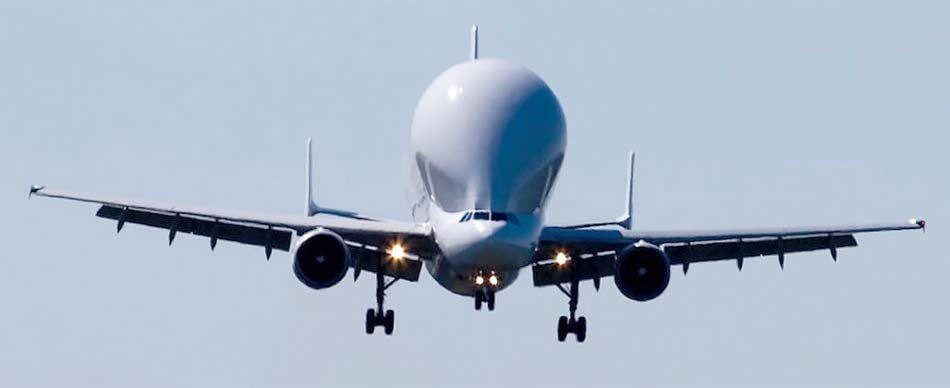 A330-743L Beluga XL |
ArchivoAéreo Editorial Team
A group of aviation researchers and enthusiasts dedicated to documenting and preserving global aeronautical history. All articles are reviewed to ensure historical accuracy.
Sources & Accuracy
The information presented in this technical sheet has been compiled from declassified flight manuals, historical archives, and specialized literature. While we strive for maximum accuracy, some performance data may vary depending on the specific variant or operational conditions.