BD-5 Micro
The Allure of Homebuilt Aviation
Do you remember those brightly decorated boxes, full of round and rectangular plates, rods, axles, screws, and nuts, toiling with which so many hours and days of our childhood were dedicated? “Constructors” of all kinds and purposes are still loved by boys, although store shelves are full of gleaming, but alas, ready-made, and therefore uninteresting toys.
The passion for breaking wind-up cars to see how they work, and the preference that future technicians and engineers give to “machine parts” kits—these are two sides of a simple psychological phenomenon explaining the interest of perfectly grown-up people of all ages and professions in “homebuilt” aviation. Isn’t it interesting to build a neat, elegantly crafted little airplane yourself from carefully marked blanks, equip it with a lovingly assembled engine, instruments, radio equipment, and finally, take off, feeling not only the joy of flight but also the quite legitimate pride of an aircraft designer?
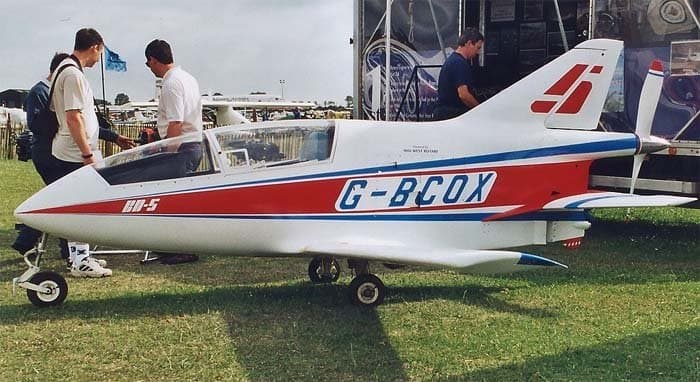
“Constructors” for adults — semi-finished kits of the ultralight BD-5 “Micro” aircraft, released to the Western market by American aircraft designer James Bede — were a successful psychological find by this talented engineer. Another circumstance also worked clearly: the price of the kit was no more than the cost of a car, whereas a factory-made light-engine “Cessna” cost a private owner ten times more.
Astonishing Flight Characteristics
However adept Bede was at getting amateur pilots to buy the “Micro,” psychology alone was not enough. The “product” itself, the micro-aircraft’s design, was also good, possessing amazing flight characteristics. As the popular German magazine “Flugrevue” noted, “Ever since the first information about the BD-5 appeared in the press, the entire aviation sports world has been divided into two camps: some consider Jim Bede a charlatan, while others consider him a genius.”
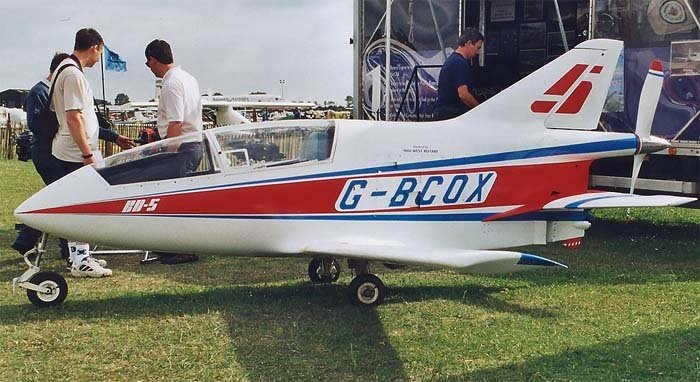
The main thing that strikes Bede’s supporters and opponents is the speed at which his elegant little airplane flies, looking like a “real,” genuine machine. With a 70-horsepower air-cooled two-stroke engine, the “Micro” accelerates to 373 km/h. And although the flight weight of the swift monoplane is only 322 kg, it is equipped with a closed spacious cockpit, retractable tricycle landing gear, flaps, and a full set of flight and navigation equipment.
Fuel consumption is ridiculously low – 26.5 liters per hour of flight at a cruising speed of 368.5 km/h. The aerodynamics, thanks to which the BD-5 gained such surprising speed and economy, amazed specialists and amateurs not for the first time. As early as 1910, pilot and designer Édouard Nieuport astonished the aviation world with his little airplane with a weak 20-horsepower engine. Developing a speed of over 80 km/h, the streamlined, “sleek” Nieuport became a favorite of air races in Reims. Two decades later came another sensation. The Lockheed “Orion” passenger aircraft proved faster than all military aircraft of its time.
Innovative Design and Legacy
In the late 1930s and early 1940s, the aerodynamic perfection of the famous SB (USSR) and “Mosquito” (England) bombers allowed these machines to fly faster than enemy fighters. Like any precise instrument, aerodynamics is omnipotent only in the hands of a master. While striving for an aircraft’s agility and “polishing” its design, it’s easy to forget about the machine’s manufacturability. Every aviation student knows that a wing in the shape of an elongated ellipse has the best aerodynamic properties, but it is also the most inconvenient to manufacture, and therefore expensive. A simple truth: the smaller the wing, the less air resistance it experiences. But after flying, one needs to land, and the lower the landing speed, the better the aircraft. So where is that “golden mean” — the optimal wing area that allows for fast flight and soft landings?
The “Micro” did not appear all at once. In 1967, Bede built a single-seat, single-engine aircraft for a non-stop (without refueling!) flight around the globe. Two years later, the designer set three world records for flight duration: the machine stayed in the air for more than 70 hours before electrical system malfunctions began. Outwardly, the BD-2 – as the aircraft was called – resembled a glider with a high-aspect-ratio wing. Flight experiments showed: excellent aerodynamics allowed the machine with a 20-horsepower engine to maintain a quite decent speed of about 250 km/h. The BD-2 was built according to the classic scheme: pulling propeller, engine in the nose of the aircraft. The BD-5 looked different – the propeller was installed at the tail, and the engine was hidden in the fuselage, behind the pilot’s cockpit.
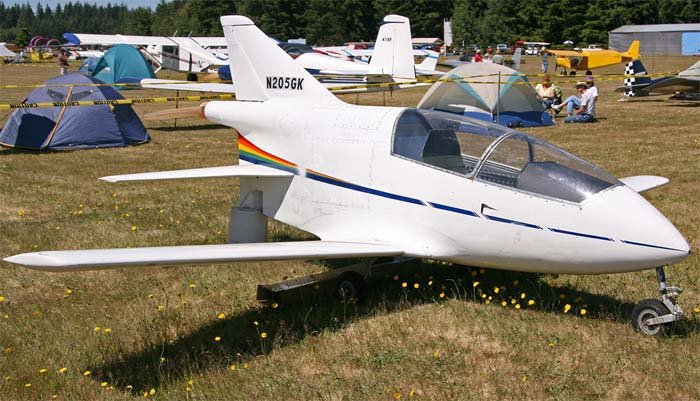
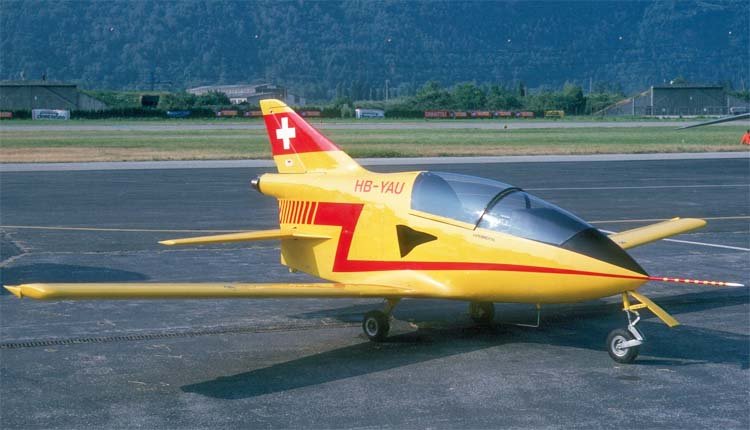
Let’s trace, at least approximately, the line of thought of the designer who conceived the new machine. The BD-5 is a small single-seat aircraft with a two-cylinder two-stroke engine. The prototype (N500BD) first took to the air on September 12, 1971. The aircraft had a short fuselage with a glider-type cockpit, in which the pilot was in a semi-reclined position. The pusher propeller was behind the tail section and connected to the engine by an extended shaft and a V-belt drive.
Subsequently, Bede also developed a variant with a jet engine with about 90 kg of thrust. The aircraft was produced as a set of blanks, from which anyone interested could assemble an aircraft. As Americans themselves assessed, this was the secret to the machine’s success. The fact is that according to American rules, an aircraft produced as blanks was not subject to certification, i.e., comprehensive flight tests. Every amateur who built an aircraft from a kit conducted its tests according to a very simplified program and received a “certificate” – permission for flights, as for an experimental machine. In this regard, whether the aircraft was bad or good, no one knew except the amateur who built and operated the machine.
The second factor contributing to the success of the BD-5 was clever, subtle, and intelligent advertising. The unusual layout and appearance of the aircraft allowed it to be advertised as the lightest, most comfortable, most stable, and easiest to control. Thanks to the advertising, even the US Air Force became interested in the machine, intending to use the BD-5 in its jet variant as a standard training aircraft.
Thus, the aircraft ended up at the US Air Force Flight Test Institute, where it was first studied in detail in flight. It was then revealed that it was not very stable, not so well controllable, and simply dangerous even for a professional. The test results were published, and Bede’s company went bankrupt. The main reason for the failure, apparently, lies in the complexity of piloting small aircraft.
So, the BD-5 is an ultralight sports aircraft designed for professional pilots and amateur pilots of any qualification. Both are interested in high flight performance, but it is precisely for amateurs that it is important to provide excellent visibility and make the machine easy to control. However, even an experienced pilot would prefer such an aircraft over a “blind” one. What obstructs visibility? The nose lifted during landing and the engine in front of the cockpit. The solution seemed simple: “clear” the nose of the engine, move the cockpit to the liberated space, place the “engine” behind the pilot – in short, swap them.
Alas, the sum after such a change of terms by no means remains constant! As for the engine, everything is fine with it — it is located right in the middle of the fuselage, near the center of gravity. It is much worse with the propeller. Imagine: a propeller, whose axis of rotation coincides with the engine’s output shaft, is attached to the tail of the machine, and imagine what kind of stilts the landing gear would have to turn into so that the blades would not hit the ground. Make an allowance for the nose raising (and thus the tail lowering) during takeoff and landing. It is clear that if such heron-like “legs” could be made, they would weigh more than the aircraft itself!
So, should one really go for a heavier landing gear or leave everything in its place? Bede brilliantly coped with this task. With a boldness more characteristic of an uninitiated novice than an experienced engineer, he placed the propeller much higher than the engine and connected them with an ordinary V-belt drive! Pulleys and belts – they were feared even in the infancy of aviation, with chains and gears preferred.
Let’s summarize. The engine is located in an ideal place for centering. The pusher propeller works under better conditions than a pulling one – it does not waste power on useless airflow over the fuselage. Since the propeller is raised above the longitudinal axis of the aircraft, there is no need for high landing gear. It is easy to make it tricycle, with a nose strut. Due to favorable centering (all the most massive units – near the center of gravity), small control surfaces with a short lever arm from the aircraft’s center of gravity can be used. The fuselage is shortened, the pilot does not need to exert great physical effort on the control levers. The compact body is more rigid and strong. Overall, weight savings are achieved, and consequently, costs for building the machine are reduced.
The successful design also offers a host of other advantages. The low, lightweight landing gear can be retracted manually without much effort. On conventional aircraft, the weight of retractable landing gear with actuators reaches 3-5% of the machine’s flight weight. The “groundedness” of the “Micro,” its low center of gravity, allowed for reducing the landing gear track and retracting the struts not into the wing, but into the fuselage. The freed root sections of the wing became fuel tanks. The ease of control made it possible to shorten the control stick and place it not in the center of the cockpit, but on the side panel, to the pilot’s right hand.
At the buyer’s request, the “Micro” was supplied with wings of various aspect ratios — the BD-5A with a normal-length wing (high-speed variant) and the BD-5B with a long, glider-like wing (economical variant). The engines also varied. The assortment included three models of the West German “Hirth” engine with powers of 40, 55, and 70 hp. For lovers of particularly sharp sensations, Bede had yet another novelty – the BD-5J “Jet” with a jet engine. The speed of this unique machine, 3.65 m long, was about 450 km/h.
By offering his “constructor” for adults, James Bede and his company honestly played by the rules: assembling the aircraft should be manageable for reasonably experienced homebuilders and take no more than 500 working hours. Each blank was carefully marked, supplied with detailed 1:1 scale drawings, and comprehensive recommendations for processing and assembly. The brochures, containing step-by-step instructions with precise references to the necessary tools, were visually clear and scrupulously executed.
The operation of the assembled aircraft was also simple and relatively inexpensive. Taking into account depreciation, maintenance costs, preventive repairs, and fuel, a short flight of the “Micro” (San Francisco – Las Vegas) taking 2.3 hours, cost 8 dollars compared to 40 for a “Boeing-747” airliner, 31 for a light-engine “Cessna,” 34 for a bus, 51 for a car, and 16 for a motorcycle. A long flight (Los Angeles – Chicago) cost 36 dollars compared to 201 for a car and 126 for a “Boeing-747″…
By early 1973, the “Bede Corporation” had received over 4,000 orders for semi-finished BD-5 kits — a program that many venerable aircraft manufacturing enterprises could envy. Concluding the story of the BD-5, it is necessary to note the advantages of the pusher propeller. If the pusher propeller is located behind a smooth, streamlined fuselage or engine nacelle, as on the BD-5, and no powerful flow separation zone forms in front of the propeller, as on the “Don Quijote” or “Elf,” thrust losses can be small.
On the other hand, if the propeller does not blow a turbulent, swirling flow over the fuselage and wing, the aerodynamic drag of such an aircraft at high speeds can be lower. Therefore, BD-5 type aircraft with a pusher propeller behind a smooth fuselage may have a higher maximum speed, losing somewhat in takeoff and landing characteristics and rate of climb. According to an approximate estimate for a BD-5 type aircraft, the gain in maximum speed can be 5-10%, and the loss in takeoff and landing data is approximately 15-20%.
As an afterword: Continuing the development of the BD-5 design, two more similar models were created — the all-metal BD-7 (in 1976) and the BD-12 (released in 1995). Both models remained unclaimed.
Image and diagram gallery of the BD-5 Micro
 BD-5 Micro |
 BD-5 Micro |
 BD-5 Micro |
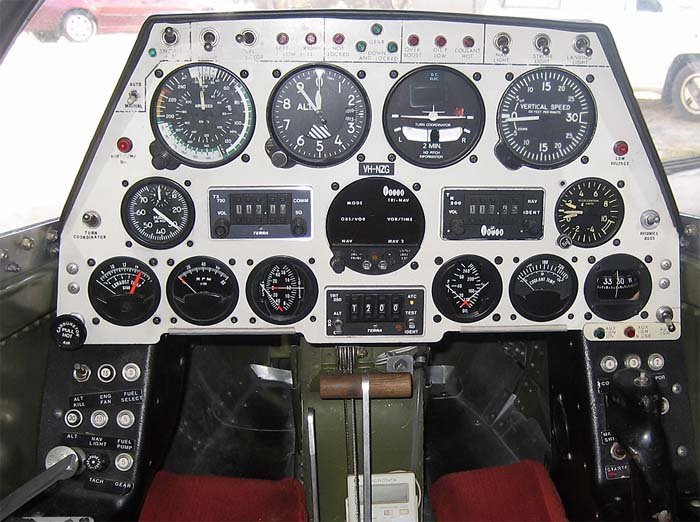 BD-5 Micro |
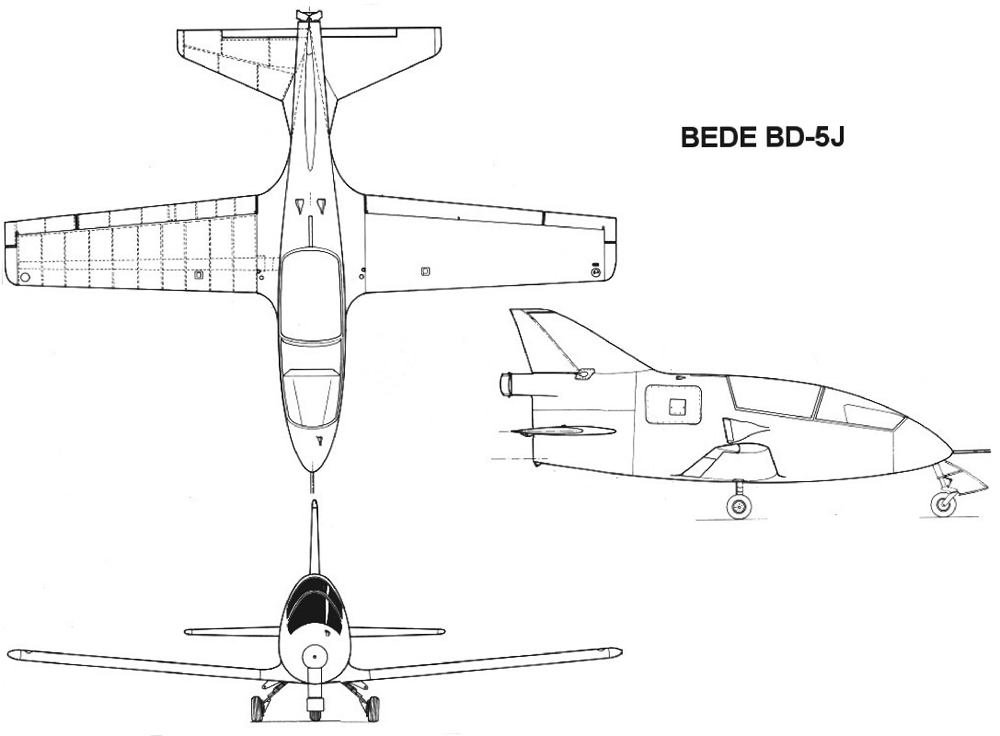 BD-5 Micro |
ArchivoAéreo Editorial Team
A group of aviation researchers and enthusiasts dedicated to documenting and preserving global aeronautical history. All articles are reviewed to ensure historical accuracy.
Sources & Accuracy
The information presented in this technical sheet has been compiled from declassified flight manuals, historical archives, and specialized literature. While we strive for maximum accuracy, some performance data may vary depending on the specific variant or operational conditions.