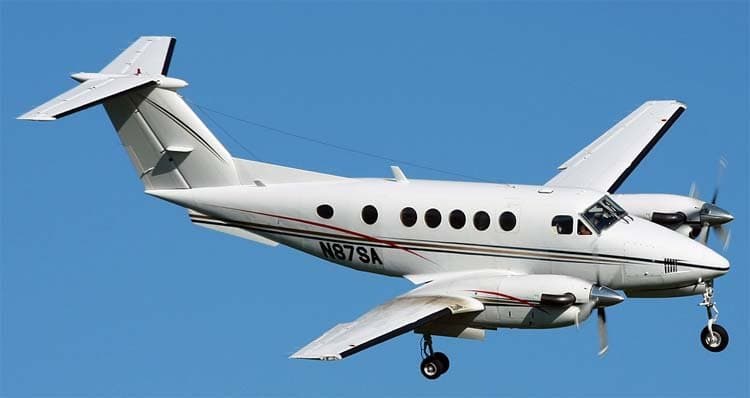
Beech 200 Super King Air
Origins and Evolution
On October 27, 1972, Beech flew the prototype of a new, improved aircraft in the King Air family, designated the Beech Model 200 Super King Air. It differed from the Model 100 King Air with an increased wingspan, a T-tail, and an enhanced fuel capacity to support more powerful Pratt & Whitney PT6A-41 turboprop engines, allowing for flights with greater loads.
In March 1981, the basic Model 200 was replaced by the Model B200, which featured improved cruising and altitude performance thanks to its PT6A-42 turboprops. The Model B200 remained in production through the late 1990s.
Variants and Specialized Applications
The Super King Air series includes various sub-variants. The Model B200C features a cargo door on the left side in the aft cabin, while the B200SE is a special variant equipped with a Collins EFIS (Electronic Flight Information System) avionics suite and an autopilot. Other models, such as the B200T, allow for the installation of removable wingtip fuel tanks, increasing the wingspan to 16.92 meters, and the B200CT combines both the cargo door and wingtip tanks.
There were also versions adapted for specific missions, including two aircraft specially equipped for the French Geographic National Institute for high-altitude aerial photography and meteorological observations. A maritime patrol/multi-purpose aircraft was developed with new outer wing panels for wingtip fuel tanks, reinforced landing gear, an emergency rescue drop hatch, a spherical observation window in the aft cabin, and a search radar with a 360-degree fuselage-mounted antenna fairing. Initial orders included 13 aircraft for the Japan Coast Guard and one for the Uruguayan Navy.
Market Impact and Military Use
By 1995, sales of the Super King Air series surpassed 1,500 units. Although most machines were intended for the civil market, approximately 350 aircraft were acquired by the US Air Force and other countries. Some aircraft perform special tasks; for example, in 1997, the Argentine Navy purchased three “Cormoran” equipped with a Bendix RDR-1500 surveillance radar for coastal patrolling.
Later models include a 2009 production version with a Collins Pro Line 21 cockpit and PT6A-52 engines, as well as a Super King Air B200 variant for private airlines, accommodating up to 13 passengers and potentially featuring an additional baggage compartment in the lower fuselage. In mid-1975, Beech also announced it would test a Model 200 prototype with two Pratt & Whitney JT15D turbofan engines.
Technical Specifications
| Modification | B200 |
| Wingspan, m | 16.61 |
| Aircraft length, m | 13.34 |
| Aircraft height, m | 4.57 |
| Wing area, m2 | 28.15 |
| Empty weight | 3419 |
| Maximum takeoff weight | 5670 |
| Engine type | 2 Turboprop Pratt Whitney Aircraft Canada PT6A-42 |
| Power, hp | 2 x 850 |
| Maximum speed, km/h | 545 |
| Cruising speed, km/h | 523 |
| Economical speed, km/h | 475 |
| Practical range, km | 3756 |
| Service ceiling, m | 10670 |
| Crew | 1 |
| Payload | up to 15 passengers or 907 kg of cargo |
Image and diagram gallery of the Beech 200 Super King Air
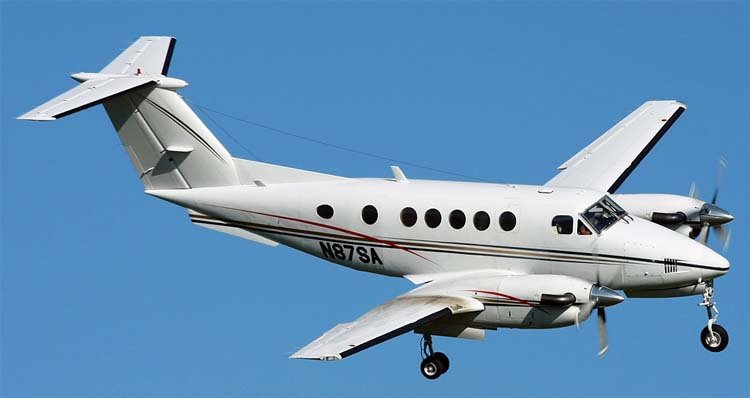 Beech 200 Super King Air |
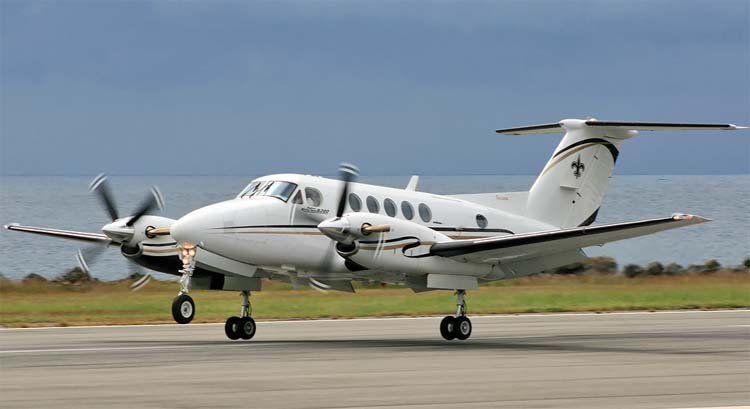 Beech 200 Super King Air |
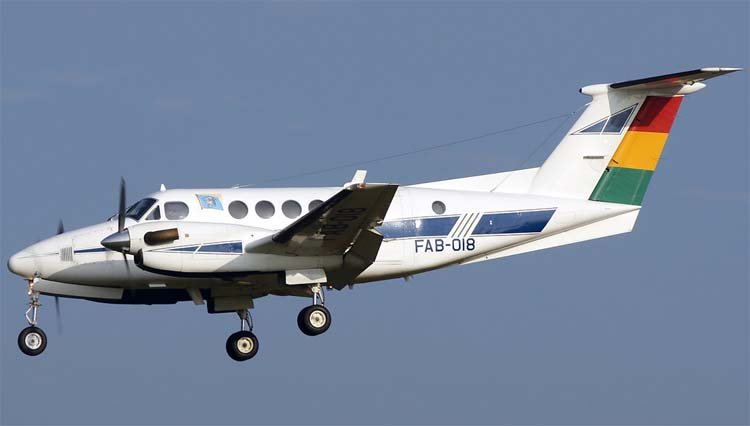 Beech 200 Super King Air |
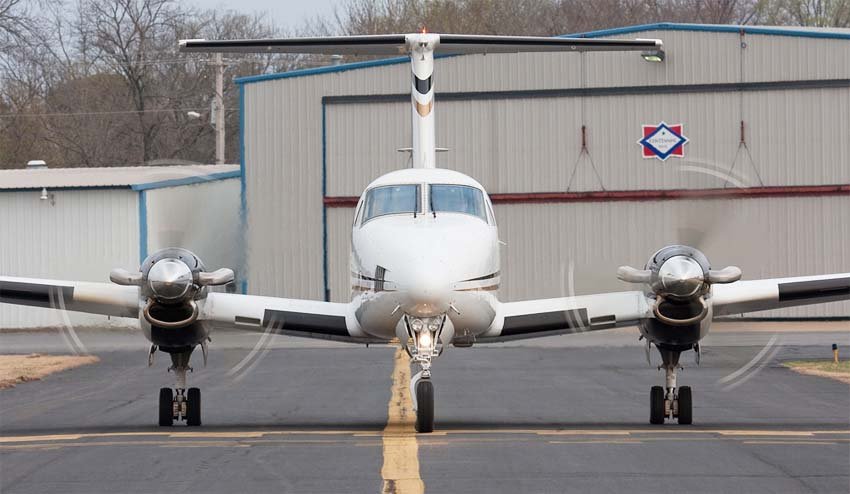 Beech 200 Super King Air |
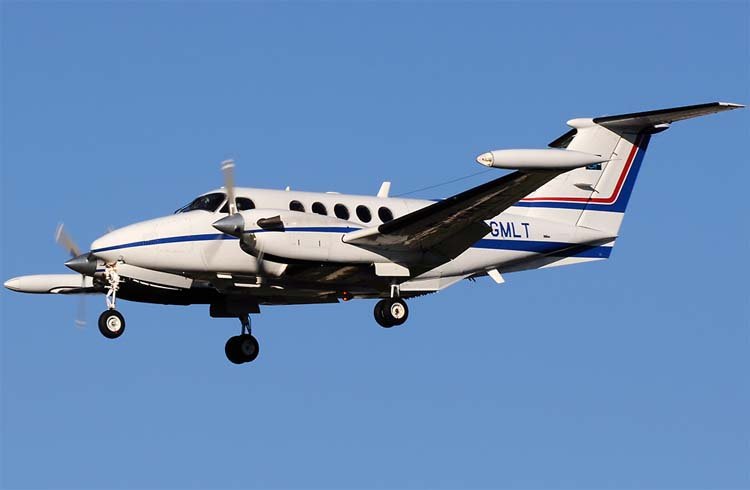 Beech 200 Super King Air |
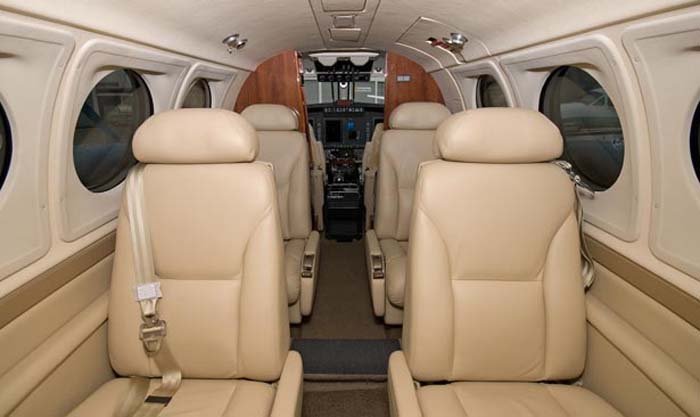 Beech 200 Super King Air |
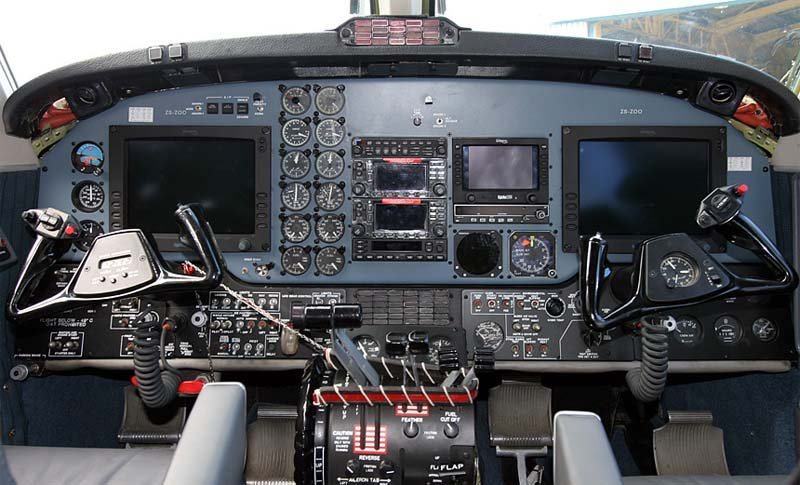 Beech 200 Super King Air |
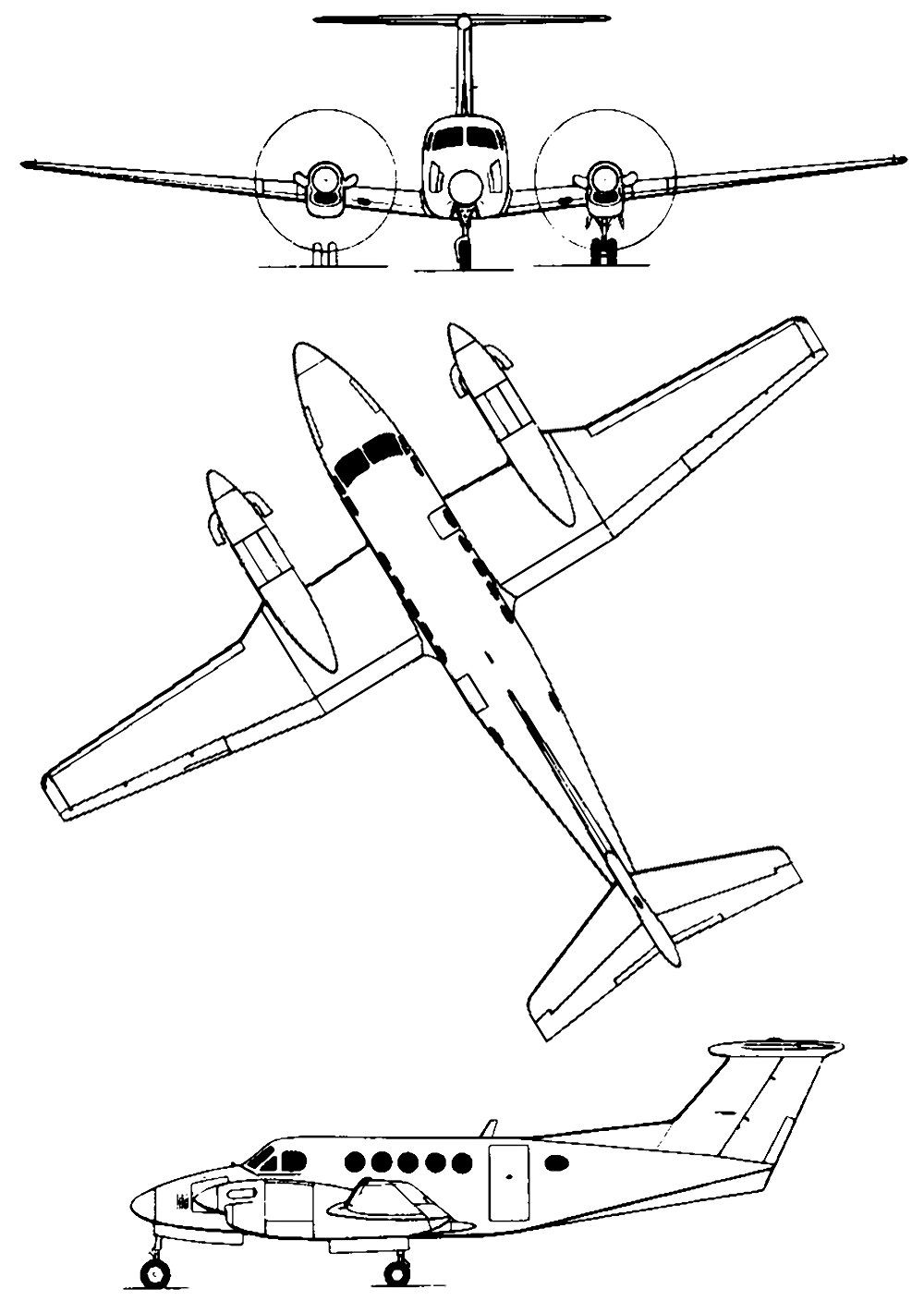 Beech 200 Super King Air |
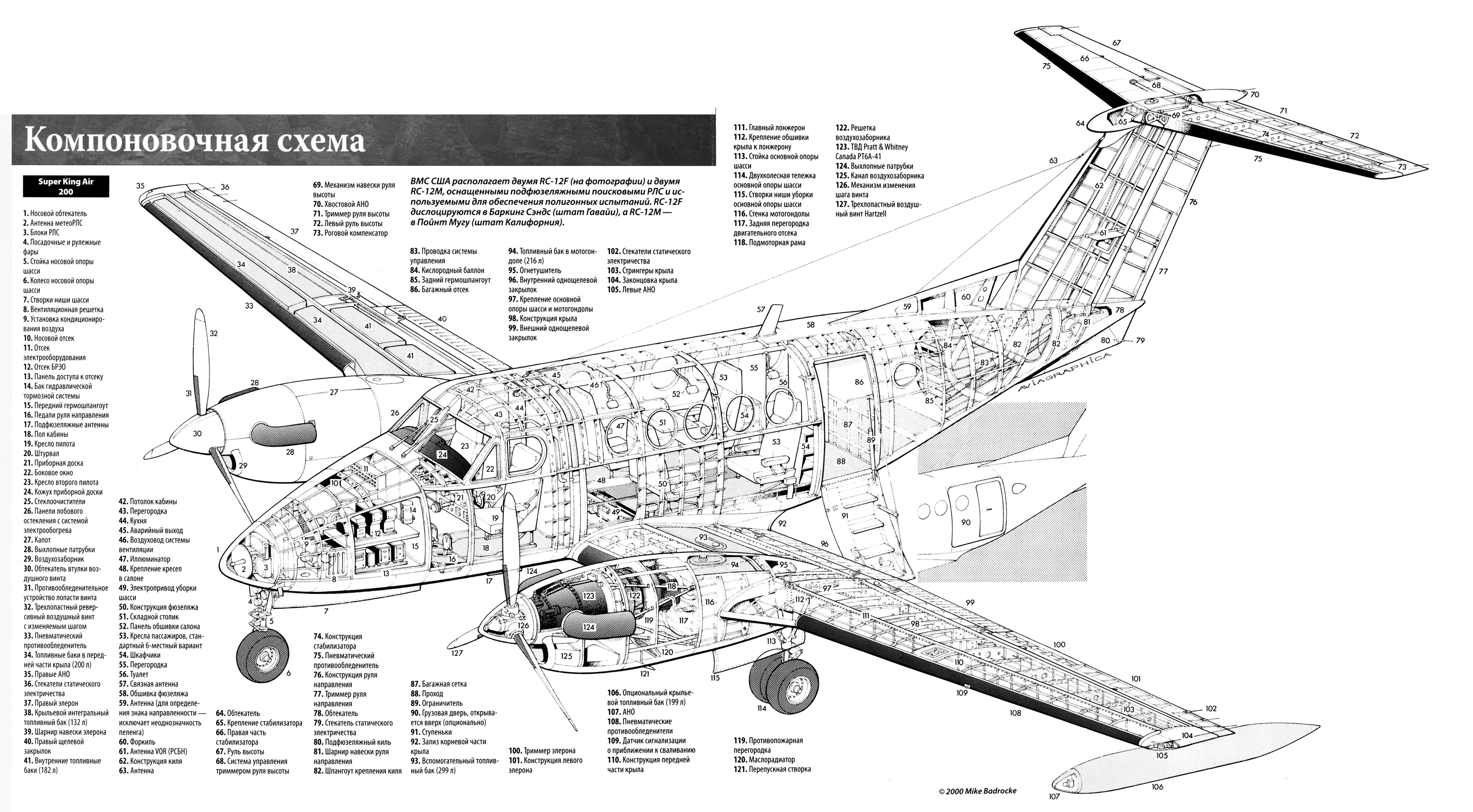 Beech 200 Super King Air |
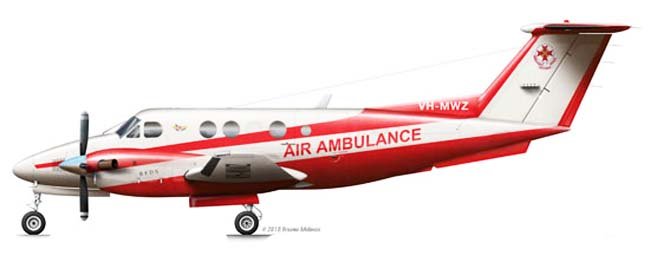 Beech 200 Super King Air |
ArchivoAéreo Editorial Team
A group of aviation researchers and enthusiasts dedicated to documenting and preserving global aeronautical history. All articles are reviewed to ensure historical accuracy.
Sources & Accuracy
The information presented in this technical sheet has been compiled from declassified flight manuals, historical archives, and specialized literature. While we strive for maximum accuracy, some performance data may vary depending on the specific variant or operational conditions.