Beech 50 Twin Bonanza
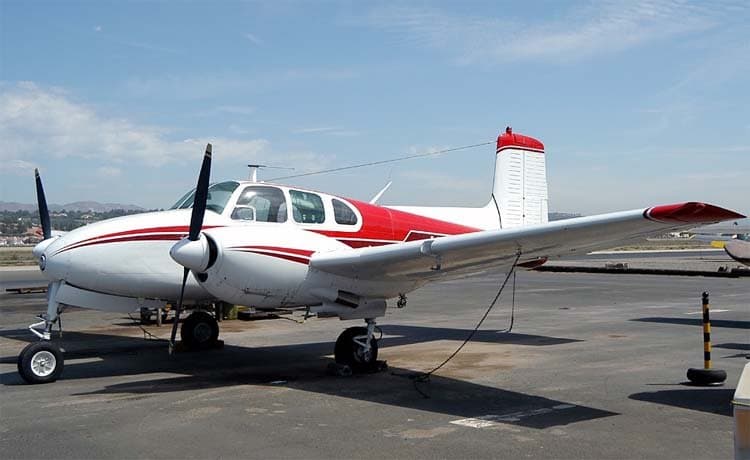
The prototype Model 50 Twin Bonanza made its first flight on November 15, 1949. Long before receiving its civilian airworthiness certificate, it performed a promotional tour of U.S. Air Force bases, as the company was anticipating military orders. The Twin Bonanza became the first light twin-engine aircraft designed in the USA after World War II.
It was designed to carry five passengers with a crew of one pilot. The Model 50 was an all-metal low-wing monoplane with a slotted-flapped wing, conventional tail, retractable tricycle landing gear, and two Avco Lycoming GO-435-C2 six-cylinder piston engines.
Origins and Civil Development
In 1963, shortly before the end of serial production of the basic model, the “Beech” company launched a promotional campaign for the Model D50E Twin Bonanza modification. This aircraft incorporated 12 years of operational experience, increasing passenger capacity to six and installing GO-480-G2F6 engines rated at 340 hp each.
Concurrently, starting in 1960, the Model J50 Twin Bonanza modification was built with two supercharged IGSO-480-A1B6 engines.
U.S. Army Military Adoption
In 1951, the U.S. Army turned its attention to light transport aircraft capable of operating in any region of the world. For economic reasons, the aircraft was chosen from existing machines rather than being designed anew. After a thorough analysis of proposals for evaluation tests, the military acquired four Twin Bonanza aircraft, designated YL-23.
The first of these was delivered to the customer on January 30, 1952. The tests were successful, after which a contract was concluded with the “Beech” company for the construction of 55 L-23A aircraft with Avco Lycoming O-435-17 engines. These were followed by 40 L-23B machines, which differed from their predecessors only by having metal, rather than wooden, propellers. A single XL-23C aircraft was intended for evaluation tests by the U.S. Air Force.
Military Variants and Redesignation
In November 1956, U.S. Army aviation received the first of 83 L-23D aircraft, developed based on the civil Model E50 (Model J50) variant with supercharged engines. All surviving L-23A and L-23B aircraft were upgraded to L-23D standard. From 1958-1960, U.S. Army aviation also received 20 RL-23D reconnaissance variants, identical to the L-23D except for their onboard equipment.
The final military variant was the L-23E, built in six units and equivalent to the civil Model E50. In 1963, a new aircraft designation system was introduced in the USA, after which the L-23D, RL-23D, and L-23E aircraft were designated U-8D, RU-8D, and U-8E, respectively, and also received the name Seminole.
Technical Specifications
| Modification | E50 |
| Wingspan, m | 13. 78 |
| Aircraft length, m | 9. 61 |
| Aircraft height, m | 3. 51 |
| Wing area, m2 | 25. 70 |
| Empty weight | 2270 |
| Maximum takeoff weight | 3311 |
| Engine type | 2 Piston engines Lycoming GSO-480-B1B6 |
| Power, hp | 2 x 340 |
| Maximum speed, km/h | 366 |
| Cruising speed, km/h | 290 |
| Practical range, km | 1600 |
| Maximum rate of climb, m/min | 492 |
| Practical ceiling, m | 9144 |
| Crew, crew members | 1-2 |
| Payload: | 5 passengers |
Image and diagram gallery of the Beech 50 Twin Bonanza
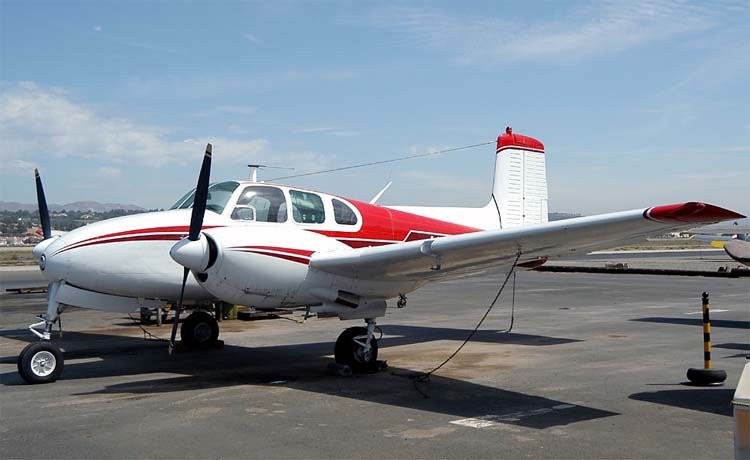 Beech 50 Twin Bonanza |
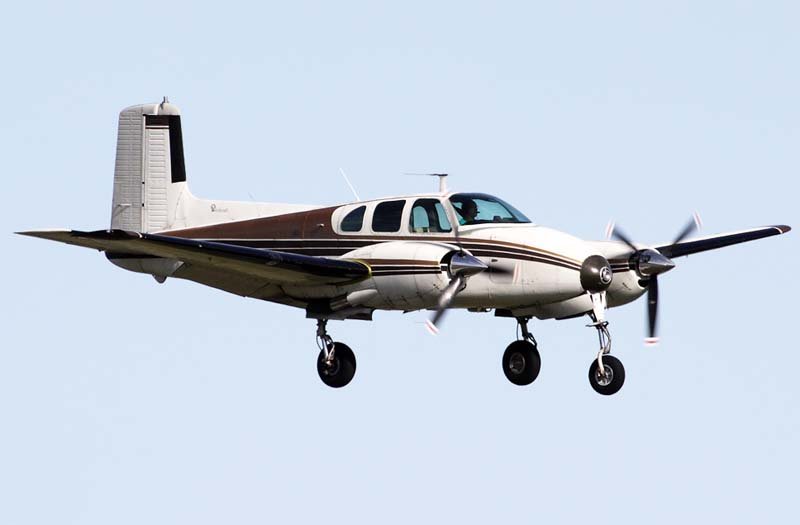 Beech 50 Twin Bonanza |
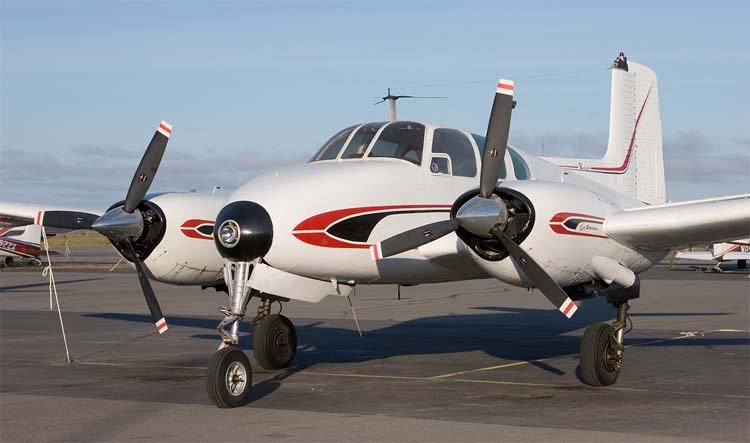 Beech 50 Twin Bonanza |
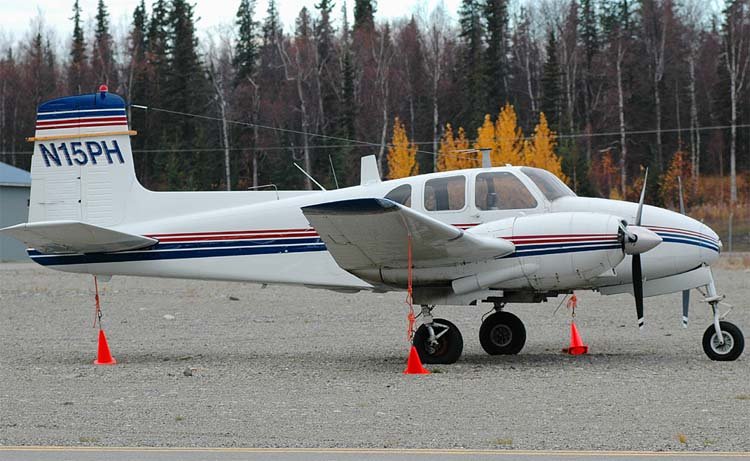 Beech 50 Twin Bonanza |
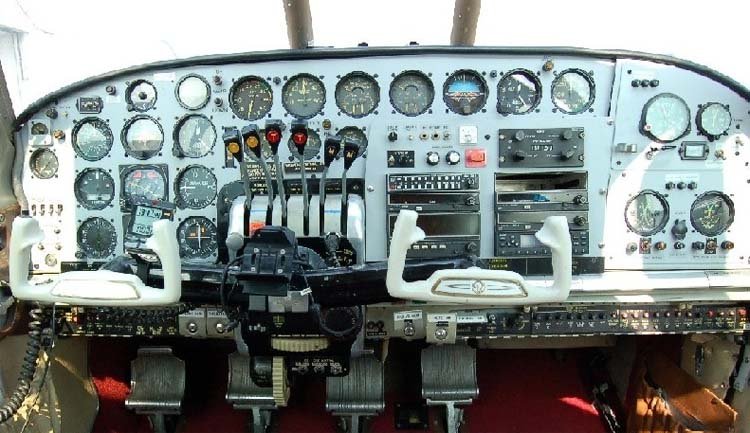 Beech 50 Twin Bonanza |
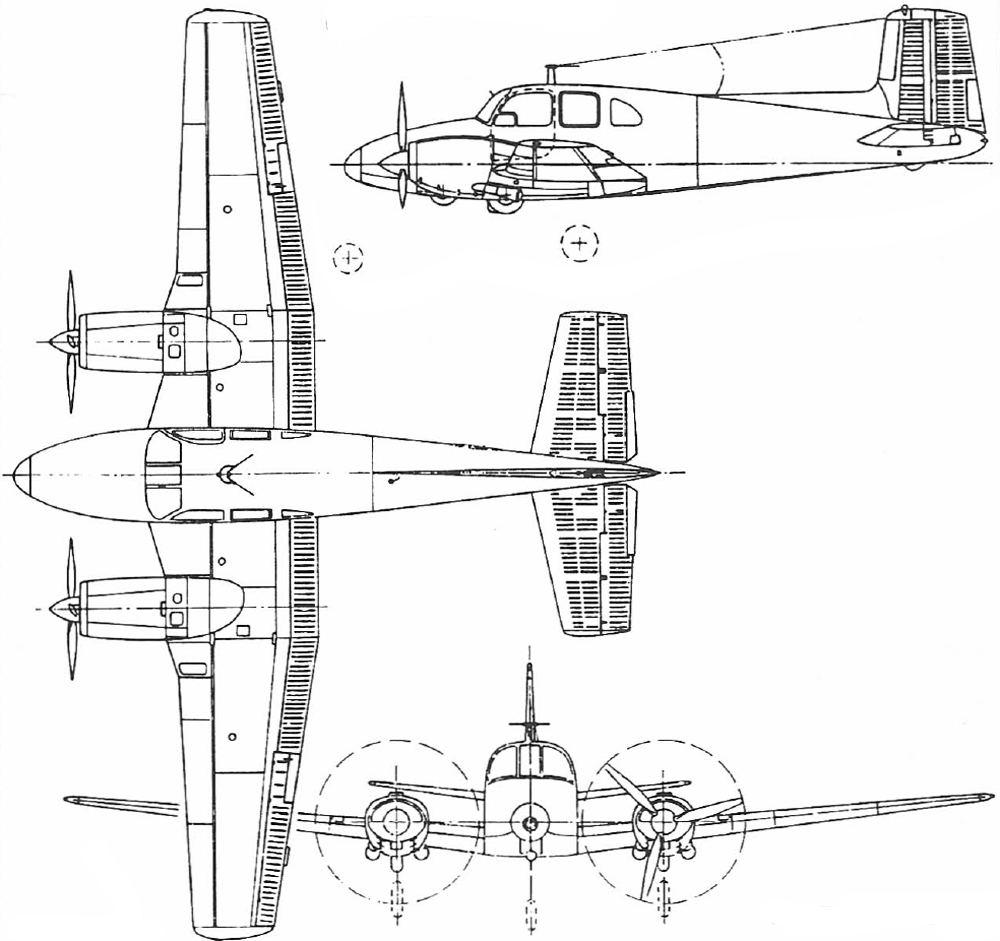 Beech 50 Twin Bonanza |
ArchivoAéreo Editorial Team
A group of aviation researchers and enthusiasts dedicated to documenting and preserving global aeronautical history. All articles are reviewed to ensure historical accuracy.
Sources & Accuracy
The information presented in this technical sheet has been compiled from declassified flight manuals, historical archives, and specialized literature. While we strive for maximum accuracy, some performance data may vary depending on the specific variant or operational conditions.