Beech 90 King Air
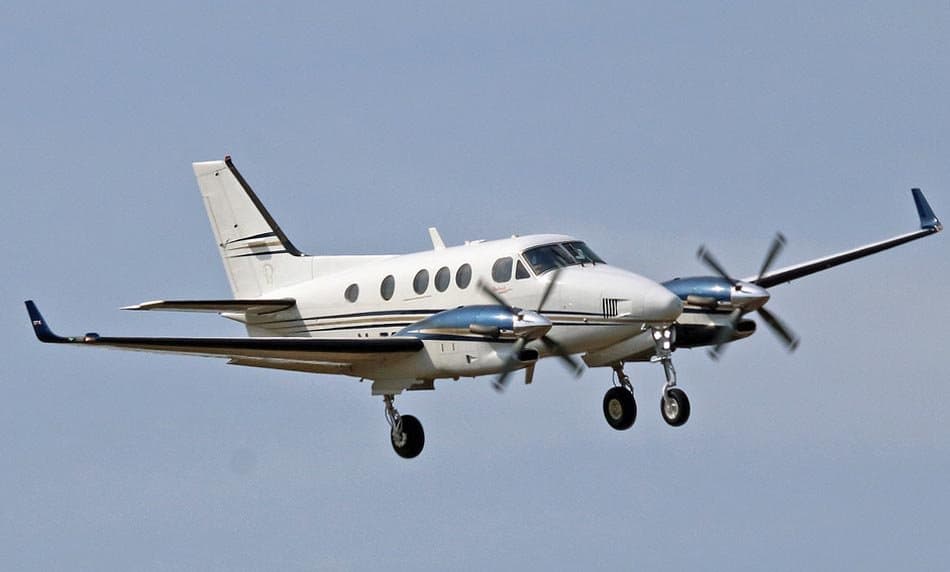
The Beech Model 90 King Air is a light multi-purpose aircraft developed by the American firm Beech Aircraft. In 1963, Beech began flight tests of an aircraft that would later be designated the Beech Queen Air Model 65-80. It was conceived as a continuation of the Queen Air family of aircraft and was developed for the U.S. Army as a staff or general-purpose transport aircraft.
Its initial designation could lead to some confusion, as models 65 and 80 Queen Air were still in production. Therefore, the aircraft was temporarily designated Model 65-90T (the letter ‘T’ stood for “turboprop engine”). Subsequently, another step was taken to clarify the situation, and all Queen Air aircraft with turboprop engines were renamed King Air.
Origins and King Air Prototype
As a result, the 65-90T aircraft became the prototype for the Beech Model 90 King Air series, more precisely, the prototype for unpressurized military King Air aircraft. After the first flight of the 65-90T model, a civilian variant with a pressurized cabin was designed, whose production model, under the designation Model 90 King Air, made its first flight on January 20, 1964.
These aircraft initiated a series of over three thousand King Air aircraft. Tests of the 65-90T model, conducted by the U.S. Army (where it was designated NU-8F), showed its full compliance with all requirements. This led to an initial order for 48 machines under the designation U-21A.
The aircraft could accommodate a crew of two and 10 military personnel, or 6 to 8 command staff, or three stretchers. The seats were easily removable, freeing up space for cargo weighing up to 1361 kg. The first deliveries of serial U-21A Ute aircraft began on May 16, 1967. As a result of subsequent contracts, over 160 machines were built.
Military and Civilian Variants
These included U-21A models, RU-21A/RU-21D models with Pratt & Whitney Canada PT6A-20 turboprop engines generating 550 hp, and RU-21B/RU-21C/RU-21E models with PT6A-29 engines generating 620 hp. The RU-21 was designed specifically for use in Southeast Asia as an electronic reconnaissance aircraft.
It featured a set of antennas and sensors on the fuselage, and inside, corresponding electronic avionics equipment and navigation and communication systems, ensuring all-weather operation. The RU-21B and RU-21C had Beech designations Model 65-A90-2 and Model 65-A90-3, respectively, and the designation U-21G was assigned to 17 aircraft intended for the U.S. Air Force, which were similar to the U-21A aircraft.
Deliveries of the civilian 90 King Air variant, featuring a pressurized cabin and 10 seats (including the pilot), began in late 1964. In early 1966, this aircraft was superseded by the King Air A90 model, which was fitted with more powerful PT6A-20 engines. One of these aircraft was used by the military under the designation VC-6A.
Evolution of the 90 Series
The A90 model was followed by the King Air B90, which had minor improvements, and in September 1970, the King Air C90, which featured more advanced cabin air conditioning and heating systems. The C90 remained in serial production until 1982, with about 1000 of these machines produced. One of them, under the designation VC-6B, also served with the U.S. Air Force. Since its appearance, the C90 was constantly improved, with PT6A-21 engines installed.
In early summer 1972, the King Air E90 model appeared, marking the beginning of the expansion of the King Air 90 aircraft family. Largely similar to its predecessor, it had more powerful PT6A-28 turboprop engines with an effective power of 550 hp and remained in serial production until 1990. In 1976, Beech Aircraft entered into a contract with the U.S. Navy for an advanced trainer aircraft under the designation T-44A, which combined characteristics of the C90 and E90 models.
The last in this aircraft family was the Model F90 Super King Air, deliveries of which began in mid-1979. It combined the pressurized fuselage of the 90 model with the wing and tail sections of the 100 and 200 models, respectively. Thrust was generated by two PT6A-135 engines, which drove four-blade, low-RPM propellers, ensuring a much lower noise level in the cabin. When production of the F90 ended at the 231st machine, construction of the C90 model continued. By early 1989, 1415 examples of this aircraft with a low-mounted horizontal stabilizer had been delivered.
Technical Specifications
| Modification | B90 |
| Wingspan, m | 13.99 |
| Aircraft length, m | 12.13 |
| Aircraft height, m | 4.60 |
| Wing area, m2 | 25.98 |
| Empty weight | 2971 |
| Maximum takeoff weight | 4966 |
| Engine type | 2 Turboprop Pratt Whitney Canada PT6A-21 |
| Power, hp | 2 x 750 |
| Maximum speed, km/h | 560 |
| Cruising speed, km/h | 495 |
| Economical speed, km/h | 405 |
| Practical range, km | 2920 |
| Practical ceiling, m | 9085 |
| Crew, crew members | 1 |
| Payload | 6-9 passengers |
Image and diagram gallery of the Beech 90 King Air
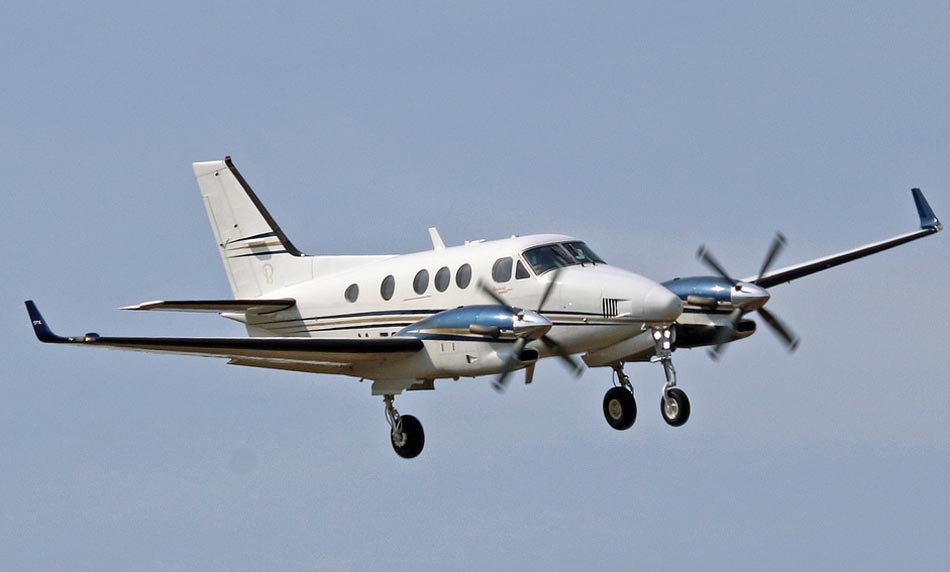 Beech 90 King Air |
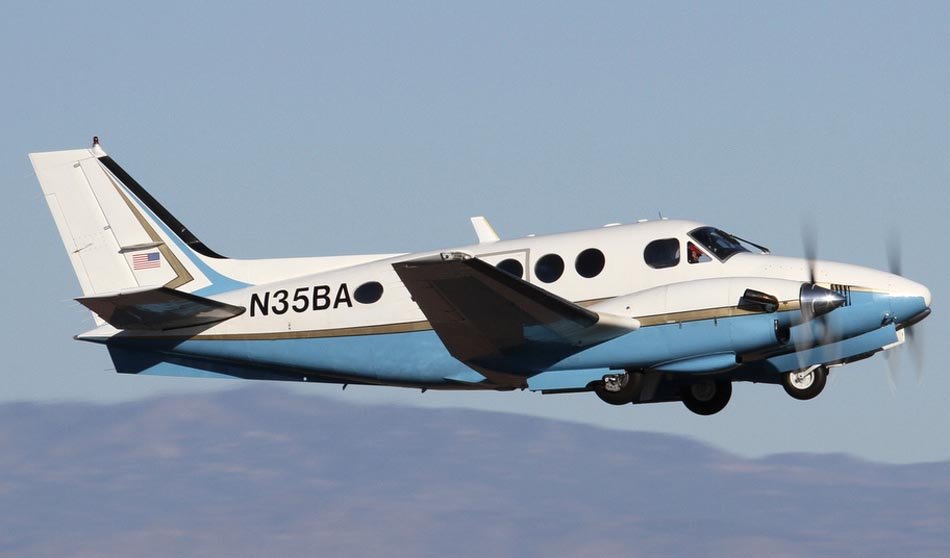 Beech 90 King Air |
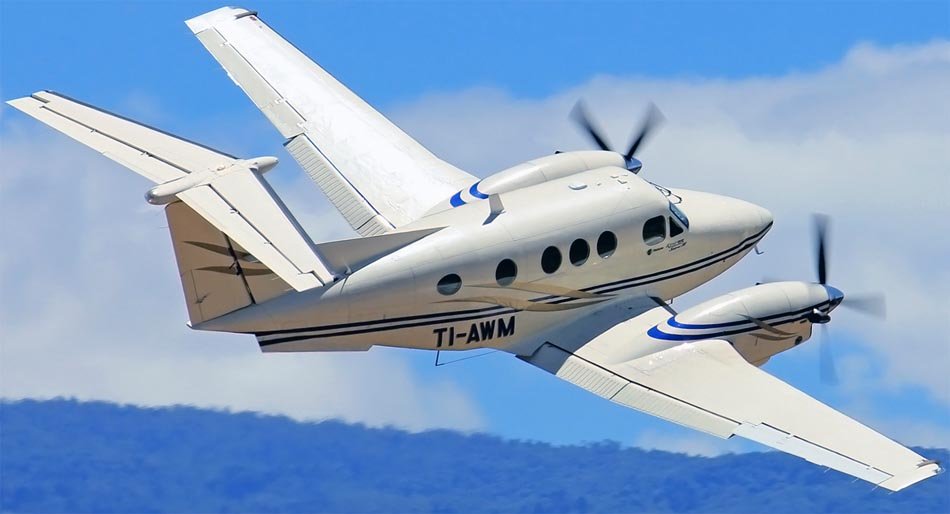 Beech 90 King Air |
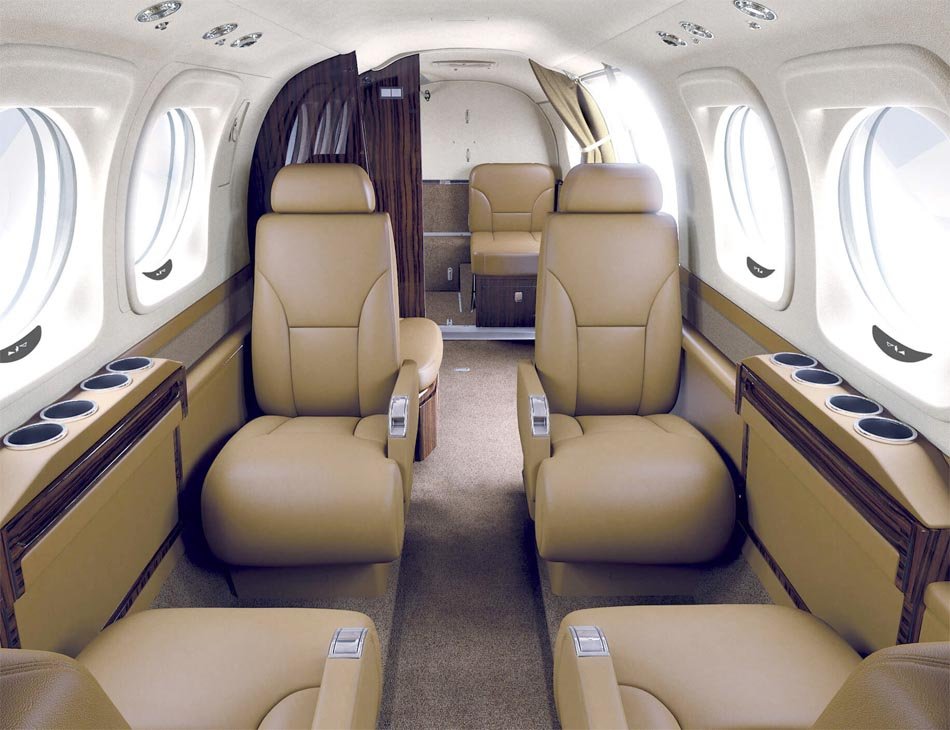 Beech 90 King Air |
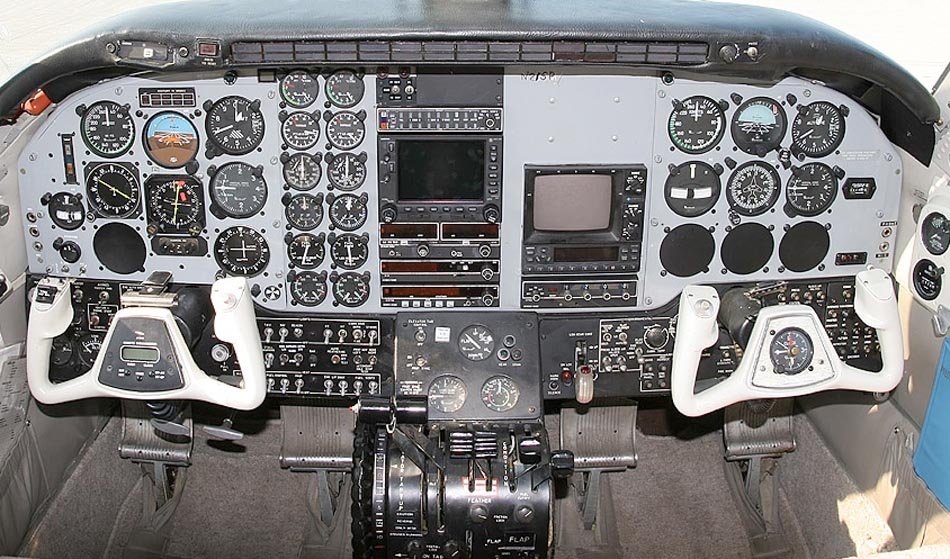 Beech 90 King Air |
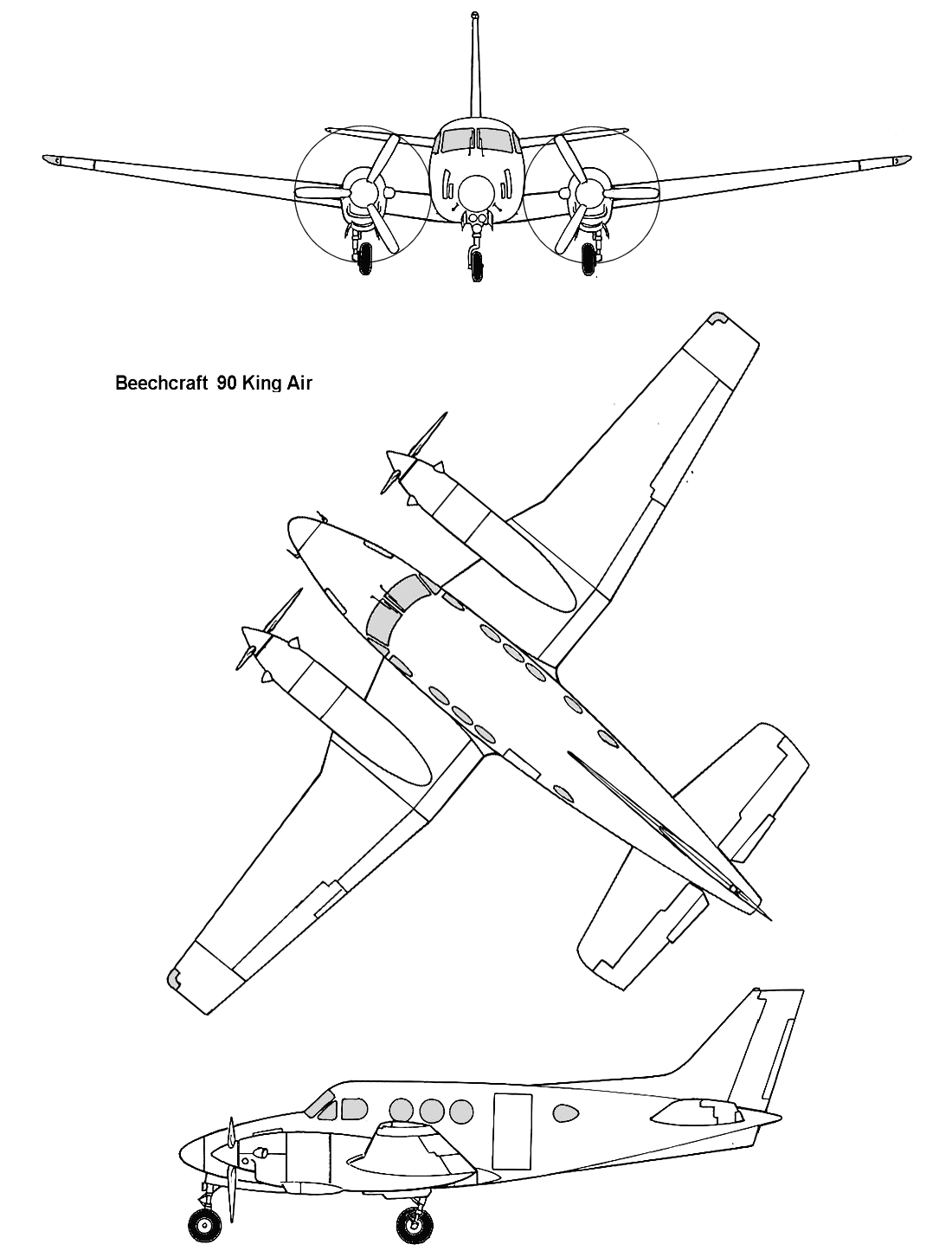 Beech 90 King Air |
ArchivoAéreo Editorial Team
A group of aviation researchers and enthusiasts dedicated to documenting and preserving global aeronautical history. All articles are reviewed to ensure historical accuracy.
Sources & Accuracy
The information presented in this technical sheet has been compiled from declassified flight manuals, historical archives, and specialized literature. While we strive for maximum accuracy, some performance data may vary depending on the specific variant or operational conditions.