Bell 430
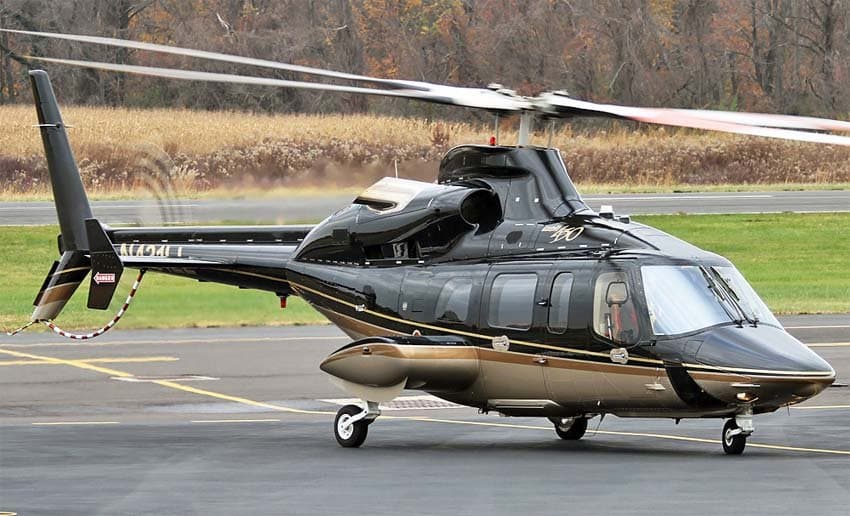
The helicopter, equipped with new Bell engines, was designated “230”. With the fuselage extended and a four-bladed main rotor installed, the Bell 430 emerged. However, neither the 230 nor the 430 achieved market success; moreover, the USA ceased to dominate the European civil helicopter segment, with Eurocopter and Agusta Westland taking the leading positions.
The Bell 222 became famous for its participation in the popular 1980s TV series “Airwolf”. It was the first American-made twin-turboshaft light helicopter, developed on the wave of success of the Italian Agusta A109. However, by the end of the 1980s, the need for more radical modernization became evident than merely increasing the main rotor diameter on the Bell 222B in 1981.
History and Development
In 1991, a Bell 222B equipped with Allison 250-C30G2 turboshafts, installed instead of AlliedSignal LTS101s, took to the air. This variant received certification in March 1992, and the first production Bell Model 230 was delivered to a customer in November of the same year. Production of the Model 230 continued until 1995, with a total of 38 helicopters built.
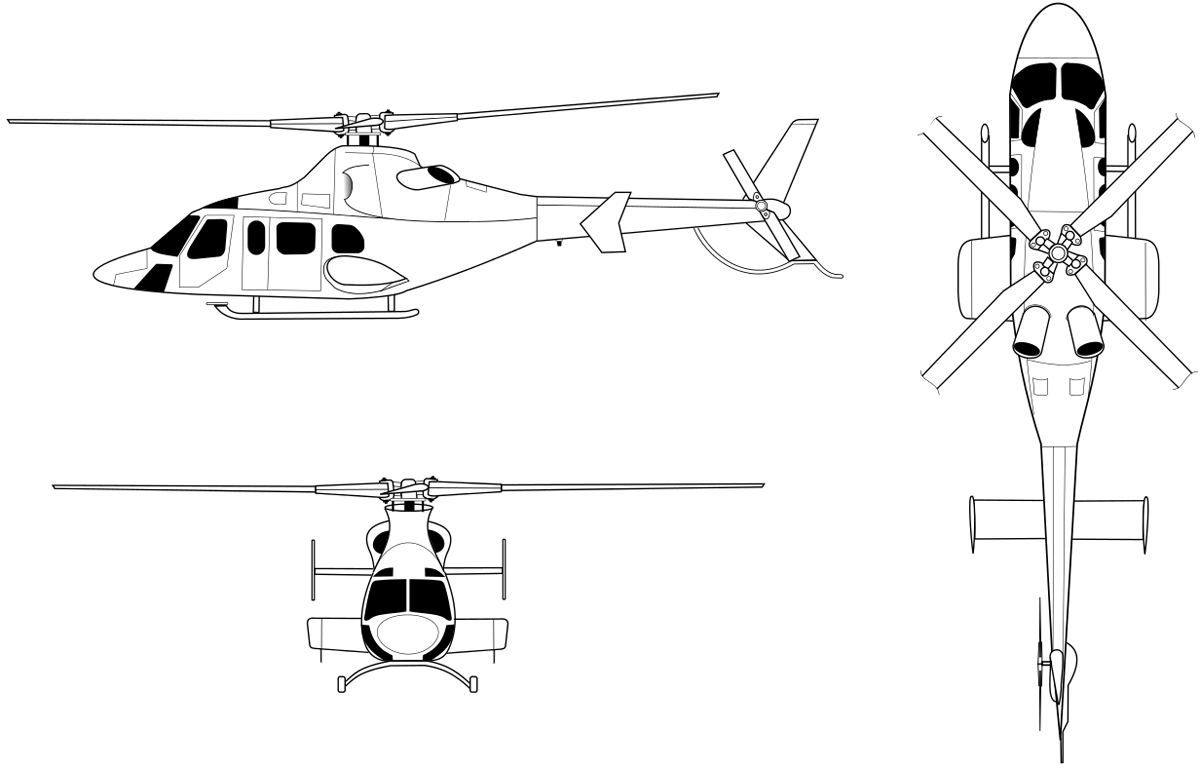
Development of the 430 began in 1991. It differed from the Model 230 by an extended cabin with two additional seats (provision was made for an additional porthole). The most significant difference of the 430 was its four-bladed main rotor (the 230 had a two-bladed one). The power plant is 10% more powerful than the 230’s, allowing the helicopter to operate with a maximum takeoff weight 408 kg greater. The helicopter made its first flight on October 25, 1994.
Cabin Comfort and Technology
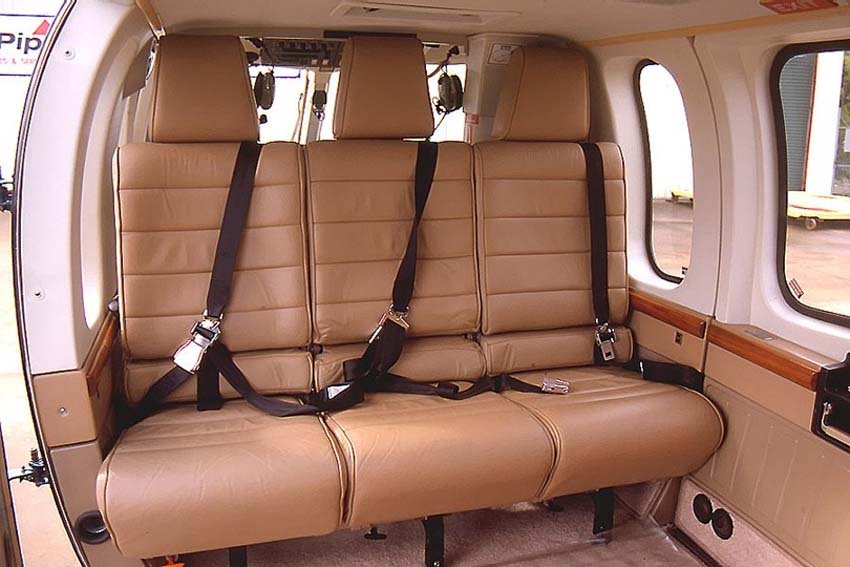
The stylish, spacious cabin of the Bell 430 can accommodate up to 7 people: 2 rows of 3 people face-to-face, and one in the prestigious co-pilot’s seat on the left side of the cockpit. However, the most representative club configuration, with the middle seat backs lowered as armrests, allows for 2 pilots and up to 4 VIP passengers.
The fuselage is manufactured using a special technology that reduces cabin noise, and it is also equipped with additional exclusive thermal and sound insulation. A spacious, separate luggage compartment allows you to bring your belongings without literally sitting on them during flight, as is sometimes the case with other helicopters.
A specially designed additional sound insulation system provides one of the quietest cabins, while the noise-compensating active noise cancellation system of Bose Series X headphones completely eliminates the specific noise traditionally associated with helicopters.
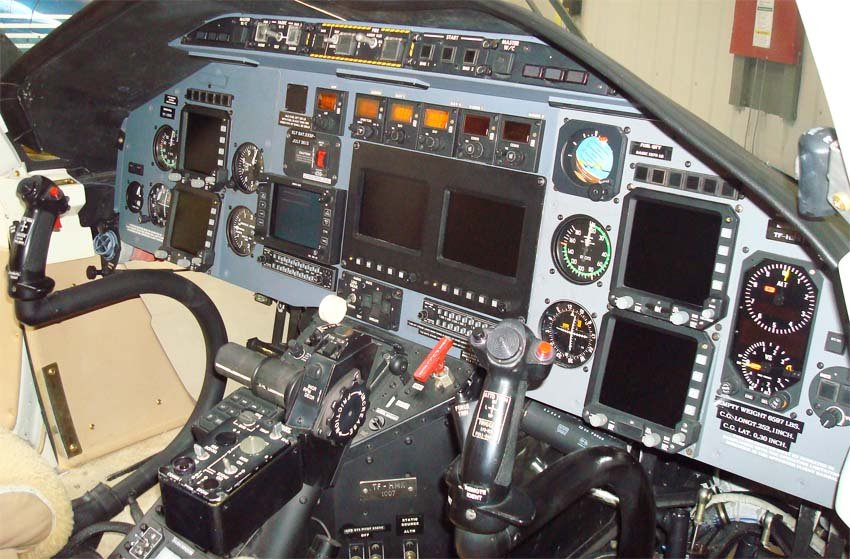
Two highly reliable Rolls Royce 250-C40B turboshaft engines not only allow speeds up to 280 km/h but also ensure continued confident flight and safe landing even on a single engine. The engines are equipped with anti-icing systems, as well as special snow and dust protection devices, safeguarding them from ingress of snow, sand, and other foreign particles from the air.
Performance and Global Operations
In 1996, the second production Bell 430, piloted by Ron Bower and John Williams, set a helicopter speed record during a flight around the Earth. The aircraft with registration N430Q covered 20,548 nautical miles in 17 days, 6 hours, 14 minutes, and 25 seconds.
The 430s were supplied to military customers and are in service in Bulgaria, the Dominican Republic, and Ecuador. Orders were also received from the University of Michigan Health System, the New York Police Department, Lee County EMS, and “Thai Minebea Aviation Co”. In India, the Bell 430 is used for transporting government officials.
In 2009, a Bell 430 crashed east of Kurnool, 70 km into the Nallamalla forest. Premier Y. S. Rajasekhara, his special secretary P. Subramaniam, security chief A. S. Weasley, and pilots Group Captain Bhati and Captain Reddy died. The helicopter wreckage and the remains of the deceased were found as a result of the largest search and rescue operation in Indian history, which even involved Indian Air Force Su-30s equipped with Lightning pods. The causes of the catastrophe could not be established.
In total, 136 Bell 430s were built before production ceased in 2008.
Technical Specifications
| Modification | Bell 430 |
| Main rotor diameter, m | 12.80 |
| Tail rotor diameter, m | 2.10 |
| Length, m | 15.30 |
| Height, m | 3.72 |
| Width, m | 2.54 |
| Empty equipped weight with wheels | 2406 |
| Empty equipped weight with skids | 2388 |
| Maximum takeoff weight | 4218 |
| Fuel capacity with wheels | 710 |
| Fuel capacity with skids | 935 |
| Engine type | 2 Rolls-Royce (Allison) 250-C40B turbine engines |
| Maximum power | 1 x 701 |
| Nominal power | 1 x 584 |
| Flight power | 1 x 521 |
| Maximum speed, km/h | 257 |
| Cruising speed, km/h | 243 |
| Range, km | 503-607 |
| Flight endurance, h.min | 3.35 |
| Service ceiling, m | 5590 |
| Hover ceiling, m | 2665 |
| Crew, crew members | 1-2 |
| Payload | 6-9 passengers in cabin or 1587 kg of cargo on sling |
Image and diagram gallery of the Bell 430
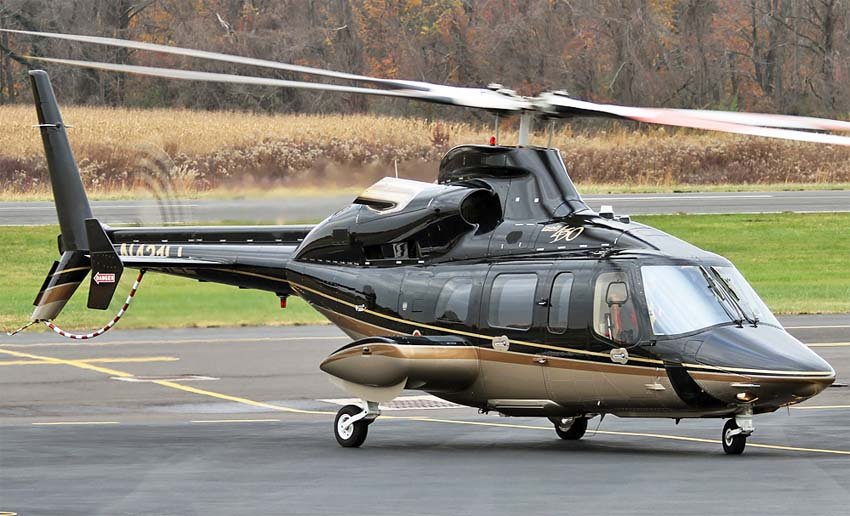 Bell 430. Photography: BillShullPhotography |
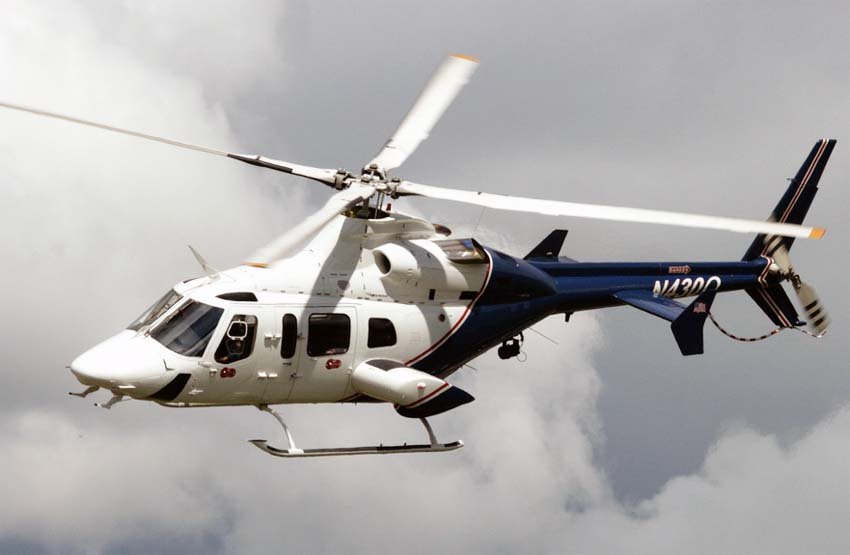 Bell 430 |
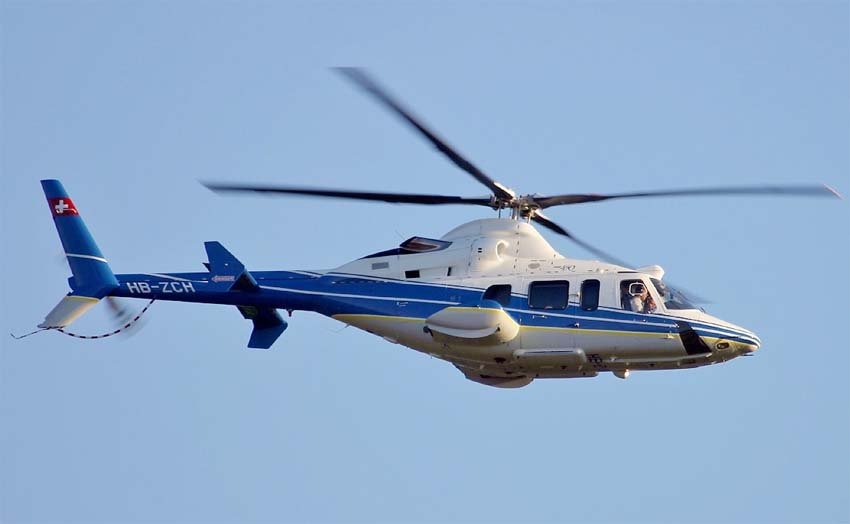 Bell 430 |
 Bell 430 |
 Bell 430 |
 Bell 430 |
 Bell 430 |
ArchivoAéreo Editorial Team
A group of aviation researchers and enthusiasts dedicated to documenting and preserving global aeronautical history. All articles are reviewed to ensure historical accuracy.
Sources & Accuracy
The information presented in this technical sheet has been compiled from declassified flight manuals, historical archives, and specialized literature. While we strive for maximum accuracy, some performance data may vary depending on the specific variant or operational conditions.