Bell 48 (H-12)
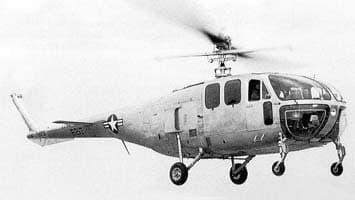
In 1946, the “Bell” company began developing a new military helicopter, which was essentially an enlarged version of the Model 47. The Model 48 machine was created based on the unsuccessful Model 42, intended for the civilian market.
Development and Early Prototypes
The U.S. Army Aviation ordered two prototypes of the five-seat XR-12, powered by a 540 hp (403 kW) Pratt & Whitney R-1340-AN-1 radial engine. There was also a slightly larger 12-seat prototype, the XR-12B (Model 48A), with a more powerful Wasp powerplant variant.
Due to a change in helicopter designations, the XR-12 and XR-12B became the XH-12 and XH-12B, respectively.
Challenges and Production Cancellation
Serious problems arose during the development process of the XR-12, leading to the cancellation of the order for 34 R-12A production aircraft. The first XR-12B was followed by 10 YR-12B (later YH-12B) with a more powerful R-1340-55 radial engine. Continued development difficulties resulted in no orders being placed for the production H-12B.
Technical Specifications
| Modification | YH-12B |
| Main rotor diameter, m | 14.48 |
| Tail rotor diameter, m | 2.59 |
| Length, m | 12.06 |
| Height, m | 3.43 |
| Maximum takeoff weight, kg | 2854 |
| Engine type | 1 Piston engine Pratt & Whitney R-1340-55 |
| Power, kW | 1 x 447 |
| Maximum speed, km/h | 168 |
| Cruising speed, km/h | 145 |
| Practical range, km | 480 |
| Rate of climb, m/min | 137 |
| Service ceiling, m | 3960 |
| Static ceiling, m | 1330 |
| Crew, crew | 1-2 |
| Payload | up to 10 passengers |
Image and diagram gallery of the Bell 48 (H-12)
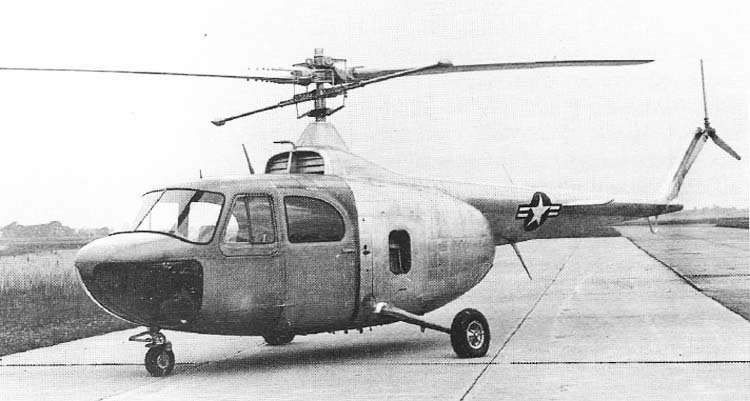 Bell 48 (H-12) |
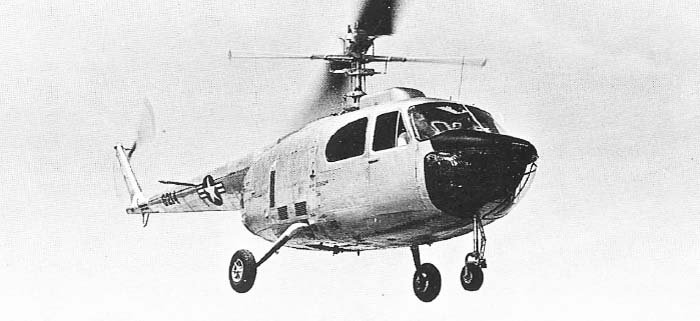 Bell 48 (H-12) |
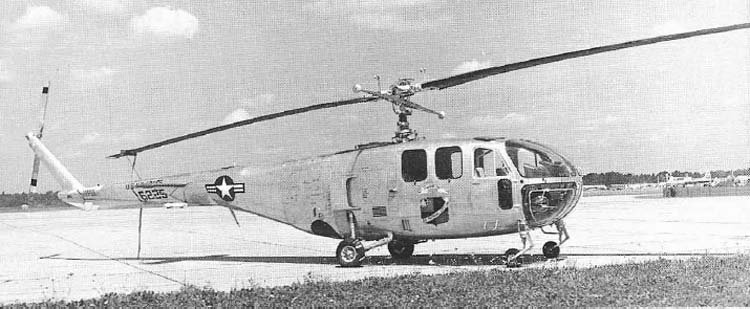 Bell 48 (H-12) |
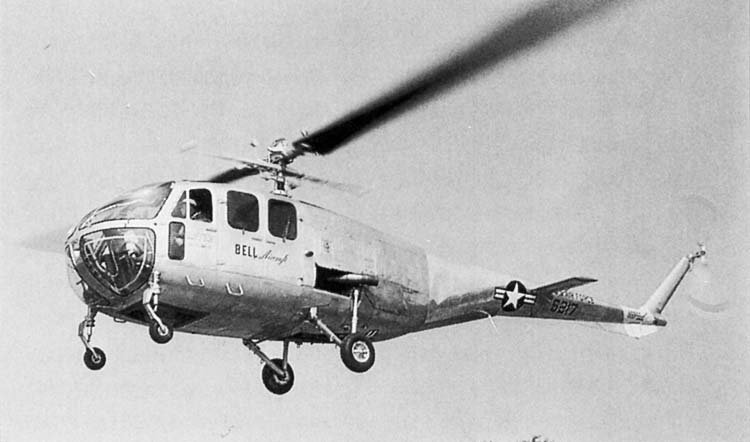 Bell 48 (H-12) |
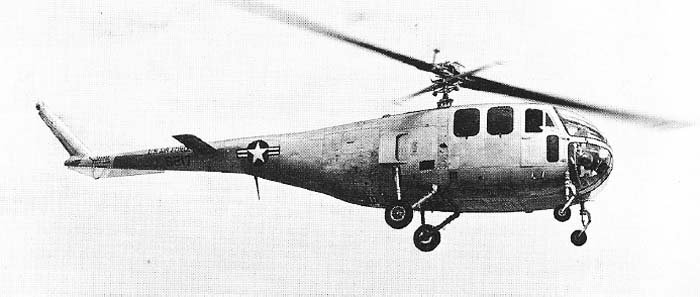 Bell 48 (H-12) |
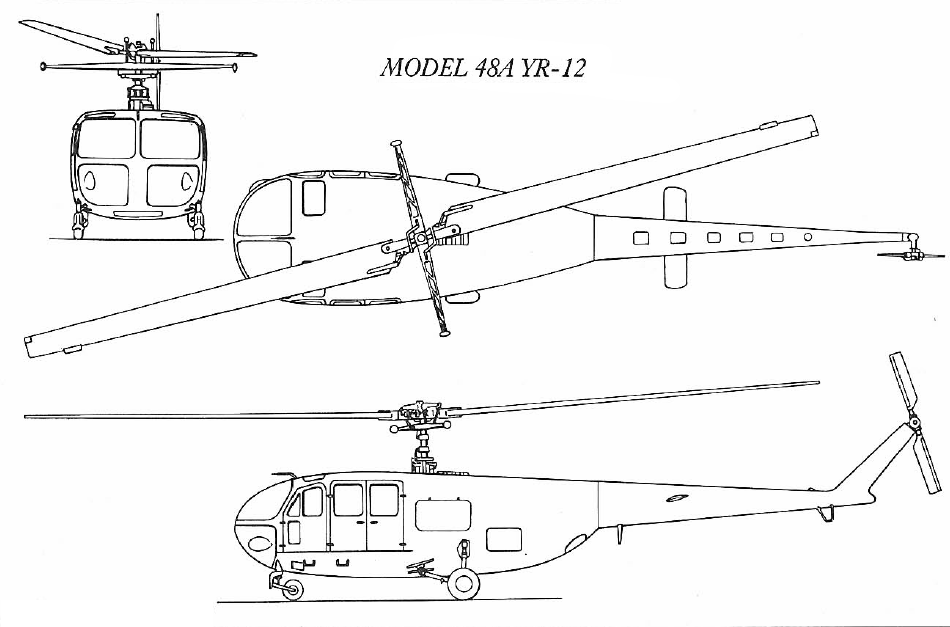 Bell 48 (H-12) |
ArchivoAéreo Editorial Team
A group of aviation researchers and enthusiasts dedicated to documenting and preserving global aeronautical history. All articles are reviewed to ensure historical accuracy.
Sources & Accuracy
The information presented in this technical sheet has been compiled from declassified flight manuals, historical archives, and specialized literature. While we strive for maximum accuracy, some performance data may vary depending on the specific variant or operational conditions.