Bf.109H
The Origin of the High-Altitude Fighter
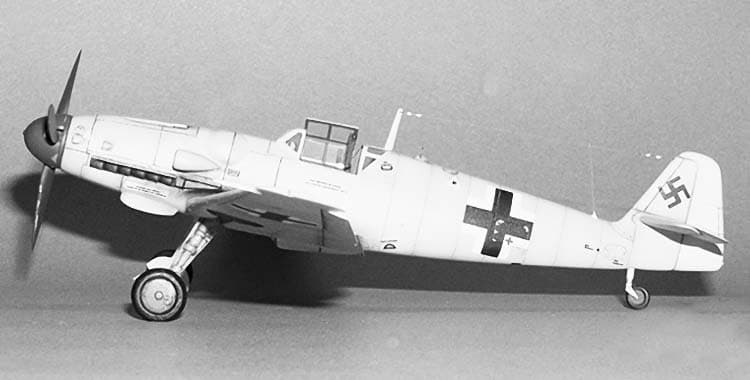
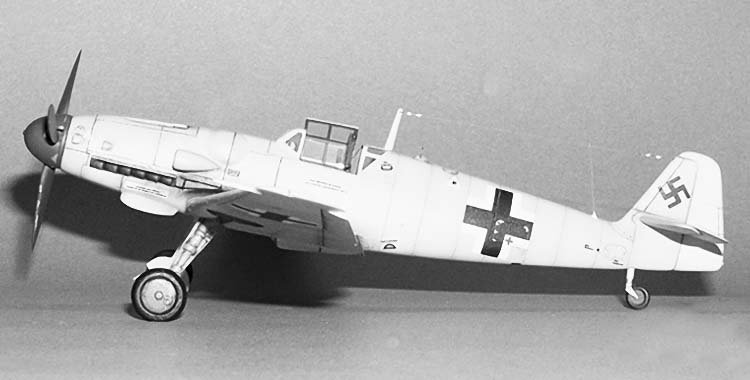
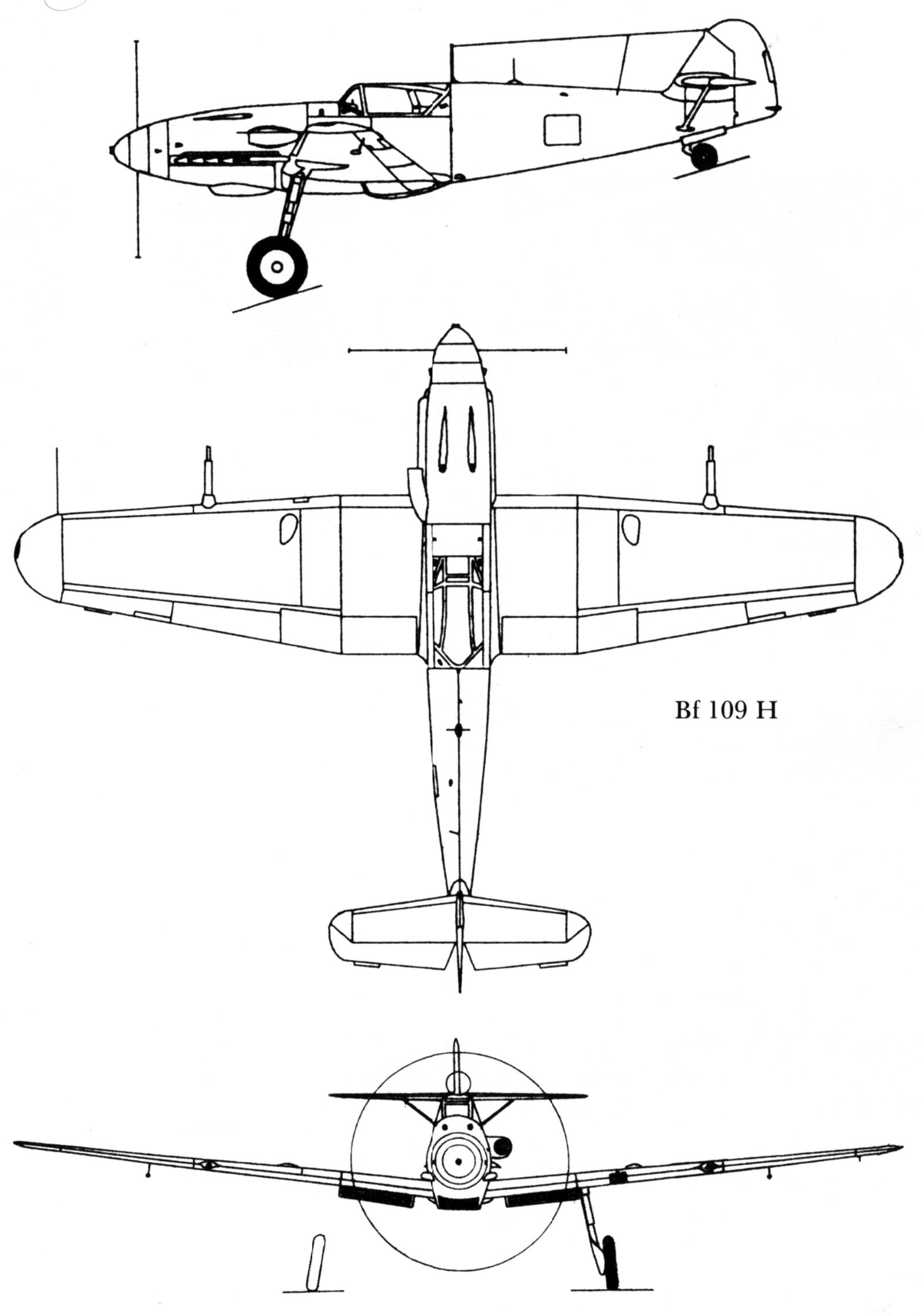
During the air war, the Luftwaffe faced an increasingly urgent task of combating high-altitude Allied bombers. As an interim, “quick” solution, which involved modernizing an existing aircraft, W. Messerschmitt proposed creating such a machine based on the “Friedrich.” The Bf 109H fighter was a Bf 109F airframe with a DB 601E engine (with an enhanced-altitude supercharger) and additional inserts in the wing panels, increasing the wingspan to 12 meters.
Concurrently, designers at Messerschmitt were developing the Me 209-II high-altitude fighter, which was intended to eventually replace the Bf 109H. However, the Technical Department of the Aviation Ministry constantly raised the bar for requirements for aircraft of this designation. In the spring of 1943, it recommended increasing its ceiling from 13,000 to 15,000 meters, which necessitated serious changes to the Bf 109H project.
On April 23, 1943, Messerschmitt designers proposed abandoning its development and focusing efforts on the Me 209-II. However, the “two hundred ninth” project required special high-altitude engines – the DB 628A or DB 603U with a TKL-15 turbocharger. According to calculations, the Me 209-II’s ceiling with such engines could reach 17,500 meters. Nevertheless, the development of new engines required a prolonged period, and the Luftwaffe needed a high-altitude fighter as soon as possible. As a result, the Technical Department made an unexpected decision: to cease development of the Me 209-II and return to the simpler and more realistic Bf 109H project, but incorporating accumulated experience, including with the DB 628 engine.
Prototypes and Technical Challenges
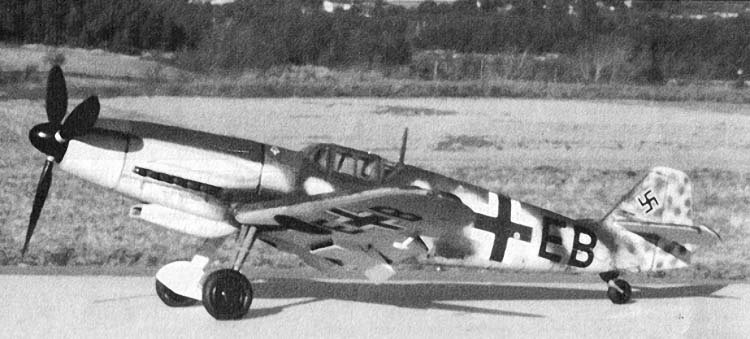
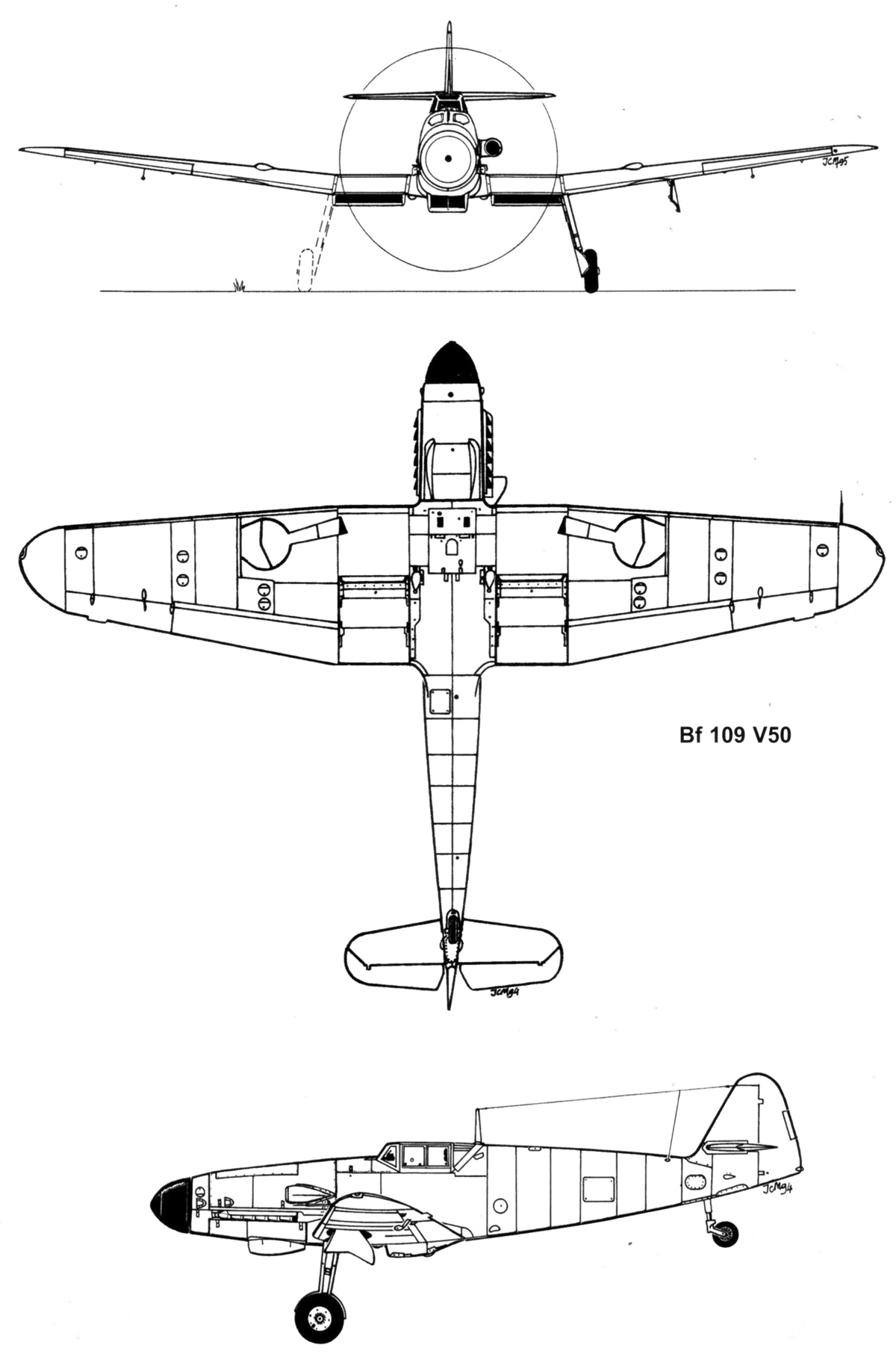
To test the powerplant with the DB 628 engine, a Bf 109G-5 airframe (serial No. 16281) was modified and designated Bf 109V49. After completing bench tests, a similar engine was installed on another Bf 109G-3 airframe (serial No. 15338). This aircraft, designated Bf 109V50, first took to the sky on May 18, 1943, piloted by Wendel.
Despite its design being close to the DB 605A, the DB 628A, with its two-stage supercharger and intercooler, was much heavier (by 170 kg) and larger. The aircraft was equipped with a ducted spinner and a propeller with widened blades, requiring the nose section to be lengthened by 0.75 meters and a counterweight to be installed in the tail. Furthermore, the wing was moved forward by 0.25 meters, and the tail surface area was increased.
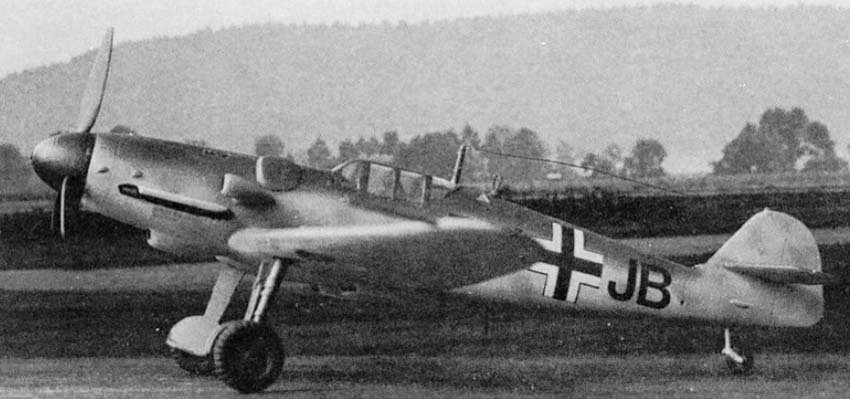
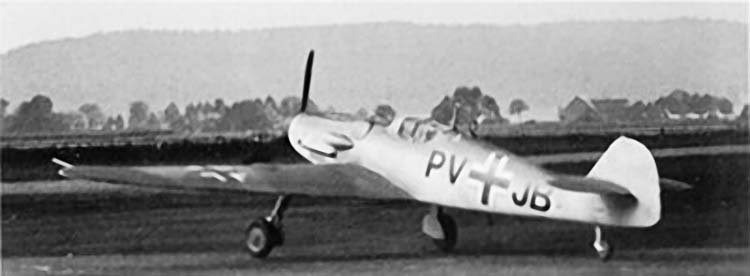
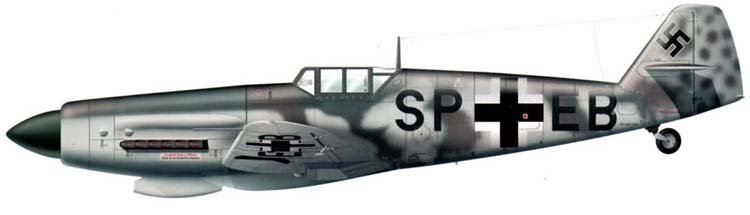
After brief trials in Augsburg, the Bf 109V50 was transferred to the “Daimler-Benz” test center in Echterdingen, where test pilots managed to reach an altitude of 15,500 meters in this machine. According to calculations, in takeoff mode, the production DB 628 engine was expected to have a power of 1,490 hp, at 2,000 meters – 1,580 hp, at 6,400 meters – 1,480 hp, at 9,600 meters – 1,350 hp, and at 12,000 meters – 1,130 hp. In July 1943, the DB 628 engine was installed on yet another Bf 109G-5, which also received an enlarged fin, a larger span wing, and the designation Bf 109V54 (DV+JB). However, it soon became clear that the refinement of the new engine was accompanied by enormous difficulties.
Operational Trials and Project Termination
In parallel, several Bf 109F-4 airframes were being converted into pre-production Bf 109H-0s. In addition to the rectangular wing sections inserted, the landing gear design was also changed, with the main struts retracting inwards. The elongated stabilizer received struts. Otherwise, the Bf 109H-0 did not differ in design from the Bf 109F-4/Z, retaining the DB 601E-1 engine with the GM-1 boosting system. Armament consisted of one 20mm MG 151 cannon and two 7.9mm MG 17 machine guns. These machines were primarily intended to study problems arising during flights near the practical ceiling and to refine high-altitude equipment.
The Bf 109H-1 aircraft, intended for military trials, were built based on Bf 109G-5 airframes with a pressurized cabin, DB 605A engine, and GM-1 system. Several Bf 109H-1s underwent military trials in early 1944 with an experimental unit based in the suburbs of Paris. Although the fighter’s flight characteristics were deemed satisfactory, and the ceiling was brought up to 14,500 meters, negative aspects of the machine also emerged. For instance, at a dive speed of 730 km/h, wing flutter began; in one flight, test pilot Wendel narrowly escaped death when the left wing panel detached. After several more test flights, further work on the Bf 109H was halted, as the choice was made in favor of the Ta 152H fighter.
On December 22, 1943, another experimental aircraft, the Bf 109V55 (serial No. 15709, DV+JC), made its first flight. It was initially designated Me 209-V6, but when the Me 209 program was closed, the machine was redesignated, making it “appear” to be the “same Bf 109H.” The fighter retained the elongated nose section of the fuselage but received a DB 605B engine with a supercharger from the DB 603 and a cowling similar to the Bf 109G. The machine featured elongated wingtips from the high-altitude Me 209 variant, resulting in a wingspan of 13.25 meters.
It was subsequently planned for the production variant of the machine, similar to the Bf 109V55, to be fitted with Jumo 213E-1 engines with the GM-1 system. Production of this aircraft was envisaged in the following variants: a heavy fighter Bf 109H-2 with three 30mm MK 103 cannons and two 20mm MG 151s; a light fighter Bf 109H-3 with one 30mm MK 108 cannon and two 13mm MG 131 machine guns; and a reconnaissance aircraft Bf 109H-4 with one Rb 50/30 or Rb 75/30 photo camera.
It was planned that by the end of 1944, fighters of the H modification would be built in large series, with production in December expected to reach 1,200 machines. However, none of the Bf 109H variants were accepted, and all work ceased after the destruction of the experimental Bf 109V55 as a result of an Allied air raid on Augsburg on February 25, 1944. Its predecessor, the Bf 109V54 with the DB 628 engine, was also destroyed by Allied bombers on August 14, 1944.
Technical Specifications
| Modification | Bf 109h-v55 |
| Wingspan, m | 13.25 |
| Length, m | 10.25 |
| Height, m | 3.20 |
| Wing area, m2 | 21.90 |
| Empty weight | 2880 |
| Takeoff weight | 3540 |
| Engine type | 1 Piston engine Daimler-Benz DB 605В |
| Power, hp | 1 x 1600 |
| Speed at 6000 m, km/h | 590 |
| Maximum speed, km/h | 685 |
| Cruising speed, km/h | 470 |
| Service ceiling, m | 13500 |
| Crew, crew | 1 |
| Armament | one 30-mm MK 108 cannon with 60 rounds in the engine V and two 20-mm MG 151 cannons with 200 rounds per gun in the wing. |
Image and diagram gallery of the Bf.109H
 Bf.109H |
 Bf.109H |
 Bf.109H |
 Bf.109H |
 Bf.109H |
 Bf.109H |
 Bf.109H |
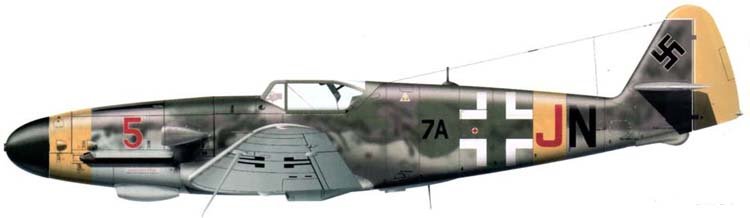 Bf.109H |
ArchivoAéreo Editorial Team
A group of aviation researchers and enthusiasts dedicated to documenting and preserving global aeronautical history. All articles are reviewed to ensure historical accuracy.
Sources & Accuracy
The information presented in this technical sheet has been compiled from declassified flight manuals, historical archives, and specialized literature. While we strive for maximum accuracy, some performance data may vary depending on the specific variant or operational conditions.