Bf.109T
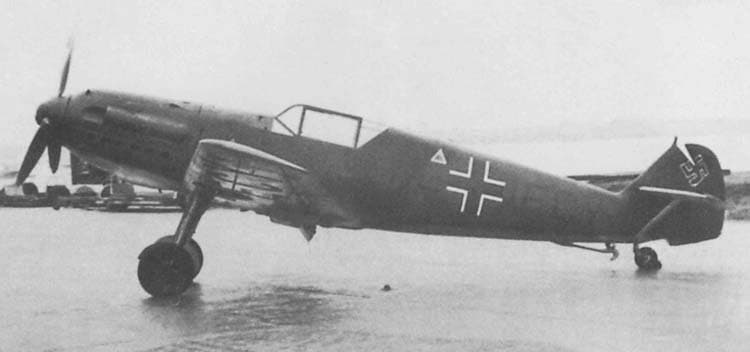
In the late 1930s, the Kriegsmarine command harbored plans for building Germany’s first two aircraft carriers, the “Graf Zeppelin” and “Peter Strasser.” In this context, W. Messerschmitt’s firm was tasked with developing a special carrier-borne variant of the Bf 109, while Junkers worked on a carrier version of the Ju 87 dive bomber. These aircraft were initially intended to equip one carrier air group, with a second group planned for later formation.
Initial Design and Naval Ambitions
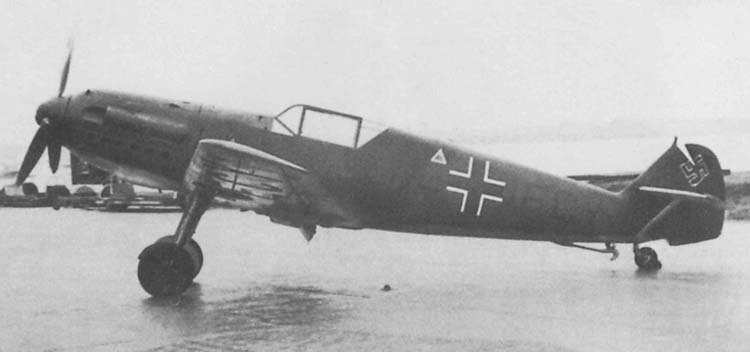
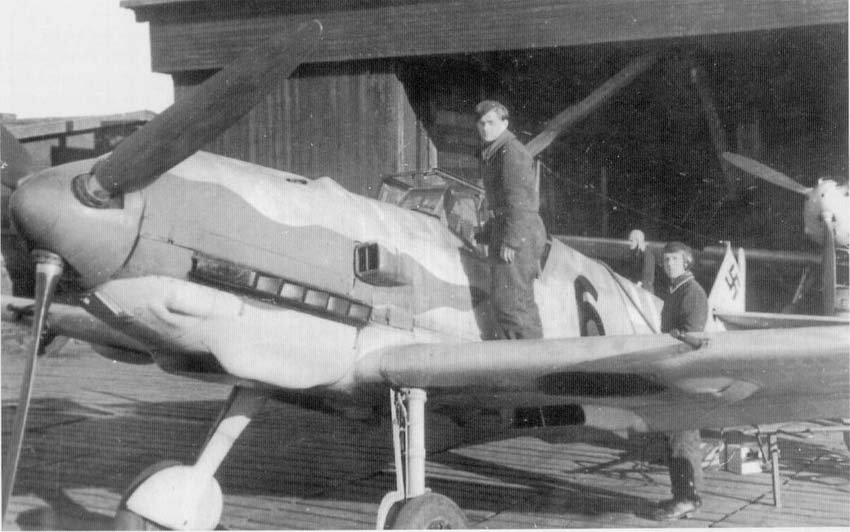
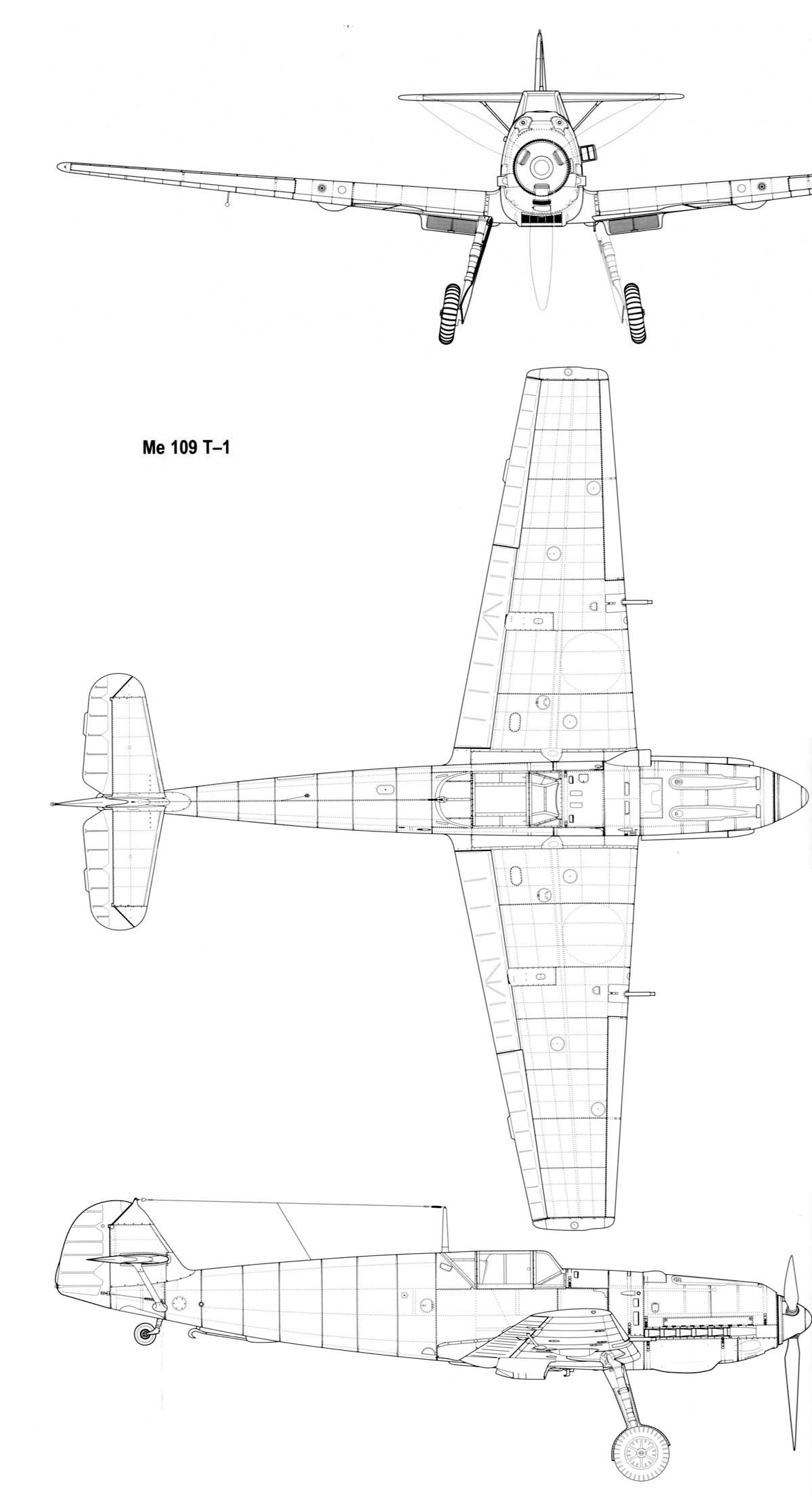
In early 1939, W. Messerschmitt proposed a technical design for the Bf 109T (“Träger” – carrier) deck fighter to the navy. Structurally, it was close to the Bf 109E but featured increased wing area and span. Accordingly, the leading-edge slats and ailerons were lengthened, and the flaps also had a larger area. Between the fifth and sixth fuselage frames, an attachment point for the catapult bridle was provided, and the arrestor hook was secured to the seventh frame, with the structure in this area reinforced to withstand heavy loads.
The wing panels could be folded manually along longitudinal hinges located externally to the gun mounting points. The wingspan in the folded state was reduced to 4.1 meters, but folding the panels was quite a laborious operation, as it first required disconnecting the flaps. The Bf 109T project was approved, but the production of a pre-series batch was entrusted to Fieseler. Ten Bf 109E-1 airframes were converted directly on the assembly line into pre-series Bf 109T-0; Fieseler subsequently received an order for another 60 Bf 109T-1 aircraft.
Adaptation and Transition to Land-Based Roles
Bf 109T-0 aircraft were fitted with DB-601A engines. To increase the glide angle during approach to landing, additional spoilers were installed on the upper wing surface. The increased loads during deck landings required strengthening of the landing gear struts. After tests in Travemünde in the winter of 1939-1940, they were planned for transfer to I/JG186 for troop trials. However, all work on completing the aircraft carrier “Graf Zeppelin” was suspended after the outbreak of World War II, as it was decided that a single carrier could not possess the required combat resilience.
The assembly of Bf 109T-1 fighters at the Fieseler factory ceased shortly after work on the carrier was suspended. Nevertheless, the successful combat use of British aircraft carriers in the Mediterranean in late 1940 once again drew the German leadership’s attention to this type of vessel. Fieseler received instructions to complete the manufacture of 60 Bf 109Ts, but without the special “carrier” equipment. The aircraft was produced as a fighter-bomber variant, adapted for operation from short runways.
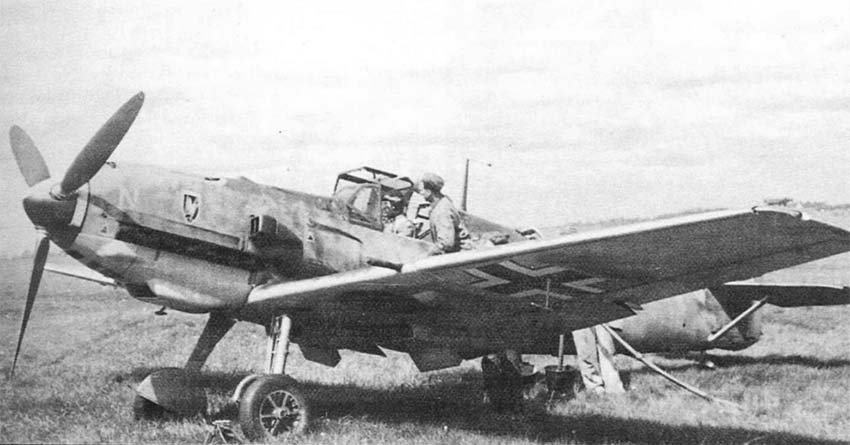
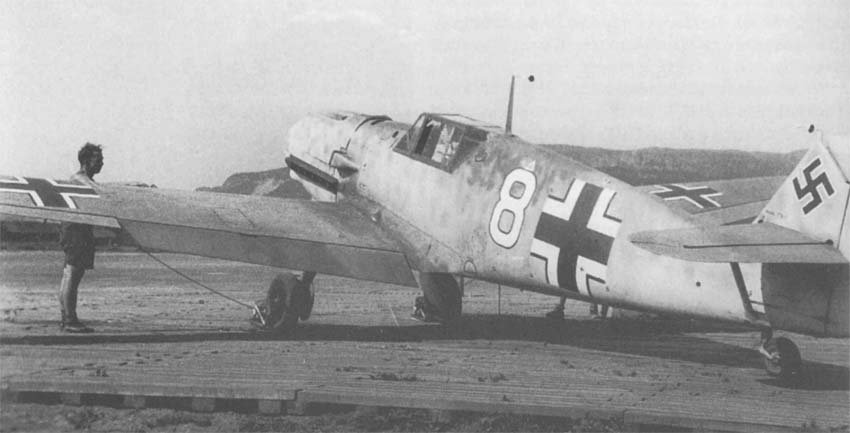
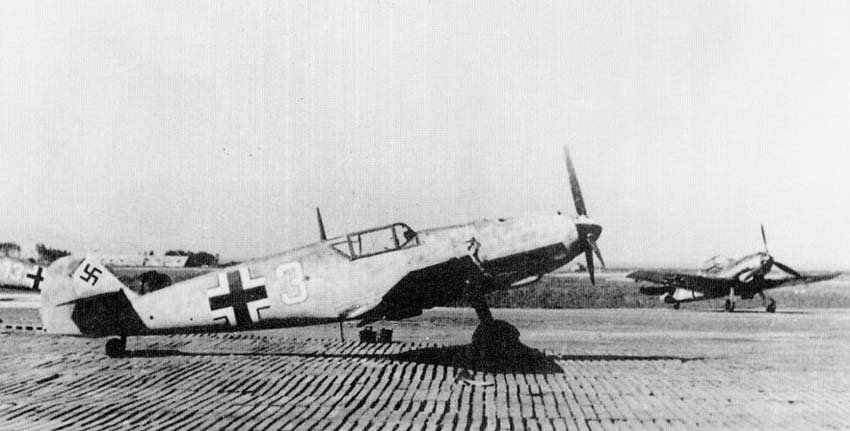
The catapult attachment points and arrestor hooks were removed from these machines, and under-fuselage holders for 300-liter tanks, four 50-kg, or one 250-kg bomb were installed. This variant, released in the spring of 1941, was designated Bf 109T-2. Aircraft of this modification were fitted with DB-601N engines, operating on 96-octane C3 gasoline. With a takeoff weight of 2800 kg, the Bf 109T-2 had a takeoff distance of 500 m (with an altitude gain of 15 m), a minimum flight speed of only 120 km/h, and a landing speed of 130 km/h.
Operational Deployment and Legacy
Such machines were considered suitable for use from small temporary airfields characteristic of northern European regions. Specifically, Bf 109T-2 fighters were transferred to the I/JG77 group, based in the Stavanger area. The re-equipment of the group from Bf 109E-3 to Bf 109T-2 began in June 1941, with one squadron being transferred to Trondheim. On January 24, 1942, group 1/JG.77, still armed with Bf 109T-2s, changed its name to I/JG5. Shortly thereafter, the 3rd squadron was transferred to Herdla island near Bergen, where a wooden runway just longer than an aircraft carrier deck had been prepared.
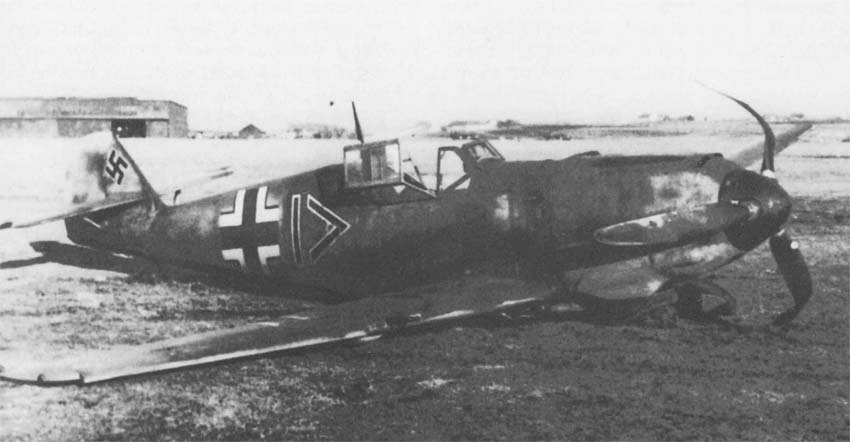
In March 1942, the battleship “Tirpitz” attempt to attack northern convoys failed, partly due to the lack of fighter cover over the German squadron. As a result, Admiral Raeder again raised the issue of completing the “Graf Zeppelin.” The order to resume work on the carrier was issued on May 13, 1942, but by this time, the Bf 109T-2 was considered obsolete. The good takeoff and landing characteristics of the Bf 109T-2 allowed surviving aircraft to be assigned to the “Helgoland Fighter Detachment,” formed on April 10, 1943. About 30 Bf 109T-2 fighters remained in the “Reich” air fleet until summer 1944, before being transferred to fighter group 1V/JG5.
Technical Specifications
| Modification | Bf 109t-2 |
| Wingspan, m | 11.10 |
| Length, m | 8.8 |
| Height, m | 2.60 |
| Wing area, m2 | 17.50 |
| Empty weight | 2000 |
| Normal takeoff weight | 2800 |
| Maximum takeoff weight | 3080 |
| Engine type | 1 Piston engine Daimler-Benz DB 601N |
| Power, hp | 1 x 1200 |
| Speed at sea level | 440 |
| Speed at altitude | 550 |
| Range without external tank | 725 |
| Range with 300 L tank | 910 |
| Max. rate of climb, m/min | 1020 |
| Service ceiling, m | 10500 |
| Crew, crew members | 1 |
| Armament | two 20-mm MG FF cannons with 60 rounds per gun, and two 7.9-mm MG 17 machine guns with 1000 rounds per gun. |
Image and diagram gallery of the Bf.109T
 Bf.109T |
 Bf.109T |
 Bf.109T |
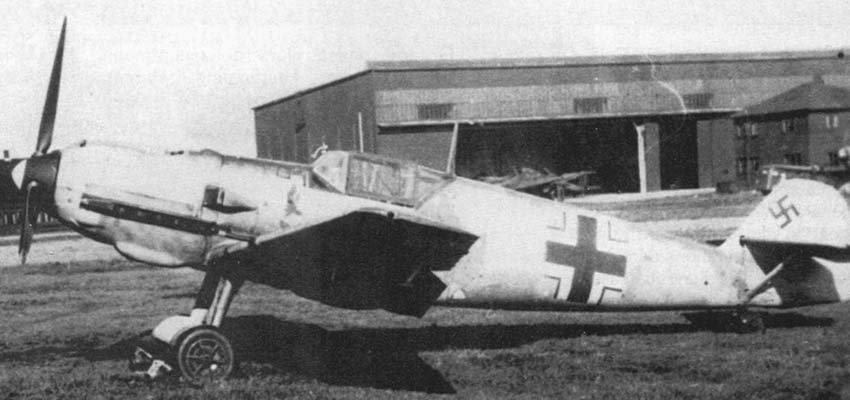 Bf.109T |
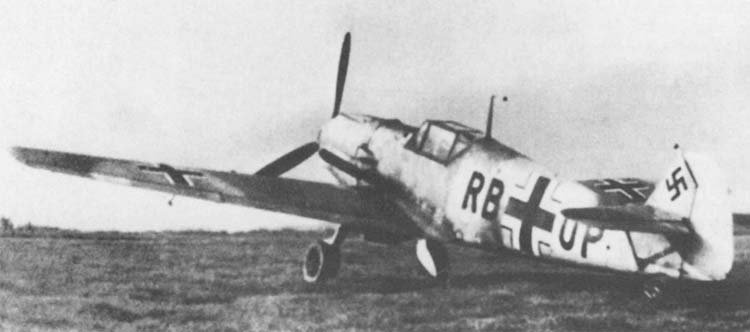 Bf.109T |
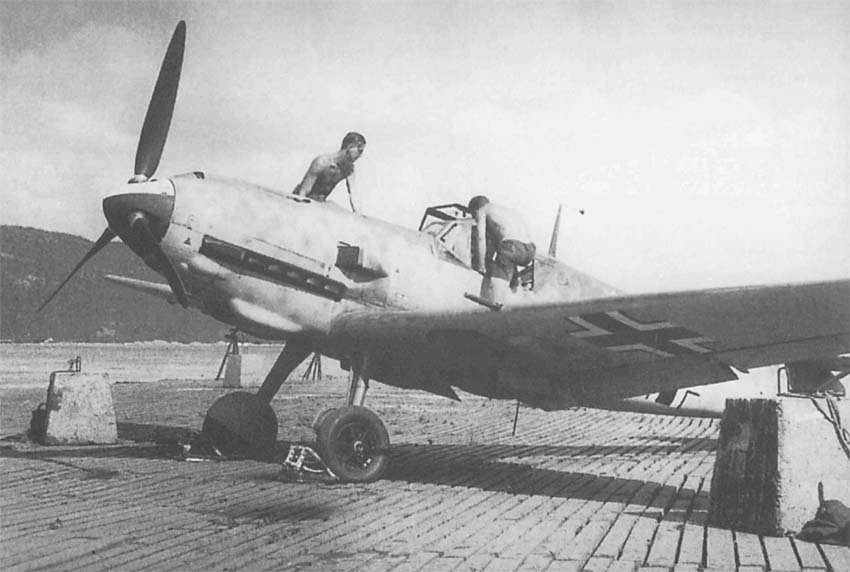 Bf.109T |
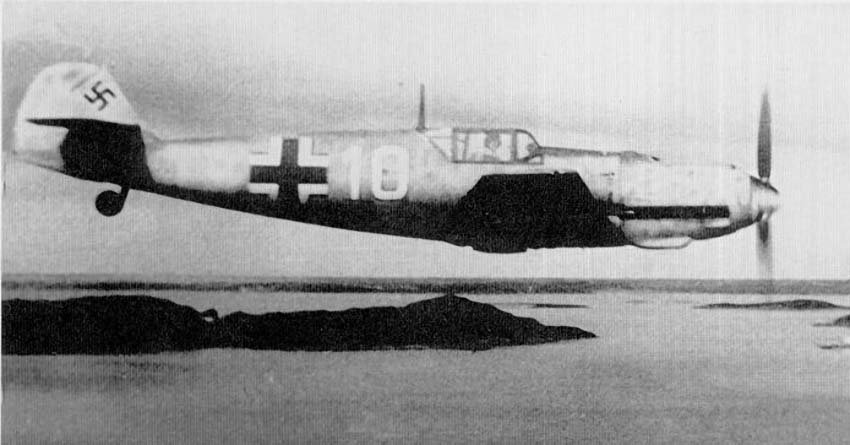 Bf.109T |
 Bf.109T |
 Bf.109T |
 Bf.109T |
 Bf.109T |
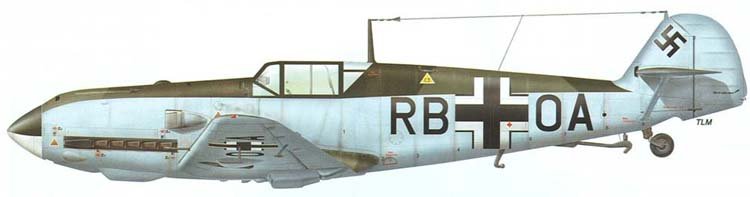 Bf.109T |
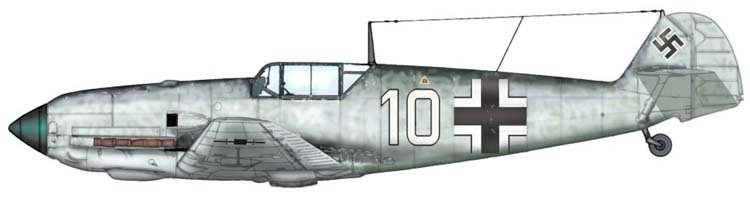 Bf.109T |
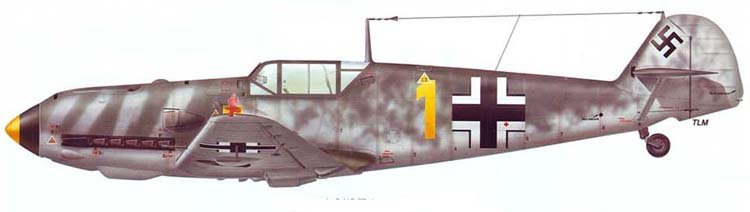 Bf.109T |
ArchivoAéreo Editorial Team
A group of aviation researchers and enthusiasts dedicated to documenting and preserving global aeronautical history. All articles are reviewed to ensure historical accuracy.
Sources & Accuracy
The information presented in this technical sheet has been compiled from declassified flight manuals, historical archives, and specialized literature. While we strive for maximum accuracy, some performance data may vary depending on the specific variant or operational conditions.