Bittern
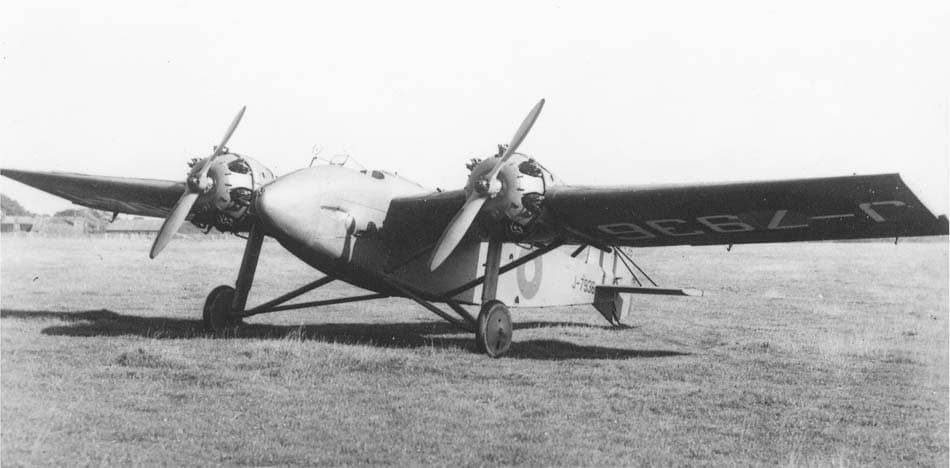
The core philosophy of the Royal Air Force (RAF) during the interwar period was that a bomber could get through anywhere. This philosophy persisted until, during World War II, the crews of Wellingtons, Hampdens, and Whitley aircraft began to suffer sudden attacks from German interceptors. From this, it followed that a countermeasure was needed to stop enemy bombers attempting to strike targets in Great Britain.
Throughout the interwar period, the Air Ministry experimented with various fighter concepts capable of stopping formations of heavy bombers. Many of these concepts featured novel armament placement and often carried heavy weaponry, but none reached the production stage until the appearance of the Defiant. The entry into service of this two-seat fighter finally crowned the Air Ministry’s efforts, with its armament concentrated in a power-operated turret.
None of those who wrote the operational specifications for these “bomber destroyers” foresaw that they would need to be capable of defending themselves against traditional fighters. Consequently, flight performance and maneuverability were not considered important parts of the requirements. The aircraft was built solely as a platform for weaponry, and the idea that they would have to contend with fighter escorts for bombers was not even considered.
The Innovative P.31 Bittern Design
Specification 27/24 outlined requirements for fighters capable of breaking up groups of heavy bombers. To solve this problem at a time when fighters were exclusively biplanes, John North took a ten-year leap forward. He created the P.31 Bittern, a single-seat, twin-engine monoplane night fighter. Alongside its general layout, its most striking feature was its armament.
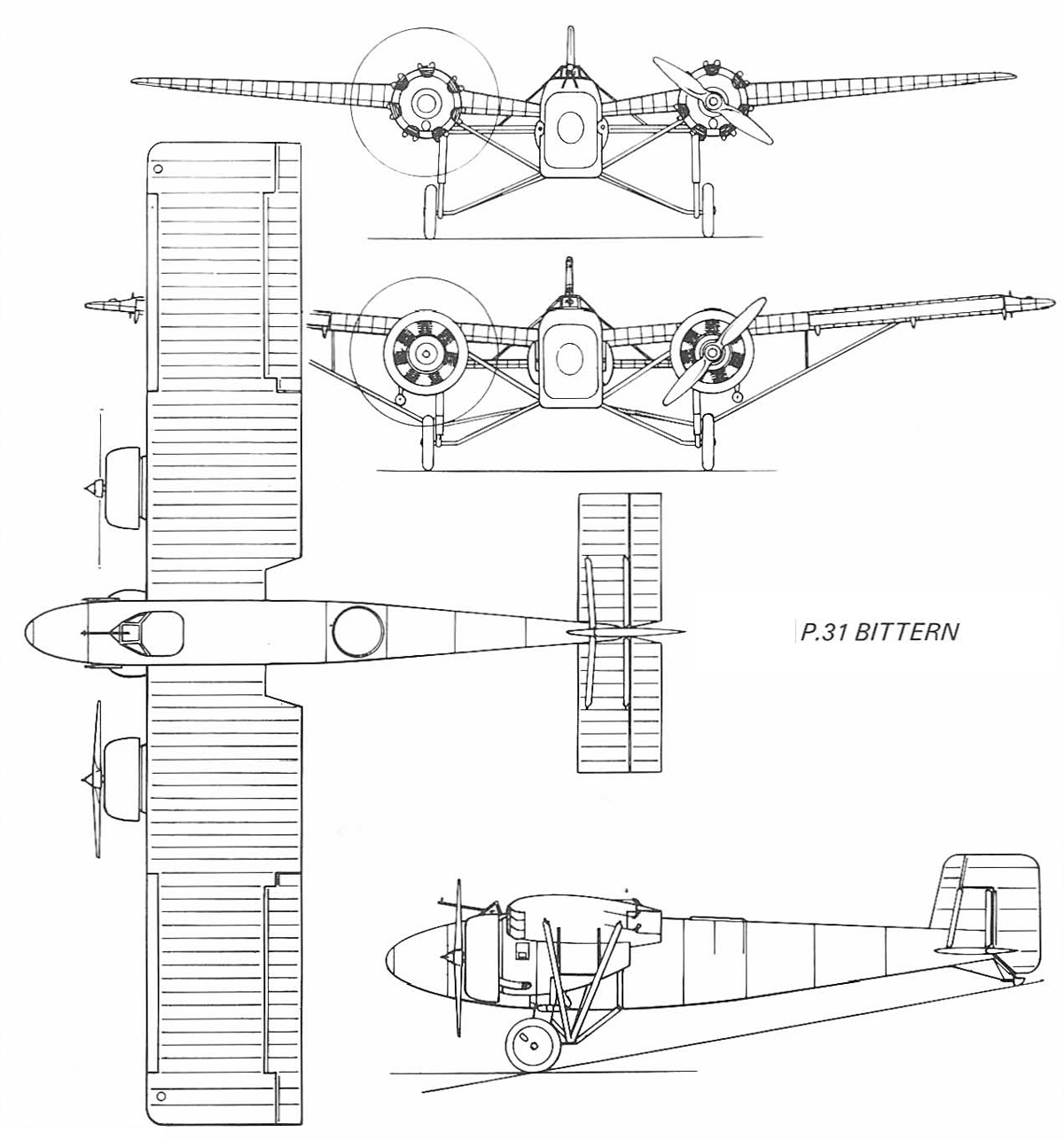
North was characterized by a very thoughtful approach to selecting armament for his aircraft designs. For the Bittern, he developed rotating barbettes, each mounted on one side of the aircraft’s nose and containing a single 0.303″ (7.7mm) Lewis machine gun. These could be raised by the pilot from horizontal to an upward angle of 45 degrees, allowing bombers to be attacked from below. A ring sight and spherical foresight were raised with them on a special frame.
It is quite possible that his inspiration came from working at Austin with World War I ace Albert Ball. Ball loved to begin his attacks from below, moving a Lewis machine gun from the upper wing of his Nieuport Scout along a curved Foster mounting to fire upwards. The vulnerable spot for most bombers was the underside of the tail, and this attack method targeted that area. The first aircraft designed by North for Boulton & Paul, the P.3 Bobolink, also featured the use of a Lewis machine gun with a rail for upward firing, much like Ball’s Nieuport.
Development and Technical Challenges
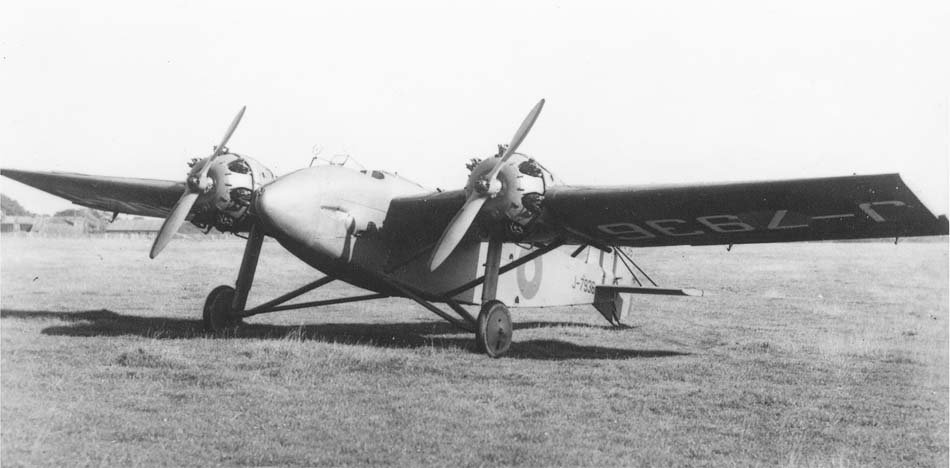
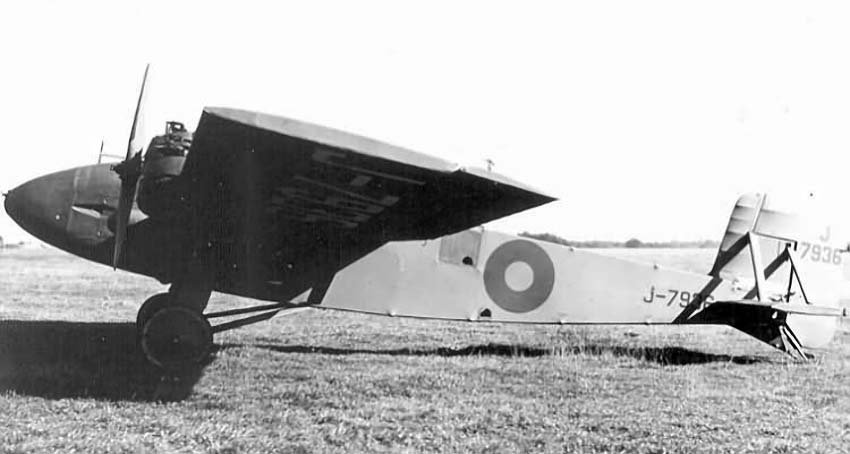
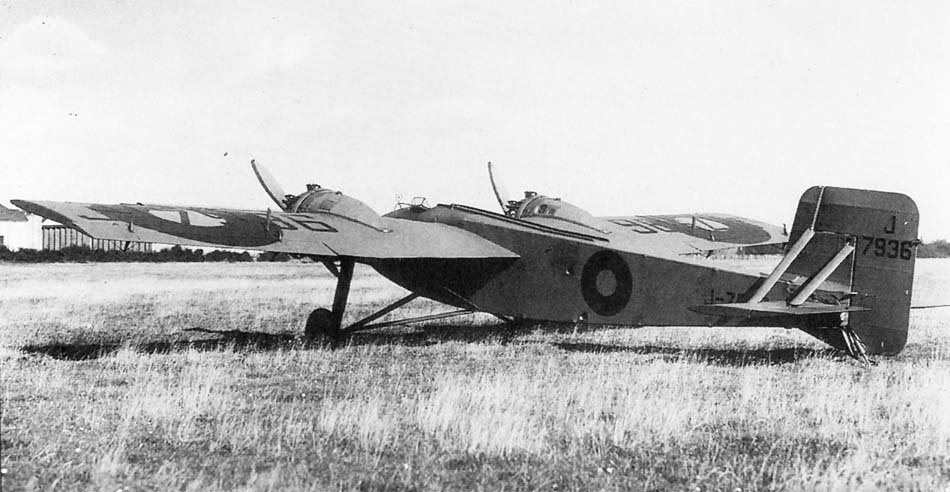
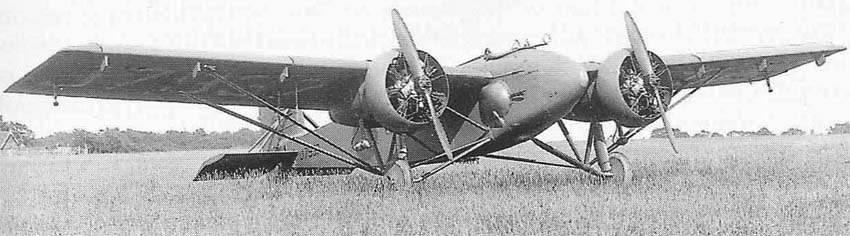
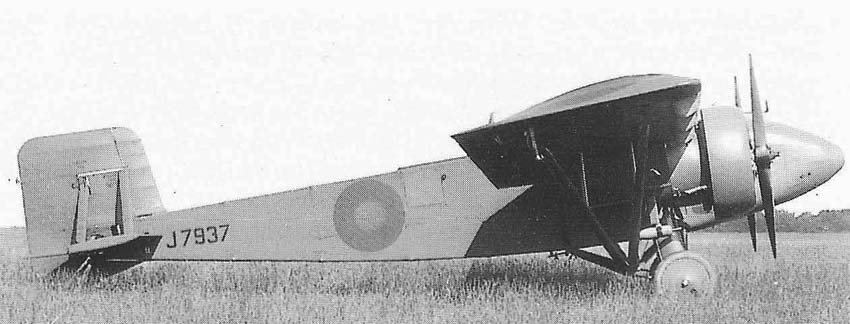
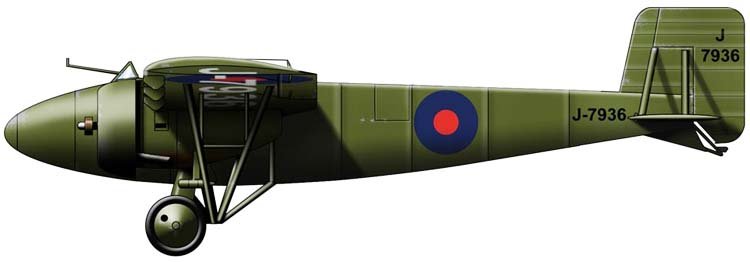
Two Bitterns, J7936 and J7937, were built, each fitted with two 230-horsepower seven-cylinder Armstrong Siddeley Lynx radial engines. The Lynx was practically half of a Jaguar engine. Both aircraft had differences: the first, J7936, was a monoplane with a high-mounted braced center section wing and a braced tail. The outer wing panels were cantilevered, broad at the root and gradually tapering to the tips.
The aircraft featured a fixed landing gear with a very wide track, considered necessary for night landings. The pilot sat in an open cockpit directly forward of the wing, where he had an excellent view in every direction over the sharply rounded nose. The wing had rectangular tips, a hallmark of John North, and the fuselage behind the pilot’s cockpit had flat sides. The engines were in very streamlined cowlings with cylinder heads exposed to the airflow.
The first prototype did not have rotating barbettes but was equipped with two conventional fixed Vickers machine guns, located on the sides of the fuselage, firing forward in the usual manner and fitted with standard ring and bead sights. Only the second aircraft, J7937, was equipped with the barbettes. To aid night landings, both had mounting points beneath the fuselage for a device that released light signals.
The first Bittern made its maiden flight in February 1927 under the control of Rea, and it was found that the machine suffered from insufficient lateral stability. The ailerons had sufficient travel, and there was no free play during ground tests, but various changes were made with no improvement. Rea believed he could solve the problem if he could see the ailerons in flight, but the wing panels were obscured from view by the engine nacelles, even with the pilot’s seat adjusted to the highest position.
Rea added cushions to the seat, which caused his head to protrude uncomfortably above the windscreen. Despite constant exposure to the slipstream, he was able to see that the wing panels only flexed in flight and that the control effect from aileron deflection was neutralized by the opposing wing flex! To reproduce the effect of aerodynamic force, ground tests were conducted with loaded ailerons and wing, and it was found that the flex was quite dangerous.
To solve this problem, struts were installed on the wing panels of the second Bittern. The wingspan was increased by 5 feet (1.524 m), and leading-edge slots were installed. The aircraft also featured the installation of Townend rings on the engines and the engines being moved downwards from their original central placement on the front spar, becoming slightly underslung.
A Concept Ahead of Its Time
It is difficult to understand why North chose such low-powered engines for such a heavy aircraft, with a full load weight of 4500 lbs (2041.2 kg), when it would have been easy enough to install motors twice as powerful. The maximum speed of the first prototype was only 145 mph (233.305 km/h), although after the installation of Townend rings, it increased by 7 mph (11.263 km/h). It was intended only to attack slow heavy bombers, compared to which the Bittern had a speed advantage of 30-40 mph (48.27-64.36 km/h).
However, light bombers such as the Fairey Fox and even Boulton & Paul’s own Sidestrand were as fast as the P.31, which was unable to intercept them. The Bittern had little chance of being ordered, as it had only a small advantage over existing biplane “bomber destroyers” and was greatly inferior in performance to the Bristol Bulldog, which was to be ordered as the RAF’s next-generation fighter. The fate of the Bitterns was not recorded, but in October 1931, the front spar in various forms was still undergoing testing.
The concept of a single-seat, twin-engine heavy fighter was at least ten years ahead of its time, too far advanced to gain recognition. However, the concept of installing upward-firing guns on aircraft for night attacks against heavy bombers was revived by the Luftwaffe during World War II. Given the German code designation Schräge Musik (crooked music, jazz), German fighters attacked at night with great success using obliquely mounted cannons, even though the latter could not change their angle of inclination.
(c) alternathistory.org.ua
Technical Specifications
| Modification | Bittern |
| Wingspan, m | 12.50 |
| Length, m | 9.86 |
| Empty weight | 1458 |
| Normal takeoff weight | 2041 |
| Engine type | 2 Piston engines Armstrong Siddeley Lynx |
| Power, hp | 2 x 230 |
| Maximum speed, km/h | 245 |
| Cruising speed, km/h | 205 |
| Flight endurance, h.min | 3.45 |
| Crew | 1 crew member |
| Armament | two fixed forward 7.7-mm Vickers machine guns (J7936), or two 7.7-mm Lewis machine guns in barbettes on either side of the nose (J7937). |
Image and diagram gallery of the Bittern
 Bittern |
 Bittern |
 Bittern |
 Bittern |
 Bittern |
 Bittern |
 Bittern |
ArchivoAéreo Editorial Team
A group of aviation researchers and enthusiasts dedicated to documenting and preserving global aeronautical history. All articles are reviewed to ensure historical accuracy.
Sources & Accuracy
The information presented in this technical sheet has been compiled from declassified flight manuals, historical archives, and specialized literature. While we strive for maximum accuracy, some performance data may vary depending on the specific variant or operational conditions.