BK 7.5
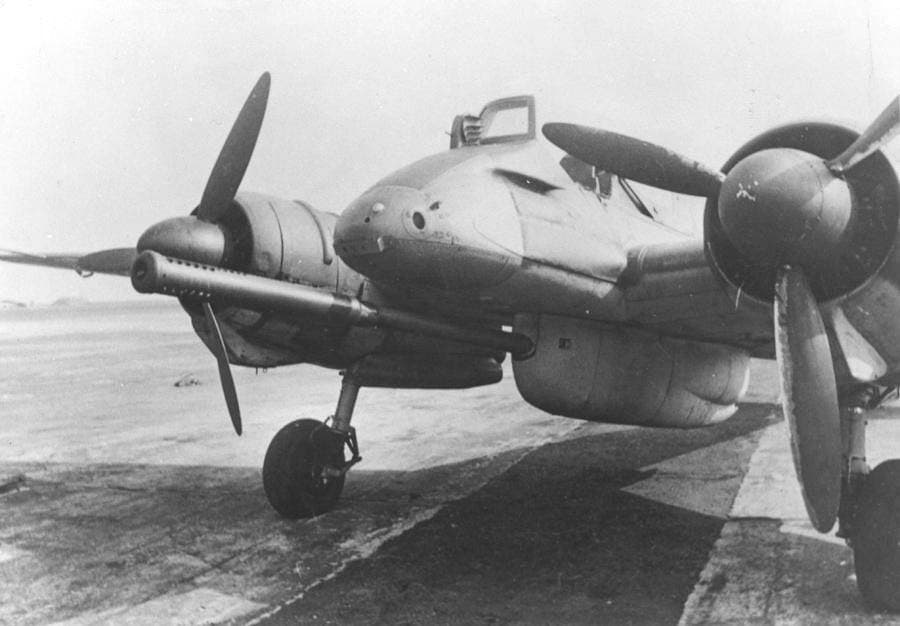
Almost simultaneously with the 50mm BK 5 cannon, Rheinmetall-Borsig began developing an even more powerful 75mm caliber artillery system. While the main idea behind the 50mm cannon was to engage enemy bombers beyond the range of their defensive weapons, the 75mm cannon was envisioned as a weapon for ground attack operations.
The idea of mounting such a caliber cannon on an aircraft was not entirely new. Americans, who had experimented with installing 75mm guns on bombers since before the war, generally based their designs on relatively low-power, short-barreled tank guns. However, the Germans, during the Third Reich, prone to megalomania, chose as the basis for their development the most powerful gun available in their arsenal at the time: the newest PaK 40 anti-tank gun, with a barrel length of 46 calibers.
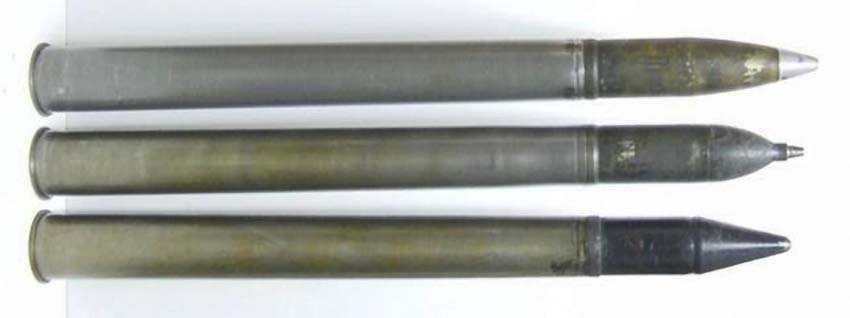
This semi-automatic weapon with a horizontal wedge breech was also developed by the Rheinmetall-Borsig concern just before the war and launched into series production in early 1942. The cannon used very powerful 75×714R unitary cartridges of various types, effective against any modern Allied tanks of the anti-Hitler coalition. It’s difficult to say why the Germans did not use shortened KwK 40 tank guns, which used less powerful 75x495R cartridges more suitable for aircraft armament, as the project’s basis.
Most likely, the inclination towards megalomania played a role here too – “if we are to create a Wunderwaffe, it must be the very best.” But the fact remains that in early 1942, the project for an aircraft system based on an anti-tank gun received the designation PaK 40L – meaning for the Luftwaffe. Later, the name was changed to BK 7.5, where the letters ‘BK’ stood for ‘Bordkanonen’ (onboard cannon). This was how artillery systems originally developed not for aviation but only modernized for aircraft installation were designated in Germany, unlike purely aviation ‘MK’ (Maschinenkanone).
Design and Mechanisms
Structurally, the cannon was a classic semi-automatic weapon with a long barrel recoil. The monoblock barrel consisted of a tube with a muzzle brake and a breech block, fitted onto the tube and secured with a connecting sleeve. The breech was a horizontal wedge semi-automatic type. The recoil brake was hydraulic, and the recuperator was hydro-pneumatic.
Only the electric ignition of the C/22 or C/22 St electric primer sleeve, which was installed in the standard cartridge instead of the primer, was borrowed from the tank gun. The pneumatic auto-loader generally replicated the design used on the 50mm BK 5 cannon, using a pneumatic cylinder that fed the cartridge into the gun’s chamber.
However, the ammunition feeding system differed significantly and varied depending on the carrier aircraft on which the cannon was installed.
Integration into the Ju 88
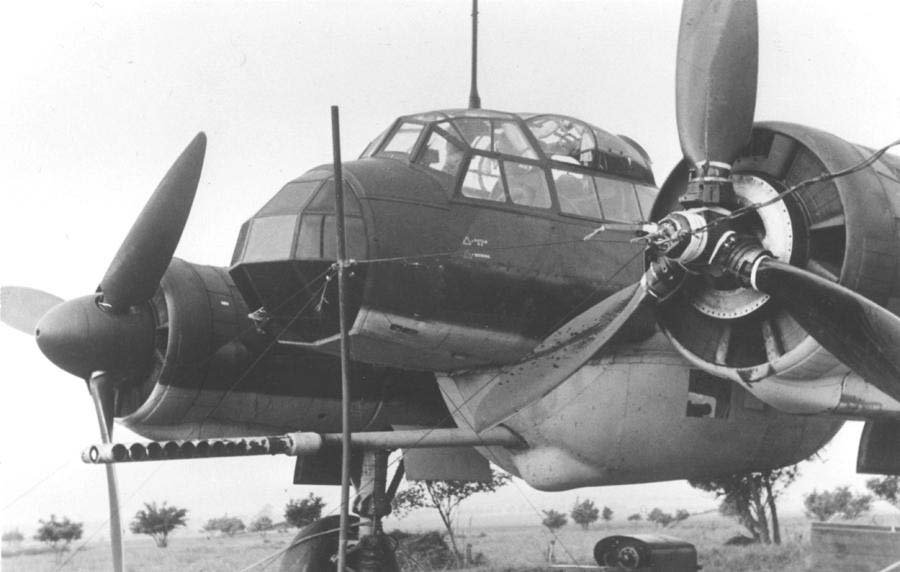
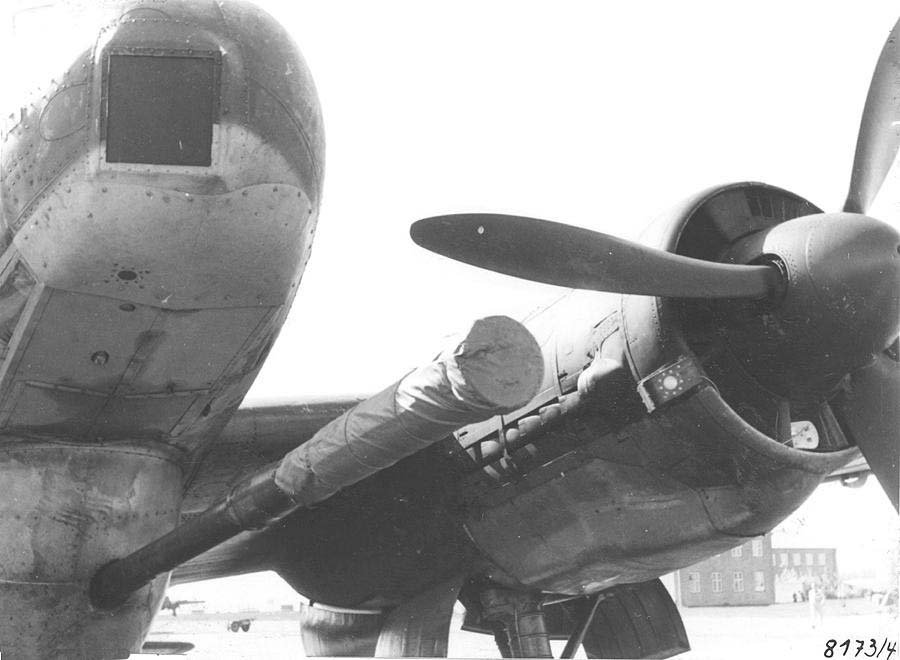
One of the first projects for which the gun was planned was the Junkers Ju-88 bomber. As early as summer 1942, a Ju.88a-4, equipped with a 50mm KwK-39 tank gun, underwent trials under the designation Ju.88P-V1. The cannon was installed in a large fairing under the fuselage, which earned the aircraft the nickname “die dicke Bertha” (the fat Bertha) during trials in Bernburg.
The lower gondola was removed, and behind the fairing, a lower gun position with a pair of MG-81 machine guns was fitted. The cannon, installed at a slight downward angle, featured manual loading, and its barrel extended one and a half meters beyond the fuselage. Initial flights allowed for a more serious trial in Roggenthin – a branch of the Rechlin test center. There, captured T-34 tanks were fired upon from the aircraft. The trials were relatively successful, and a small series was ordered.
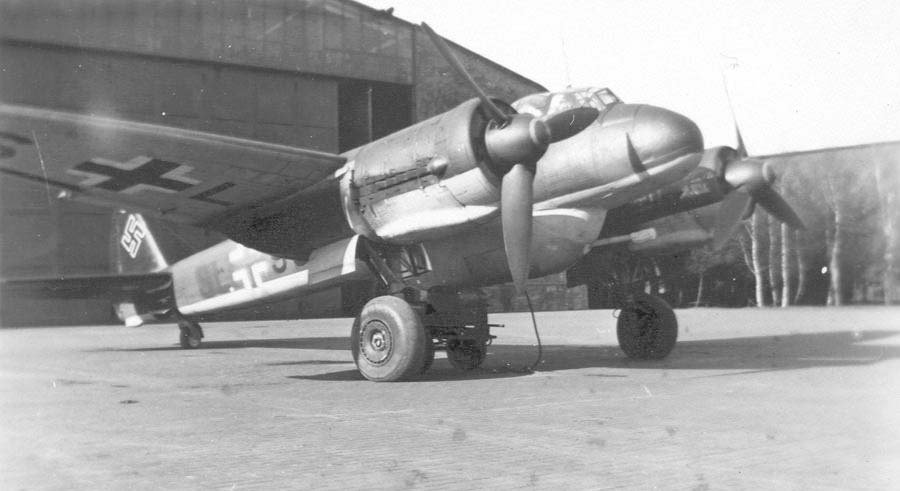
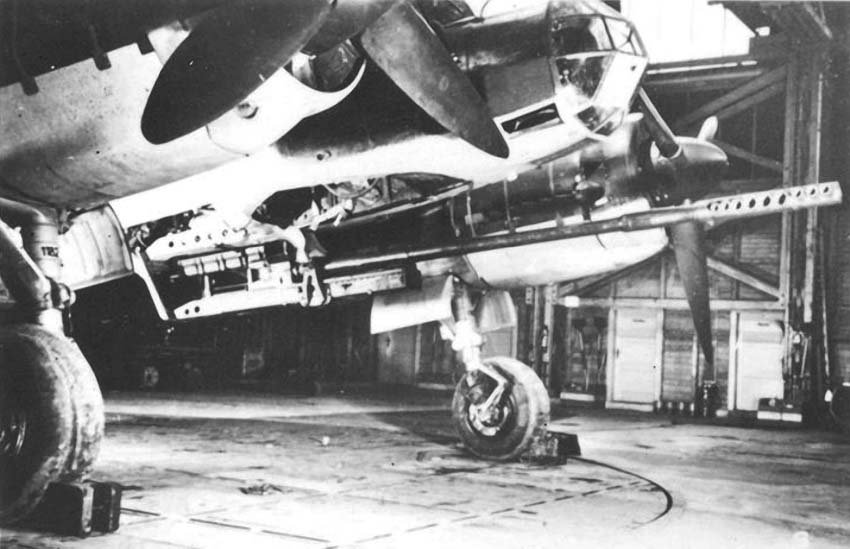
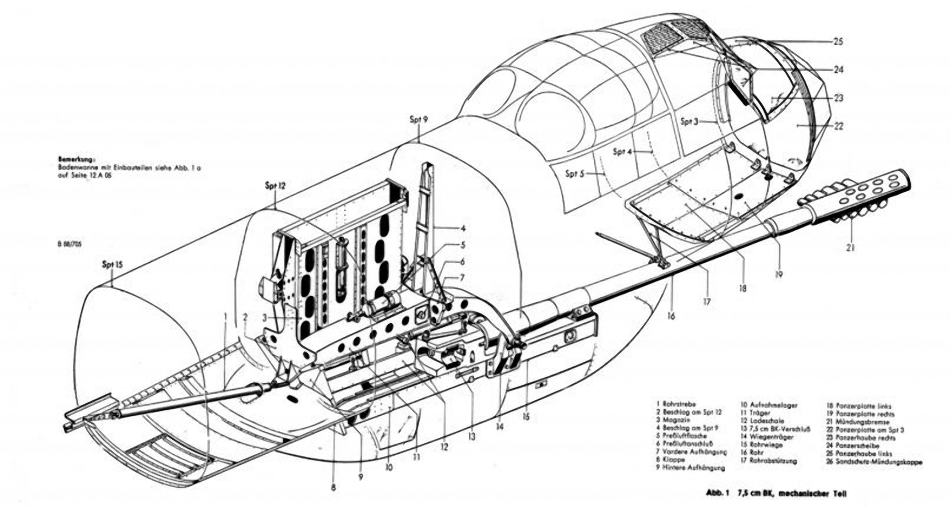
The aircraft received the designation Ju.88P-1 and was distinguished by the absence of glazing in the nose section and a new 75mm PaK-40 cannon, also with manual loading. Trials revealed that the aircraft was, in principle, capable of flying and shooting, and soon the BK 7.5 cannon, equipped with an electro-pneumatic auto-loading system, was installed on the Ju.88v-54 (WerkNr. 1881). For this, a 10-round magazine was mounted above the breech. However, usually only 8 rounds were loaded into it, plus one in the gun’s breech. In flight, the magazine could be reloaded by the gunner of the lower rear machine gun turret.
In addition to the rounds in the magazine, the aircraft’s onboard ammunition consisted of 7 additional rounds. The automatic loading mechanism allowed for a theoretical rate of fire of about 30 rounds/min, although realistically, no more than two shots could be fired in a single pass. The first was made from an altitude of about 300 m at a distance of 450 m in a shallow dive, the second from an altitude of 80 m. For aiming, the standard Revi C/12D reflector sight was used, which was not well-suited for long-range shooting.
Operational trials of several production Ju.88P-1s took place in autumn 1943 in the central sector of the Eastern Front with the Versuchskommando für Panzerbekämpfung unit. As the first battles showed, the rate of fire of the BK 7.5 cannon was so low that a pilot could make no more than two shots in one attack, although usually even a single direct hit was enough to set any tank on fire. Soon, several Ju 88P-1s entered service with the Panzerjäger Staffel 92 combat unit, which became part of the third group of the first bomber squadron “Hindenburg” (III/K.G. 1 Hindenburg).
Given the almost complete lack of information on the combat use of the Ju 88P-1, it can be concluded that their successes were rather modest. It is known that when installing the gun on the Junkers, problems arose, as is often the case, from unexpected quarters. To reduce recoil, the standard muzzle brake of the PaK 40 cannon was replaced with a more effective, elongated one with more gas ports that vented excess muzzle gases sideways.
However, it turned out that these gas ports were precisely in the plane of the propellers, whose wooden blades were not only constantly exposed to streams of incandescent gases, but at certain RPM frequencies resonated with the diverging sound waves from the gun’s firing, causing cracks and trivial breakage. The developers tried various shapes and positions of muzzle brakes and settled on an optimal one.
The final design of the muzzle brake was a “flattened” tube with nine holes of different diameters, commensurate with the gun’s caliber. In this case, the muzzle brake was positioned on the gun so that the gas ports were directed at an angle of approximately 45 degrees up/down from the wing plane. Nevertheless, while this reduced the effect of resonance and the impact of muzzle gases on the blades, it still did not completely solve the problem.
Because of this, at least on some of the produced Ju 88P-1s, the wooden blades were replaced with composite ones, and crews were advised to maintain a strictly defined engine RPM when firing the cannon – around 1800 rpm. Subsequently, the use of the BK 7.5 cannon on Junkers assault aircraft was abandoned, preferring to replace them on subsequent “P” sub-modifications with the less powerful, but also less eccentric and faster-firing BK 3.7 and BK 5.
Resurgence on the Hs 129
Thus, the BK 7.5 cannon could have been written off in early 1944, remembered only in the context of one of the Third Reich’s “wonder weapons,” but it was recalled at the very end of the war, used as the main offensive armament for Henschel Hs 129 ground-attack aircraft.
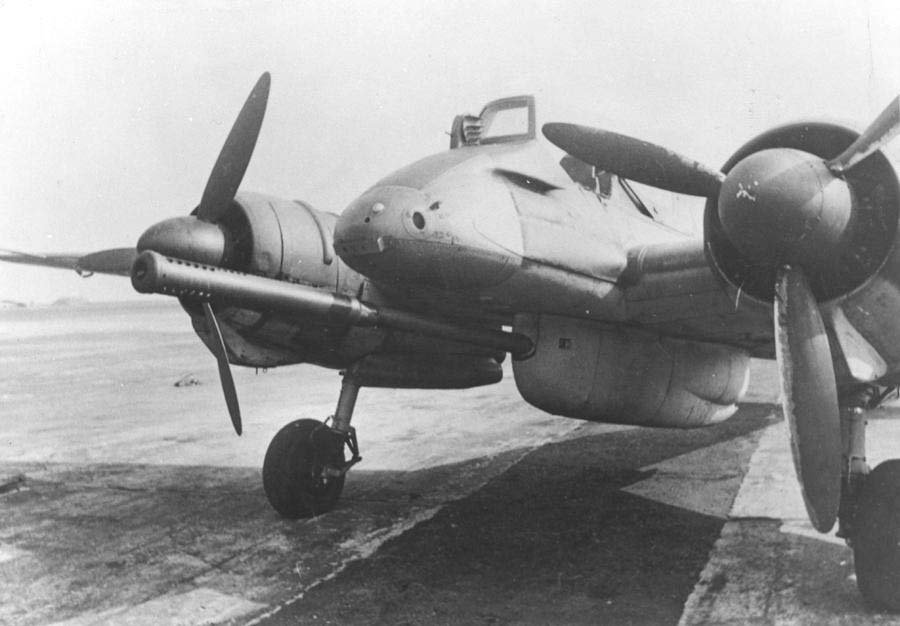
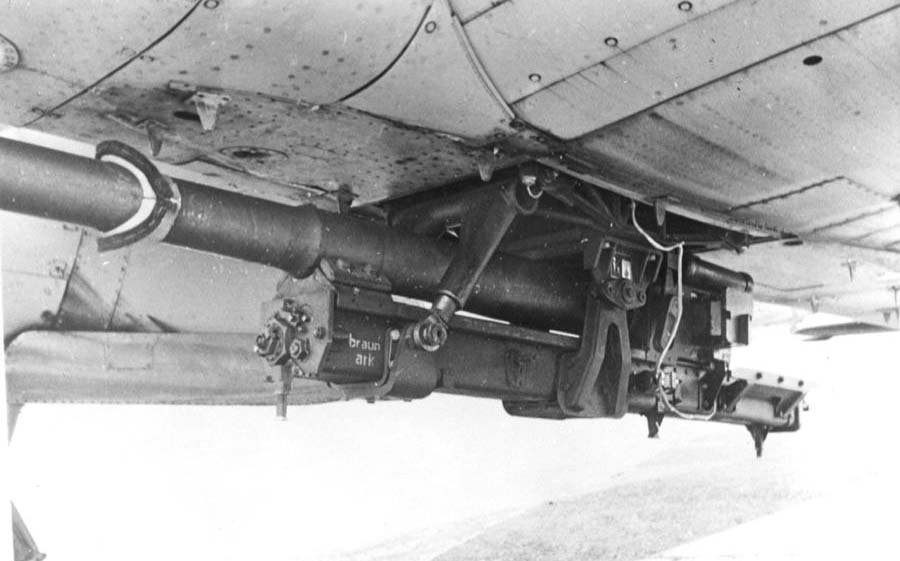
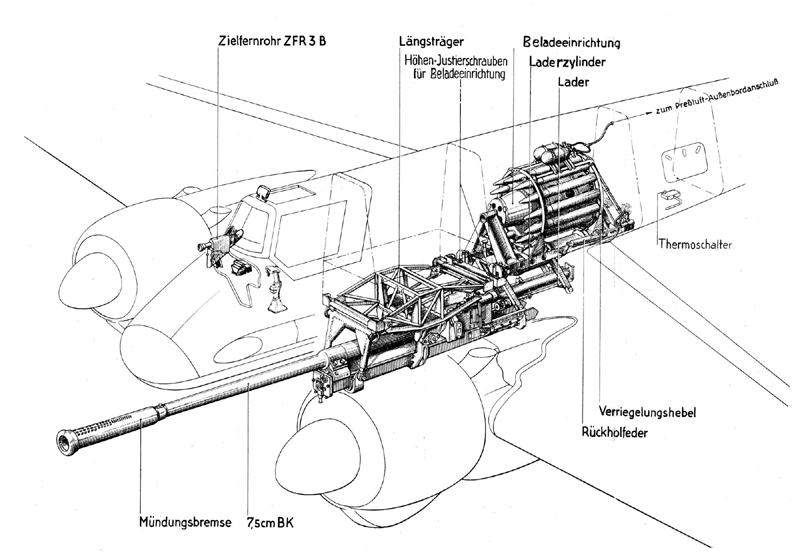
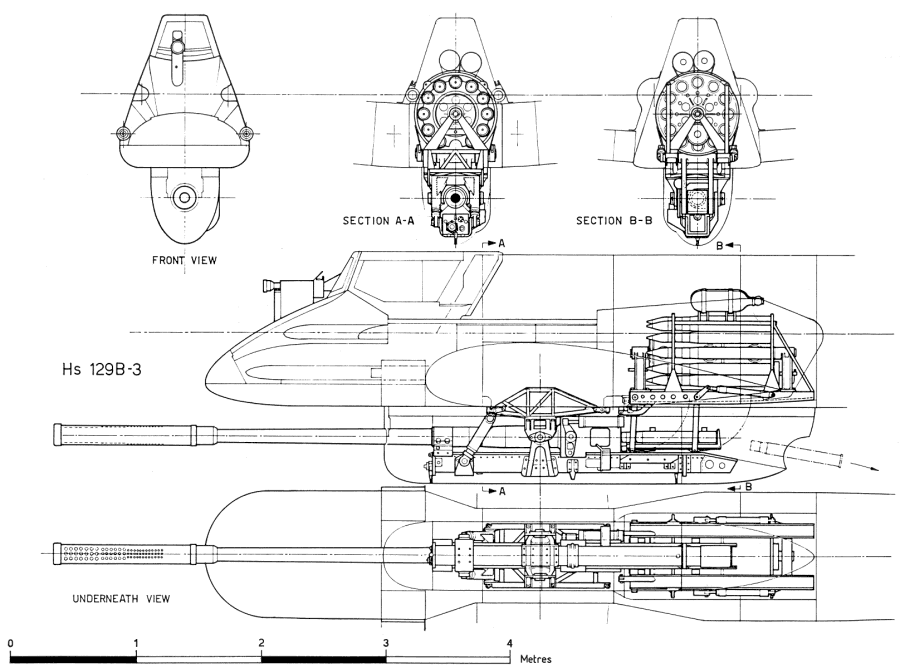
The appearance of new Soviet heavy IS-2 and medium T-34-85 tanks with reinforced armor on the front provided the impetus for creating the most powerful modification of the Hs 129B-3/Wa ground-attack aircraft, which was armed with the BK 7.5 cannon. A new carriage, a lightened muzzle brake, a pneumatic auto-loader, and a drum mechanism for 12 shells were specifically developed for this carrier. The total weight of the entire installation on the aircraft exceeded 700 kg. The design included an emergency jettison capability for the container along with the gun.
A single hit from an armor-piercing shell of the BK 7.5 cannon was enough to disable any Soviet tank. During firing range tests, shells consistently penetrated the turret armor not only of the latest versions of the “thirty-fours” but also of the heavy IS-2 tank. It was believed that the new ground-attack aircraft would be capable of successfully engaging all types of Soviet tanks in combat conditions from a firing distance of approximately 1000 m. In this regard, a telescopic ZFR 3B sight was installed on the ground-attack aircraft instead of the Revi C12/C collimator sight. The MG151/20 cannons were removed in this variant, but the MG 17 machine guns were retained for aiming adjustments.
The first three examples of ground-attack aircraft with 75-millimeter cannons arrived at the Tarnewitz proving ground in July 1944 for test firing against captured Soviet tanks. The test results delighted the Germans. Even the standard 6.8 kg high-explosive armor-piercing 75×714R shell, with an initial velocity of 732 m/s, penetrated 132 mm of armor at 500 meters at normal incidence. At an angle of 60° at the same distance, 104 mm of armor plate was penetrated. The composite lightened shell, weighing 3.18 kg with an initial velocity of 990 m/s, under the same conditions, penetrated 154 and 115 mm respectively. Composite 75mm Hartkernmunition shells were used to a limited extent in PaK-40 anti-tank guns, but most likely, due to tungsten shortages at the end of the war, they did not reach ground-attack aviation units. But even so, the frontal armor of any Soviet tank, both the T-34-85 and even the heavy IS-2, proved vulnerable to the BK 7.5 cannon.
However, test flights showed that the Hs 129B-3/Wa barely stayed airborne, and its maximum speed did not exceed 250 km/h. The presence of the large gun fairing significantly reduced the ground-attack aircraft’s directional stability. Compared to previous variants, piloting the new “Henschel” became even more difficult. Since the gun barrel was approximately one meter below the longitudinal axis passing through the aircraft’s center of gravity, the strong recoil of the gun when firing in the air created a significant pitching moment, causing the aircraft to oscillate in the longitudinal plane. Making aiming corrections after each shot was very difficult, so only one shot – the first – could be accurate, although the gun’s rate of fire of 30 rounds/min theoretically allowed for four shots in a single pass.
But despite such dismal test results, it was decided to launch the new ground-attack aircraft into serial production. The main thing was that, at last, an aircraft capable of truly destroying Soviet tanks had been obtained! The new ground-attack aircraft received the designation Hs.129B-3/Wa and the unofficial nickname “can opener” (Büchsenöffner). Between July and October 1944, the Germans managed to produce approximately 25 aircraft of this type, which were sent to the Eastern Front. There are reports that in late October, the first production Hs 129B-3/Wa arrived at 13.(Pz)/SG9.
Somewhat later, the new “Henschels” also arrived at 12.(Pz)/SG.9, but due to the fact that the 12th squadron was re-equipped with “Focke-Wulfs” on January 1, 1945, the “can openers” were transferred to 10. and 14.(Pz)/SG9. Detailed information on the combat use of the Hs.129B-3/Wa is lacking. It is known that these two squadrons were involved in the battles for the Seelow Heights and even claimed nine Soviet tanks, including two heavy IS tanks, destroyed in 14 attacks, but the veracity of this information, given the complete Soviet air superiority during that period, remains unknown.
Another aircraft on which the BK 7.5 cannon, like its semi-automatic prototype PaK 40, was installed was the Heinkel He 177 heavy bomber, a gun-armed version of which was intended to be used as a giant ground-attack aircraft to suppress Soviet air defenses in the Stalingrad pocket area. Cannon installations were mounted on five He 177 A-3/R5 sub-modification bombers, located where the lower nose gondola would normally be.
In addition to the 75mm BK 7.5 and manually loaded PaK 40 cannons, 50mm BK 5s were also tested on the Heinkels. These monsters received the unofficial name “Stalingradtyp,” but by the time they were ready, Paulus’s 6th Army, encircled in Stalingrad, had capitulated, and the work became meaningless. As a result, these ersatz ground-attack aircraft were re-modernized back into bombers. The BK 7.5 cannon could use the entire range of ammunition applicable to the PaK 40 anti-tank gun, provided that the impact primer was replaced with a C/22 or C/22 St electric primer sleeve.
Technical Specifications
| Modification | BK 7.5 |
| Caliber, mm Type of automatic action Rate of fire, rpm Muzzle velocity, m/sec Weapon weight, kg Barrel with breech weight470 Weapon length, mm Barrel length, mm Barrel length without muzzle brake Cartridge type Magazine capacity Projectile weight, kg Cartridge weight, kg | 75 Long barrel recoil + electropneumatic 30 550 (High-explosive) 732 (Armor-piercing tracer) 933 (Armor-piercing discarding sabot) 990 (Armor-piercing composite Hartkernmunition) 705 470 6105 3920 3450 75×714R 9 or 12 rounds 5.74 (High-explosive) 6.8 (Armor-piercing tracer) 4.15 (Armor-piercing discarding sabot) 3.18 (Armor-piercing composite Hartkernmunition) 9.1 — 11.9 |
Image and diagram gallery of the BK 7.5
 BK 7.5 |
 BK 7.5 |
 BK 7.5 |
 BK 7.5 |
 BK 7.5 |
 BK 7.5 |
 BK 7.5 |
 BK 7.5 |
 BK 7.5 |
 BK 7.5 |
ArchivoAéreo Editorial Team
A group of aviation researchers and enthusiasts dedicated to documenting and preserving global aeronautical history. All articles are reviewed to ensure historical accuracy.
Sources & Accuracy
The information presented in this technical sheet has been compiled from declassified flight manuals, historical archives, and specialized literature. While we strive for maximum accuracy, some performance data may vary depending on the specific variant or operational conditions.