Blackburn Beverley
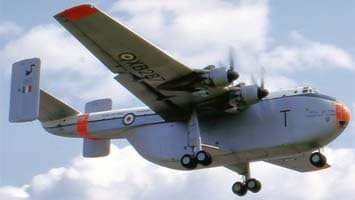
The Genesis of a Giant Transport
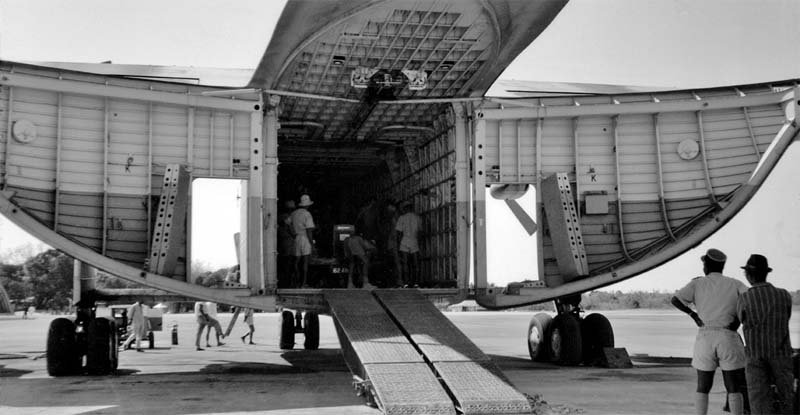
Large transport aircraft have always held military interest, as the rapid deployment of heavy equipment, including tanks and armored personnel carriers, often determines the success of an entire battle. The first truly effective transporter was the six-engined Me 323 “Gigant” by Willy Messerschmitt, developed from the huge Me 321 glider. This unique aircraft possessed all the attributes of modern “Galaxy” and “Ruslan” aircraft, such as multi-bogie landing gear, a spacious fuselage, and crucially, nose-mounted doors that significantly eased loading and unloading.
After the end of the Second World War, virtually all leading aviation powers began designing specialized large-capacity transport aircraft. Great Britain was no exception; in 1945, the chief designer of GAL (General Aircraft Ltd), Crocombe, tasked his subordinates with creating a tactical transport for delivering personnel and equipment to the battlefield. The firm already had experience in this area, having built the “Hamilcar” glider, capable of airlifting light tanks, and its twin-engined version, the “Hamilcar” MkX.
One of the main requirements for the new aircraft was quick loading and the ability to land on unprepared airfields. Achieving long range was not a top priority; it was considered that the transporter would fly to the front from bases located close to the front line. Various aircraft variants were explored, differing significantly from each other. One project featured a four-engined, high-wing design with a twin-boom layout and a detachable cargo pod. As conceived by the designers, the transport would appear in the desired area and then drop the cargo pod from a height of 3 meters at a speed of 146 km/h, using special shock absorbers to cushion the impact with the ground.
The calculated take-off weight of this unusual aircraft was 34 tons, with a payload reaching 9 tons. An alternative variant for the same load was also designed, featuring four Bristol “Hercules” engines, built to a classic high-wing transport scheme with a conventional fuselage and twin-tail empennage. There was also a project for a significantly heavier machine with four powerful air-cooled Bristol “Centaurus” engines, a take-off weight of 57 tons, and a useful load of 17 tons.
Throughout 1945, representatives of the Air Ministry and GAL discussed all options and approved the final specification C.3/46, detailing the tactical and technical data of the new aircraft. According to these requirements, the transport was to carry a payload of 11340 kg over 805 km. The take-off distance to reach a height of 15 m was not to exceed 732 m, and the flight altitude was set at 5486 m.
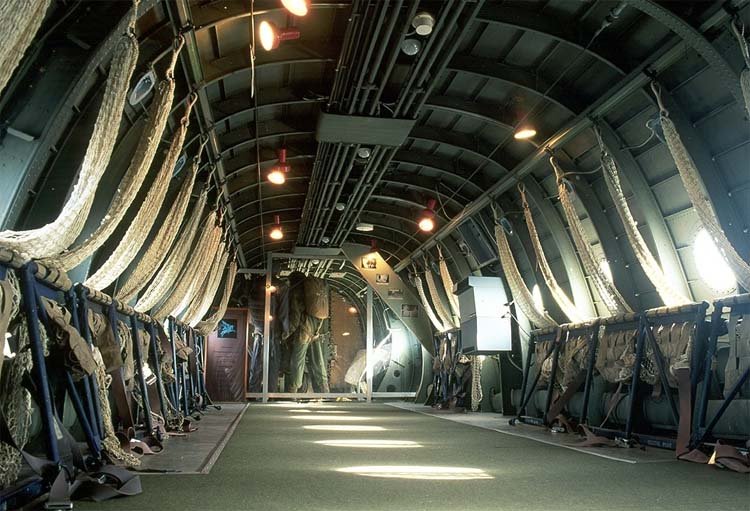
The basis for the new project, designated GAL 60, was a variant with four Bristol “Hercules” engines, with cargo doors at the rear and a folding internal ramp. The aircraft’s structure was all-metal with a double-deck fuselage. The crew cabin (two pilots, a navigator, and a radio operator) was located above the cargo compartment. Besides equipment, the transport could carry 81 paratroopers, accommodated not only in the cargo hold (10.97 m x 3.05 m x 4.72 m) but also on the upper deck, including the capacious tail boom.
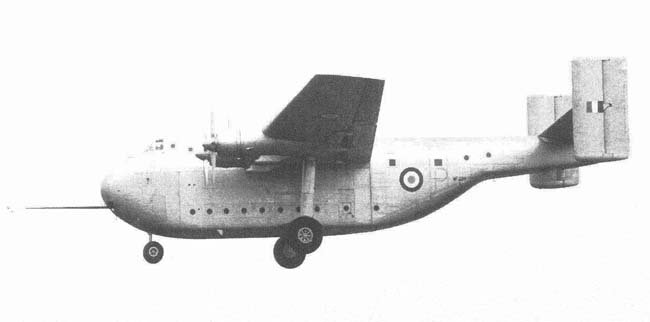
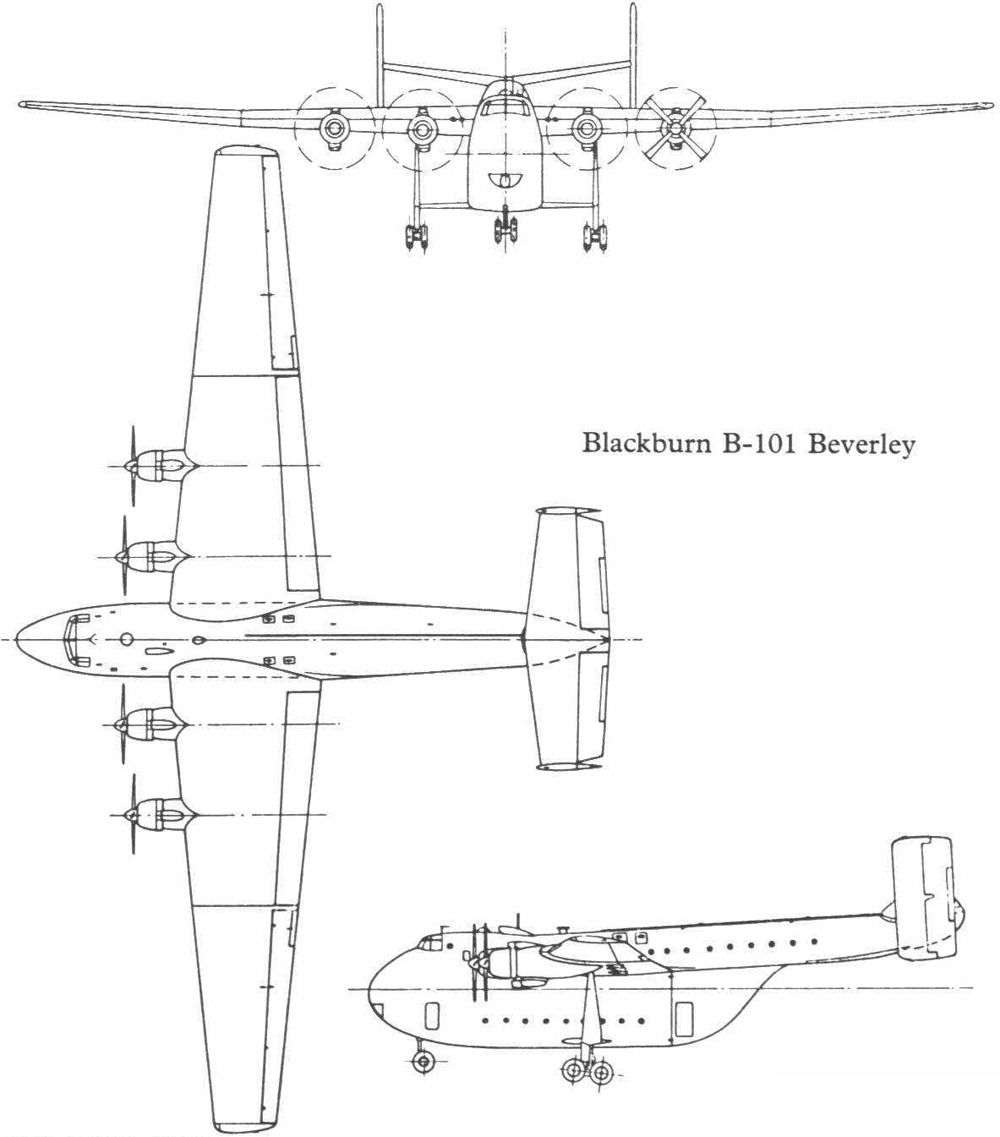
The Bristol “Hercules” Mk 261 engines with a two-speed supercharger (1950 hp take-off power) were mounted on the leading edge of the two-spar wing, which also housed the fuel tanks. Long, non-retractable main landing gear struts with a single 2.2 m diameter wheel (the nose gear was twin-wheeled) were attached to the wing in the area of the inner engines. They featured an additional triangular streamlined strut, connected to the lower part of the fuselage. Since the aircraft was not intended for long-range and high-altitude flights, its pressurization was omitted. Hydraulic power boosters were provided in all control channels to facilitate piloting the heavy machine. The tail boom ended in a twin rectangular tail assembly, and the take-off and landing mechanization consisted of electrically operated flaps.
From Prototypes to Royal Air Force Service
In mid-1946, GAL received an order for the construction of an experimental prototype, which, in addition to the GAL 60 designation, was also named “Universal Freighter.” The company also hoped for interest from civilian departments, simultaneously developing a cargo-passenger variant, the “Universal Transport.” GAL designers wrote in their machine’s advertising brochure at the 1947 Radlett air show—”Wings are wheels today”—and offered airlines a comfortable civil variant with spacious seating for 90 passengers with luggage on two decks. Conversion to a regular freighter took very little time, and in this form, it could carry 11 tons of useful load. However, the aircraft was intended only for short routes—the flight range with passengers was 400 km, and with cargo, 530 km. If the entire useful load was allocated to additional fuel, the GAL 60 could fly non-stop for 5310 km.
With a wingspan of 49.38 m and a length of 30 m, the GAL 60 was at that time one of the largest land-based aircraft built in England, surpassed in size and weight only by the eight-engined Bristol “Brabazon” passenger liner. Although GAL received a preliminary order for the construction of one “Universal Freighter,” it produced all parts in duplicate, hoping for early interest in the civil variant as well. Work on assembling the aircraft began at the Feltham factory, and after GAL merged with Blackburn in January 1949, the Hanworth factory also joined the program.
By the end of 1949, the first prototype was ready, and a decision was made to test fly it at Blackburn’s airfield in Brough (Yorkshire), where the aircraft arrived disassembled. Harold Wood lifted the machine into its first flight on June 20, 1950. No difficulties arose in the subsequent test program, and by autumn, the enormous “Universal Freighter” MkI was showcased at the Farnborough exhibition, literally and figuratively overshadowing the other exhibits. The giant’s specifications were impressive: maximum take-off weight reached 47640 kg, of which 16 tons accounted for payload, fuel, and oil. The aircraft’s speed, due to its non-retractable landing gear, was, naturally, low—350 km/h at an altitude of 1220 m.
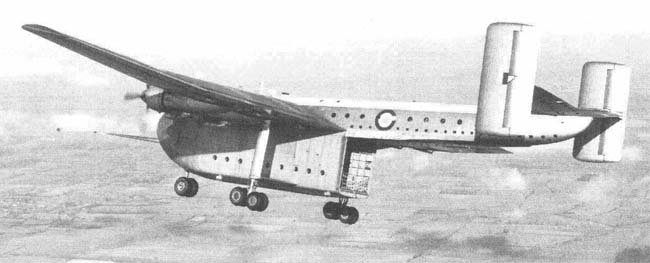
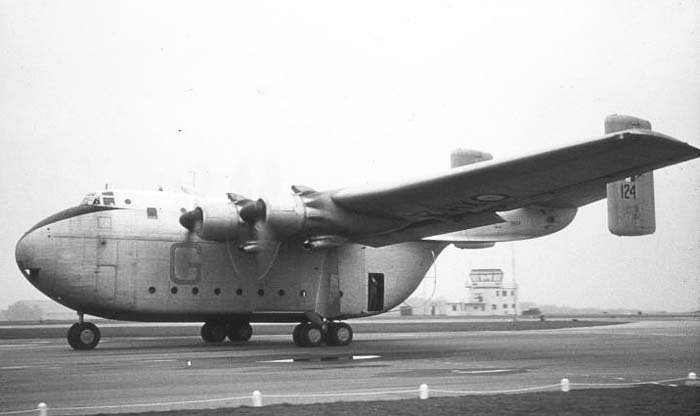
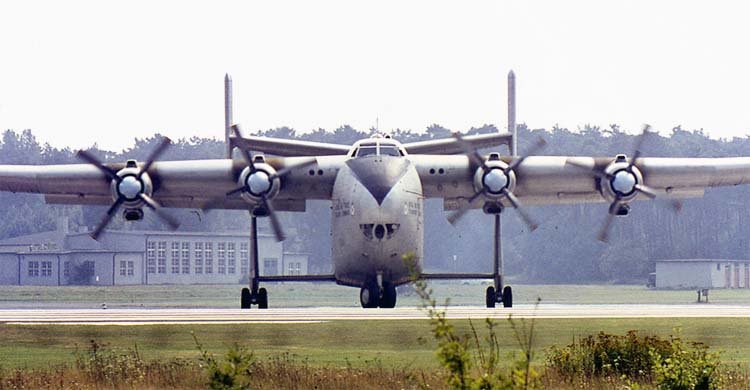
The exhibition’s advertising paid off, and an order for a second prototype soon followed. However, according to Royal Air Force (RAF) experts, the aircraft needed modifications. This decision was influenced by successful tests of dropping various equipment using extraction parachutes from low altitudes, conducted in the USA and England. Besides the possibility of using the transport in such a variant, the military demanded an increase in range. Structural reinforcement, modification of the rear doors for air dropping equipment, and the installation of additional fuel tanks led to an increase in the maximum take-off weight to 57 tons, and consequently, more powerful engines were required. The choice fell on the twin-row, air-cooled Bristol “Centaurus” engines, with a take-off power of 2850 hp. The aircraft’s overall dimensions remained almost unchanged; only the main landing gear struts were fitted with a four-wheeled bogie of smaller diameter instead of a single wheel.
During the assembly of the second Mk2 prototype at the Feltham factory, every effort was made to maximize the use of parts from the second set, originally prepared for the civilian variant. While the Mk2 was being built, the first aircraft’s main landing gear struts were fitted with four-wheeled bogies, and a series of test flights were conducted, dropping various loads by parachute from low altitudes (the rear doors were removed for this). In September 1951, the first “Universal Freighter” once again became the star of the Farnborough air show. Numerous spectators enthusiastically watched the flight of the bulky transport, which demonstrated a short landing roll using propeller reverse thrust, automatically engaged by a switch on the landing gear shock absorbers. Harold Wood complemented the shortened landing with an impressive display of all reverse thrust capabilities, causing the huge machine to move backward.
In June 1953, Wood, along with Derek Braide, head of Blackburn’s test department, first flew the second prototype. The original designation of the second machine was GAL 65, and according to the company’s system, it was assigned the index B.100, retaining the additional name “Universal Freighter” Mk2. By then, civilian customers had also become interested in the transport. Silver City Airways was involved in air transport of tourists in cars across the English Channel, using twin-engined Bristol “Freighter” aircraft.
The new spacious machine was perfectly suited for this purpose, and designers developed a variant for vehicle transport. It was planned to accommodate 6 cars, 5 motorcycles, and 42 passengers. Representatives of Silver City were satisfied with the project and assured that if the aircraft was adopted for service and serial production began, they would also order 20 machines for themselves. However, when the transport, having received its own name Blackburn “Beverley,” was already in serial production, civilian customers ultimately declined to purchase it.
The production “Beverley” differed little from the Mk2, on which a number of modifications had been carried out during testing. Since the Mk2 was created using the second set of parts from the Mk1, the first issue arose with the propellers. The powerful “Centaurus” engines were equipped with 5.03 m diameter propellers, compared to 4.42 m diameter propellers on the variant with Bristol “Hercules” engines. To prevent the propellers from touching each other, the inner engines had to be moved forward by 30 cm, and the outer ones moved the same distance closer to the wing’s edge. Additionally, the fins and elevator were made slightly larger in area, and the main landing gear bogies received Maxaret brakes.
The decision to start serial production was made at the end of 1953, and preparation for this complex work began at the Brough factory. Assembling such huge aircraft required suitable workshops, so Short became a subcontractor, as they had spacious hangars in Dumbarton where large “Sunderland” flying boats were assembled during the war. Fuselage parts were riveted in Dumbarton, and final assembly took place in Brough. The first two serial “Beverley” C MkI first flew on January 29 and March 30, 1955, respectively, and both remained with the company for various tests. The next two transports were ready in July, and the fifth production aircraft appeared at the Farnborough exhibition in September 1955. From March of the following year, the bulky transport officially entered service with the Royal Air Force, with a total order of 47 aircraft.
Compared to the Mk2 prototype, the serial Blackburn “Beverley” grew heavier to 61 tons, mainly due to structural reinforcement and, above all, the cargo floor. When transporting armed soldiers, 58 people were accommodated in the cargo cabin, and 36 in the tail boom. If troops needed to be dropped, 70 paratroopers (30 taking seats in the tail boom) could be carried aboard the “Beverley.” But the main task for the transport remained cargo hauling.
For the serial “Beverley,” the maximum transportable load was 22680 kg. In this case, fuel had to be sacrificed, and the range reached only 160 km. With a 13-ton load, the aircraft could already embark on a long journey of one and a half thousand miles—2424 km. The standard loading option included virtually all available British army armaments. The aircraft could carry two small “Sycamore” helicopters, a “Hunter” fighter with detached wings, a “Bloodhound” missile launcher with a tractor, not to mention army trucks and tractors.
The 47th Squadron, based in Abingdon, was the first to receive the new aircraft in 1956. The squadron was part of the RAF Transport Command and had previously flown Handley Page “Hastings.” It is symbolic that the unit was organized in 1916 at the airfield in Beverley, and 40 years later, retrained on an aircraft with the same name. With the start of the transport’s operation in combat units, low-altitude cargo drop tests continued. In the summer of 1956, the maximum weight of dropped equipment was increased to 11 tons, and in April of the following year, a peculiar record was set at the Brough airfield, increasing this figure to 13 tons (ballast, pulled by eight 20-meter parachutes, was dropped in flight).
To facilitate the take-off of the overloaded machine, Napier “Scarab” solid fuel boosters, placed in two packs of five each on the sides of the fuselage, were also tested on the first serial “Beverley.” The increase in thrust was noticeable, but this method was not adopted for operational use. The second RAF unit to receive the “Beverley” was the 57th Squadron, co-located with the 47th Squadron aircraft at the same Abingdon base. The squadron crews quickly engaged in air operations, transporting cargo virtually all over the world. These units’ bulky four-engined transports appeared in the skies of Europe, Cyprus, Malta, Vietnam, Africa, and the Middle East.
In 1957, “Beverley” aircraft of the 30th Squadron joined the British air forces in the Middle East, their crews, after retraining on the new aircraft in Dishforth, flew to the capital of Kenya. Aden (Yemen) became the main base for the 84th Squadron’s transports, and the 46th Squadron’s “Beverley” aircraft reached the furthest, taking off from Singapore. In service with the RAF, the “Beverley” earned a reputation as a reliable and unpretentious aircraft, capable of landing on unpaved airfields of limited size. The engines performed reliably in hot tropical climates, and perhaps the aircraft’s only drawbacks remained its low speed and range. The refinement of the ULLA (Ultra Low-Level Airdrop) system continued, including the improvement of extraction parachutes and various equipment drop units.
A Legacy of Heavy Lift and Enduring Design
In September 1955, the second serial “Beverley,” which remained with the company, received the civil registration number G-AOEK and participated in the transportation of oil equipment in the Persian Gulf. Over nine two-hour flights, the transport delivered 129 tons of various equipment from Qatar to Oman, confirming its high efficiency. But even after this, civilian customers showed no particular interest in the aircraft. The only exception was Field Aviation, which needed a large air tanker to deliver fuel to remote Arctic regions of Canada.
Blackburn designers proposed a variant with four “Centaurus” 373 engines, producing 3150 hp (with direct fuel injection), which could carry 23 tons of liquid fuel over 800 km. But all these plans remained only on paper, and not a single passenger variant of the aircraft was built for Field Aviation, although negotiations were held for such a modification. Blackburn engine specialists planned to re-equip all serial “Beverley” aircraft with the powerful “Centaurus” 373 engines, but the era of piston engines had already ended, and this idea could not be realized.
At the end of 1956, the design bureau began working on a radical modification of its aircraft, designated B.107. The high-wing twin-tail layout remained unchanged, but the latest Rolls-Royce Tyne R Ty 11 turboprop engines were chosen. In 1957, the final B.107A variant appeared in drawings, featuring retractable landing gear in streamlined bogies (like on the “Anteo”) and additional fuel tanks in the wingtips. The maximum project weight was 79 tons, and the maximum useful load reached 26 tons. With a 20-ton load, the B.107A could fly 1250 km. However, the Royal Air Force rejected the serial production of the “Beverley’s” turboprop sibling, ordering 10 “Belfast” transports from Short.
The last serial “Beverley” was rolled out of the Brough factory in May 1956. A year after Blackburn’s reorganization, the name GAL, whose designers began work on the “Beverley’s” progenitor, ceased to be mentioned. And in 1963, having joined the Hawker Siddeley Aviation group of companies, Blackburn also disappeared from directories. The RAF transports briefly outlived the company whose name they bore. In December 1967, the Blackburn “Beverley” was officially withdrawn from service, and the crews of the transport squadrons began retraining on modern Lockheed “Hercules” aircraft.
The very first serial “Beverley,” on which various tests were conducted until the end of 1972, remained airworthy the longest. This aircraft was also the only survivor of all 49 machines built (47 serial plus two prototypes), becoming an exhibit at the Military Transport Museum in the city bearing its name, Beverley. Another serial aircraft flew to Hendon in June 1968 to become one of the main attractions at the Royal Air Force Museum. However, to the great regret of all aviation enthusiasts, none of the museum’s hangars could accommodate the enormous and bulky transport, and it eventually had to be dismantled. Only fragments of the four-engined aircraft were acquired by two museums. A cockpit is in a private collection in Duxford, and the nose section of the famous giant is part of the exhibition at the aviation museum in Wroughton.
Technical Specifications
| Modification | Beverley C.Mk.I |
| Wingspan, m | 49.38 |
| Length, m | 30.30 |
| Height, m | 11.81 |
| Wing area, m2 | 270.90 |
| Empty weight | 37273 |
| Normal takeoff weight | 61200 |
| Maximum takeoff weight | 64864 |
| Engine type | 4 Piston engine Bristol Centaurus 273 |
| Power, hp | 4 x 2850 |
| Maximum speed, km/h | 384 |
| Cruising speed, km/h | 359 |
| Ferry range, km | 5938 |
| Range with 20 t cargo, km | 322 |
| Service ceiling, m | 4900 |
| Crew, crew | 4+2 |
| Payload | 80 soldiers or 70 paratroopers or 22400 kg of cargo |
Image and diagram gallery of the Blackburn Beverley
 Beverley |
 Beverley |
 Beverley. Photo: Caz Casswell |
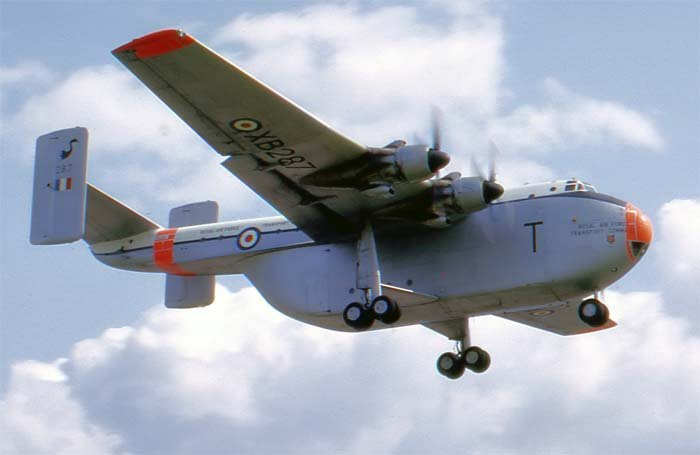 Beverley |
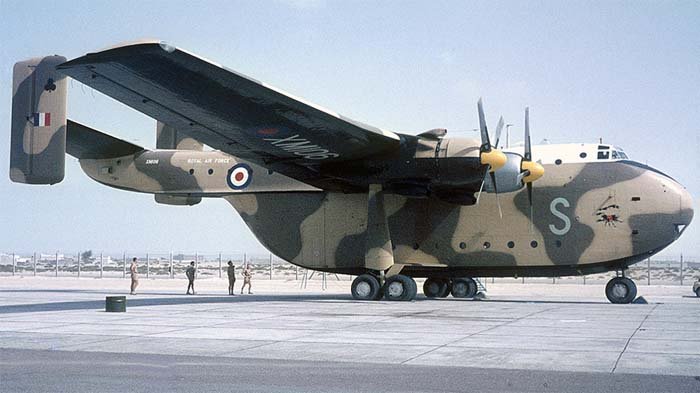 Beverley |
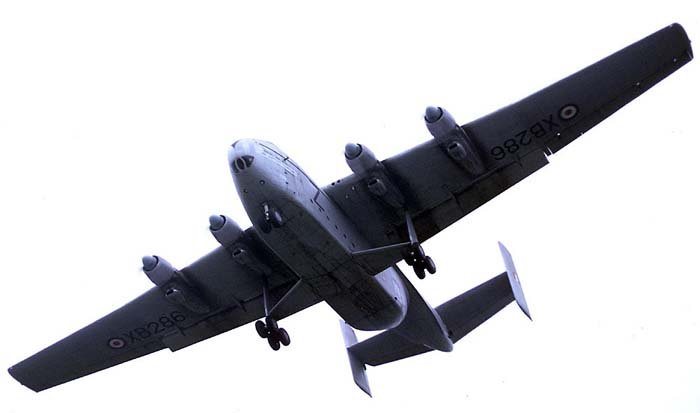 Beverley |
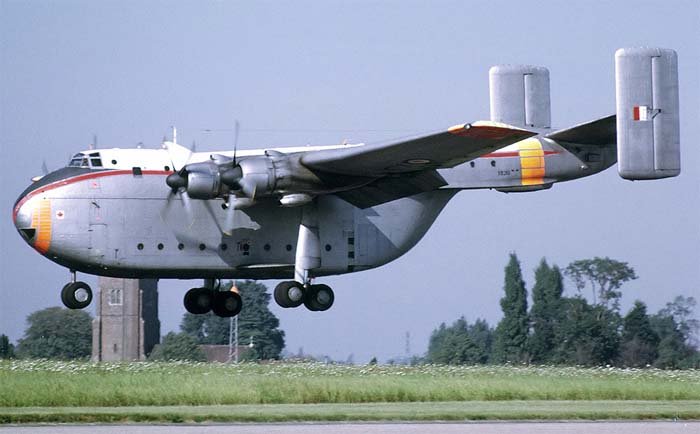 Beverley |
 Beverley |
 Beverley |
 Beverley |
 Beverley |
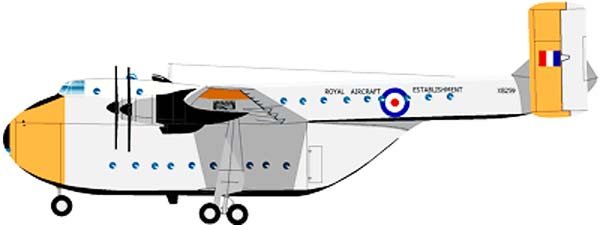 Beverley |
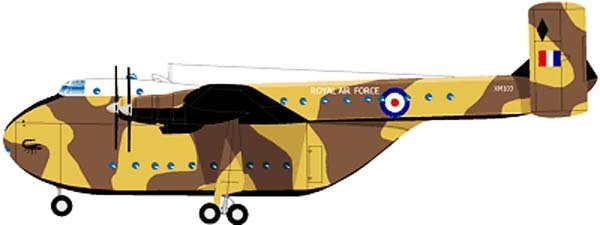 Beverley |
ArchivoAéreo Editorial Team
A group of aviation researchers and enthusiasts dedicated to documenting and preserving global aeronautical history. All articles are reviewed to ensure historical accuracy.
Sources & Accuracy
The information presented in this technical sheet has been compiled from declassified flight manuals, historical archives, and specialized literature. While we strive for maximum accuracy, some performance data may vary depending on the specific variant or operational conditions.