BlackFly
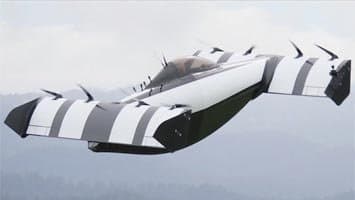
On July 12, 2018, the company Opener unveiled the BlackFly, a single-seat flying multicopter. This is the first fully electric VTOL aircraft with fixed wings. The core idea behind BlackFly is simple: a light copter doesn’t need to rotate either its wings or engines if it can stand vertically like a rocket during take-off. The prototype made its first flight on August 11, 2014, and the pre-production model took to the air on October 20, 2017.
According to the manufacturer’s statements, this unique transport vehicle has been under development for the past 9 years and is poised to become a breakthrough in short-distance travel. Furthermore, Opener promises that this project will redefine perceptions of flying vehicles and make them accessible for the first time.
Innovative Design and Performance
Compared to classic winged cars, this copter does not require acceleration for take-off; the BlackFly lifts off vertically, like a helicopter. BlackFly is designed like an electric vehicle, but it consumes much less energy. According to the manufacturers, the machine charges to 80% in just 20 minutes.
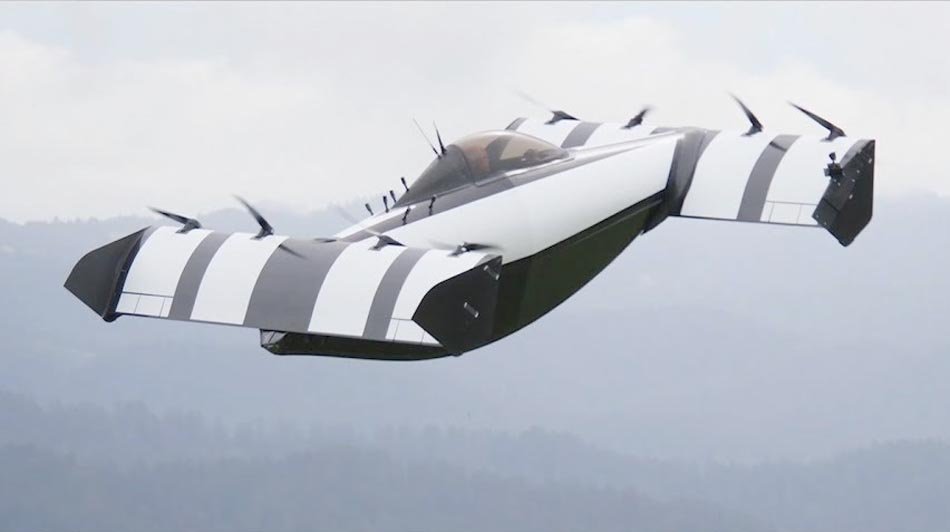
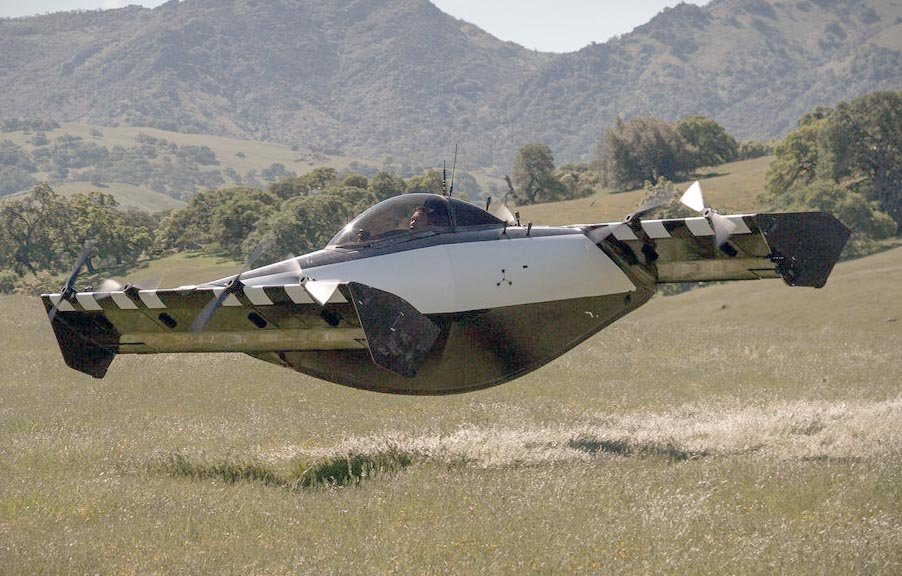
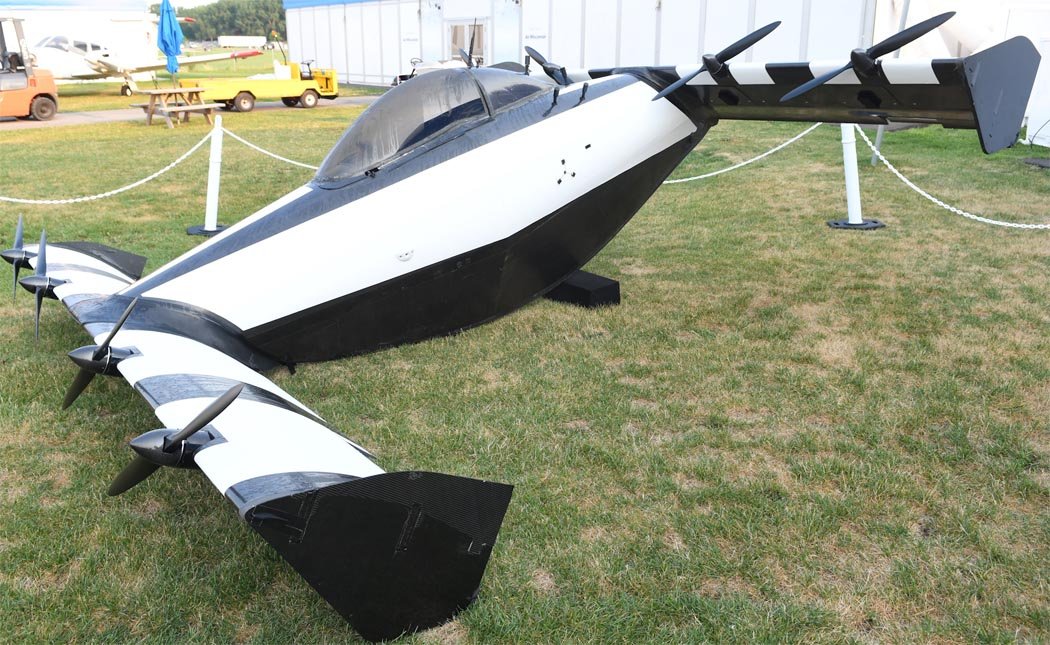
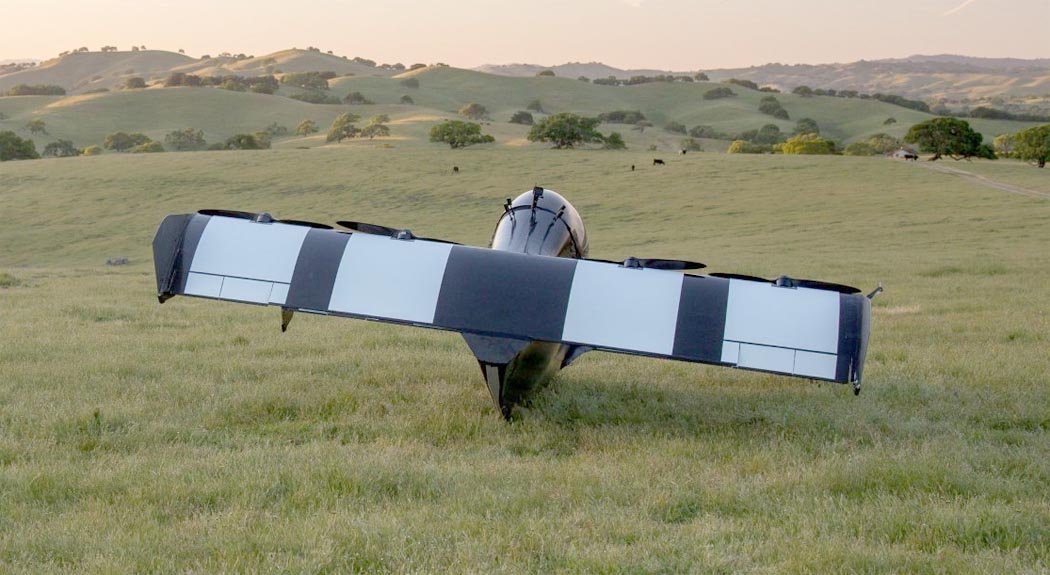
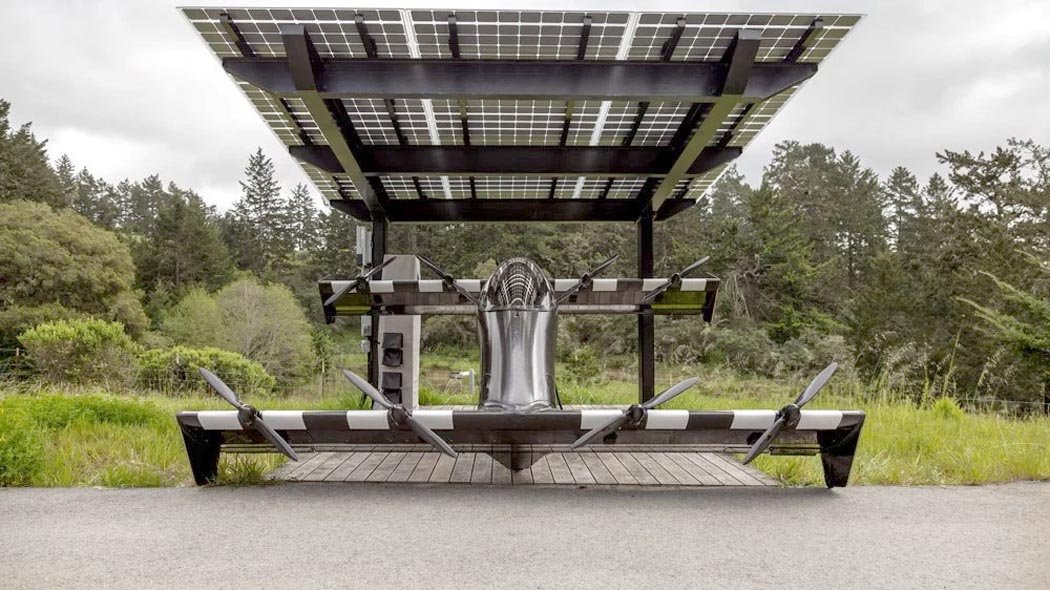
The BlackFly features eight small engines with pulling propellers, mounted on the leading edge of two wings (front and rear). The wings themselves are set at a steep angle to the horizon. During take-off, thanks to the teardrop shape of the fuselage, the copter raises its nose and ascends into the sky almost vertically. The machine can fly 64 kilometers on a single charge at a speed of 100 km/h and can land on both grass and water.
Accessibility and Regulation
However, calling the BlackFly a “flying car” wouldn’t be entirely accurate, as the aircraft doesn’t even have wheels. Nevertheless, this device offers an alternative to traditional means of transport that do not require roads. The presentation of the BlackFly by the Canadian company Opener took place in California, though the flying vehicle, positioned as personal transport, had already undergone necessary tests in Canada, where it was also approved by authorities.
The manufacturer specifically notes that BlackFly does not require a pilot’s license, but training is suggested for its operation for safety purposes. It can be operated by a person weighing no more than 114 kg and no taller than two meters.
The Future of Personal Transportation
Opener acknowledges that the capabilities of the current variant are modest. Nonetheless, the company hopes that their device will transform personal transport in the future. The single-seat BlackFly has some potential for this; for example, it can follow terrain and autonomously return home at the push of a button, thanks to GPS.
Operating Opener’s development has already been permitted in the USA. Company representatives noted that the cost of the aircraft would be comparable to that of a regular crossover SUV. To avoid dangerous situations, its use will be prohibited within city limits. This ban also applies because flying cars, according to US law, are considered ultralight aircraft. The startup attracted investments from billionaire Larry Page and promises to enter the mass market in 2019.
Technical Specifications
| Modification | Blackfly |
| Wingspan, m | 4.10 |
| Length, m | 4.08 |
| Height, m | 1.52 |
| Empty weight | 142 |
| Maximum takeoff weight | 253 |
| Engine type | 8 electric motors |
| Power, hp | 8 x 42 |
| Maximum speed, km/h | 129 |
| Cruising speed, km/h | 100 |
| Practical range, km | 64 |
| Rate of climb, m/min | 305 |
| Crew | 1 |
Image and diagram gallery of the BlackFly
 BlackFly |
 BlackFly |
 BlackFly |
 BlackFly |
 BlackFly |
ArchivoAéreo Editorial Team
A group of aviation researchers and enthusiasts dedicated to documenting and preserving global aeronautical history. All articles are reviewed to ensure historical accuracy.
Sources & Accuracy
The information presented in this technical sheet has been compiled from declassified flight manuals, historical archives, and specialized literature. While we strive for maximum accuracy, some performance data may vary depending on the specific variant or operational conditions.