Blaskor
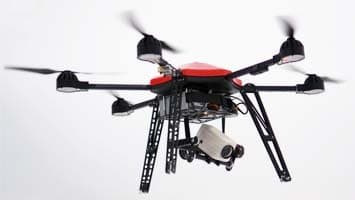
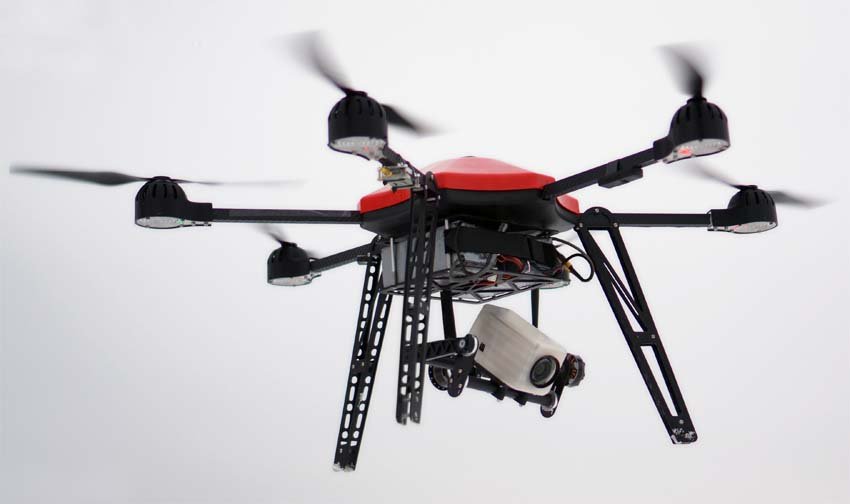
The Blaskor (MT6M-03) is a multipurpose electric helicopter-type unmanned aerial vehicle (UAV). It was developed by “Blaskor Unmanned Aerial Vehicles,” which is a subsidiary of “Company Bezopasnost.” This parent organization has 20 years of experience in designing and building integrated complexes of security engineering and technical means and fire safety systems.
Versatile Aerial Surveillance
The primary purpose of this UAV is aerial visual observation of stationary and moving objects in both the visible and infrared (thermal) spectra. Additionally, the UAV provides effective monitoring of ground and surface situations, assisting in tasks related to law enforcement, emergency prevention and response, and industrial safety.
Equipment Capabilities
The UAV can be outfitted with a thermal imager, a Full HD video camera featuring optical stabilization and 10x optical zoom, a still camera, a cargo delivery system, or any other customer-specified equipment within a 2 kg weight limit.
Advanced Control and Data Transmission
Control of the device is managed from a stationary, portable, or mobile ground control station (GCS). This GCS enables fully automatic takeoff, landing, and flight of the UAV along a route defined by the operator, composed of geographical and relative coordinates, after pre-flight preparations.
Video images are transmitted in real-time, with simultaneous recording of video information onto an onboard recording device in HD format. The video is also recorded directly onto the GCS hard drive for comprehensive data management.
Technical Specifications
| Modification | Blascor |
| Length, m | 0.67 |
| Maximum takeoff weight | 7.3 |
| Engine type | 6 electric motors |
| Power, kW | 6 x 0.36 |
| Maximum speed, km/h | 45 |
| Cruising speed, km/h | 25 |
| Range, km | 5 |
| Flight endurance, min | 30 |
| Operating altitude, m | 300 |
| Service ceiling, m | 3000 |
Image and diagram gallery of the Blaskor
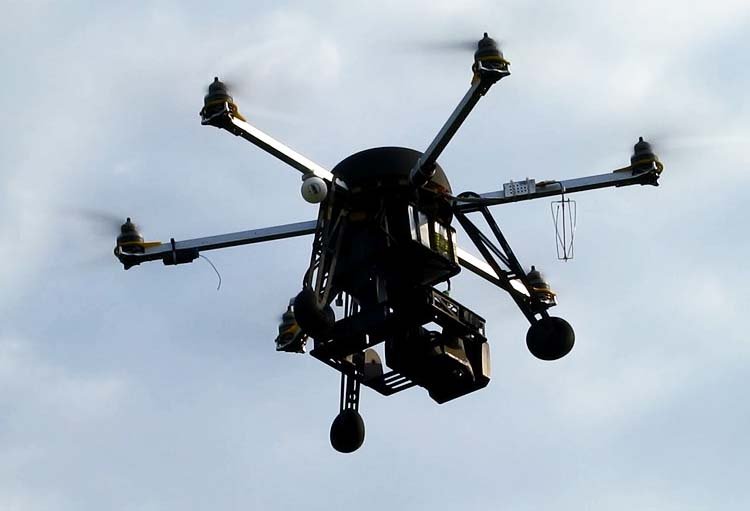 Blaskor |
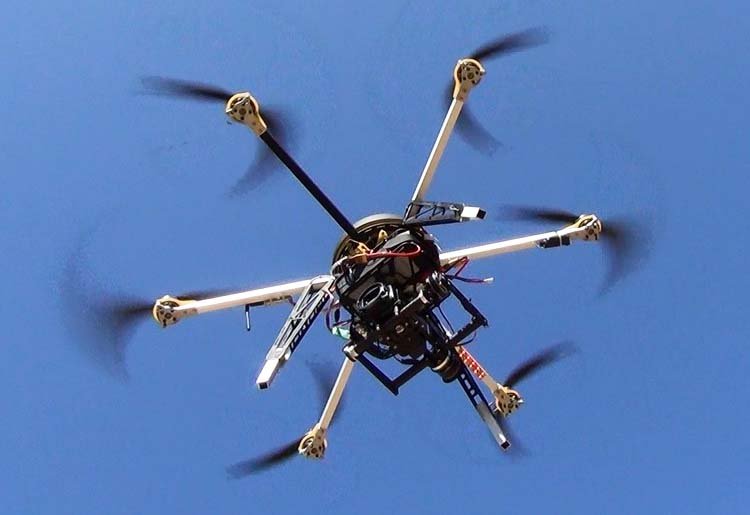 Blaskor |
 Blaskor |
ArchivoAéreo Editorial Team
A group of aviation researchers and enthusiasts dedicated to documenting and preserving global aeronautical history. All articles are reviewed to ensure historical accuracy.
Sources & Accuracy
The information presented in this technical sheet has been compiled from declassified flight manuals, historical archives, and specialized literature. While we strive for maximum accuracy, some performance data may vary depending on the specific variant or operational conditions.