Bleriot 67
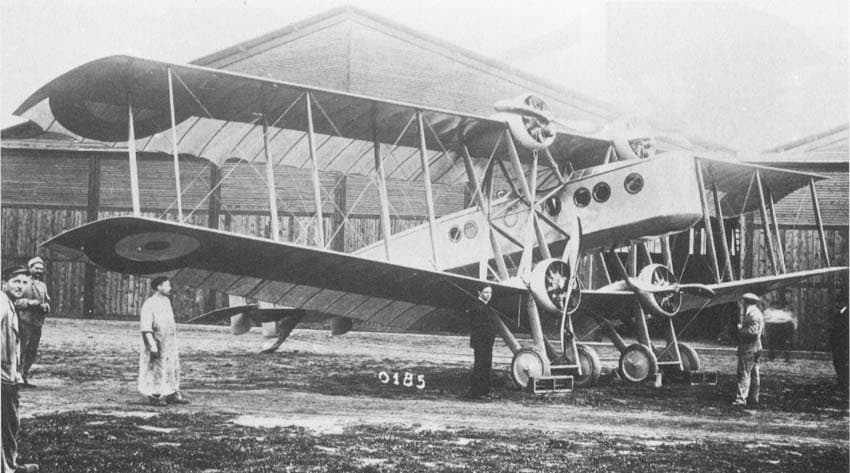
Louis Blériot, who traditionally built monoplanes before the war, attempted to develop a biplane with the outbreak of hostilities. The first twin-engine Blériot LIII (Type 53) was built in the spring of 1915, soon followed by its four-engine successor, which demonstrated advantages in strength. However, these prototypes showed too low performance and did not enter serial production. Nevertheless, the Blériot company managed to survive by license-producing Caudron aircraft.
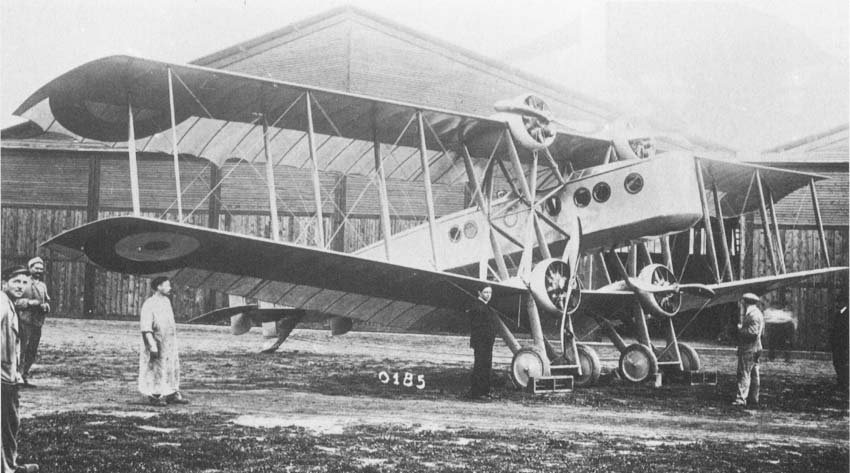
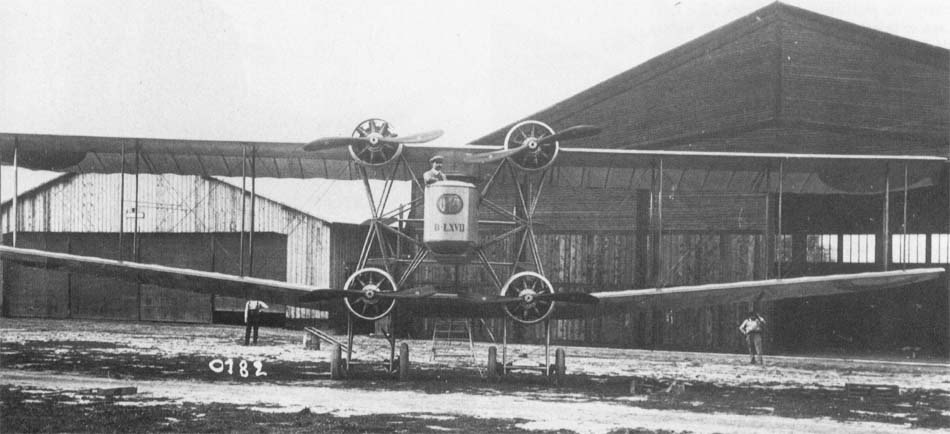
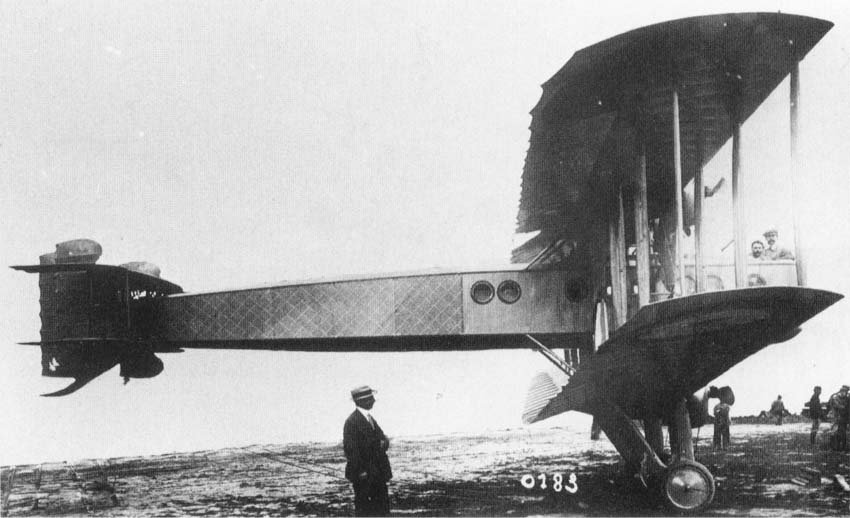
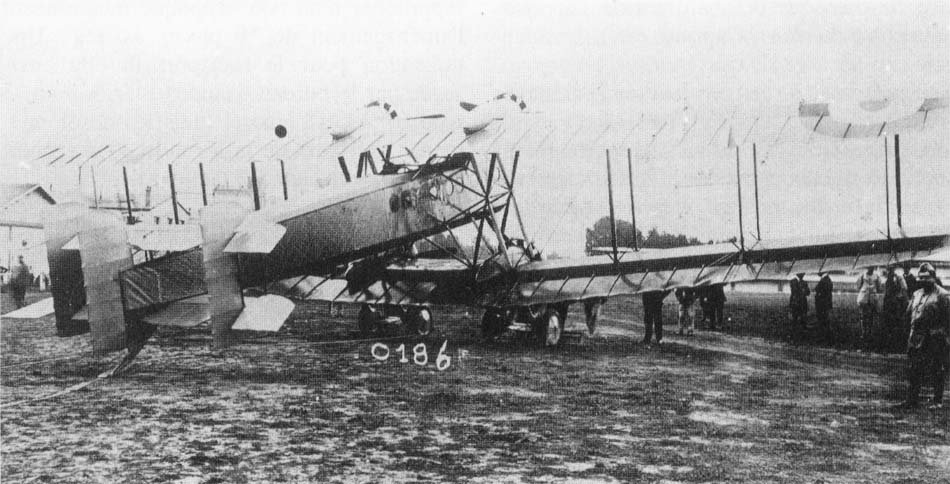
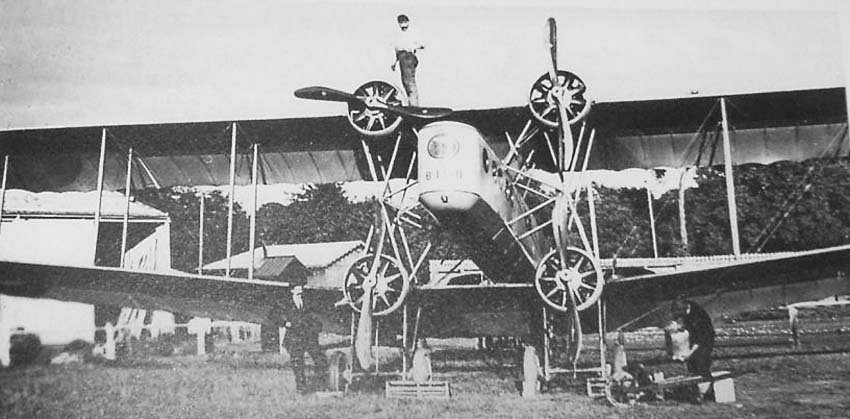
The Blériot design bureau’s answer to the “powerful aircraft competition” was the Blériot LXVII (Type 67), developed by engineer Touillet and built in Bue in the summer of 1916. The aircraft had a wooden structure with plywood covering on the forward fuselage and fabric on the tail. It was a four-engine biplane with narrow wings of equal span. The slim fuselage was located in the interplane gap and terminated in a biplane stabilizer with a three-fin vertical tail. The landing gear consisted of main struts that were two-wheel bogies, and a robust tail skid. The appearance of this new aircraft was no more unusual than many bombers of those years, such as the Siemens-Schuckert or Caproni.
Innovative Design and Early Challenges
The Blériot LXVII featured several unique characteristics. One was the “square” arrangement of the four 100 hp Gnome Monosoupape engines, installed on the leading edge of both the upper and lower wings. This allowed the powerplant to be placed as close as possible to the fuselage axis, thereby reducing potential control issues that could arise from a (very probable) failure of one of the engines. Moreover, this configuration provided greater wing stiffness compared to the 1915 four-engine prototype, whose engines were arranged in a row.
Another unique feature was the use of wing warping instead of ailerons for aircraft control. Although this control method was outdated and had begun to be phased out before the war, it was still used on a number of successful aircraft, such as the Morane-Saulnier Type N and the Fokker Type E. Blériot’s advantage was that, since the construction of the Caudron G.4, it had skillfully applied this method to “modern” aircraft. The very strong three-strut (plus engine mounting struts) wings, though relatively “soft” as implied, were reinforced by a spar and did not require a large number of bracing wires. The upper wing was straight, while the lower wing’s outer sections had a transverse V to enhance the stability of the heavy bomber. The slim fuselage, located in the interplane gap, featured eight portholes on each side, recalling a note from that time about a design with “9 seating places.” While it’s unknown if Blériot engineers considered a transport aircraft as the basis for Type 67, subsequent developments suggest such an approach with potential conversion for civilian payload.
The Blériot LXVII most likely made its first flight in Bue on September 18, 1916, piloted by test pilot Béquet; it was a simple straight flight at an altitude of 10 meters. Unfortunately, the test ended in failure, as the four-engine aircraft nosed over on landing. The cause of the accident was most likely poor visibility from the pilot’s cockpit. The wing and the central part of the fuselage withstood the impact, but its fragile rear part and mounting struts were damaged.
Béquet escaped without major problems (the cockpit’s position, quite far from the nose, had the advantage of allowing him to avoid being crushed!). However, the aircraft itself was not rebuilt. The most probable reason for this decision was that the insufficient power of the aircraft’s powerplant became evident, which would not allow it to meet all the requirements of the competition specification. The defeat was not too bitter, as competing aircraft that passed tests (Spad SE and Morane-Saulnier S) also never received orders for serial production. Perhaps it was even better, because the technologies for creating large aircraft were not yet fully developed.
Legacy and Evolution: From LXVII to Mammouth
A direct descendant of the B.LXVII was the B.LXXI (Type 71), which appeared in November 1917. This four-engine aircraft, which thanks to 220 hp Hispano-Suiza 8 Bc engines had twice the power and was equipped with ailerons, crashed during taxiing in mid-May 1918 before completing its tests.
In July 1918, the B.LXXIII (Type 73 B.N.3) appeared, equipped with even more powerful Hispano-Suiza 8 Fb engines. This aircraft differed from the previous one by a change in layout, with the fuselage lowered beneath the lower wing in the form of a “gondola.” The wingspan was now 28 meters and the weight reached almost 7 tons! However, during its first flight in Villacoublay, the aircraft suffered fuselage damage near the tail, and the machine crashed onto the airfield. The pilot, Sergeant Poulet, died in the fire that followed the accident.
Despite the tragedies, engineer Touillet was confident in the “four-engine square” formula and used it in the creation of the Blériot 71 and Blériot 74 “Mammouth.” The latter featured a much larger cross-section fuselage, capable of accommodating two crew members and either 21 passengers or a significant bomb load.
Technical Specifications
| Modification | Bl 67 |
| Wingspan, m | 19.60 |
| Length, m | 11.80 |
| Wing area, m2 | 89.00 |
| Empty weight | 1800 (1700) |
| Normal takeoff weight | 3500 (4000) |
| Engine type | 4 Piston engines Gnome Monosoupape 9 |
| Power, hp | 4 x 100 |
| Crew | 3 |
| Armament | two or three 7.7-mm machine guns, bomb load – 200 kg |
Image and diagram gallery of the Bleriot 67
 Bleriot 67 |
 Bleriot 67 |
 Bleriot 67 |
 Bleriot 67 |
 Bleriot 67 |
ArchivoAéreo Editorial Team
A group of aviation researchers and enthusiasts dedicated to documenting and preserving global aeronautical history. All articles are reviewed to ensure historical accuracy.
Sources & Accuracy
The information presented in this technical sheet has been compiled from declassified flight manuals, historical archives, and specialized literature. While we strive for maximum accuracy, some performance data may vary depending on the specific variant or operational conditions.