BOK-3
Origins and Development
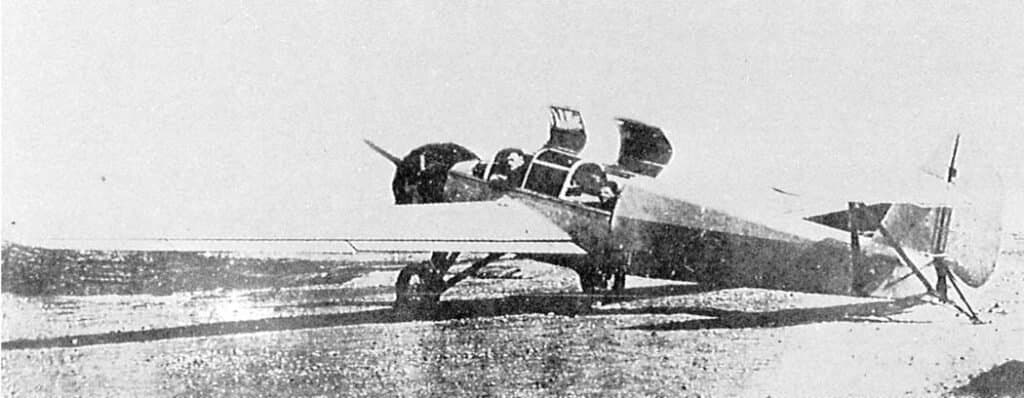
Mentions of the BOK-3 aircraft are scarce in aviation publications, likely due to its origins within the Bureau of Special Designs (BOK). This organization primarily focused on creating stratospheric aircraft, with only three of its projects—BOK-2, BOK-3, and BOK-5—deviating from this main purpose.
Work on the “Executive Committee aircraft” (IS), later indexed as BOK-3, began in 1933 at the V.R. Menzhinsky Factory under the TsKB No.9 plan. Production concluded at Factory No.35 in Smolensk. A general layout sketch of the BOK-3, signed by I.I. Tsebrikov, then a recent institute graduate leading BOK’s general design sector, is still preserved.
Design Innovations
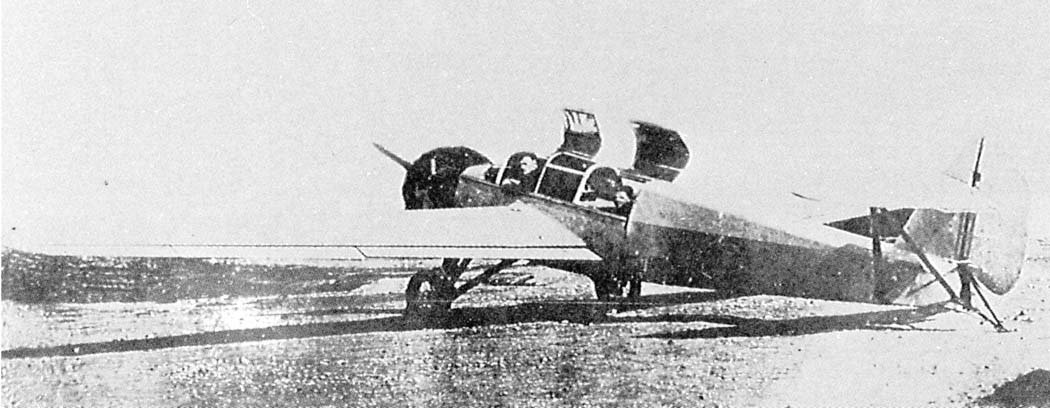
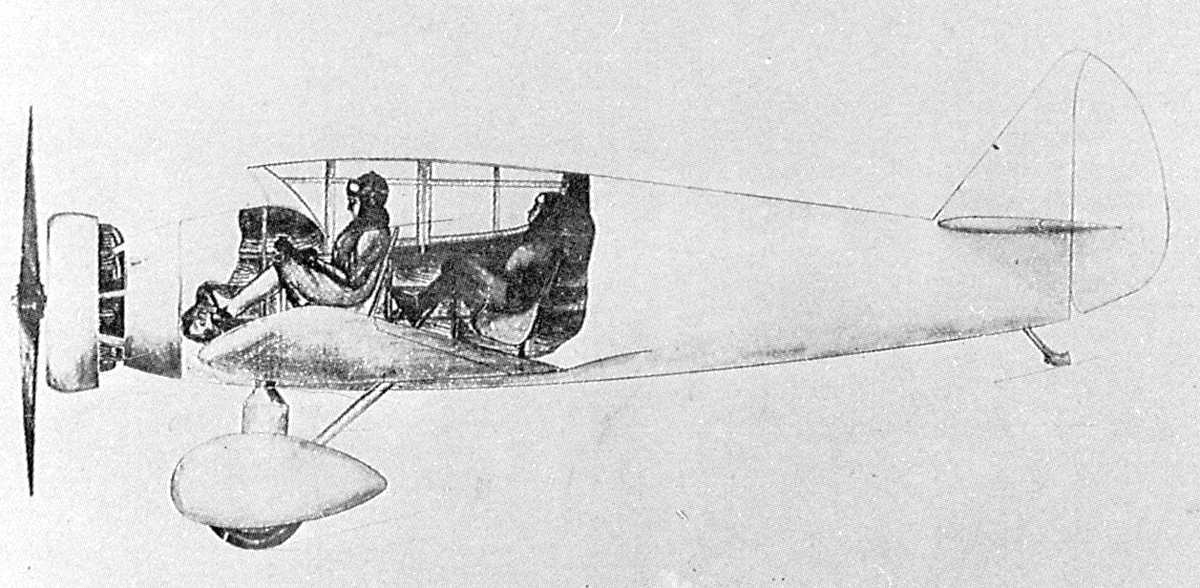
The actual BOK-3 differed significantly from its initial project design, primarily in the canopy’s shape. The original “visor” front section, fashionable at the time, quickly gave way to the more streamlined forms implemented in the constructed aircraft. The horizontal empennage, initially cantilevered, was redesigned with struts, which reduced the empty weight of the aircraft while maintaining flight characteristics. The rudder and tail skid also underwent modifications to optimize performance.
Operational Versatility and Specifications
The BOK-3 was designed for multiple purposes: local communication (as an executive committee aircraft), training military pilots, and agricultural needs. In its training configuration, the machine featured dual controls and could be equipped with a PV-1 machine gun (for firing through the propeller), a DA turret machine gun, and bomb racks capable of carrying up to 100 kg of bombs, along with an aerial camera.
When used for agricultural work, the BOK-3 could be fitted with special equipment for crop dusting and aerial seeding, showcasing remarkable versatility. This adaptability allowed the aircraft to fulfill a wide array of operational roles.
The aircraft was an all-wooden low-wing monoplane with folding wing consoles and a monocoque fuselage. The wings and empennage were covered with fabric, while the framework for the ailerons and empennage was made of duralumin. With 190-liter fuel tanks, the BOK-3 could achieve a flight duration of up to three hours.
While specific flight performance data remains undiscovered, geometric characteristics of the first TsKB-9 variant are available: a wingspan of 11.0 m and an aircraft length of 7.10 m. The BOK-3 was designed around the M-48 engine. This particular engine, also installed on the experimental U-3 aircraft, was produced in very limited quantities, a factor that likely contributed to the BOK-3’s obscure fate.
Technical Specifications
| Modification | BOK-3 |
| Wingspan, m | 11.00 |
| Aircraft length, m | 7.10 |
| Engine type | 1 Piston engine M-48 |
| Power, hp | 1 x |
| Crew | 2 |
Image and diagram gallery of the BOK-3
 BOK-3 |
 BOK-3 |
ArchivoAéreo Editorial Team
A group of aviation researchers and enthusiasts dedicated to documenting and preserving global aeronautical history. All articles are reviewed to ensure historical accuracy.
Sources & Accuracy
The information presented in this technical sheet has been compiled from declassified flight manuals, historical archives, and specialized literature. While we strive for maximum accuracy, some performance data may vary depending on the specific variant or operational conditions.