Br.761 Deux Ponts
Origin and First Flight
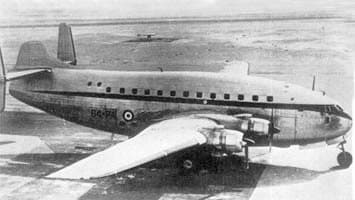
The design of the Breguet 761 Deux Ponts double-deck transport aircraft commenced in 1944. The prototype, fitted with four Gnome-Rhône 14R radial engines producing 1590 hp, built by SNECMA, made its maiden flight on February 15, 1949.
Technical Specifications and Evolution
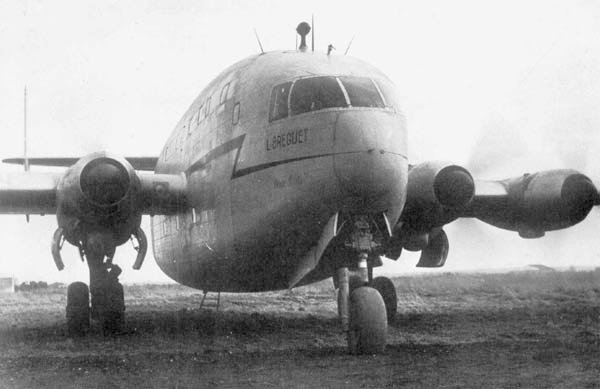
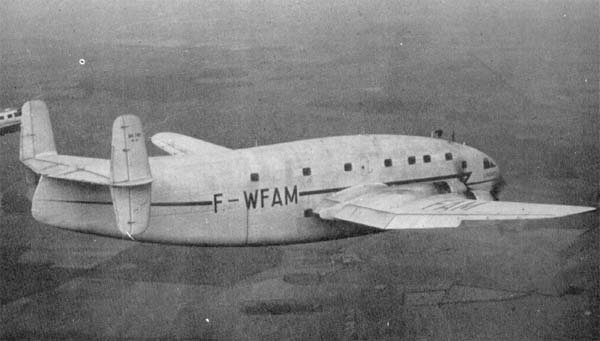
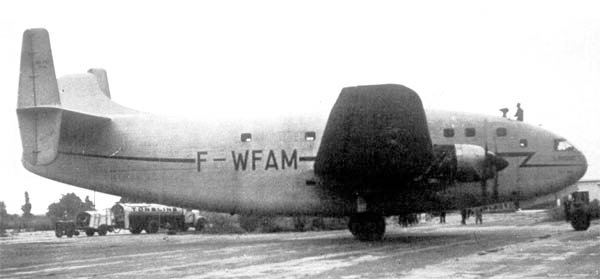
This aircraft featured an all-metal construction with a cantilever mid-wing design. It was equipped with a retractable tricycle landing gear, which included twin-wheel main struts. The tail assembly consisted of a high-mounted horizontal stabilizer and vertical stabilizers located at the ends of the horizontal one.
The three pre-production Br.761S aircraft showcased notable differences. They were powered by Pratt & Whitney R-2800-B31 radial engines, each delivering 2020 hp. Furthermore, these variants featured modified wingtips, a third central fin, and a crew of four.
Technical Specifications
| Modification | Br.76 1 |
| Wingspan, m | 41.66 |
| Length, m | 28.70 |
| Height, m | 9.53 |
| Wing area, m2 | 178.60 |
| Empty weight | 22050 |
| Maximum takeoff weight | 40000 |
| Engine type | 4 Piston engines Gnome-Rhône 14R-4 |
| Power, hp | 4 x 1590 |
| Maximum speed, km/h | 400 |
| Cruising speed, km/h | 320 |
| Practical range, km | 3800 |
| Practical ceiling, m | 6000 |
| Crew, crew members | 4 |
| Payload | 126 passengers or 12 passengers and 13500 kg of cargo |
Image and diagram gallery of the Br.761 Deux Ponts
 Br.761 Deux Ponts |
 Br.761 Deux Ponts |
 Br.761 Deux Ponts |
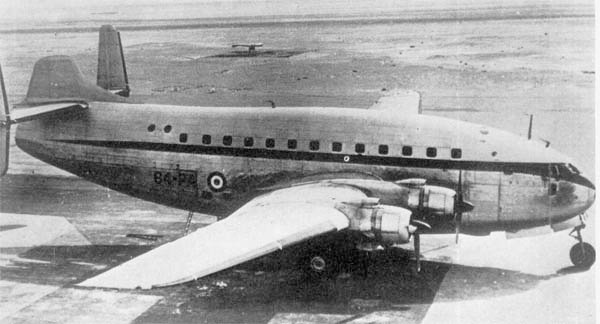 Br.761 Deux Ponts |
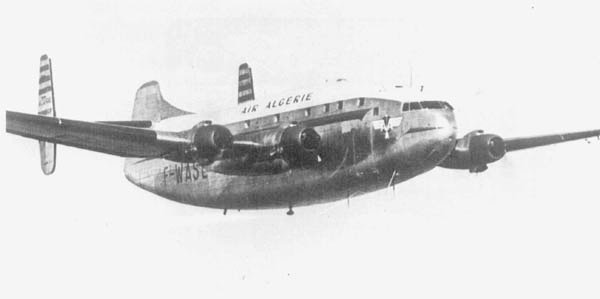 Br.761 Deux Ponts |
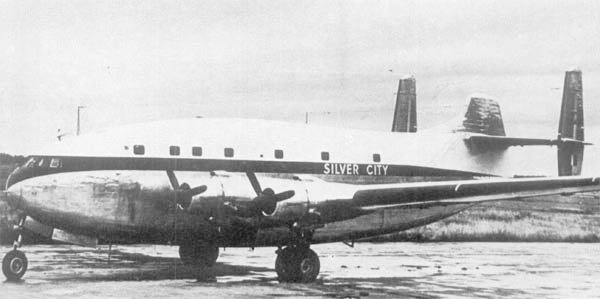 Br.761 Deux Ponts |
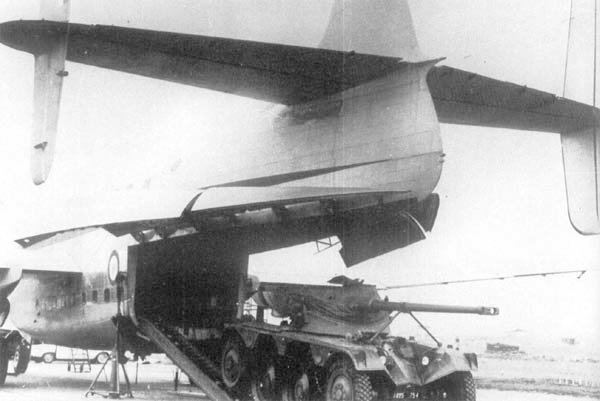 Br.761 Deux Ponts |
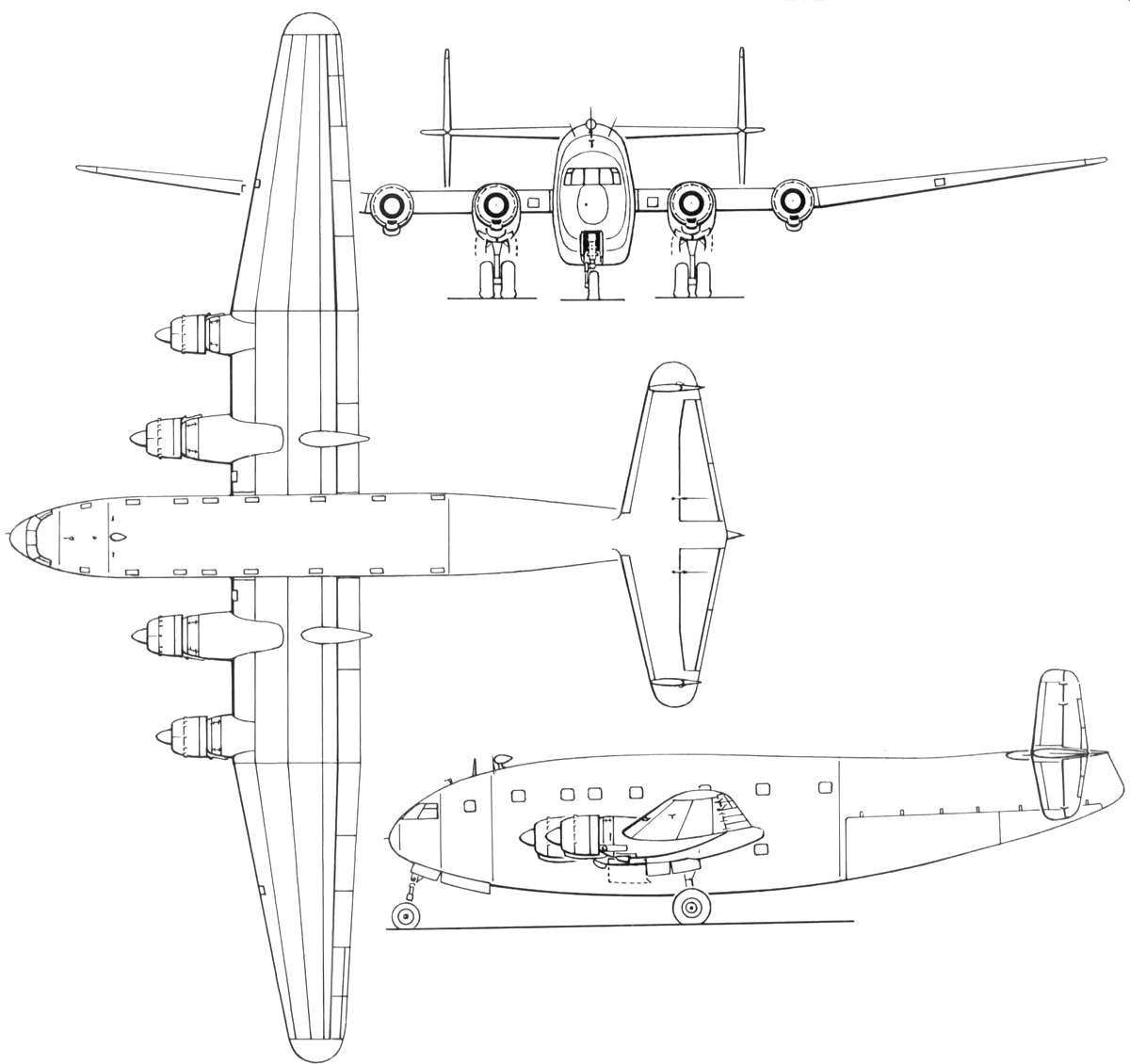 Br.761 Deux Ponts |
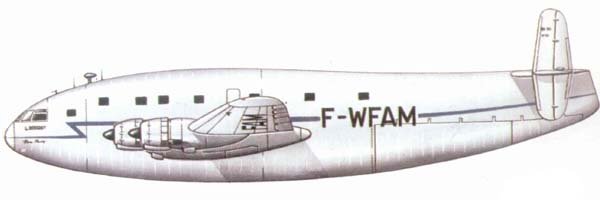 Br.761 Deux Ponts |
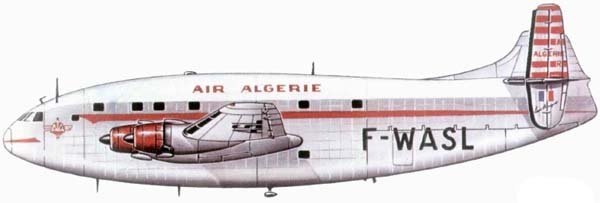 Br.761 Deux Ponts |
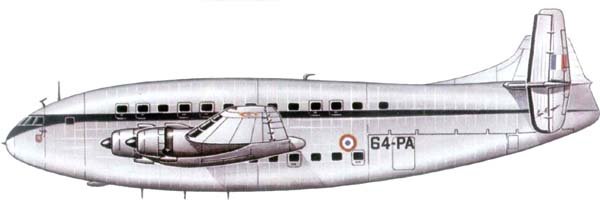 Br.761 Deux Ponts |
ArchivoAéreo Editorial Team
A group of aviation researchers and enthusiasts dedicated to documenting and preserving global aeronautical history. All articles are reviewed to ensure historical accuracy.
Sources & Accuracy
The information presented in this technical sheet has been compiled from declassified flight manuals, historical archives, and specialized literature. While we strive for maximum accuracy, some performance data may vary depending on the specific variant or operational conditions.