Bristol Type 192 Belvedere
Between 1952 and 1953, the fine-tuning of the 850 hp ‘Leonides Major’ engine was completed, which was then installed in three subsequent prototypes of the Bristol-173 helicopter: Mk.3, Mk.4, and Mk.5. The Mk.5 prototype was built as a carrier-based variant and was considered the direct predecessor of the Bristol-191 helicopter.
The construction of subsequent experimental aircraft was carried out under the Bristol-192 helicopter development program. In addition to new powerplants, the prototypes also received new four-bladed main rotors. The third prototype, which featured a V-shaped stabilizer similar to the first machine, performed its first flight on November 9, 1956, while the fourth and fifth helicopters were not completed.
These ‘birds’, as well as two fuselages of unfinished Bristol-191 helicopters, were used in various ground tests: resonance tests, control system development, and synchronizing shaft design.
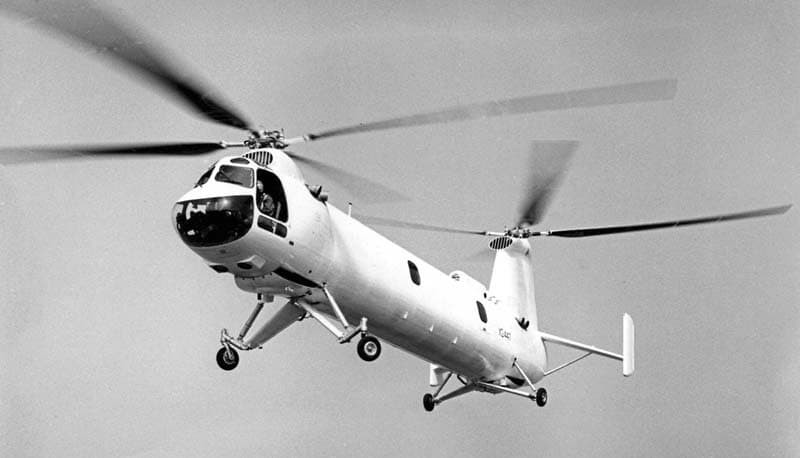
The most important difference of the Bristol-192 helicopter from its predecessors was the installation of two Napier ‘Gazelle’ NGa.2 turboshaft engines. The prototype made its first flight on July 5, 1958. The aircraft was entirely painted white and had the registration code ‘XG-447’.
Flight tests culminated on May 30, 1961, with a flight from Battersea to Paris for the international air show. The machine demonstrated a record time for helicopters—1 hour, 41 minutes, and 43 seconds—despite one engine failing during the flight! The helicopter was piloted by a crew consisting of commander and Bristol senior test pilot S. Hosegood, co-pilot D. Farquharson, and flight engineer G. Banks.
Promotional and commercial use of the helicopter began even before the completion of testing. For instance, in October 1959, the Bristol-192 transported a metal frame for a radiotelescope antenna, measuring 8 meters 30 centimeters in diameter and weighing 900 kg, from Cambridge to its installation site, a distance of approximately 10 km.
Production and Operational Service
Serial production of Bristol-192 helicopters, under the designation ‘Belvedere’ H.C.1, began in 1960. A large number of changes were introduced into the aircraft’s design, primarily the installation of all-metal, rectangular main rotor blades and a new stabilizer. This new, kinked stabilizer featured a negative V-angle and lacked end plates.
The first three production aircraft, which still had wooden main rotor blades and ‘intermediate’ type stabilizers (already without end plates, but still without the final kink), were handed over to the RAF on October 13, 1960. Troop trials of the ‘Belvedere’ took place in a specially formed unit at RAF Odiham, commanded by Squadron Leader J. Dowling. The helicopters bore the registration codes ‘XG-453’, ‘XG-454’, and ‘XG-456’. By the summer of 1961, the new helicopters entered service with the first (66th) of three squadrons of the RAF’s 38th Group. The squadron was stationed at Odiham and was still commanded by Dowling. In October 1961, the 66th Squadron participated in the large-scale ‘Spearpoint’ exercises, conducted in the northern regions of West Germany.
The company hoped for the widest possible application of its product. The helicopter was intended for use as a transport, passenger, crane, anti-submarine, ambulance, and search-and-rescue aircraft.
Extensive design work was undertaken for the ‘Bristol-192C’ passenger variant. It differed from the military version by a new central fuselage section designed for comfortable seating of 24 passengers; the cabin sides were to have 13 rectangular windows each. It was expected that serial production of the commercial model would begin in early 1961. Company managers believed that the helicopter would be most in demand on the London city center – Paris city center route. The cost of a ‘ticket’ was even calculated and announced as 22.14 pounds sterling.
Before completing the design work for the ‘Bristol-192C’, the company began developing a more spacious machine, the ‘Bristol-194’, designed to carry 35 passengers. While retaining the overall layout of its predecessor (which was yet to be born), the 194 model had significant differences: larger dimensions, five-bladed main rotors, and a wing installed in the middle part of the fuselage, with a span more than respectable for a helicopter.
The interest in the commercial use of large-capacity helicopters at Bristol was not accidental. The British airline BEA actively developed helicopter transport in the 1950s. As early as 1952, Peter Masefield, one of the company’s leaders, stated: ‘By 1960, we need a large multi-engine helicopter capable of carrying 40-70 passengers at 150 mph.’ This statement was by no means made out of nowhere: in August 1951, the company distributed a specification for a prospective rotary-wing aircraft (‘BEAline bus’) with a capacity of 30-45 people, a flight range of 115-230 miles, and a cruising speed of 138 mph. It was no coincidence that the ‘Bristol-173’ prototype bore the BEA emblem on its fuselage and received the unofficial name ‘Bus’.
However, the company’s management was initially skeptical about the capabilities of the first British tandem-rotor helicopter. It was considered merely a transitional model. The ‘Bristol-192’ also did not satisfy the company’s appetite, and no further development followed.
Between 1960 and 1962, the British armed forces received 26 ‘Bristol-192’ helicopters. The ‘Bristol-192’ helicopters did not serve long in the UK military. The aircraft had a short airframe life of only 1600 hours. When, in the late 1960s, the majority of helicopters of this type were nearing the end of their service life, the country’s government decided to purchase ‘Chinook’ helicopters from the USA. The last ‘Belvedere’ was decommissioned in 1969. The history of British tandem-rotor helicopters concluded, becoming almost a complete analogy to the history of the Soviet Yak-24 helicopter: immense hopes, modest practical implementation, and a departure from the scene just as the lion’s share of problems had been solved.
Design and Technical Specifications
The ‘Bristol-192’ helicopter is built according to a tandem-rotor scheme. The fuselage is all-metal, semi-monocoque type; the structural frame is formed by Z-shaped stringers and frames. In the nose section, there is a two-seat cockpit, with the pilot on the right and the co-pilot on the left; the backrest of the co-pilot’s seat is foldable. Both workstations are equipped with all necessary helicopter controls. The instrument panel is arranged so that the main instrument readings can be seen from both workstations. There are doors on both sides of the cockpit that open upwards.
Behind the cockpit is the compartment for the front turboshaft engine and the front fuel tank.
The central part of the fuselage is occupied by the cargo cabin, with two windows on each side. The cabin dimensions are: length 7.4 m, width 1.6 m, height 1.5 m. On the right side, there is a cargo door, and on the left, an emergency hatch. The door opens upwards and can be fixed in the open position. A winch with a lifting capacity of 270 kg and a searchlight are mounted on the inside of the door. A narrow passage is provided between the cargo and pilot cabins on the left side of the engine compartment. Foldable seats for 18 paratroopers are installed along the sides of the cargo cabin. The flight engineer’s seat is secured on the bulkhead between the cargo cabin and the front engine compartment. The fuselage ends in a tall main rotor pylon-fin.
The helicopter is equipped with two Napier ‘Gazelle’ turboshaft engines, each with a takeoff power of 1650 hp (nominal power 1300 hp, cruising power 920 hp). The engines are installed vertically directly in front of the front and rear main rotors. The front engine is tilted forward by 7°, and the rear one backward by 15°. The shaft axis of the front engine is parallel to the shaft of the front main rotor; the difference between the inclination of the axes of the rear engine and the main rotor is compensated by a bevel gear. The engine air intakes, in the form of elliptical openings, are located on the lower surface of the fuselage in convex removable panels. The helicopter has the ability to perform horizontal flight on a single operating engine.
The main rotors are four-bladed. The front main rotor rotates counter-clockwise (when viewed from above), and the rear one clockwise. The trapezoidal blades, when viewed in plan, are made of wood, with a blade chord of 0.635 m at the root and 0.395 m at the tip. The main rotor hubs have vertical and horizontal hinges.
The total capacity of the three fuel tanks is 2545 liters. Half of the fuel supply is held in the front tank, the other half in the two rear tanks. The tanks are connected by a single fuel line; however, in normal mode, fuel from the front tank is supplied only to the front engine, and from the two rear tanks to the rear engine.
The four-point pyramidal landing gear is designed for normal landings with a vertical speed of 2.4 m/s and emergency landings with a vertical speed of 3.6 m/s. The wheels of the two front struts are self-orienting. All wheels are equipped with hydraulic brakes, and dampers are installed on the front struts to eliminate self-oscillations. The landing gear struts are equidistant from the helicopter’s center of gravity.
The helicopter was equipped with quite sophisticated radio-technical equipment for its time, including ‘Tacan’ and ‘Decca’ radio navigation systems, a radio altimeter, a ten-channel HF band transceiver radio station, and an internal intercom system for three users.
Technical Specifications
| Modification | Belvedere HC.Mk.1 |
| Main rotor diameter, m | 14.90 |
| Length, m | 27.30 |
| Height, m | 5.18 |
| Empty weight, kg | 4750 |
| Maximum takeoff weight, kg | 8165 |
| Engine type | 2 Napier Gazelle N.Ga.2 gas turbine engines |
| Power, hp | 2 x 1650 |
| Cruising speed, km/h | 200 |
| Ferry range, km | 740 |
| Range with full load, km | 120 |
| Service ceiling, m | 4040 |
| Static ceiling, m | 2450 |
| Crew | 2-3 crew |
| Payload | up to 18 soldiers or 2722 kg of cargo |
Image and diagram gallery of the Bristol Type 192 Belvedere
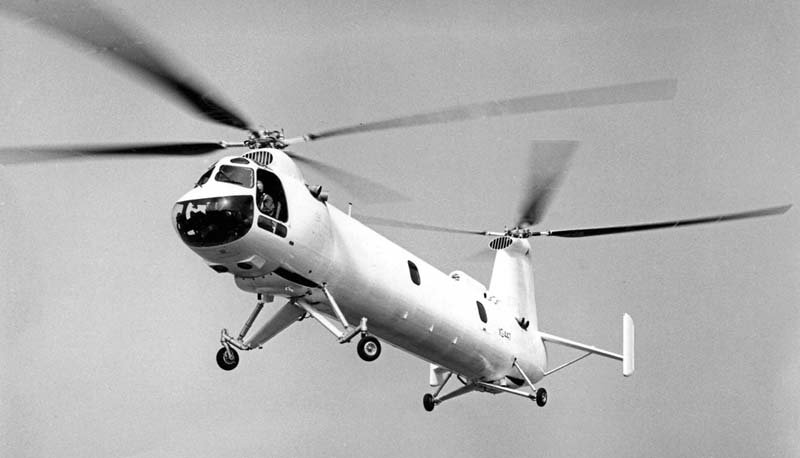 Bristol Type 192 Belvedere. Photograph: RAScholefield |
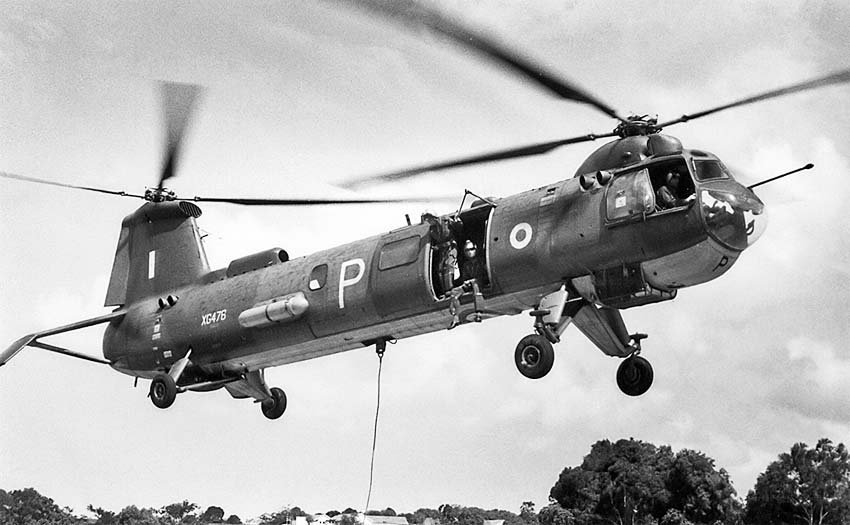 Bristol Type 192 Belvedere. Photograph: Laurence Bean |
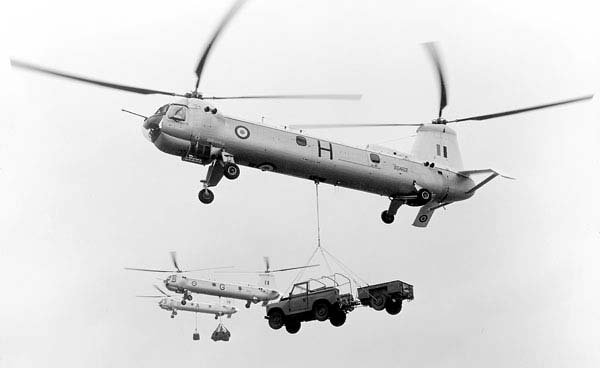 Bristol Type 192 Belvedere |
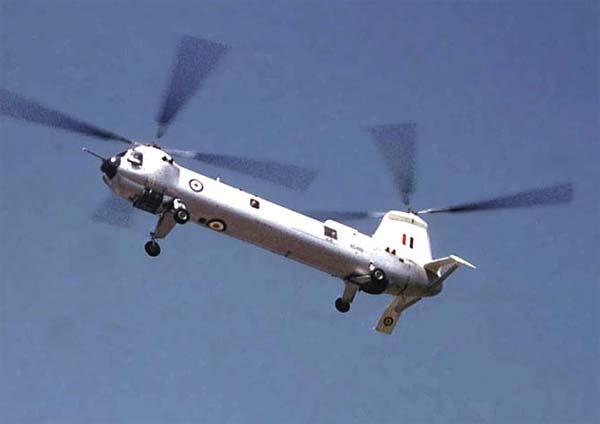 Bristol Type 192 Belvedere |
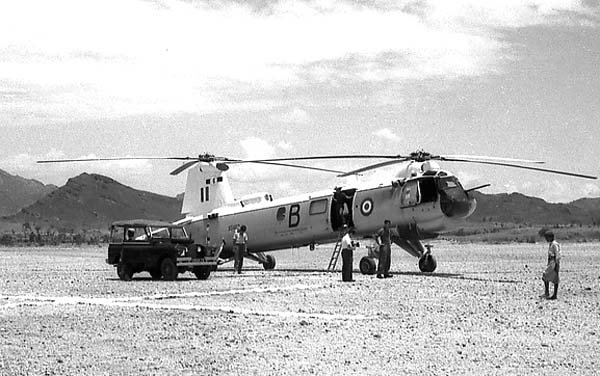 Bristol Type 192 Belvedere. Photograph: Peter Pickering |
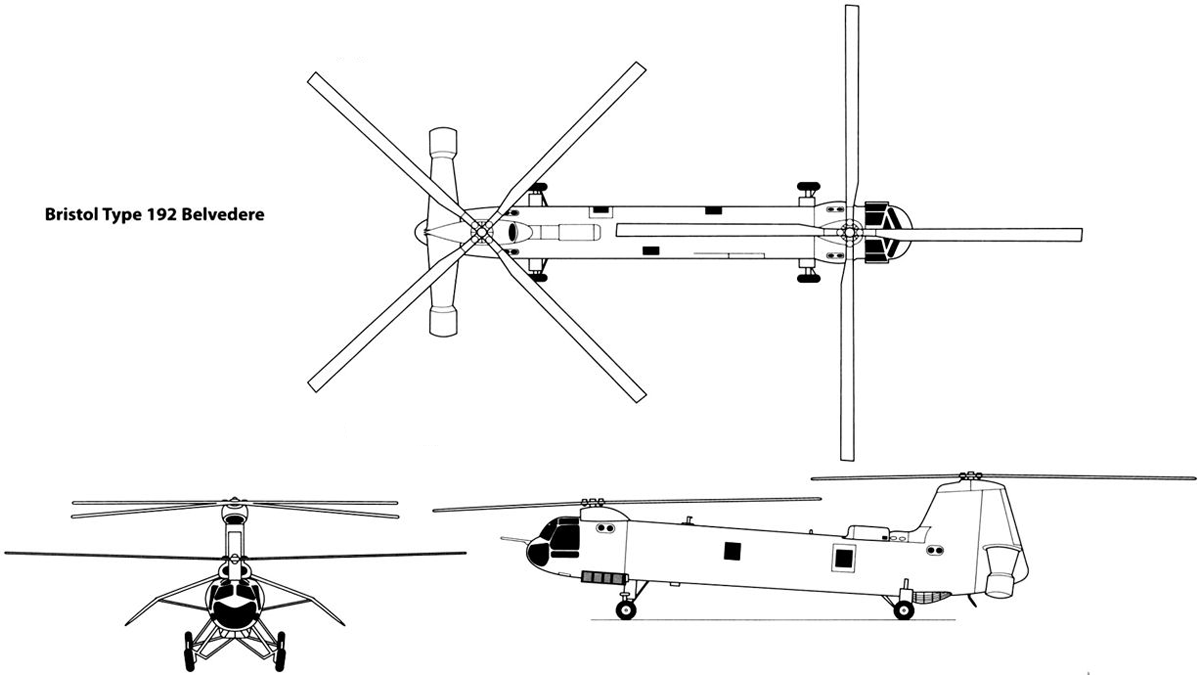 Bristol Type 192 Belvedere |
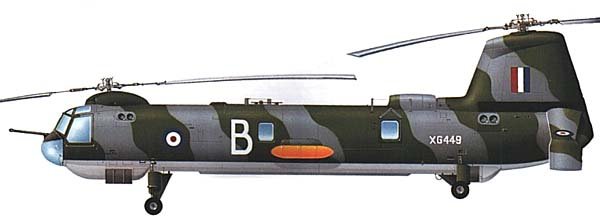 Bristol Type 192 Belvedere |
ArchivoAéreo Editorial Team
A group of aviation researchers and enthusiasts dedicated to documenting and preserving global aeronautical history. All articles are reviewed to ensure historical accuracy.
Sources & Accuracy
The information presented in this technical sheet has been compiled from declassified flight manuals, historical archives, and specialized literature. While we strive for maximum accuracy, some performance data may vary depending on the specific variant or operational conditions.