Buscaylet-de Monge 5/2

The company “Buscaylet Pere et Fils-Bobin et Cie”, which had been involved as a subcontractor in aircraft construction during World War I, decided immediately after its end to undertake the design and construction of aviation equipment independently. Louis de Monge was invited as the chief designer, and the first parasol-wing fighter prototype developed by him at the firm was designated Buscaylet-de Monge 5/2.
Innovative Design and Development
This fighter was an evolution of the de Monge 5/1 racing aircraft, which crashed during a monoplane configuration flight in 1921. The Buscaylet-de Monge 5/2 featured a mixed wood-metal construction with metal skin, and was powered by a 300 hp V-shaped Hispano-Suiza 8Fb engine.
An unusual feature of the racing machine was its ability to transform into a sesquiplane by mounting two lower wing consoles. It was precisely in the sesquiplane configuration that the aircraft performed its first test flights, though the monoplane configuration was retained for high-speed flights.
Concept and Evaluation
De Monge decided to retain this feature on the fighter, believing that in the high-altitude variant, the sesquiplane would be more efficient due to an increase in total lifting surface area from 24.00 m² to 32.00 m². The fighter prototype made its first flight in 1923.
A Design Deemed Too Radical
However, the French Air Force considered the 5/2 model to be too radical. As a result, all further work on the project was ceased.
Technical Specifications
| Modification | 5/2 |
| Wingspan, m | 10.90 |
| Length, m | 7.15 |
| Height, m | 2.70 |
| Wing area, m2 | 24.00 |
| Normal takeoff weight | 1350 |
| Engine type | 1 Piston engine Hispano-Suiza 8Fb |
| Power, hp | 1 x 300 |
| Maximum speed, km/h | 270 |
| Cruising speed, km/h | 235 |
| Service ceiling, m | 7500 |
| Crew, crew members | 1 |
| Armament: | two fixed 7.7 mm Vickers machine guns were planned in the forward fuselage |
Image and diagram gallery of the Buscaylet-de Monge 5/2
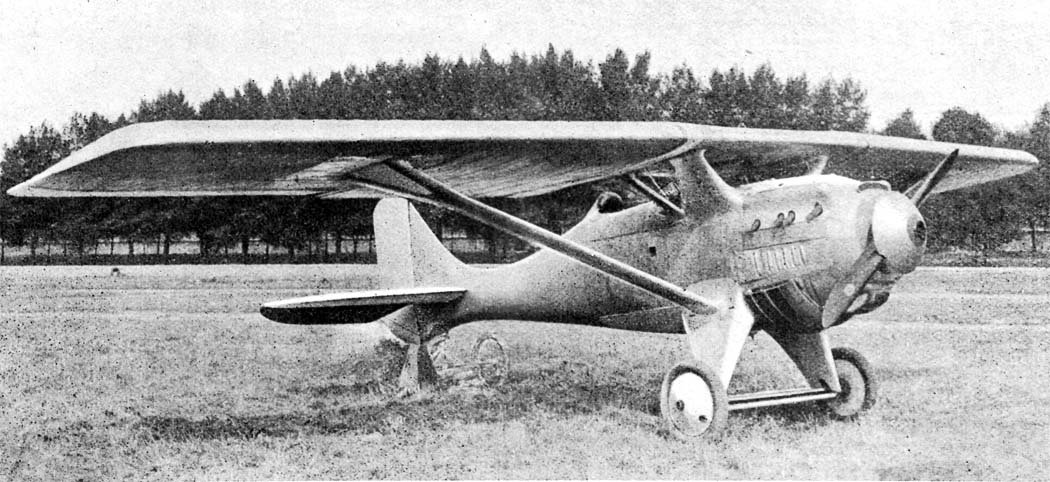 5/2 |
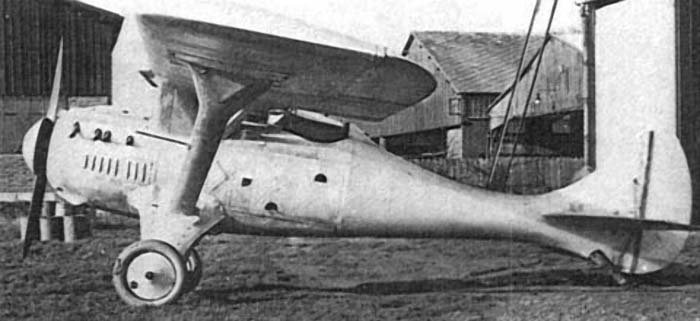 5/2 |
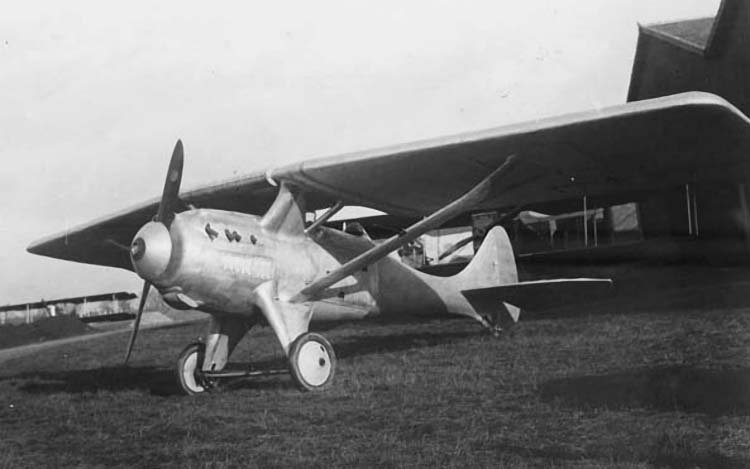 5/2 |
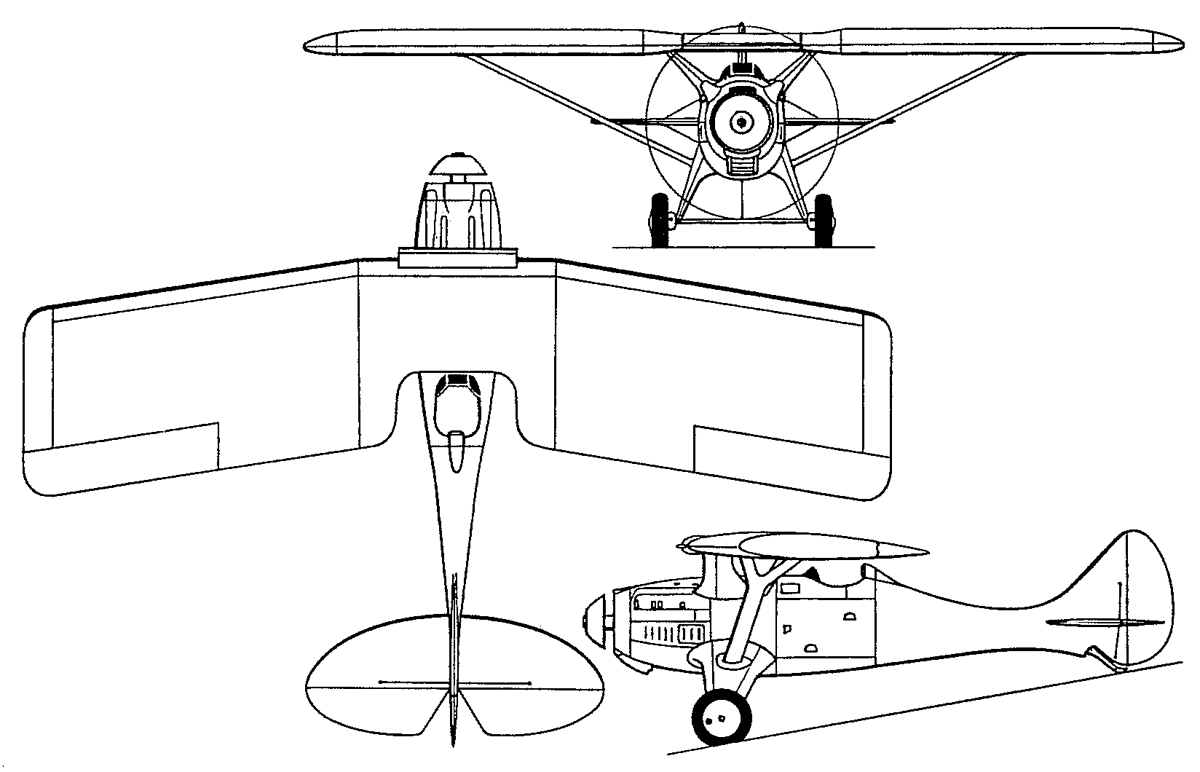 5/2 |
ArchivoAéreo Editorial Team
A group of aviation researchers and enthusiasts dedicated to documenting and preserving global aeronautical history. All articles are reviewed to ensure historical accuracy.
Sources & Accuracy
The information presented in this technical sheet has been compiled from declassified flight manuals, historical archives, and specialized literature. While we strive for maximum accuracy, some performance data may vary depending on the specific variant or operational conditions.