BV.222A Wiking
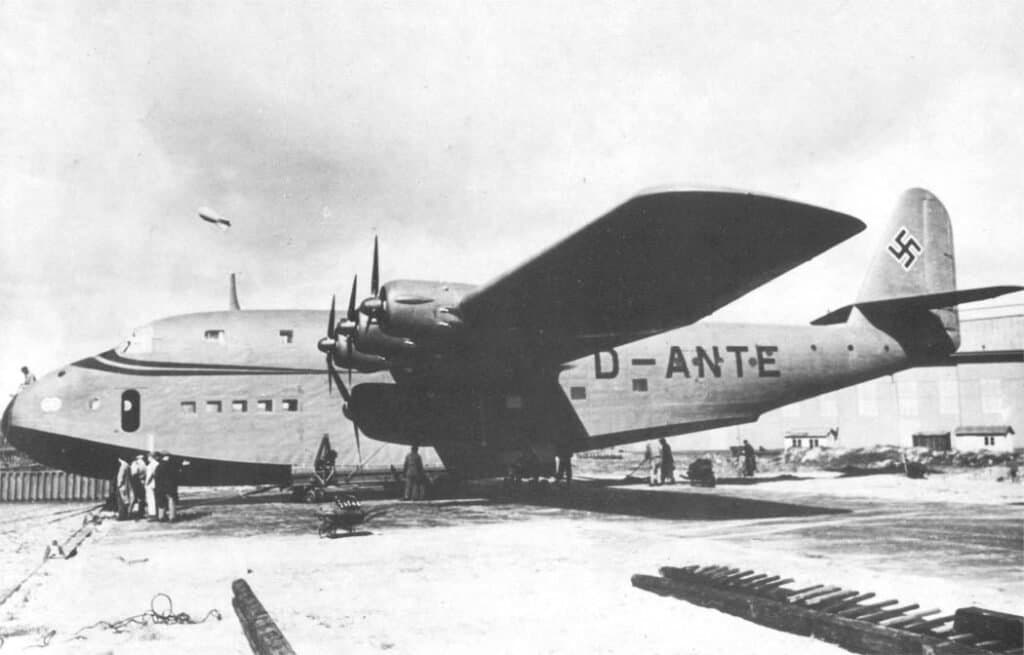
The Daring Genesis of a Giant
On May 31, 1937, “Hamburger Flugzeugbau” celebrated its fourth anniversary. By international standards, the company was still in its infancy. On this date, the relatively inexperienced company proposed its transatlantic flying boat liner project to “Lufthansa”, only slightly smaller than the world’s largest seaplane, the “Dornier” Do-X.
This proposal was accepted despite competition from the far more experienced “Dornier” and “Heinkel”. The design bureau of “Hamburger Flugzeugbau” under Vogt had previously demonstrated bold engineering solutions, but starting work on such a complex project according to “Lufthansa’s” requirements in late 1936, when the firm had only managed to release a not-so-successful dive bomber and only one seaplane, was either great daring or extreme recklessness.
“Lufthansa” aimed to start regular services across the North and South Atlantic, which until then had only handled an insignificant volume of cargo and mail, and issued its specifications to “Heinkel”, “Dornier”, and “Hamburger Flugzeugbau”. “Dornier” had already proposed the Do.20 project, based on its experience with the Do-X, and which the company believed fully met the given requirements. It was a 50-ton flying boat with diesel engines working in pairs for four propellers via extended shafts.
“Heinkel” and the Hamburg firm joined the competition. After researching a series of flying boat projects of various configurations and sizes, including the twin-hull “Project 42” and the single-hull “Project 43” with six engines each, Vogt and his team settled on what they considered the most suitable “Project 54” with six BMW-132B air-cooled radial engines, weighing up to 45 tons, and retractable stabilizing floats.
“Heinkel’s” project was less ambitious, envisioning a smaller 29-ton flying boat with four Jumo-205 engines and fixed underwing floats. Both projects were proposed on May 31, 1937, and the RLM simultaneously assigned the designations He.120 and Ha.222 to them. After careful study of the proposals, “Lufthansa” chose the Ha.222 as the most promising, announcing this on September 19, 1937, followed by an order for three aircraft.
Innovative Design and Early Testing
While requirements were being refined, full hydrodynamic characteristic tests of the Ha.222 hull lines were conducted at the “Deutschen Schiffbauversuchsanstalt” (DSF). In December, Vogt’s designers received the final specifications, which provided for spacious and even luxurious accommodation for 24 passengers for daytime flights in seats and 16 berths for nighttime flights. Detailed project work began in January 1938 in Wenzendorf. The first drawing reached the factory six months later.
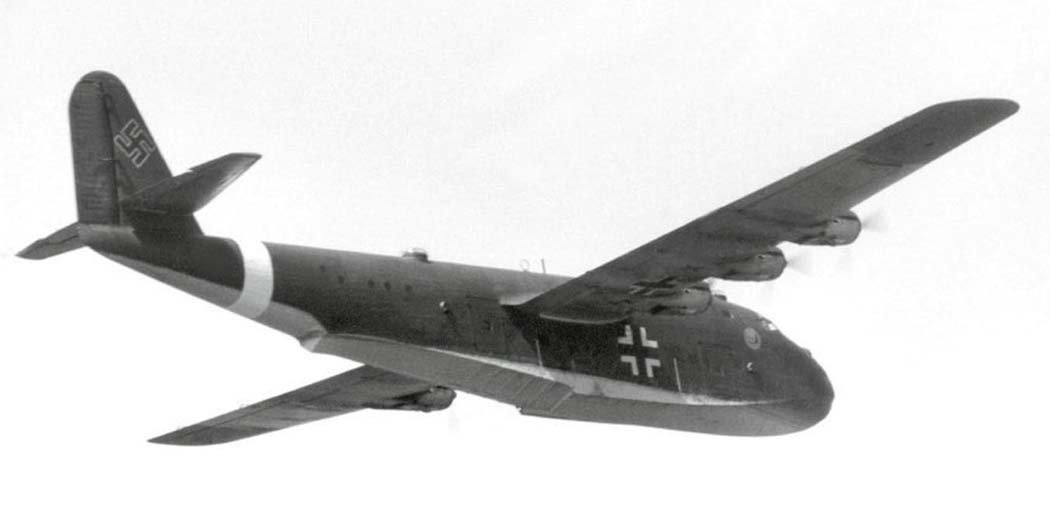
Despite a classic design, with the exception of the tubular spar, the Ha.222 nevertheless featured a number of innovations, the main ones being the hull length-to-width ratio, retractable stabilizing floats, and the control system. At a time when a hull L/B ratio of 6 was common, Vogt, to reduce hydrodynamic and aerodynamic drag, chose an L/B of 8.4. The electrically retractable floats split and folded into the wing on different sides.
The control system, which at first glance seemed extraordinary, was partly manual and partly servo-driven. Each aileron was split into two sections. The larger inner section was manually controlled via a servo-trim tab, while the outer section was servo-controlled, but its trim tab was manually operated via rigid linkages. The patented “scooping balance” was achieved by two specially profiled sections creating additional lift when the aileron was deflected.
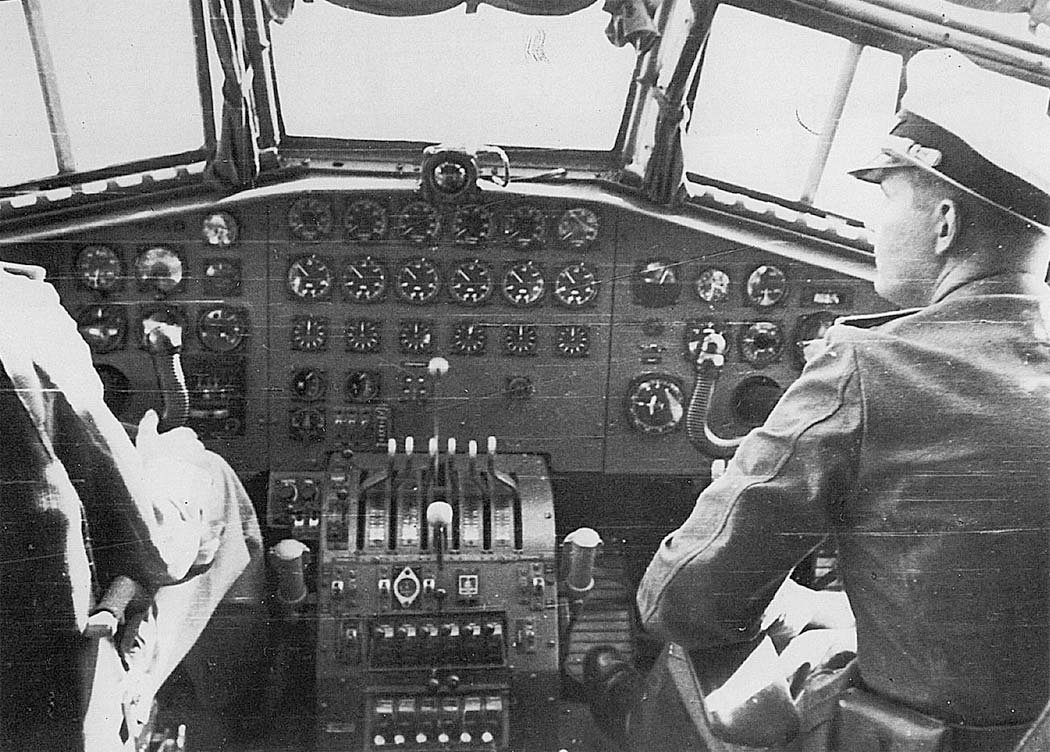
Each elevator was divided into three sections. The outermost was driven by an electric motor and used as a trim tab. The controlled central section was not connected to the control column and was used only by the autopilot or disconnected to “feather” freely. The main inner section had a servo-controlled trim tab. The single-section rudder had two interconnected trim tabs, controlled from the control column. A spring system was installed under the cockpit to provide feedback to the control column.
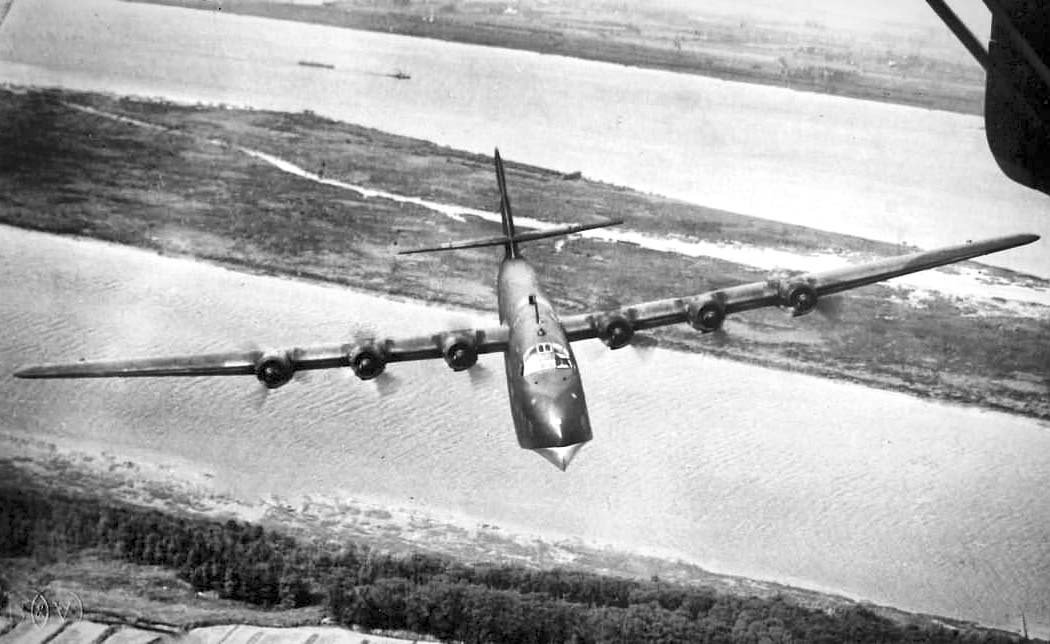
The all-metal wing featured a tubular spar 1.5 m in diameter, divided by bulkheads into six 3450-liter fuel tanks and located at 30% chord. Motor mounts, welded from steel tubes, supported six “Bramo-Fafnir”-323R-2 9-cylinder radial engines, rated at 1000 hp for takeoff, 800 hp for climb, and 640 hp nominal. The straight center-wing section carried electrically retractable flaps. Access passages to the engines during flight were provided within the main spar.
The two-step, all-metal hull was covered with corrosion-resistant skinning 3-5mm thick. The hull had two decks, the lower one being for passengers. The crew consisted of two pilots, two engineers, a navigator, and a radio operator.
From Civilian Transport to Wartime Missions
With the outbreak of hostilities in September 1939, some specialists were transferred to the BV.138 program, but work on the three flying boats for “Lufthansa” continued. On July 16, 1940, a “Lufthansa” commission inspected the interior mock-up, although by this time it was clear that these aircraft were unlikely to enter airline service.
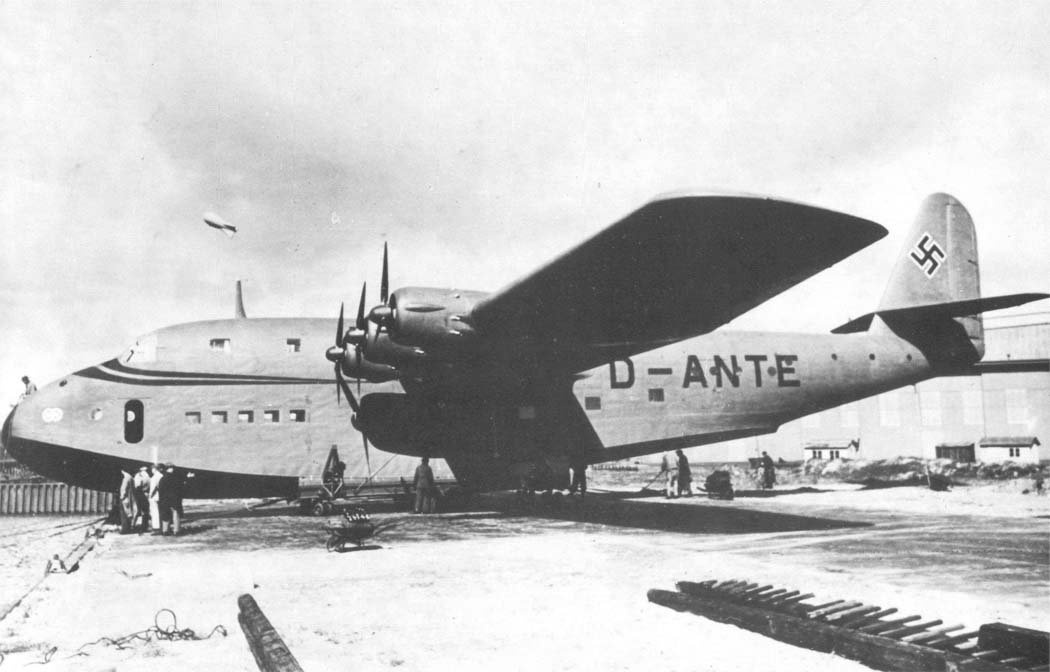
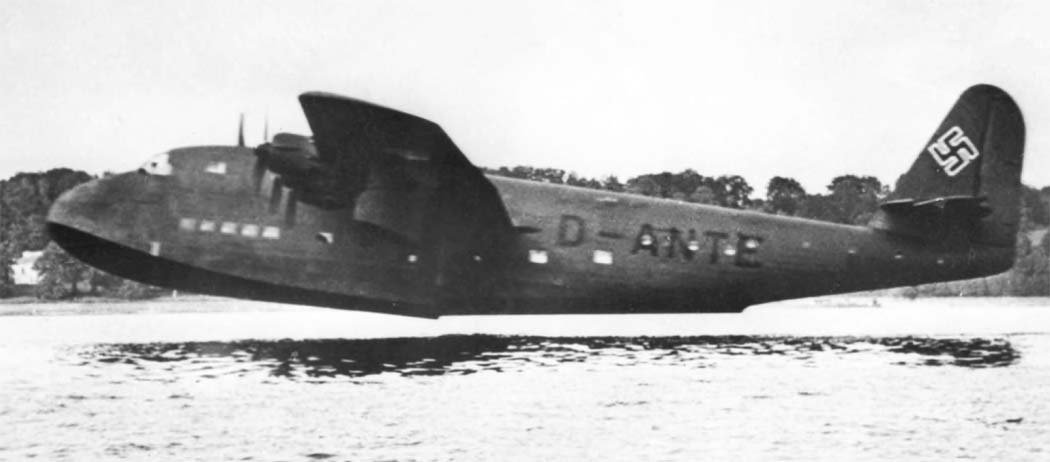
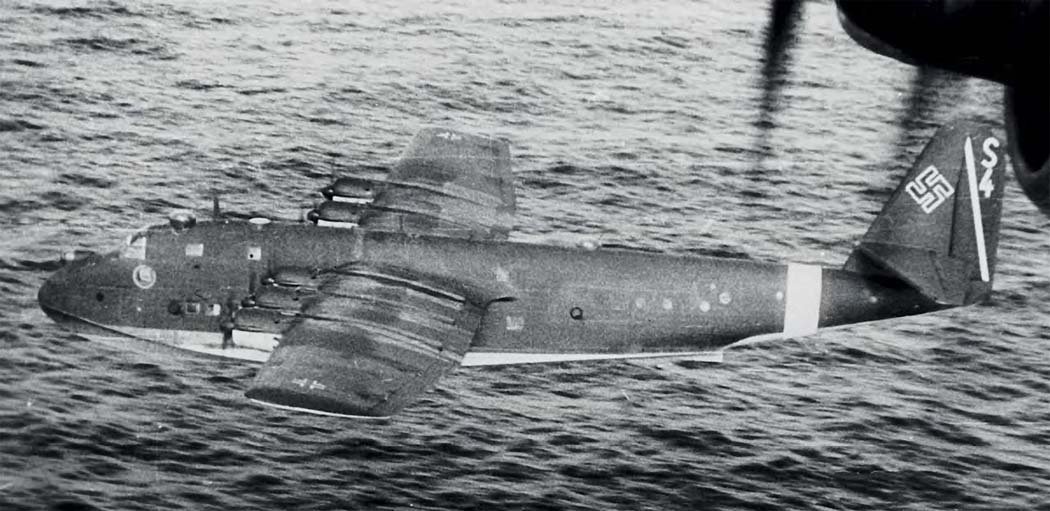
The first aircraft, BV.222-V1 (D-ANTE), was completed in late August 1940 and made its maiden flight on September 7 under the command of Flugkapitän Helmut Vaz Rodig. The first flight lasted 20 minutes and was generally satisfactory. The flying boat handled well on all axes, but the pilot noted some directional instability. During taxiing on water, the BV.222 demonstrated a tendency to porpoise.
Flight tests continued throughout the autumn and early winter, interrupted from December to February due to ice formation on the Elbe. The plan was to conduct several long-distance flights in the spring. The Luftwaffe proposed using these flights for cargo transport, and “Blohm und Voss” agreed to modify the aircraft by cutting cargo hatches and redesigning the interior to accommodate freight.
With Luftwaffe markings and its civilian registration replaced by the call sign CC+EQ, BV.222-V1 made its first flight in Luftwaffe service on July 10, 1941, from Hamburg to Kirkenes on the Barents Sea. Seven flights between Hamburg and Kirkenes were completed by August 19, covering about 30,000 km, delivering 65 tons of cargo, and evacuating 221 wounded.
After maintenance in Finkenwerder, BV.222-V1 resumed flights on September 10, 1941, this time heading to Athens. From there, it conducted shuttle flights to Derna, Libya. However, the flying boat soon had to be returned to the factory again to clean the hull of “barnacles”. Between October 16 and November 6, 1941, V1 made 17 shuttle flights between Athens and Derna, transporting 30 tons of cargo and evacuating 515 wounded.
During flights at an altitude of 4500 m, a maximum speed of 382 km/h was recorded. The maximum calculated range was 7000 km. The aircraft could carry up to 72 wounded personnel and up to 92 fully equipped soldiers. BV.222-V1 was completely unarmed and usually escorted by a pair of Bf.110s. But sometimes fighters were late to the rendezvous point, and the flying boat was forced to fly without cover.
During one such flight, the lone flying boat was intercepted by two British “Beaufighters,” which for unknown reasons did not attack the aircraft. In November 1941, V1 returned to “Blohm und Voss” for the installation of defensive armament. This consisted of an MG-81 machine gun in the nose, MG-131s in the front and rear turrets, and four MG-81s in the side windows.
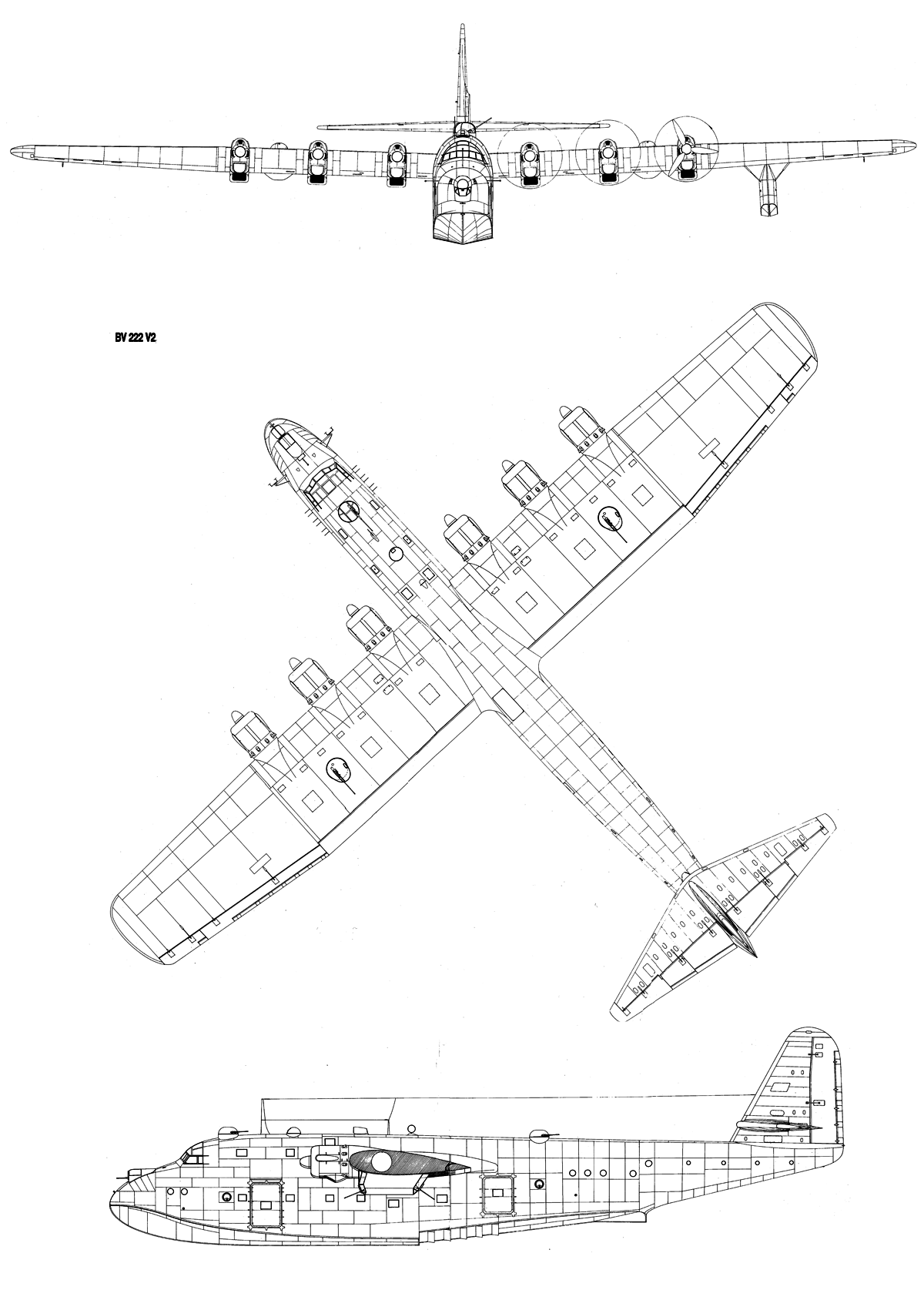
Meanwhile, the second prototype, BV.222-V2 (#366 CC+ER), began flight tests on August 7, 1941. On November 28, 1941, it was joined by V3 (#439 DM+SD). New aircraft were also laid down at the Finkenwerder factory. It was decided to assign V2 to the “Atlantik” air command for long-range reconnaissance in support of submarine forces.
The aircraft received full defensive armament, like V1, plus four MG-131s in two underwing gondolas between the outer pair of engines. The machine guns were mounted in the nose and tail of each gondola. Tests in Travemünde showed that the additional drag from these two gondolas was greater than acceptable, and this innovation had to be abandoned. Other changes resulting from the Travemünde tests included the installation of five additional steps immediately behind the main step. The rear step received a wedge-shaped extension. The wing structure was slightly reinforced.
In reality, BV.222-V2 was initially used as a transport variant. V3 was built as a transport variant from the start, receiving only one MG-81 in the nose. Additional BV.222s were laid down in early 1941, intended for use as transport aircraft and reconnaissance planes. The first batch of five pre-production flying boats was to receive “Bramo-Fafnir”-323R-2 engines and were already considered A-series aircraft, although they carried “Versuch” (experimental) numbers. The fourth of these, BV.222-V7, was converted to diesel engines and was intended to serve as the prototype for the C-series.
BV.222-V4 (X4+DH), V5 (X4+EH), V6 (X4+FH), V8 (X4+HH) entered Luftwaffe service between April 20 and October 26, 1942. They featured a reinforced structure with a redesigned step based on the V2. The aircraft were also armed and began their service career as transports. V4 and V5 were used in the “Z” air communications squadron, and later in the See 222 squadron in the Mediterranean.
Together with two of the first three aircraft, these machines were deployed from bases in Italy and Greece to support Rommel’s Afrika Korps. Landings were made in Tobruk and Derna, returning with wounded. The next two aircraft delivered to LTS See 222, V6 and V8, were shot down by British fighters before the end of 1942.
After the operation in which V8 was lost, BV.222-V4, which had sustained serious damage, was returned to “Blohm und Voss” for repair. More powerful defensive armament was installed on the aircraft, and the structure was reinforced again. V1 was lost in an accident in February 1943. The remaining BV.222s were returned to Germany for repair and modernization, and V2 and V5 were transferred to “Lufthansa-Werft” in Travemünde.
New defensive armament installed on the four remaining flying boats included an MG-151 cannon in the forward upper turret and similar turrets behind the outboard engine nacelles. An MG-131 machine gun was located in the nose window, and two MG-81s in the rear windows. The engines were equipped with a water-methanol injection system, increasing power to 1200 hp.
By the end of the work, it was clear that the catastrophe of German forces in North Africa was imminent. The task of interacting with submarines arose again. It was decided to transfer all four BV.222s to the “Atlantik” command. As a result, the flying boats were equipped with search radars and additional radio equipment, including FuG-200 “Hohentwiel”, FuG-16Z radio stations with location determination capability, FuG-25a, and a FuG-101a radio altimeter. ETC 501 bomb racks could carry FuG-302c “Schwan” (Swan) radio buoys.
BV.222-V3 was assigned to the 3rd squadron of the 406th Coastal Aviation Regiment, equipped with BV.138s and based in Biscarrosse. The remaining three BV.222s arrived in Biscarrosse in May 1943, forming the See 222 long-range reconnaissance squadron, which later became part of 3./Ku.Fl.Gr.406. During the following month, V3 and V5 were sunk at their moorings during an attack by British fighters.
Technical Specifications
| Modification | ВV.222a-0 |
| Wingspan, m | 46.00 |
| Length, m | 36.50 |
| Height, m | 10.90 |
| Wing area, m2 | 247.00 |
| Empty weight | 28575 |
| Normal takeoff weight | 45640 |
| Engine type | 6 Piston engines Bramo-Fafnir -323R-2 |
| Power, hp | 6 x 1200 |
| Maximum speed, km/h | 309 |
| Cruising speed, km/h | 277 |
| Practical range, km | 7400 |
| Maximum rate of climb, m/min | 125 |
| Practical ceiling, m | 6500 |
| Crew, crew members | 11 |
| Armament | one 20-mm MG-151 cannon in the forward turret, one MG-151 in each underwing turret, one 13-mm MG-131 machine gun and two 7.9-mm MG-81 machine guns in the side windows. |
Image and diagram gallery of the BV.222A Wiking
 BV.222A Wiking |
 BV.222A Wiking |
 BV.222A Wiking |
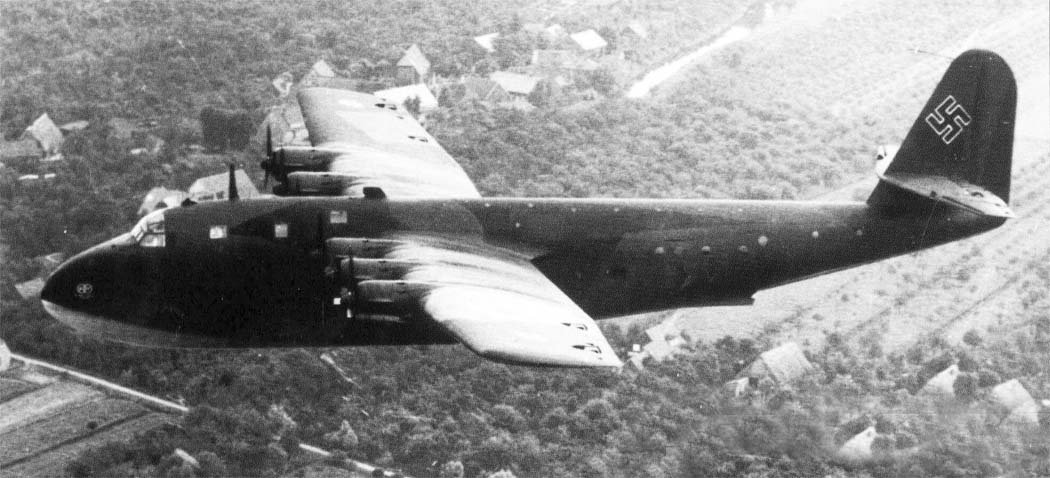 BV.222A Wiking |
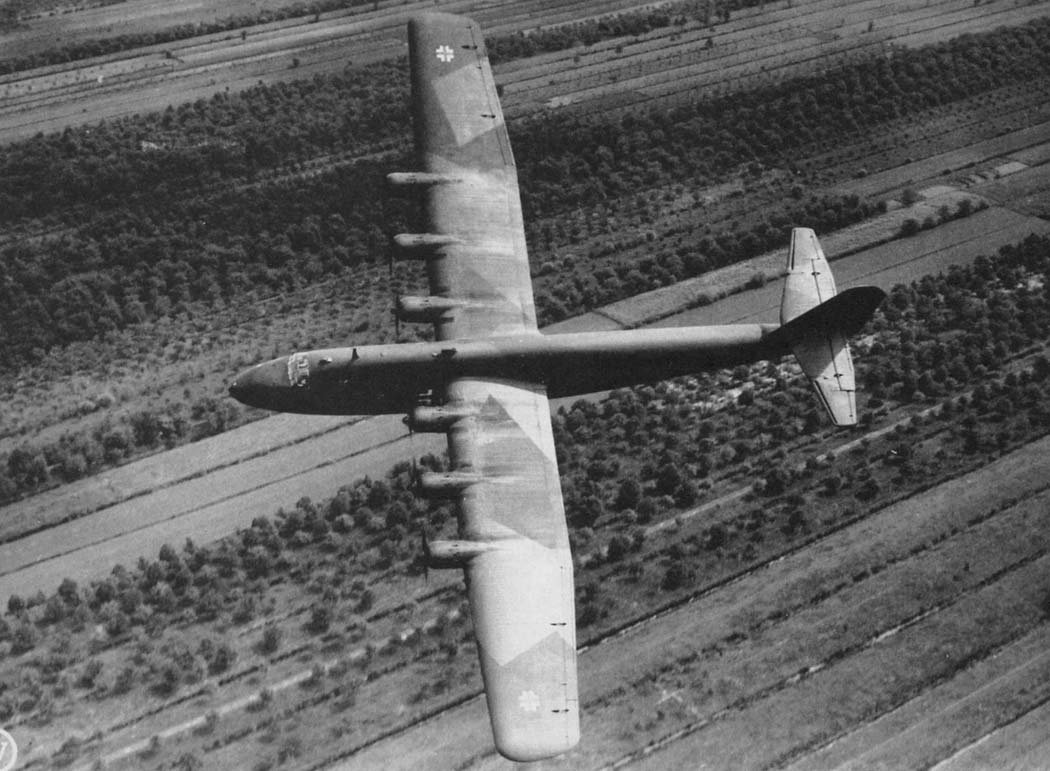 BV.222A Wiking |
 BV.222A Wiking |
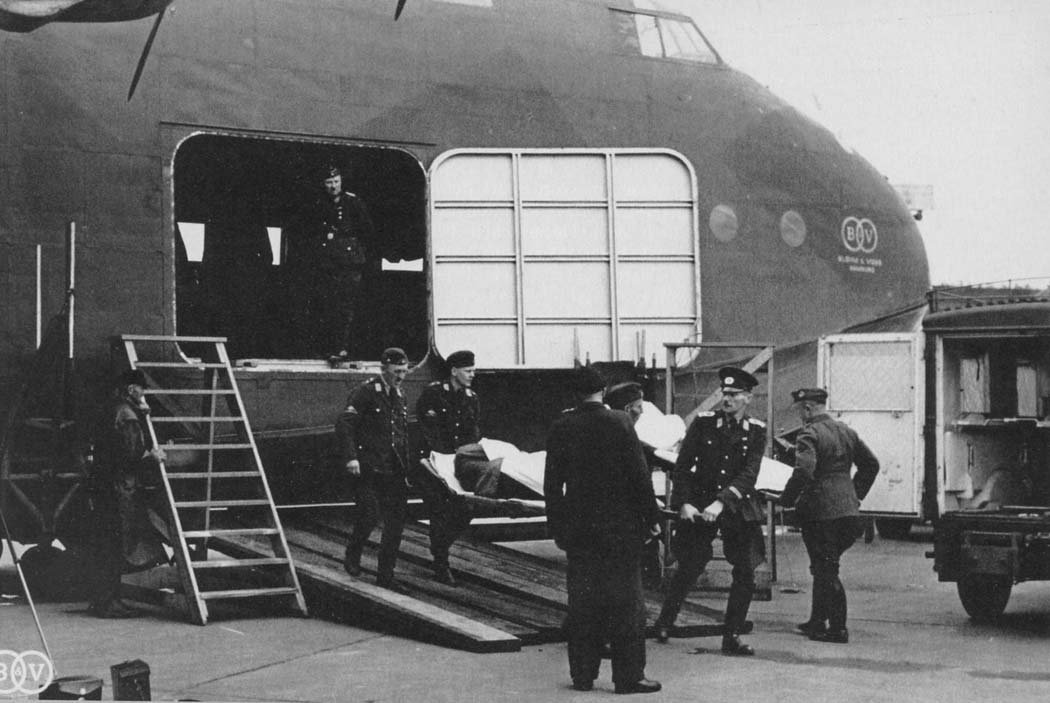 BV.222A Wiking |
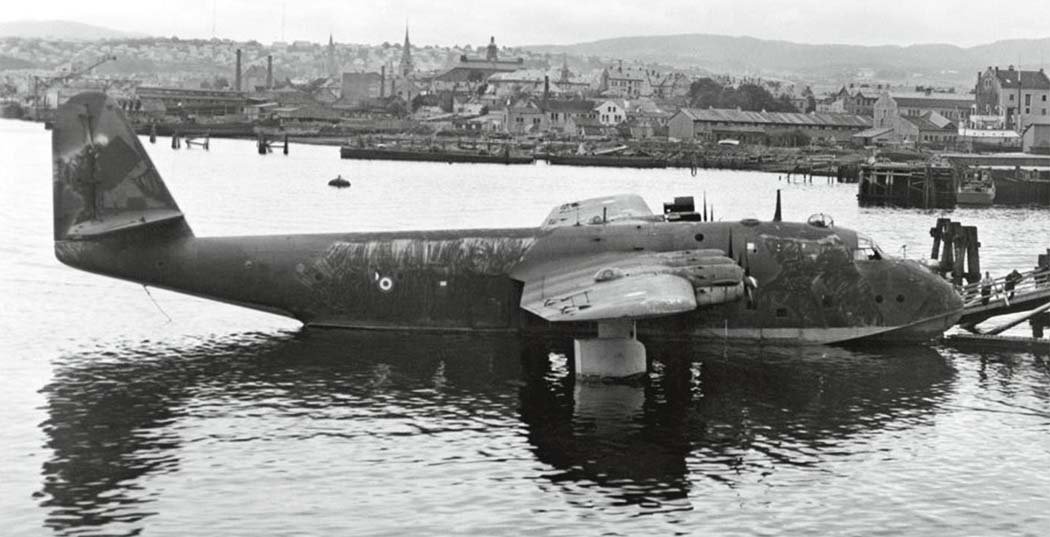 BV.222A Wiking |
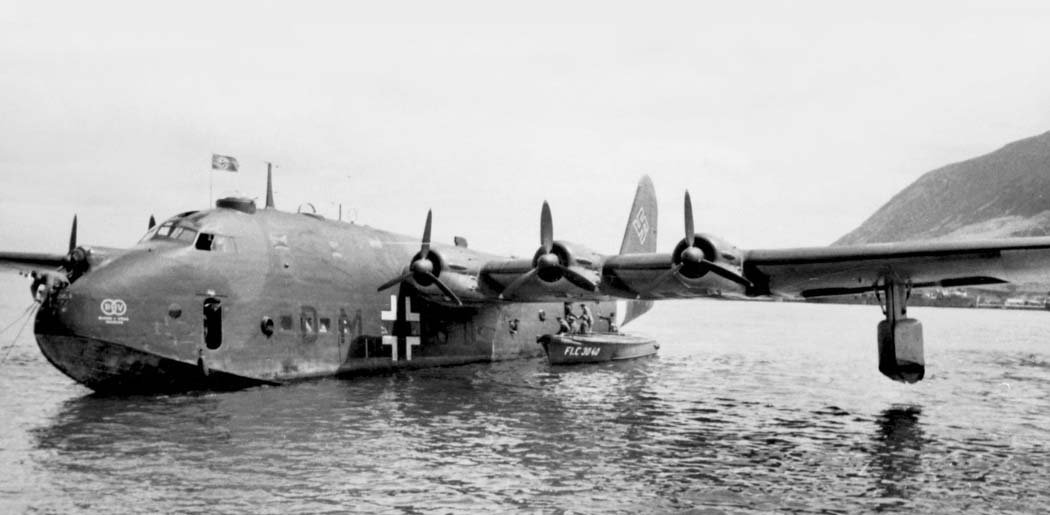 BV.222A Wiking |
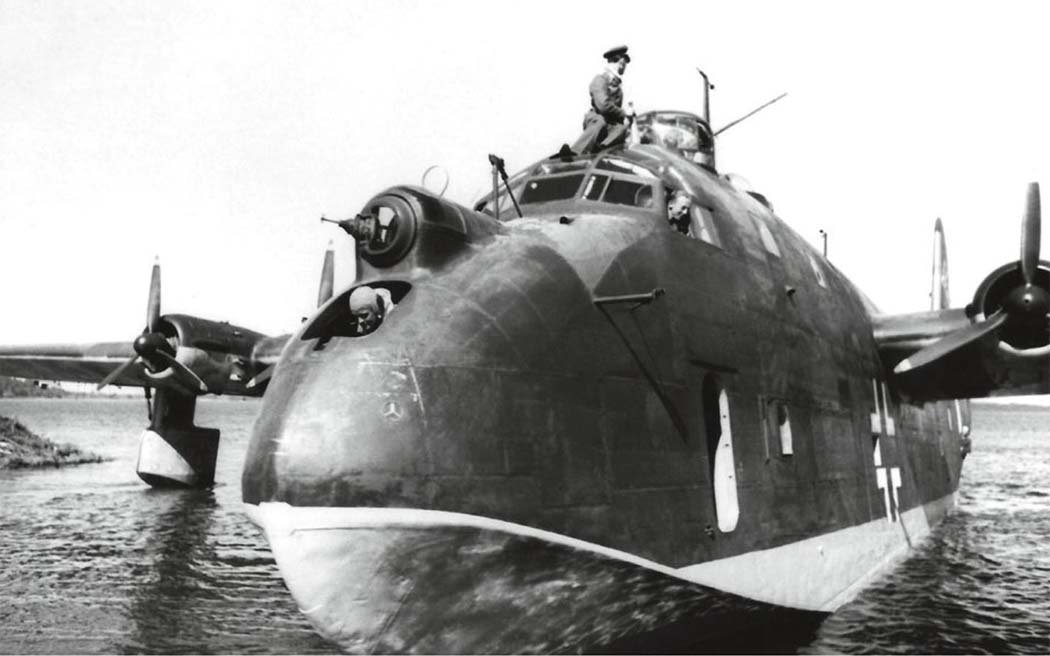 BV.222A Wiking |
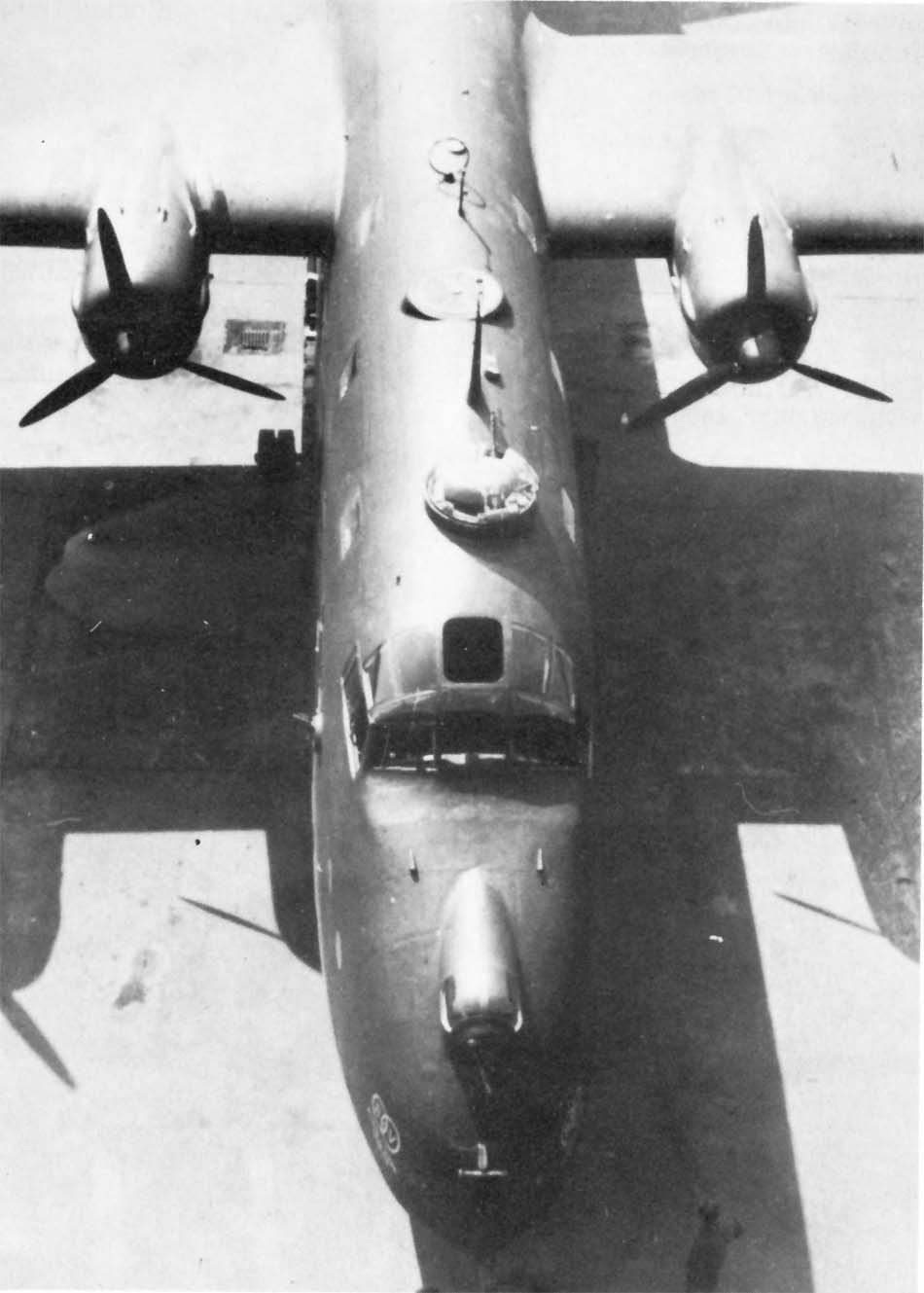 BV.222A Wiking |
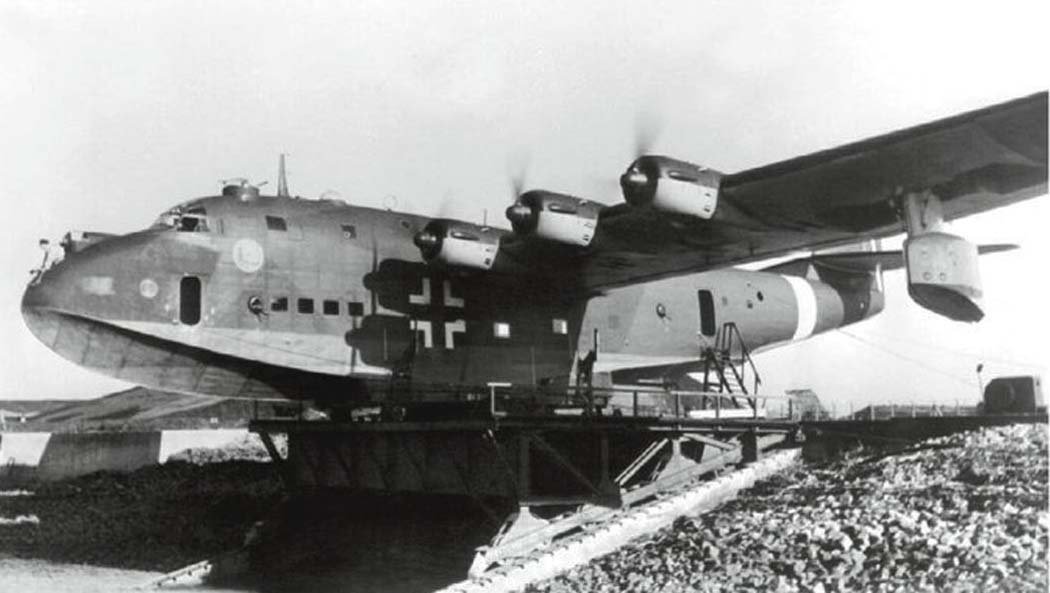 BV.222A Wiking |
 BV.222A Wiking |
 BV.222A Wiking |
 BV.222A Wiking |
 BV.222A Wiking |
 BV.222A Wiking |
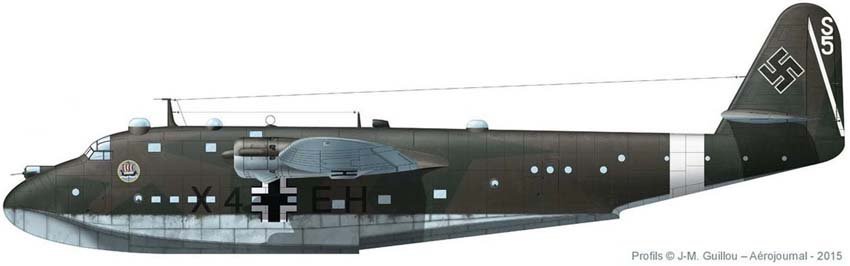 BV.222A Wiking |
ArchivoAéreo Editorial Team
A group of aviation researchers and enthusiasts dedicated to documenting and preserving global aeronautical history. All articles are reviewed to ensure historical accuracy.
Sources & Accuracy
The information presented in this technical sheet has been compiled from declassified flight manuals, historical archives, and specialized literature. While we strive for maximum accuracy, some performance data may vary depending on the specific variant or operational conditions.