C-12 Huron

Effective military operations require reliable communication and comprehensive logistical support. For the U.S. Armed Forces, the King Air 200 aircraft, among others, fulfills these vital tasks. Additionally, a family of electronic intelligence (ELINT) aircraft was developed based on the King Air platform.
The King Air 200 aircraft was initially designed for corporate use but eventually found widespread application in the U.S. Armed Forces and several foreign countries. Prior to its introduction, military and law enforcement agencies operated aircraft from the Queen Air/King Air family, primarily under the U-21 Ute designation.
Initial Deployment and Early Variants
The King Air 200 made its first flight on October 27, 1972. The first military versions were three RU-21J electronic reconnaissance aircraft, which entered service in 1973. This was followed by a larger batch of multi-role and VIP transport aircraft, designated C-12A, equipped with PT6A-38 engines.
The U.S. Army classified the aircraft as the Huron, acquiring 60 units, while the U.S. Air Force purchased 30. Both services took delivery in July 1975, and one aircraft was supplied to the Greek Army. The USAF primarily used the C-12A for U.S. embassy support and overseas flights, with one C-12A assigned to the U.S. embassy in South Africa reportedly equipped for reconnaissance missions.
Evolution of the C-12 Series
In 1979, the U.S. Navy and Marine Corps began receiving UC-12B variants. These aircraft were fitted with PT6A-41 engines and featured a cargo door, used for transporting staff personnel and other duties, with 66 aircraft acquired. For the U.S. Army, 14 new C-12C aircraft were built, largely similar to the C-12A but with more powerful Dash 41 engines; most C-12As, including those briefly designated C-12E by the USAF, were later upgraded to this standard.
The subsequent C-12D modification also included a cargo door, though approximately half of the 40 units built for the U.S. Army were later converted into RC-12 electronic reconnaissance aircraft. Six C-12Ds were also acquired by the U.S. Air Force. In 1984, the C-12F, equipped with Dash 42 engines and a cargo door, entered service with both the U.S. Army and Air Force.
The Army acquired 20 new C-12Fs, while the Air Force purchased 46, many of which were later transferred to the Army. Army commands acquired these for National Guard units, designated C-12F-1 and C-12F-2, with transferred USAF aircraft becoming C-12F-3. The U.S. Navy acquired a dozen UC-12F aircraft, two of which were later converted into RC-12F variants.
The C-12L designation was given to three former RU-21J aircraft after their Guardrail equipment was removed, subsequently used as transport planes. This was followed by the UC-12M modification, with 12 aircraft acquired by the U.S. Navy; two were later converted to the RC-12M variant. Early UC-12B/F models were also modernized to a new standard, receiving updated cockpit instrumentation and communication systems, though otherwise largely identical to the C-12F. The U.S. Army acquired 29 C-12R aircraft, a military version of the civilian B200C featuring a glass cockpit, while the Greek Army purchased two C-12R/AP aircraft equipped with photo and video reconnaissance equipment.
Global Service and Operational Legacy
Military C-12s were employed for a wide range of tasks, with personnel transport between military bases being one of the most crucial. Army aircraft were operationally subordinated to the Operational Support Airlift Command (OSACOM), which in turn reported to the Joint Operational Support Airlift Command, serving all branches of the U.S. Armed Forces.
By 2000, the inventory of these aircraft in the U.S. Air Force and Navy significantly decreased. Most Navy UC-12s were placed into storage, and a large portion of the C-12C/D fleet was transferred from the Air Force to the Army. However, aircraft assigned to embassies remained in active service.
The King Air 200 also proved popular with militaries outside the U.S., often being militarized civilian modifications. Israel became the most active international operator, acquiring C-12D and RC-12D/K variants. Other operators included Algeria, Argentina, Bolivia, Venezuela, Guatemala, Egypt, India, Ireland, Cambodia, Colombia, Macedonia, Malaysia, Morocco, New Zealand, Peru, Saudi Arabia, Thailand, Togo, Turkey, Uruguay, Chile, Sri Lanka, Sweden, Ecuador, and South Africa.
In some cases, aircraft were leased from civilian operators, retaining their civilian registration. Internationally, the King Air 200 was used for multi-engine pilot training and other missions, such as photographic reconnaissance, maritime patrol, transport, and liaison duties.
Technical Specifications
| Modification | C-12C |
| Wingspan, m | 16.61 |
| Aircraft length, m | 13.34 |
| Aircraft height, m | 4.57 |
| Wing area, m2 | 28.15 |
| Empty weight | 3318 |
| Maximum takeoff weight | 5670 |
| Internal fuel, l | 1461 + optionally 598 |
| Engine type | 2 Turboprops Pratt Whitney Canada PT6A-41 |
| Power, kW | 2 x 634 |
| Maximum speed, km/h | 536 |
| Cruising speed, km/h | 503 |
| Practical range, km | 3495 |
| Operational range, km | 2935 |
| Service ceiling, m | 9450 |
| Crew | 2 crew members |
| Payload | 13 passengers or 907 kg of cargo |
Image and diagram gallery of the C-12 Huron
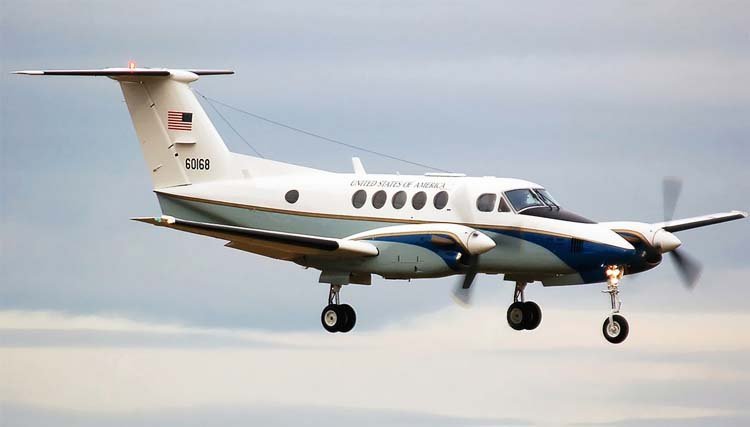 C-12 Huron |
 C-12 Huron |
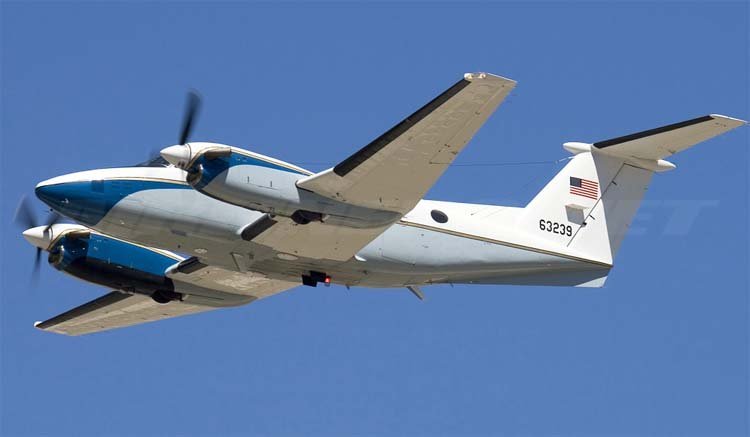 C-12 Huron |
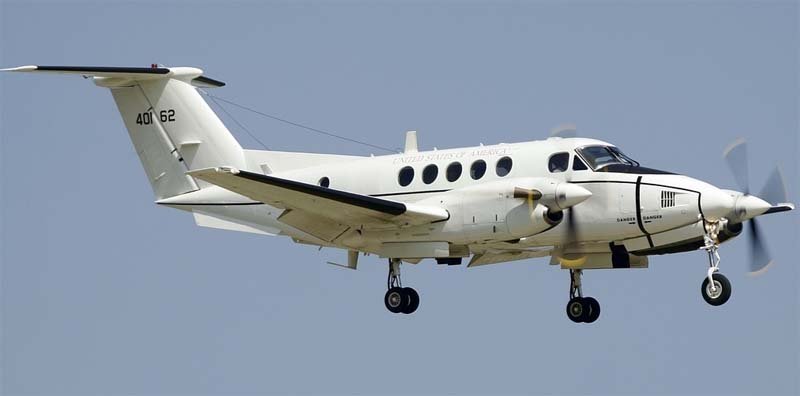 C-12 Huron |
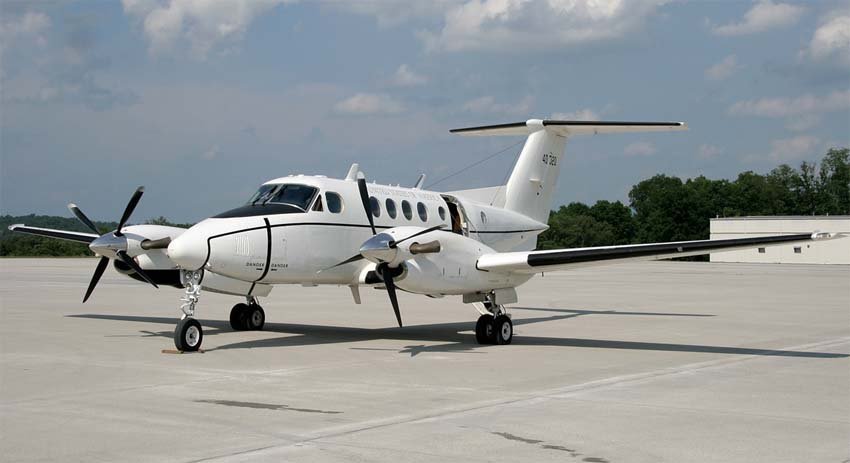 C-12 Huron |
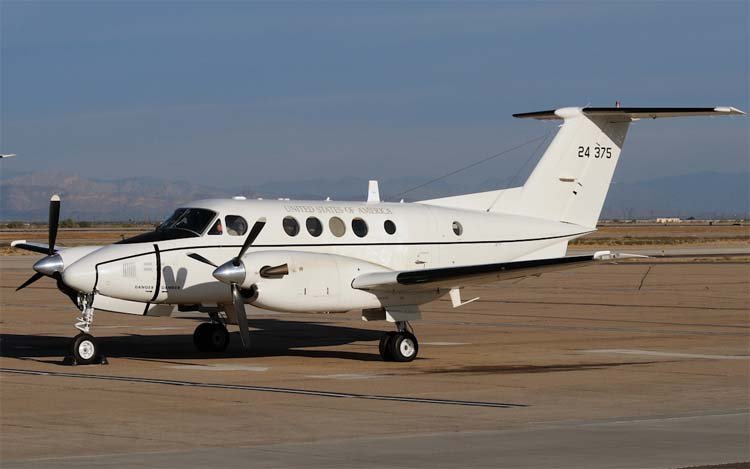 C-12 Huron |
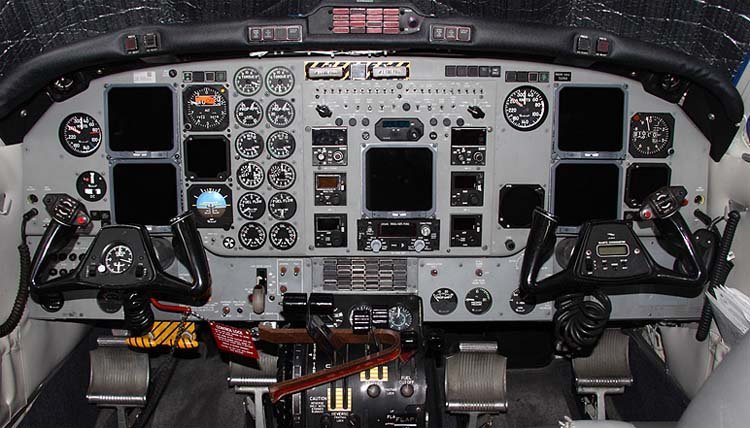 C-12 Huron |
 C-12 Huron |
 C-12 Huron |
ArchivoAéreo Editorial Team
A group of aviation researchers and enthusiasts dedicated to documenting and preserving global aeronautical history. All articles are reviewed to ensure historical accuracy.
Sources & Accuracy
The information presented in this technical sheet has been compiled from declassified flight manuals, historical archives, and specialized literature. While we strive for maximum accuracy, some performance data may vary depending on the specific variant or operational conditions.