C-135 Stratolifter
Initial Variant and Purpose
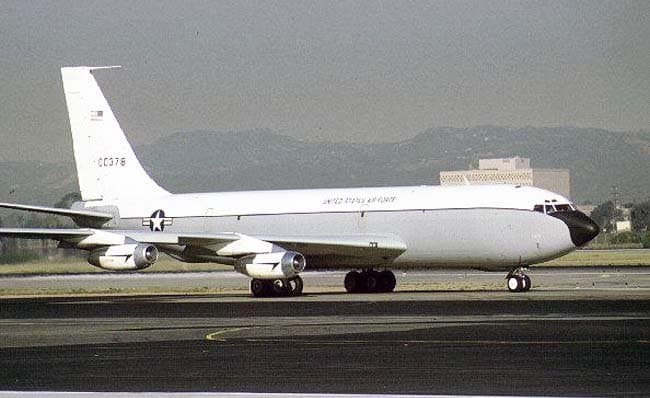
The pure transport C-135 Stratolifter, derived from the KC-135, was produced in modest numbers—only 45 units. It was conceived as a temporary solution until the Lockheed C-141A Starlifter, capable of transporting heavy equipment and air-dropping personnel and cargo, entered service.
The transport variant differed from the KC-135A by lacking refueling apparatus, featuring a reinforced cargo floor, and offering significantly greater capacity, accommodating up to 176 people. Consequently, an additional lavatory was installed in the cargo cabin. The refueling operator’s fairing was retained to simplify production, with a long emergency fuel dump tube occupying the space where the refueling boom would typically be.
Early Production and Models
The first “transports” were three “false C-135As” (tail numbers 60-0356, 60-0357, and 60-0362), delivered in 1961. These were essentially KC-135As with their refueling booms removed, but the operator’s station and boom attachment points were kept, allowing for easy conversion back to tankers.
The first “true” C-135 rolled out of the Renton assembly plant on July 14, 1961. The initial 15 aircraft, designated C-135A (Model 717-157), were equipped with J57P-59W engines. The remaining 30 units, designated C-135B (Model 717-158), featured TF33-P-5 (JT3D-3) engines and an increased-span stabilizer, with the first flight of this variant on February 15, 1962.
C-135A/B aircraft were assigned to the U.S. military transport aviation, with deliveries concluding in August 1962. Ultimately, almost all these aircraft were converted into various specialized variants. The C-135C variant, for example, was a re-equipped WC-135B weather reconnaissance aircraft. Two of these (61-2668 and 61-2669) belonged to the 89th Military Airlift Wing, and one (61-2671) served the USAF Research and Development Directorate.
Specialized and VIP Variants
Between 1982 and 1983, three C-135As (60-0372, 60-0375, and 60-0376) were upgraded with TF33-PW-102 engines and redesignated C-135E. These were used as “staff salons” for transporting command personnel, characterized by an increased number of windows (six per side).
Five C-135Bs were converted into VIP “salons” under the designation VC-135B, featuring the same blue-and-white “parade” livery as the presidential VC-137A/B/C aircraft. However, during President Jimmy Carter’s austerity drive, the VC-135s were downgraded to regular transport roles.
Over time, there were also five combined “salon”-tanker variants, designated VKC-135A, code-named “Speckled Trout.” One notable example was aircraft 57-2589, which served as the aircraft for the commander of SAC (Strategic Air Command). Another, 55-3126, served the commander of the U.S. Pacific Command until its decommissioning in 1992.
Technical Specifications
| Modification | C-135A |
| Wingspan, m | 39.88 |
| Aircraft length, m | 41.53 |
| Aircraft height, m | 12.70 |
| Wing area, m2 | 226.03 |
| Empty weight | 44664 |
| Normal takeoff weight | 136806 |
| Maximum takeoff weight | 143335 |
| Fuel | 86047 |
| Engine type | 4 Turbofan Pratt Whitney J57-P-59W |
| Non-afterburning thrust | 4 x 49.82 |
| Afterburning thrust | 4 x 61.16 |
| Maximum speed, km/h | 982 |
| Cruising speed, km/h | 888 |
| Practical range, km | 14806 |
| Operational range, km | 1854 – 5560 |
| Service ceiling, m | 13715 |
| Crew | 5 |
| Payload | 160 soldiers or 44 stretchers and 54 seated wounded with attendants or 40370 kg of cargo. |
Image and diagram gallery of the C-135 Stratolifter
 C-135 Stratolifter |
 C-135 Stratolifter |
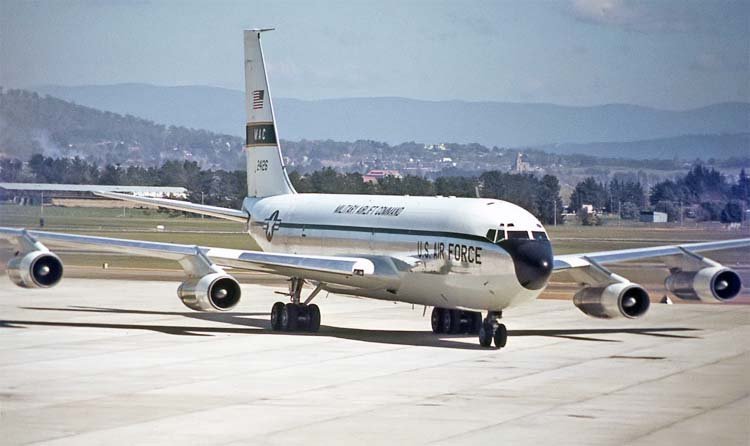 C-135 Stratolifter |
 C-135 Stratolifter |
 C-135 Stratolifter. Photograph: Ralf Manteufel |
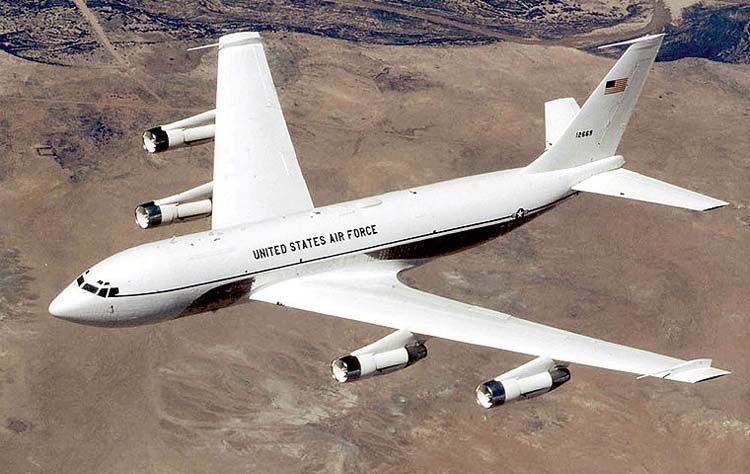 C-135 Stratolifter |
 C-135 Stratolifter. Photograph: JetPix |
 C-135 Stratolifter |
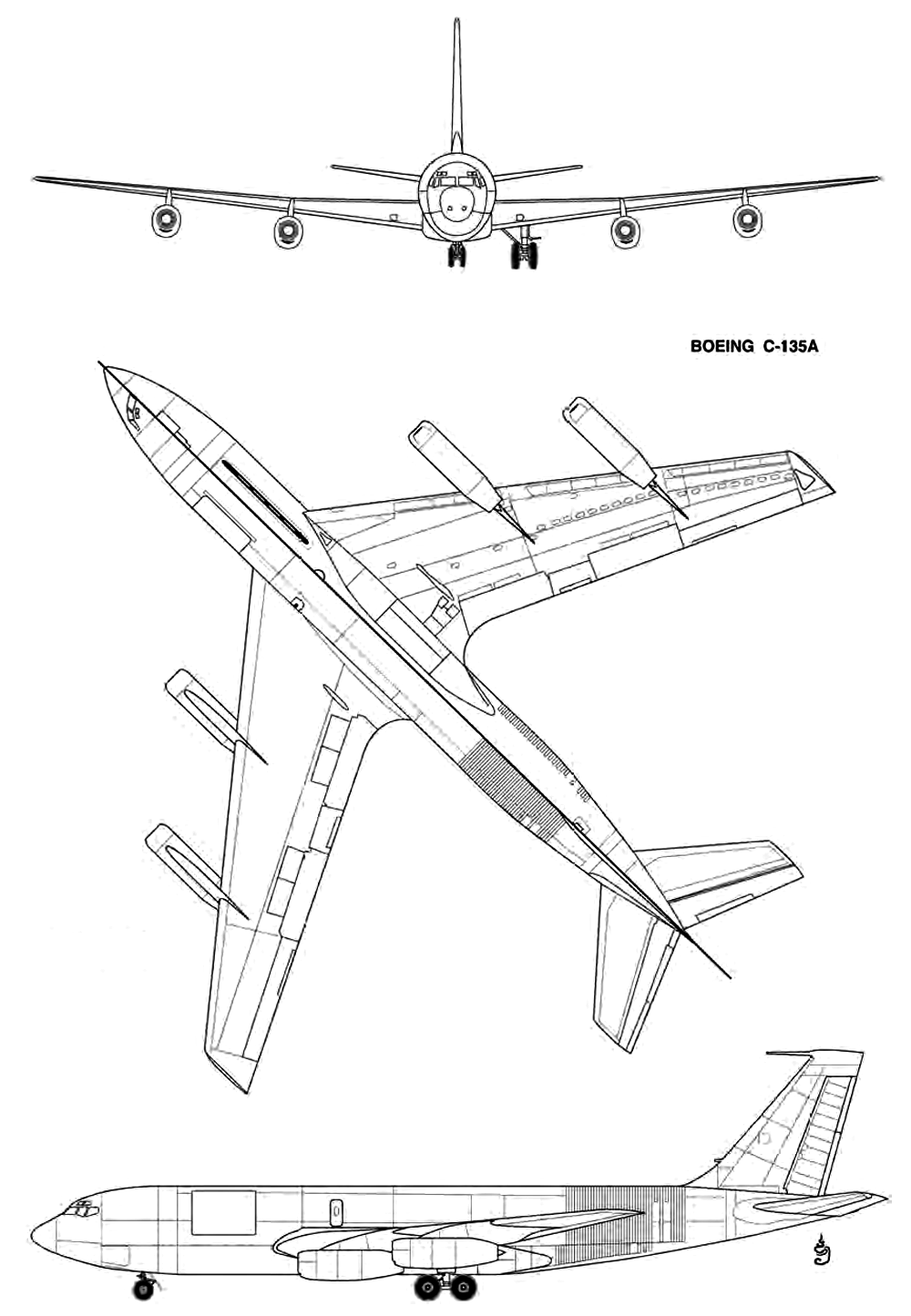 C-135 Stratolifter |
 C-135 Stratolifter |
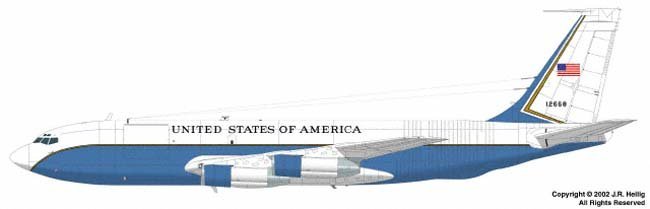 C-135 Stratolifter |
ArchivoAéreo Editorial Team
A group of aviation researchers and enthusiasts dedicated to documenting and preserving global aeronautical history. All articles are reviewed to ensure historical accuracy.
Sources & Accuracy
The information presented in this technical sheet has been compiled from declassified flight manuals, historical archives, and specialized literature. While we strive for maximum accuracy, some performance data may vary depending on the specific variant or operational conditions.