C-26 Metro
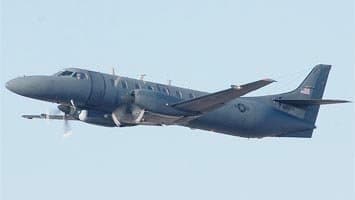
The C-26 Metro is a tactical military transport aircraft developed by the American firm Fairchild. It is based on the civilian transport aircraft Fairchild SA227-AC Metro III, with serial production commencing in 1970.
This versatile aircraft is primarily utilized by the US National Guard Air Force. It has also been supplied to various international armed forces, including those of Argentina, Belgium, Chile, Mexico, Sweden, and Thailand.
Special Mission Aircraft (SMA) Capabilities
The C-26 Metro serves as a Special Mission Aircraft (SMA) for specific operations. An anti-submarine warfare (ASW) variant is equipped with either an APS-504(V)5 or an Eaton AIL APS-128D radar system. This configuration allows for a patrol time of 10 hours and an operational radius of 1946 km.
Advanced Variants and International Use
Among its specialized variants is the SA227 Metro III SMA, developed for the Swedish Navy. This particular version integrates the advanced Ericsson FSR-890 Erieye AEW radar system, enhancing its surveillance and reconnaissance capabilities.
Technical Specifications
| Modification | С-26А |
| Wingspan, m | 17.37 |
| Length, m | 18.09 |
| Height, m | 5.08 |
| Wing area, m2 | 28.71 |
| Empty weight | 4164 |
| Maximum takeoff weight | 6577 |
| Internal fuel, kg | 1970 |
| Engine type | 2 Turboprop Garrett TPE331-11U-612G |
| Power, kW | 2 х 820 |
| Cruising speed, km/h | 515 |
| Practical range, km | 2131 |
| Operational range, km | 1065 |
| Service ceiling, m | 9380 |
| Crew, crew | 2-3 |
| Payload: | 20 passengers or 2214 kg of cargo |
Image and diagram gallery of the C-26 Metro
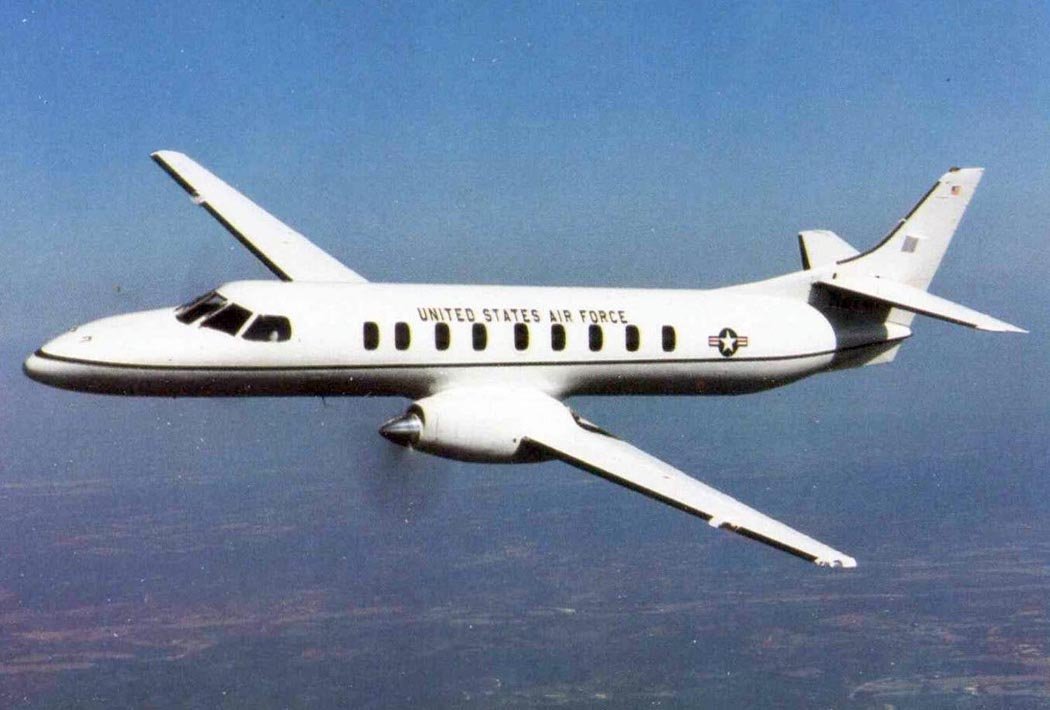 C-26 Metro |
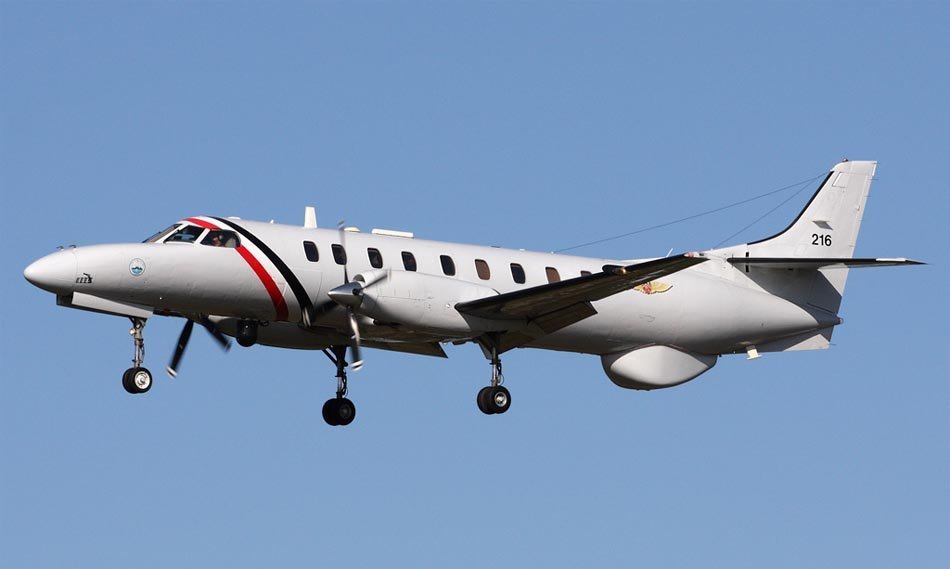 C-26 Metro |
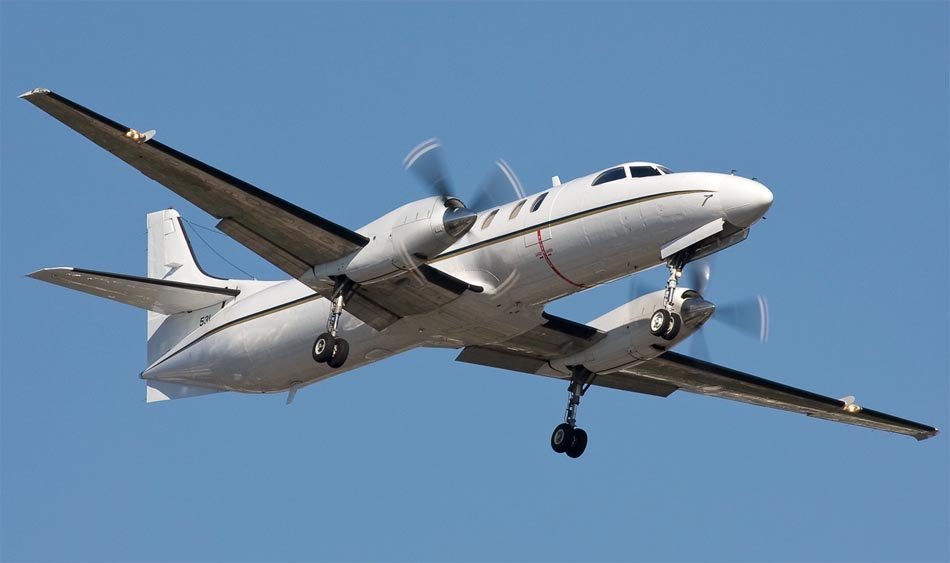 C-26 Metro |
 C-26 Metro |
 C-26 Metro |
 C-26 Metro |
ArchivoAéreo Editorial Team
A group of aviation researchers and enthusiasts dedicated to documenting and preserving global aeronautical history. All articles are reviewed to ensure historical accuracy.
Sources & Accuracy
The information presented in this technical sheet has been compiled from declassified flight manuals, historical archives, and specialized literature. While we strive for maximum accuracy, some performance data may vary depending on the specific variant or operational conditions.