C-27J Spartan
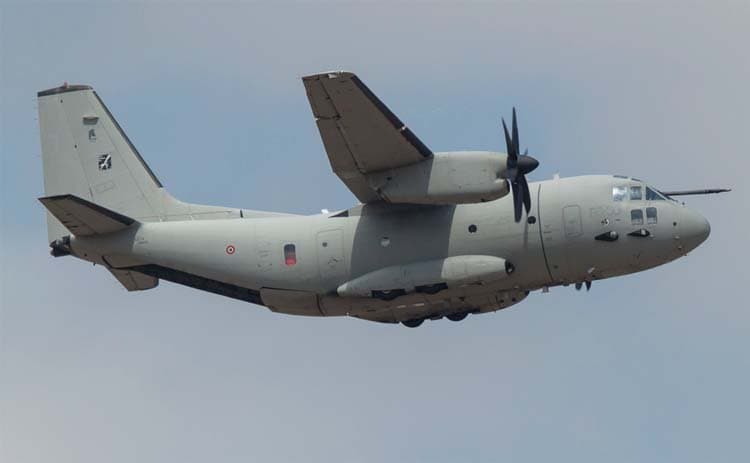
The impetus for developing an improved G222 variant came from the Lockheed Martin C-130J Hercules. In 1995, the American firm was negotiating with “Alenia” about the possibility of producing the C-130J for the Italian Air Force. Specifically, they proposed installing C-130J cockpit avionics and T64G turboprop engines on the G222J.
Ultimately, to standardize the new G222 variant’s engines with the C-130J, the Rolls-Royce (formerly Allison) AE 2100 D2 turboprops were chosen. The improved G222J was renamed C-27J, analogous to the G222, which had received the C-27A designation in the US Air Force.
Initial Development and Collaboration
“Alenia” and “Lockheed Martin” formed a joint venture, “Martin Alenia Tactical Transport Systems” (LMATTS), and official program work began on June 17, 1997. The G222 was designed around a pressurized cargo compartment, and the floor strength on the C-27J was brought up to the C-130J’s floor strength.
The C-27J is capable of transporting 34 troops or 24 paratroopers with full gear. Alternatively, the cabin can accommodate 24 wounded on stretchers and four medical attendants. The C-27J prototype, intended for power plant development (an Alenia G222 flying laboratory), made its first flight on September 24, 1999.
The second aircraft became the standard for serial production, making its first flight on May 12, 2000. On September 8, 2000, a third aircraft, intended for the Italian Air Force, took to the air. On November 11, 1999, the Italian Air Force ordered 12 aircraft, becoming the first C-27J customers.
The US Joint Cargo Aircraft (JCA) Program
The LMATTS joint venture offered the C-27J to all C-130J customers. The aircraft participated in tenders for transport aircraft for the Polish and Swiss Air Forces but lost to the CASA C-295.
Of great significance to the C-27J program was the competition for a unified transport aircraft (JCA) for the US Army and Air Force. The Army required a machine to replace the aging Short C-23 Sherpa, and the Air Force a new tactical aircraft for internal transport. Additionally, the National Guard aimed to replace its C-130E/H with such an aircraft.
Both the US Army and Air Force extensively used transport aviation in Iraq and Afghanistan. However, existing aircraft such as the C-130 and C-17 were too large for such transports and did not fully meet the climatic conditions (heat and high altitude).
The LMATTS venture dissolved in 2006 when “Lockheed Martin” submitted the C-130J to the JCA competition. “Alenia” joined forces to promote the C-27J in the market with “L-3 Communications” (and later with “Boeing”) as part of the “Global Military Aircraft Systems” (GMAS) project.
The C-27J’s competitor in the JCA competition was the Raytheon/EADS North America C-295. On June 13, 2007, the US Department of Defense selected the C-27J, after which a contract for the supply of 78 aircraft was concluded. The first of these made its first flight on June 17, 2008. Deliveries to the US Army began in April 2009.
After all Army aircraft were transferred to the control of the US Air Force, the order was reduced first to 38 aircraft, and then to 21. The aircraft were flown by joint Army and National Guard aviation crews. In August 2011, two C-27Js were deployed to Kandahar, Afghanistan.
Global Adoption and Future Prospects
In 2012, the US Air Force decided to completely discontinue work on the C-27J program, as the number of purchased aircraft was sufficient for performing tasks for the US Armed Forces in difficult natural conditions, such as Afghanistan. “Alenia’s” refusal to provide technical support for the US Air Force aircraft complicated their operation, leading to the decision to sell them.
The possibility of modernizing the C-27J into AC-27J Stinger II gunships, intended to replace outdated C-130-based gunships, is being studied. Meanwhile, the number of countries that have ordered the C-27J, besides the USA, is growing. In October 2006, Italy received the first of 12 ordered aircraft.
In 2012, C-27J aircraft were also in service in Bulgaria (three), Greece (eight), Lithuania (three), Mexico (one; three ordered), Morocco (four), and Romania (seven). Greece initially ordered 12 aircraft, but due to defense budget cuts, the last four aircraft of the Greek order were sold to Mexico. Slovakia also ordered the C-27J. Thailand is studying the possibility of upgrading three of its G.222s to C-27J configuration.
“Alenia” continues to actively market the aircraft globally. Potential customers include Australia, Canada, India, Peru, Taiwan, Ghana, and Indonesia.
Technical Specifications
| Modification | C-27J |
| Wingspan, m | 28.70 |
| Aircraft length, m | 22.70 |
| Aircraft height, m | 9.64 |
| Wing area, m2 | 82.00 |
| Empty weight | 17000 |
| Normal takeoff weight | 25800 |
| Maximum takeoff weight | 30500 |
| Internal fuel, kg | 9400 |
| Engine type | 2 Turboprop Rolls-Royce AE2100-D2A |
| Power, hp | 2 x 4640 |
| Maximum speed, km/h | 602 |
| Cruising speed, km/h | 583 |
| Ferry range, km | 5926 |
| Practical range, km | 1852 |
| Service ceiling, m | 9144 |
| Crew, crew members | 2 |
| Payload | 60 soldiers or 46 paratroopers or 30 passengers or 36 stretchers with 6 attendants or 9000 kg of cargo |
Image and diagram gallery of the C-27J Spartan
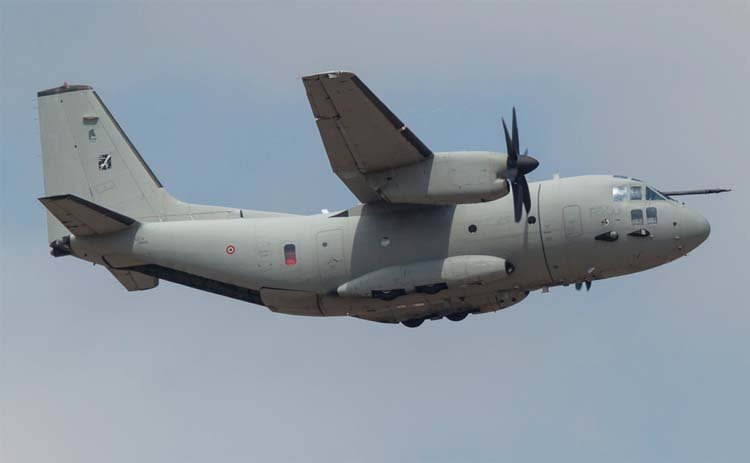 C-27J Spartan |
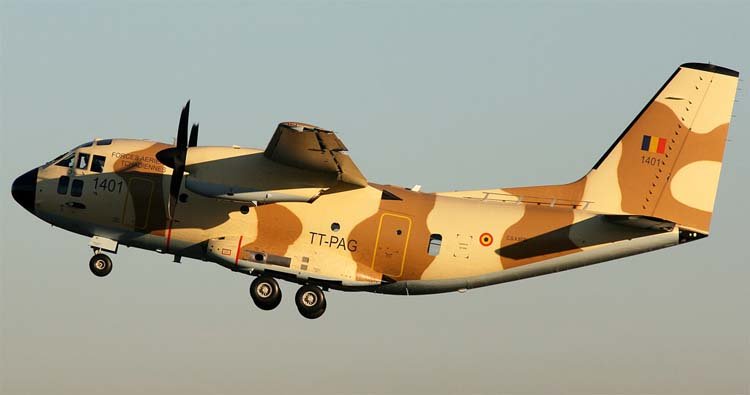 C-27J Spartan |
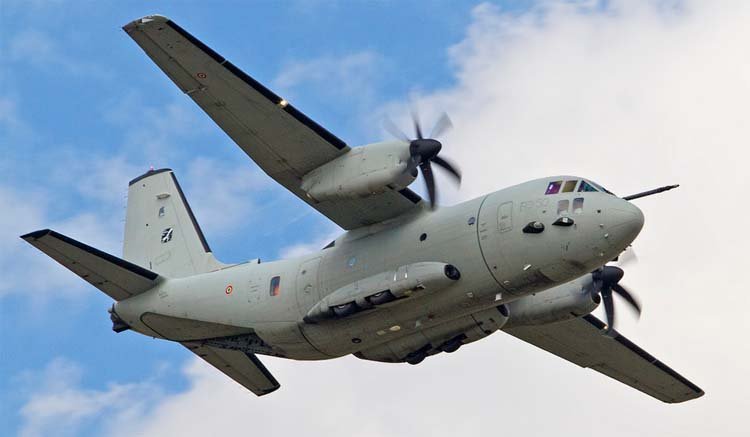 C-27J Spartan |
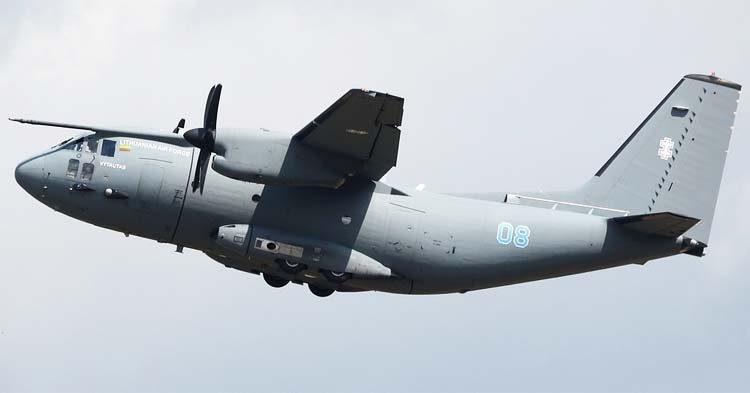 C-27J Spartan |
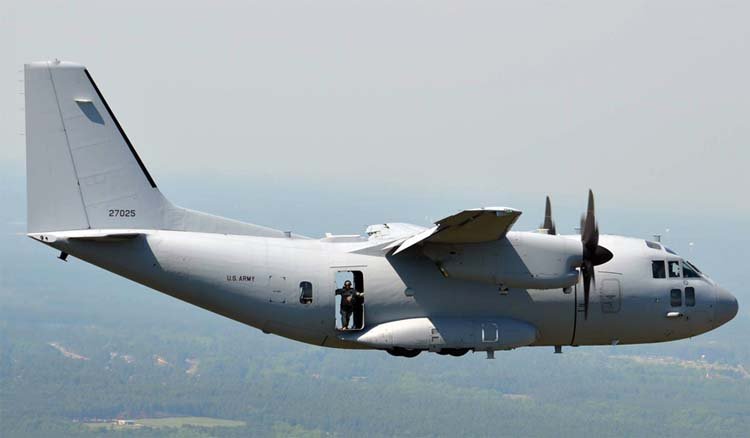 C-27J Spartan |
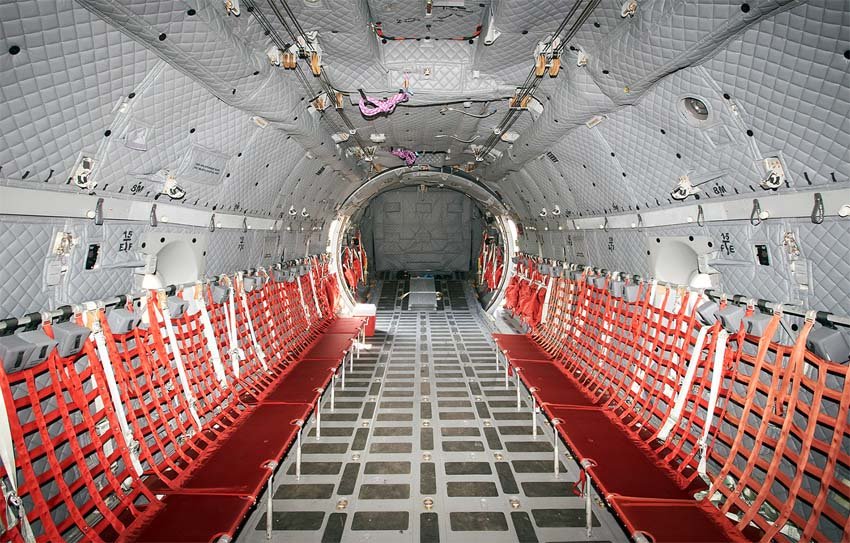 C-27J Spartan |
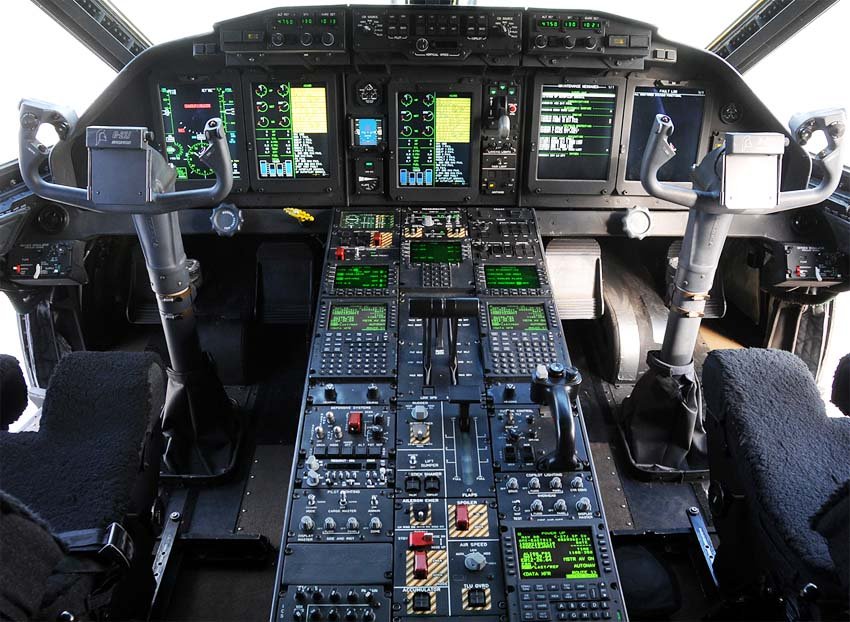 C-27J Spartan |
 C-27J Spartan |
 C-27J Spartan |
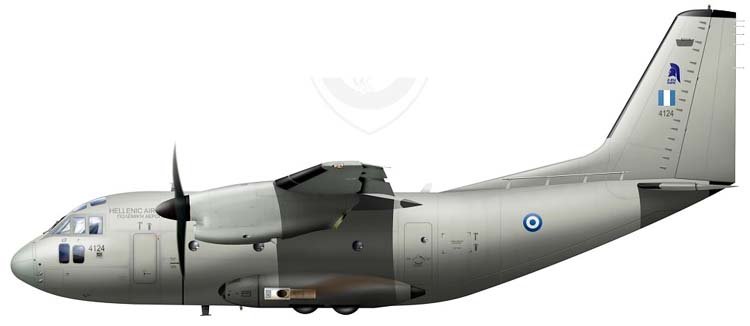 C-27J Spartan |