C.5
In late 1938, the Inspectorate of Aviation Schools issued a specification for a new trainer aircraft intended to replace the outdated Romeo Ro.5 and FIAT AS.1. Key requirements for the UHT (trainer aircraft) included simplicity in production and maintenance, good flight characteristics, and the use of FIAT A.50 engines (85 hp), which were produced in large quantities in Italy. CANSA (Costruzioni Aeronautiche Novaresi S.A.), previously part of Societe Gabardidni and known for establishing licensed production of the Hanriot HD.1 fighter, undertook the design of such an aircraft. Engineer Giacomo Mosso led the work, quickly presenting the FL.5 trainer aircraft project, named after Italian journalist Francesco Lombardi, which was a significantly redesigned HD.1 fighter.
Thanks to their existing experience, the design team managed to meet all requirements. The fuselage featured a wooden ash structure, reinforced internally with metal ties. The tail and central sections were fabric-covered, while the nose section had aluminum sheet cladding. The wing was also entirely wooden, made of spruce, and its internal structure also included metal ties.
Development and Testing
By November 1938, the project was fully complete. By this time, the aircraft’s name was first changed to F.5, and then to C.5 for standardization purposes. The first C.5 prototype (MM.50856) was officially presented on December 29, 1939, and underwent comprehensive testing in Guidonia from August to September 1939. Test flights confirmed the calculated characteristics, and most importantly, the C.5 possessed excellent acrobatic capabilities.
Production and Service
Preparation for serial production began for two variants: the single-seat C.5A with a FIAT A.50 engine and the two-seat C.5B, which could be fitted with either the standard engine (C.5B\A.50) or the radial Alfa Romeo 110 (100 hp). The plan was to deliver six prototypes within the next three months and commence construction of 50 production aircraft starting in 1939, each costing no more than 50,000 lire. These plans soon changed, as the price for the single-seat C.5A rose to 57,000 lire and for the C.5B to 71,000 lire.
This clearly didn’t fit into the budget, so initially, 12 pre-production aircraft were ordered (six C.5A\A.50, five C.5B\AR110, and one C.5B\A50) to determine the best variant. Ultimately, it was decided that all 50 production aircraft would have the FIAT A.50 engine, with 35 built as single-seaters and 15 as two-seaters. This was formally documented by an order on April 24, 1940. The aircraft were assigned serial numbers 51588 – 51637 and served excellently with the Regia Aeronautica until September 1943. Of the 62 aircraft available by July 31, 21 fell into German hands and were transferred to their flight schools. As for the 41 Italian C.5s, there is no precise information.
Technical Specifications
| Modification | C.5A |
| Wingspan, m | 8. 50 |
| Length, m | 6. 22 |
| Height, m | 2.5 2 |
| Wing area, m2 | 18.00 |
| Empty weight | 453 |
| Maximum takeoff weight | 633 |
| Engine type | 1 Piston engine Fiat A.50 |
| Power, hp | 1 x 85 |
| Maximum speed, km/h | 176 |
| Cruising speed, km/h | 154 |
| Practical range, km | 640 |
| Practical ceiling, m | 4650 |
| Crew | 1 crew |
Image and diagram gallery of the C.5
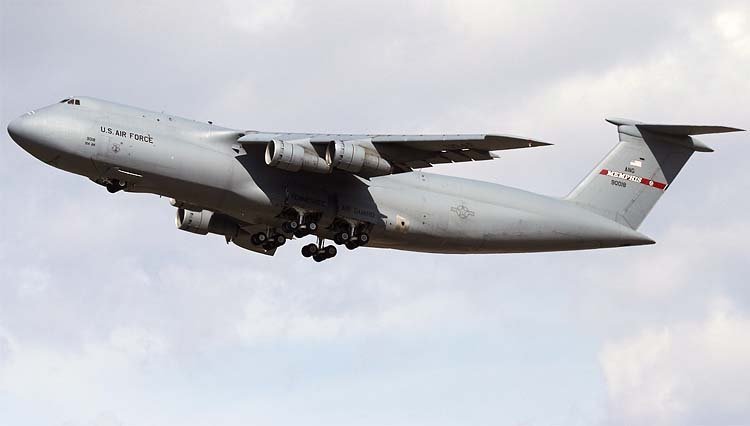 C.5 |
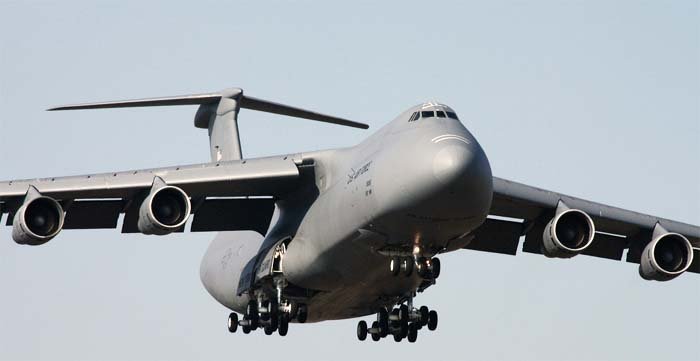 C.5 |
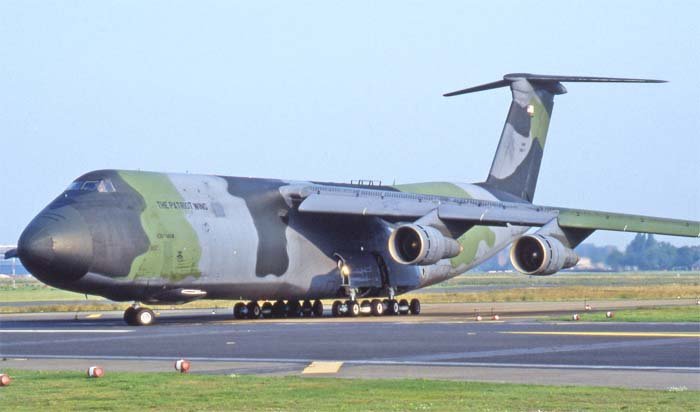 C.5 |
 C.5 |
ArchivoAéreo Editorial Team
A group of aviation researchers and enthusiasts dedicated to documenting and preserving global aeronautical history. All articles are reviewed to ensure historical accuracy.
Sources & Accuracy
The information presented in this technical sheet has been compiled from declassified flight manuals, historical archives, and specialized literature. While we strive for maximum accuracy, some performance data may vary depending on the specific variant or operational conditions.