Cessna 182 Skyline
Genesis and Early Variants
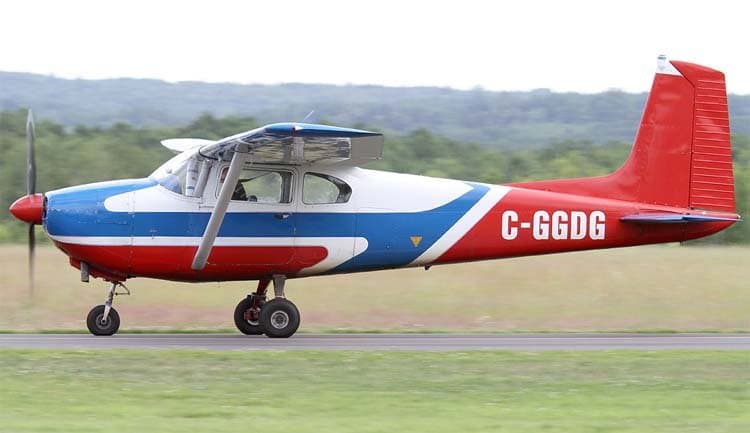
Developed from the Model 180, the Cessna Model 182, featuring a non-ret retractable tricycle landing gear, made its inaugural flight in September 1955. The airframe of the initial Model 182 variant was identical to the Model 180, sporting an unswept vertical stabilizer and powered by a 230 hp Continental O-470-R engine. Serial production commenced in 1956, with 843 aircraft built.
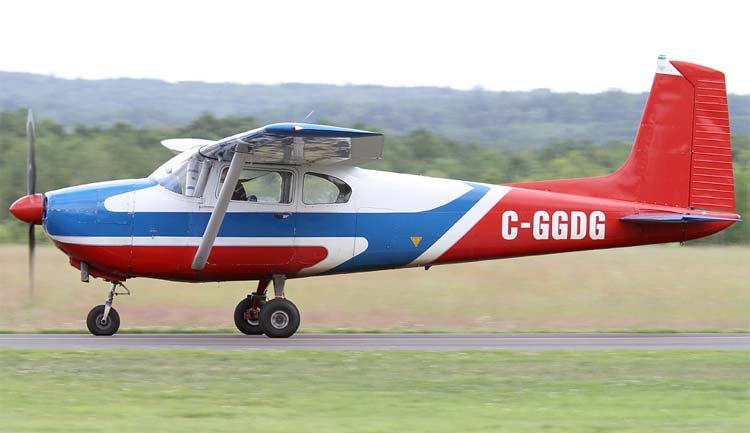
In 1957, the Model 182A variant (1,713 aircraft) was introduced, featuring a strengthened, shortened landing gear with an increased track for improved ground stability, and an external baggage compartment door. At this time, the common name “Skylane” was adopted for all Model 182 family aircraft. The Model 182B (802 aircraft) entered production in 1959, differing from its predecessor with minor changes to the engine cowling. In 1960, Cessna released the Model 182D (591 aircraft), which included a swept tailfin, a third cabin window, and shortened landing gear struts.
Design Evolution and Performance Upgrades
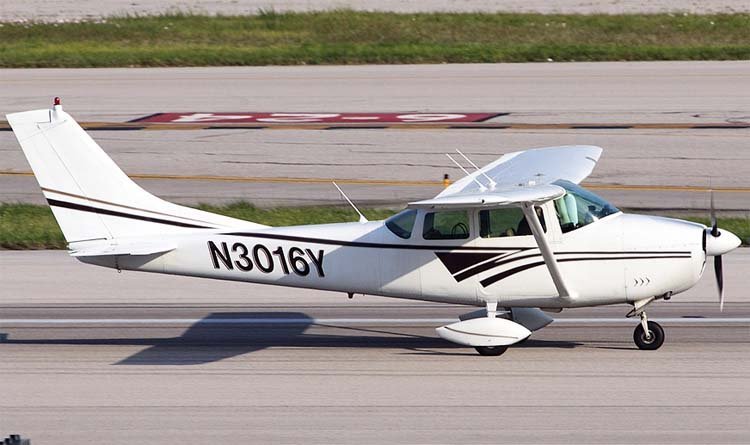
To combat declining sales in 1962, the Model 182E (826 aircraft) was developed, featuring a wider fuselage and a cut-down dorsal fairing, which allowed for rear cabin glazing (“Omnivision”). This variant, like others, was fitted with O-470-R engines. Subsequent variants included the Model 182F (635 aircraft) and Model 182G (786), both with integral rear cabin glazing and elliptical rear side windows.
Further developments saw the Model 182H (840) with a sharp spinner, Model 182J (885) with a narrow tailfin, and Model 182K (840) with a modified tailfin tip. The Model 182L (800), Model 182M (750), and Model 182N (770) followed. From 1973, the Model 182P (4,350 aircraft) was produced, featuring tubular steel landing gear struts, a nose-mounted landing light, and an enlarged dorsal fin.
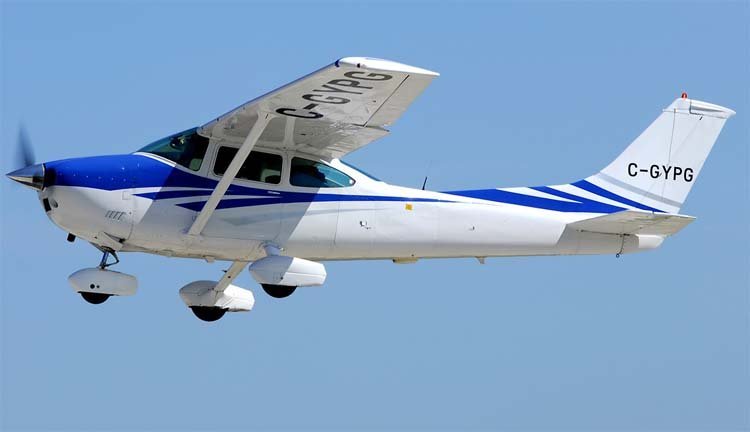
The Model 182Q (2,540 aircraft) introduced new landing gear wheel fairings and an O-470-S engine. The Model 182R Turbo Skylane (900 aircraft) was equipped with turbocharged 245 hp (175 kW) Lycoming TIO-540 engines. The final variant of the first series was the Model R182 Turbo Skylane RG (2,041 aircraft), a high-performance version of the Model 182Q distinguished by its fully retractable landing gear.
Modernization and Global Reach
Production of the Skylane ceased in 1986 but resumed in the 1990s following changes in U.S. legislation. Since 2001, standard variants like the Model 182T Skylane and Model T182T Turbo Skylane have been built, featuring conventional and turbocharged engines, respectively. In 2005, Cessna began outfitting aircraft with Garmin G1000 “glass cockpit” avionics and offered upgrades for earlier models.
Some aircraft were equipped with weather radar pods mounted under the left wing. The Model 182 was also produced under license in Argentina by DINFIA and in France by Reims Aviation, highlighting its global impact and adaptability.
Technical Specifications
| Modification | Cessna 182 |
| Wingspan, m | 10.98 |
| Length, m | 7.67 |
| Height, m | 2.80 |
| Wing area, m2 | 16.20 |
| Empty weight | 735 |
| Maximum takeoff weight | 1160 |
| Engine type | 1 Piston engine Continental O470R |
| Power, hp | 1 x 230 |
| Maximum speed, km/h | 257 |
| Cruising speed, km/h | 253 |
| Practical range, km | 1078 |
| Rate of climb, m/min | 366 |
| Service ceiling, m | 6096 |
| Crew | 1 crew member |
| Payload | 3 passengers |
Image and diagram gallery of the Cessna 182 Skyline
 Cessna 182 Skyline |
 Cessna 182 Skyline |
 Cessna 182 Skyline |
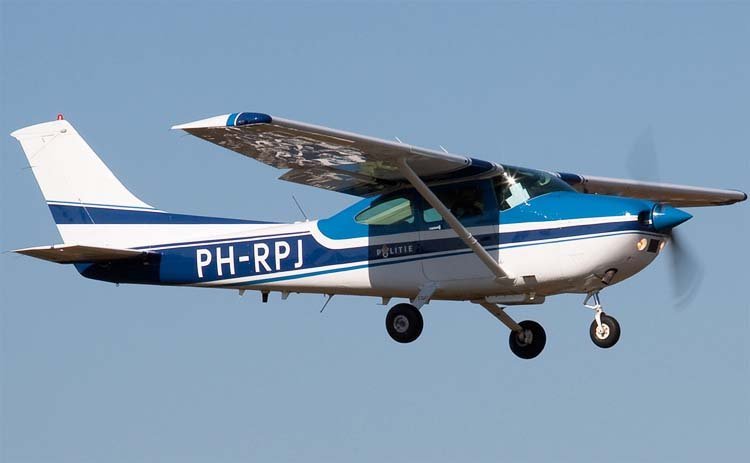 Cessna 182 Skyline |
 Cessna 182 Skyline |
 Cessna 182 Skyline |
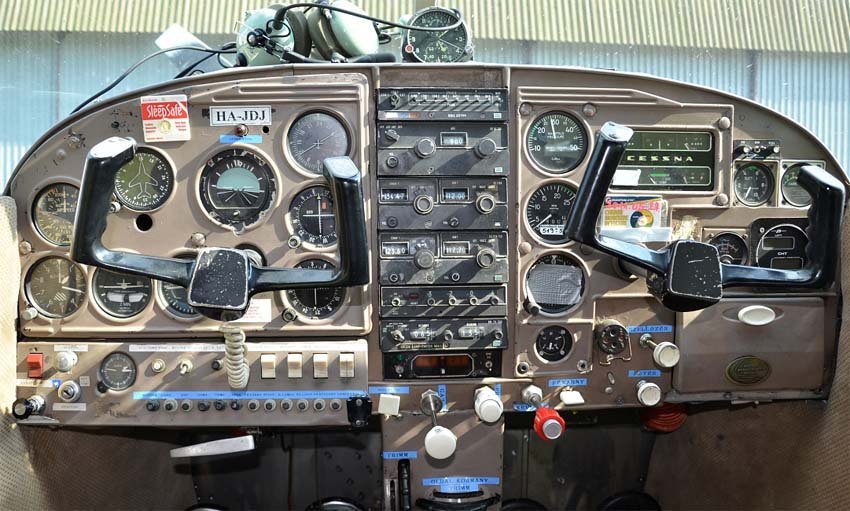 Cessna 182 Skyline |
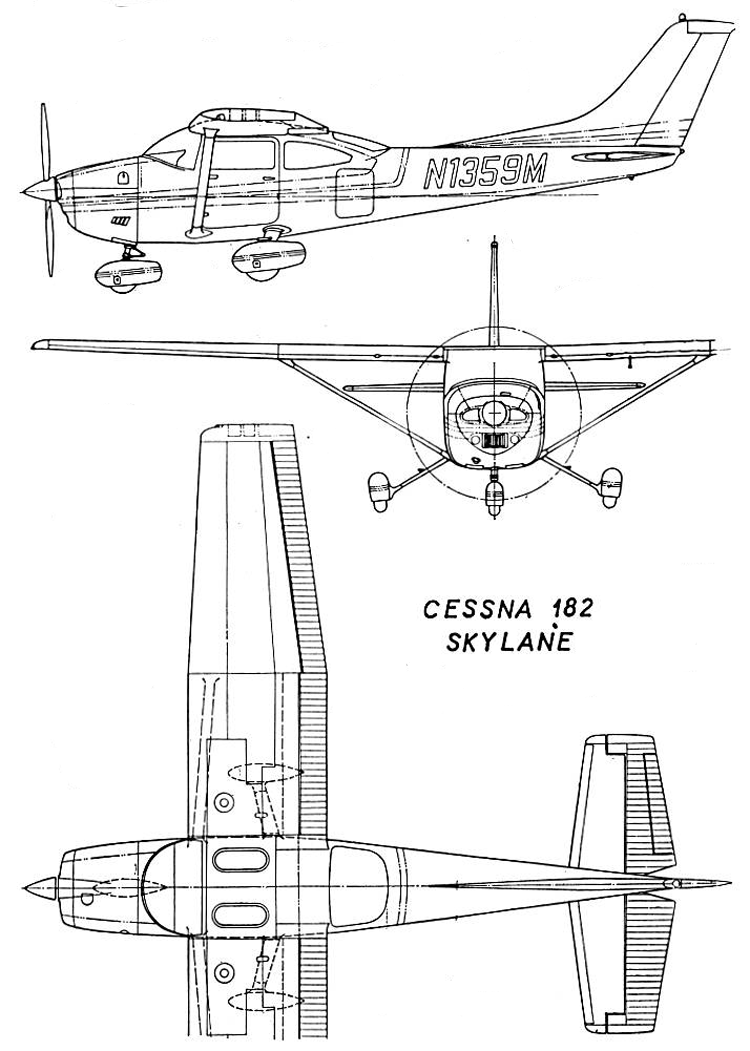 Cessna 182 Skyline |
ArchivoAéreo Editorial Team
A group of aviation researchers and enthusiasts dedicated to documenting and preserving global aeronautical history. All articles are reviewed to ensure historical accuracy.
Sources & Accuracy
The information presented in this technical sheet has been compiled from declassified flight manuals, historical archives, and specialized literature. While we strive for maximum accuracy, some performance data may vary depending on the specific variant or operational conditions.