Cessna 407
An Ambitious Aircraft Project
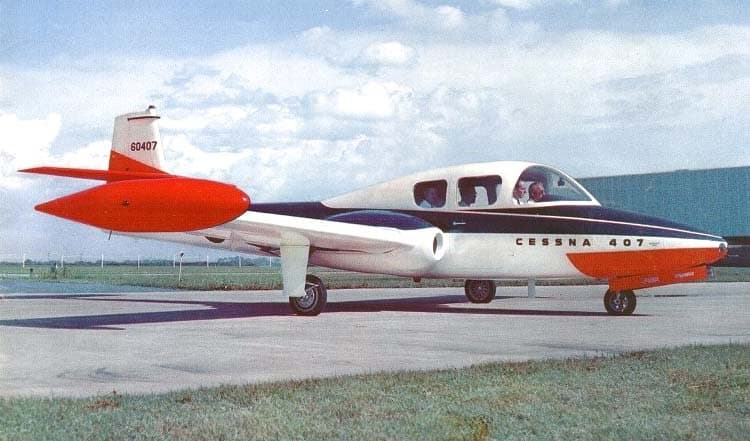
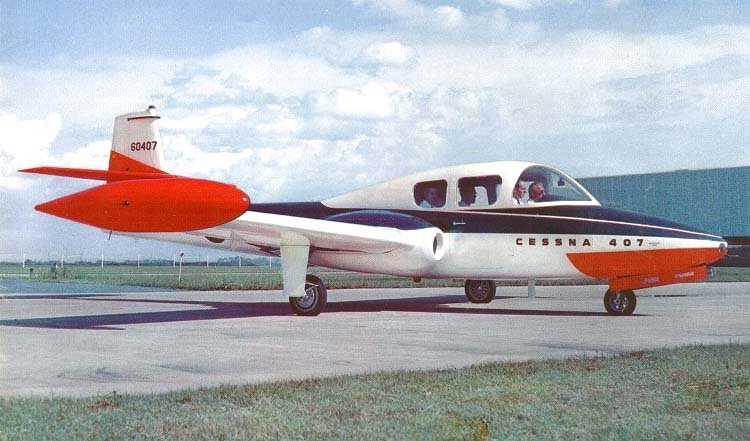
In September 1959, Cessna announced the development of the Cessna Model 407, a light multi-purpose aircraft. This four-seater was a redesign of the T-37 Tweet trainer, intended for both military and civilian customers.
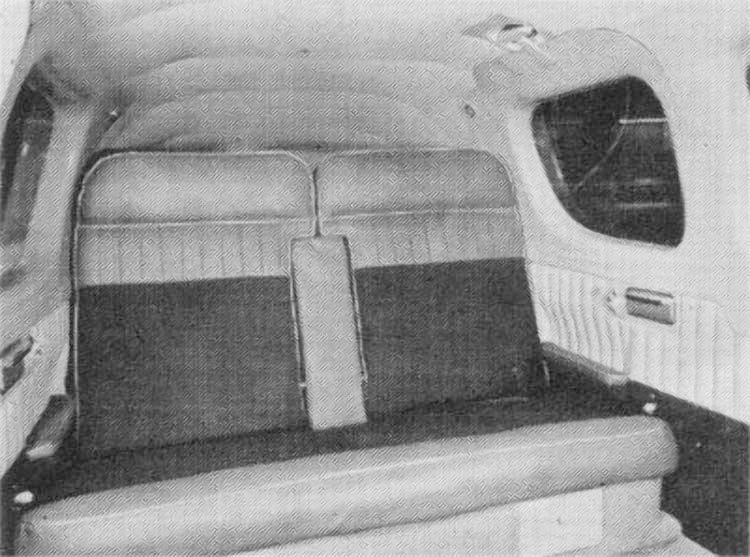
Its main distinguishing feature was a comfortable cabin designed for four people, complete with luggage space. For passenger convenience, the cabin doors were of an automotive type, an innovative touch for an aircraft.
Competition and Project Cancellation
However, during the construction of the first prototype (N34267), it became clear that the Cessna 407 would not be able to compete with the more versatile North American T-39 Sabreliner. Hopes for civilian customers also proved to be increasingly elusive.
As a result, the project was terminated, and the Cessna 407 never once took flight. This promising design ultimately met an early end.
Technical Specifications
| Modification | Cessna 407 |
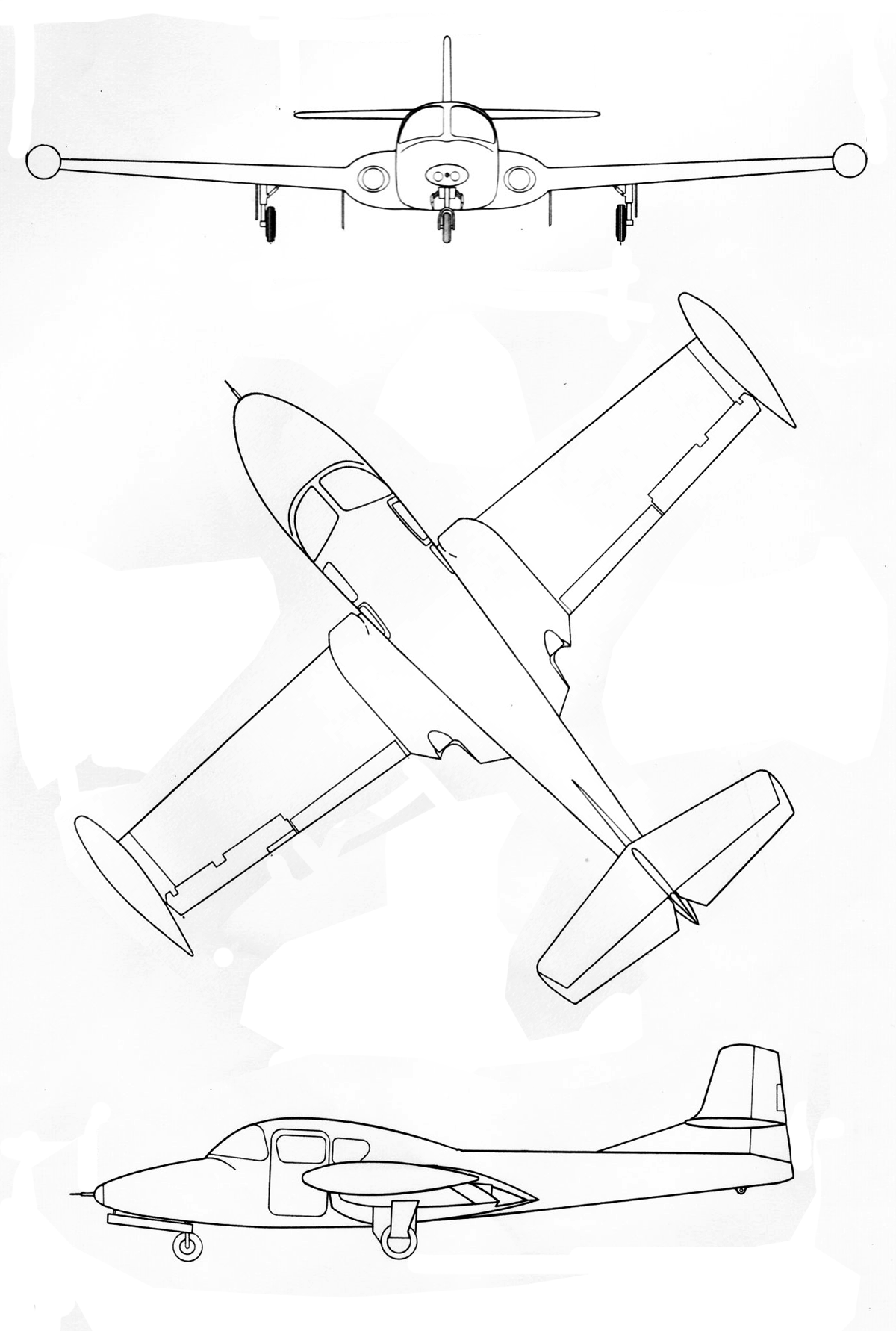
| Wingspan, m | 11.53 |
| Aircraft length, m | 9.67 |
| Aircraft height, m | 2.99 |
| Wing area, m2 | 17.10 |
| Empty weight | 2112 |
| Maximum takeoff weight | 4218 |
| Engine type | 1 Turbojet Continental 356-9 |
| Thrust, kN | 1 х 7.6 |
| Maximum speed, km/h | 783 |
| Cruising speed, km/h | 748 |
| Economical speed, km/h | 283 |
| Practical range, km | 2280 |
| Maximum rate of climb, m/min | 1122 |
| Practical ceiling, m | 14100 |
| Crew | 1-2 |
| Payload | 2-3 passengers |
Image and diagram gallery of the Cessna 407
 Cessna 407 |
 Cessna 407 |
 Cessna 407 |
 Cessna 407 |
 Cessna 407 |
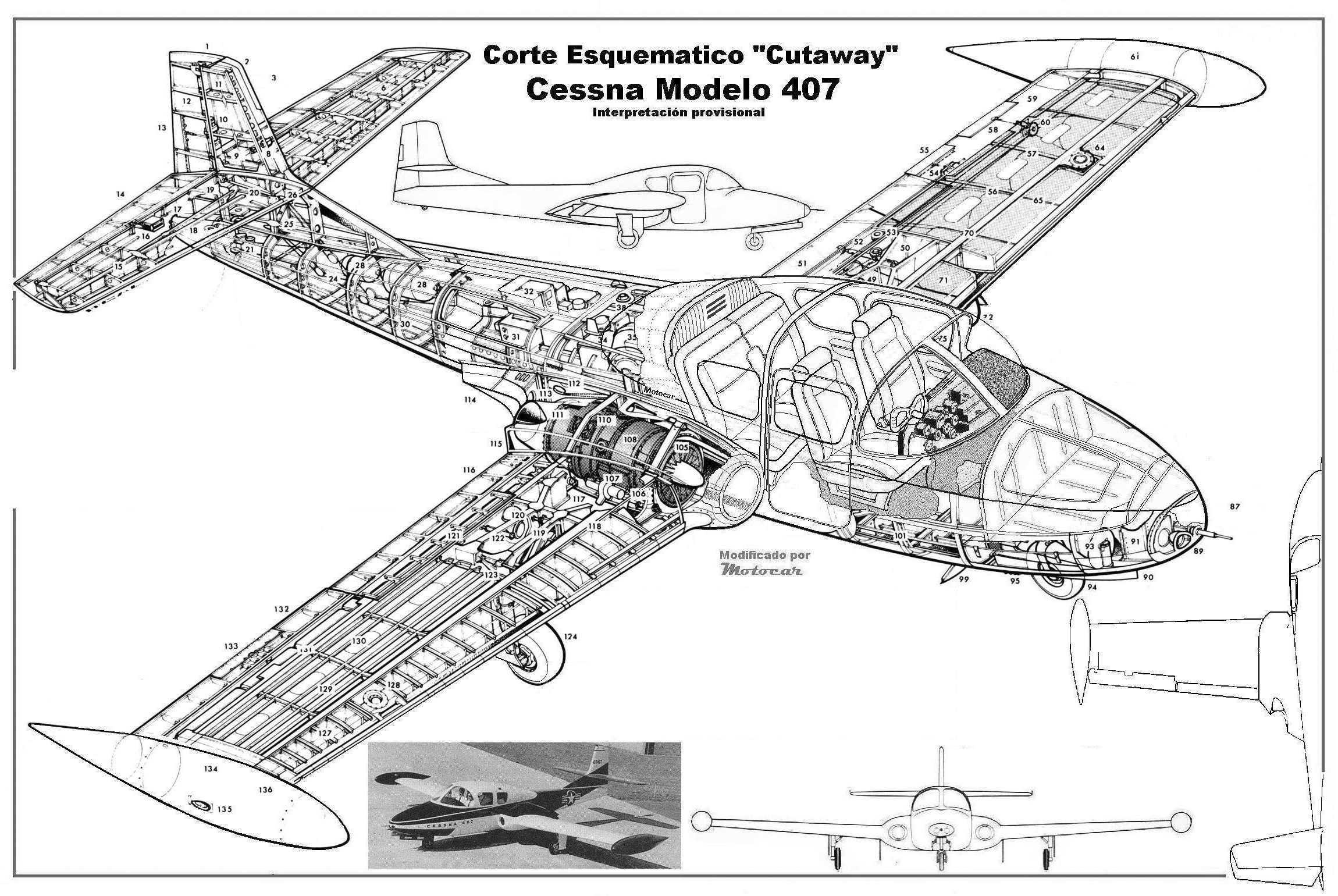 Cessna 407 |
ArchivoAéreo Editorial Team
A group of aviation researchers and enthusiasts dedicated to documenting and preserving global aeronautical history. All articles are reviewed to ensure historical accuracy.
Sources & Accuracy
The information presented in this technical sheet has been compiled from declassified flight manuals, historical archives, and specialized literature. While we strive for maximum accuracy, some performance data may vary depending on the specific variant or operational conditions.