Cessna 510 Citation Mustang
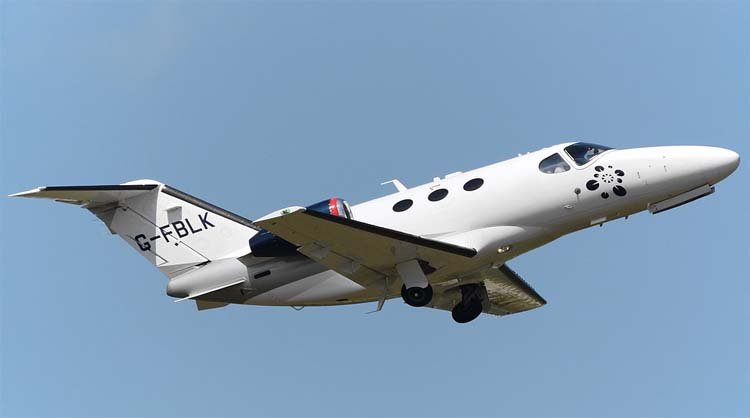
The business (administrative) aircraft Cessna Model 510 Citation Mustang belongs to the VLJ (Very Light Jet) class and, in its standard configuration, can carry six people. Like most other aircraft in its class, the Citation Mustang can perform flights with a single pilot.
The Citation Mustang’s first flight took place on April 23, 2005, and it received its full type certificate on September 8, 2006. The first production Citation Mustang was delivered on November 23, 2006. This aircraft was a pioneer in its class, being the first to receive full certification and approval for flight in icing conditions, as well as the first VLJ delivered to a customer.
Mustang Design and Structure
The Citation Mustang’s airframe is primarily constructed from aluminum alloys. The entrance door is located on the left side of the forward fuselage, while the emergency exit is on the right side, in the central section.
The Cessna Mustang is similar in size to the CJ1, but it did not inherit the basic Citation fuselage design, and the Mustang’s cabin volume is somewhat smaller than the CJ1’s. The fuselage diameter has been reduced, so the cabin, for the sake of ergonomics, does not have a perfectly circular cross-section, but one expanded in the shoulder and leg areas of the passengers. The cabin, whose finish is of a higher quality level than in Citation business jets released in recent years, features four passenger seats facing each other, with deployable tables in the space between them. The cabin windows are oval-shaped and located at passenger eye level. The cabin length is 2.97 m (excluding the cockpit), width is 1.40 m, and height is 1.37 m. The baggage compartment, inaccessible to passengers during flight, has a volume of 1.8 cubic meters.
Advanced Cockpit and Avionics
Unlike most other VLJ aircraft, the Citation Mustang’s cockpit lacks overhead control panels; all toggles and switches are concentrated on the instrument panel and central console. The latter also houses the throttles, trim wheel, flap control levers, flight management system keyboard, and rudder and aileron trim switches.
The aircraft is equipped with a Garmin G1000 avionics suite with the highest degree of integration, which not only complements the main systems but directly controls them. By combining all primary flight information, navigation, engine, and data from numerous sensors, the Garmin, with its three easy-to-read multi-function displays, significantly reduces workload by minimizing various switching operations and ensuring an extreme degree of situational awareness. A 38-centimeter multi-function display is located in the center of the instrument panel. In addition, each crew member has their own display showing flight information.
Propulsion and Flight Systems
The Citation Mustang is powered by two Pratt & Whitney Canada PW615F turbofan engines in nacelles on the sides of the aft fuselage. All wheels of the retractable landing gear are equipped with brakes with an anti-skid system. A variant of the Citation Mustang with a lavatory unit between the cockpit and the passenger cabin is available.
Technical Specifications
| Modification | C 510 |
| Wingspan, m | 13.16 |
| Aircraft length, m | 12.37 |
| Aircraft height, m | 4.09 |
| Wing area, m2 | 19.51 |
| Empty weight | 2336 |
| Maximum takeoff weight | 3930 |
| Engine type | 2 Turbofan engines Pratt & Whitney Canada PW615F |
| Thrust, kN | 2 x 6.49 |
| Maximum speed, km/h | M=0.63 |
| Cruising speed, km/h | 630 |
| Practical range, km | 2163 |
| Practical ceiling, m | 12495 |
| Crew | 1-2 crew members |
| Payload | 4-5 passengers |
Image and diagram gallery of the Cessna 510 Citation Mustang
 Cessna 510 Citation Mustang |
 Cessna 510 Citation Mustang |
 Cessna 510 Citation Mustang |
 Cessna 510 Citation Mustang |
 Cessna 510 Citation Mustang |
 Cessna 510 Citation Mustang |
 Cessna 510 Citation Mustang |
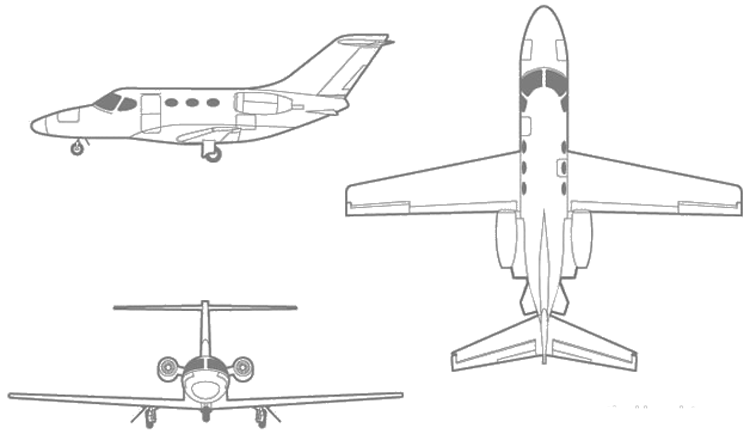 Cessna 510 Citation Mustang |
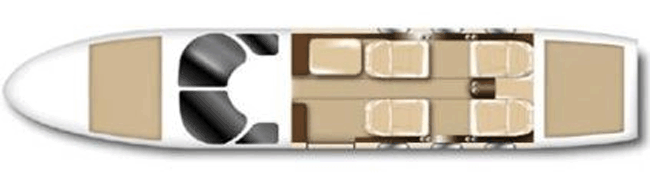 Cessna 510 Citation Mustang |
 Cessna 510 Citation Mustang |