CL-227 Sentinel
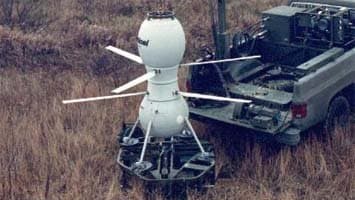
Early Development and Prototypes
The CL-227 Sentinel is a multi-purpose UAV created by the Canadian firm Bombardier Services Corporation. Project development began in 1964, but the first UAV was not built until 1977. The initial prototype, equipped with a Wankel rotary engine, took flight on August 25, 1978.
The subsequent CL-227 prototype was fitted with a Williams WTS34-15-2 turboshaft engine, delivering 24 kW. The UAV’s first flight equipped with a commercial TV camera and data transmission system occurred in 1981.
Testing and Operational Capabilities
The final phase of testing, which lasted from 1984 to 1989, involved demonstration flights of ten UAVs controlled from two ground stations. These trials took place in the USA. From 1990, the Sentinel underwent testing at US military bases and on warships.
The UAV could be equipped with various systems, including television and photo cameras, FLIR infrared sensors, EW and ELINT systems, radar, and laser designator systems.
Evolution and the Puma Version
Successful testing allowed Bombardier to continue modifying the UAV. In 1994, a new Williams WTS125 gas turbine engine was installed. This version was designated Puma, and its first flight occurred in March 1996.
Technical Specifications
| Modification | CL 227 |
| Height, m | 1.67 |
| Rotor diameter, m | 2.80 |
| Empty weight | 111 |
| Maximum takeoff weight | 227 |
| Fuel capacity, kg | 54 |
| Engine type | 1 Turboshaft engine Williams International WTS34-16 |
| Power, hp | 1 x 51.5 |
| Maximum speed, km/h | 142 |
| Flight endurance, h.min | 3.30 |
| Operating radius, km | 60 |
| Rate of climb, m/min | 274 |
| Service ceiling, m | 3000 |
| Payload, kg | 45 kg of various equipment |