Crescent C-81 and C-82
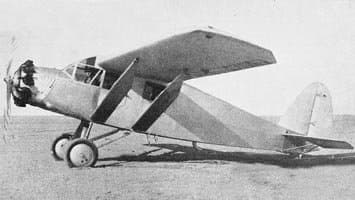
The Origins of Crescent Aircraft
American engineer Clarence D. Chamberlin founded Chamberlin Aeronautical Corp. in Jersey City, New Jersey, in 1929. The following year, the company changed its name to Crescent Aircraft Corp., with Chamberlin remaining as president. In the same year, two light aircraft, the C-2 Trainer and C-5 Super Sport, were built. However, due to the onset of the Great Depression, no orders for these aircraft were received.
In 1931, the company attempted to find buyers among major airlines. For them, two aircraft variants were immediately built: the eight-seater C-81 and the seven-seater C-82. Both were strut-braced high-wing monoplanes, equipped with 300 hp Wright J-6-9 (R-975) Whirlwind radial engines. The mass of the first aircraft exceeded the second by only 165 kilograms.
Design and Technical Specifications
They shared an identical wingspan of 14.63 meters and a length of 8.69 meters. The fuel tank on both machines held 100 gallons (379 liters) of gasoline. This allowed them to transport passengers at an average speed of 177 km/h over a distance of 965 kilometers. The cost of the C-82 in 1931 was 12,500 US dollars.
The Legacy of the Prototypes
Hopes for series production of these aircraft were not realized. The machines remained as single examples: the C-81 (NC60W) and the C-82 (NC69K). A proposed eight-seater C-82 variant, equipped with a 450 hp Pratt & Whitney Wasp engine, was never built.
Technical Specifications
| Modification | C-81 |
| Wingspan, m | 14.63 |
| Length, m | 8.69 |
| Empty weight | 2014 |
| Normal takeoff weight | 2586 |
| Engine type | 1 Piston engine Wright J-6-7 Whirlwind |
| Power, hp | 1 x 300 |
| Maximum speed, km/h | 209 |
| Cruising speed, km/h | 177 |
| Practical range, km | 965 |
| Crew | 1 crew |
| Payload | 7 passengers and 77 kg of luggage |
Image and diagram gallery of the Crescent C-81 and C-82
 C-81(82) |
 C-81(82) |
 C-81(82) |
 C-81(82) |
ArchivoAéreo Editorial Team
A group of aviation researchers and enthusiasts dedicated to documenting and preserving global aeronautical history. All articles are reviewed to ensure historical accuracy.
Sources & Accuracy
The information presented in this technical sheet has been compiled from declassified flight manuals, historical archives, and specialized literature. While we strive for maximum accuracy, some performance data may vary depending on the specific variant or operational conditions.