Fairchild XC-120 Pack Plane
Military transport aircraft, especially heavy ones, spend considerable time on loading and unloading. Even combining loading with required maintenance does not save much time, which can have negative consequences in an armed conflict. Accelerating and simplifying loading and unloading operations can be achieved by using large standard containers instead of small packaging.
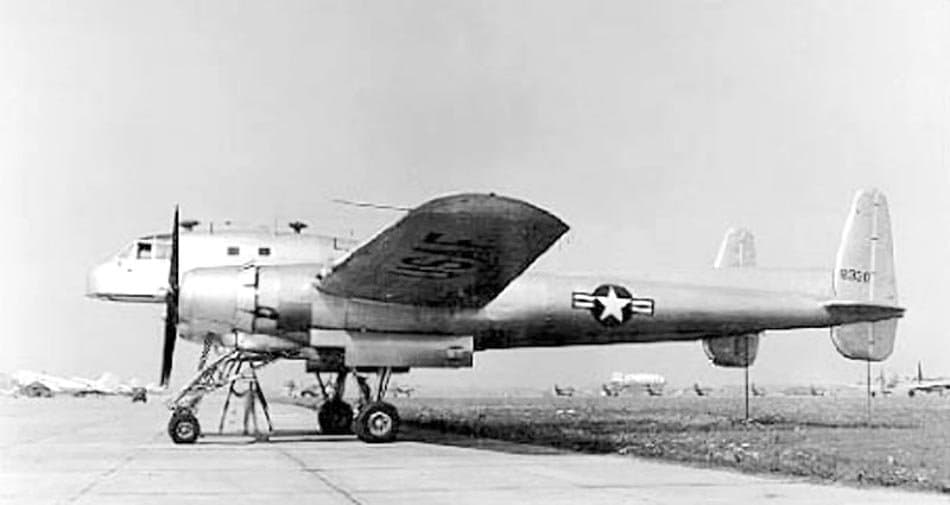
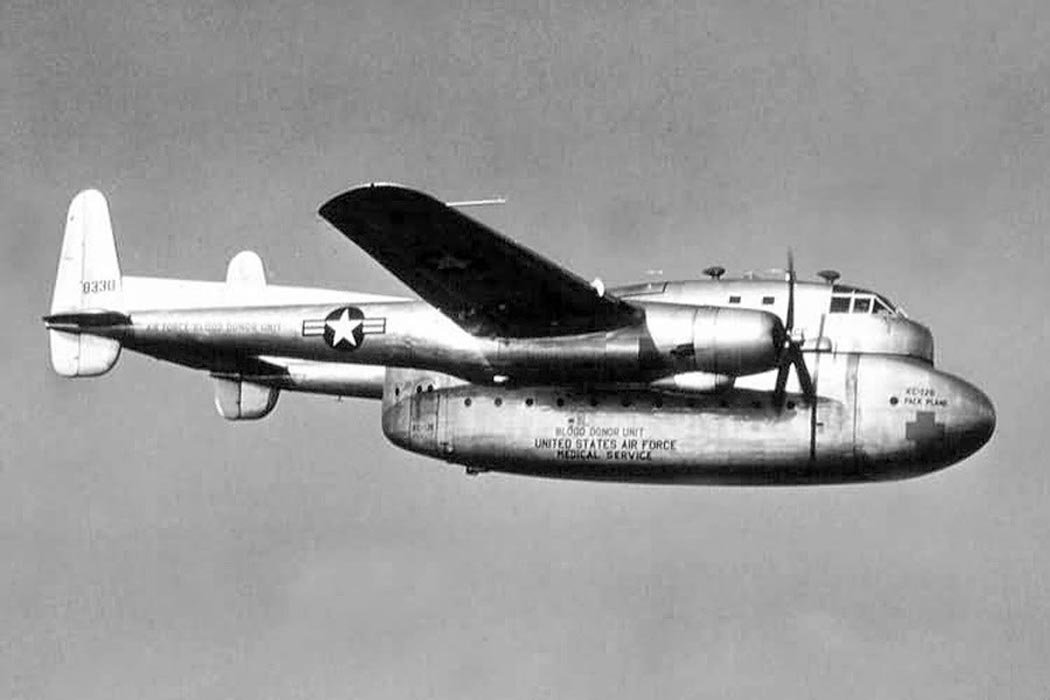
An original variant for developing this idea was proposed in the Fairchild XC-120 Pack Plane military transport aircraft project. Classic-scheme transport aircraft carry their payload inside the fuselage, in a large cabin that can be equipped with special equipment, passenger seats, etc. In the late 1940s, an original proposal emerged that greatly simplified aircraft reconfiguration for new objectives and tasks, and reduced loading time.
The Innovative Modular Concept
Fairchild Aircraft designers proposed transporting cargo not inside the aircraft, but in a special container. The latter was to be attached to the aircraft and be detachable. The authors’ original idea was that using a detachable container would sharply reduce preparation time for departure. The aircraft could arrive at its destination, drop off the cargo compartment with supplies or special equipment, then pick up a new one, and depart for another airfield.
With this operation, after the first landing, only refueling the aircraft and attaching a new container would be required. Furthermore, the unusual architecture could be used to expand the range of tasks. Specialized cargo or passenger containers could be built, as well as mobile command posts, hospitals, and so on.
Fairchild presented its original idea to the American military department and managed to interest them. The prevailing global situation demanded further development of both the armed forces as a whole and their logistics system. A military transport aircraft capable of carrying containers with various loads was of great interest to the customer.
The project received the official designation XC-120. The name “Pack Plane” (Aircraft with a Box) was also used, sometimes written as one word. Later, after testing and acceptance into service, the project name was expected to lose the “X” letter, which denoted new developments not yet brought into practical use. It is also known that serial XC-120s might have received the name C-128.
Design and Technical Specifications
Within the new project, it was proposed to use ready-made components and assemblies borrowed from serial aircraft. This approach drastically reduced development times and simplified future serial production of military transport aircraft. From a structural perspective, the new “Pack Plane” was intended to be a deep modernization of the Fairchild C-119 Flying Boxcar transport, which had entered service shortly before.
The existing aircraft would “share” with the new one some large airframe components, the power plant, and so on. The existing twin-boom configuration was also utilized. Simultaneously, some existing components required major modifications to meet the project’s main objectives. The proposal to forgo a dedicated internal cargo bay necessitated the development of a new fuselage and a special container for cargo transport.
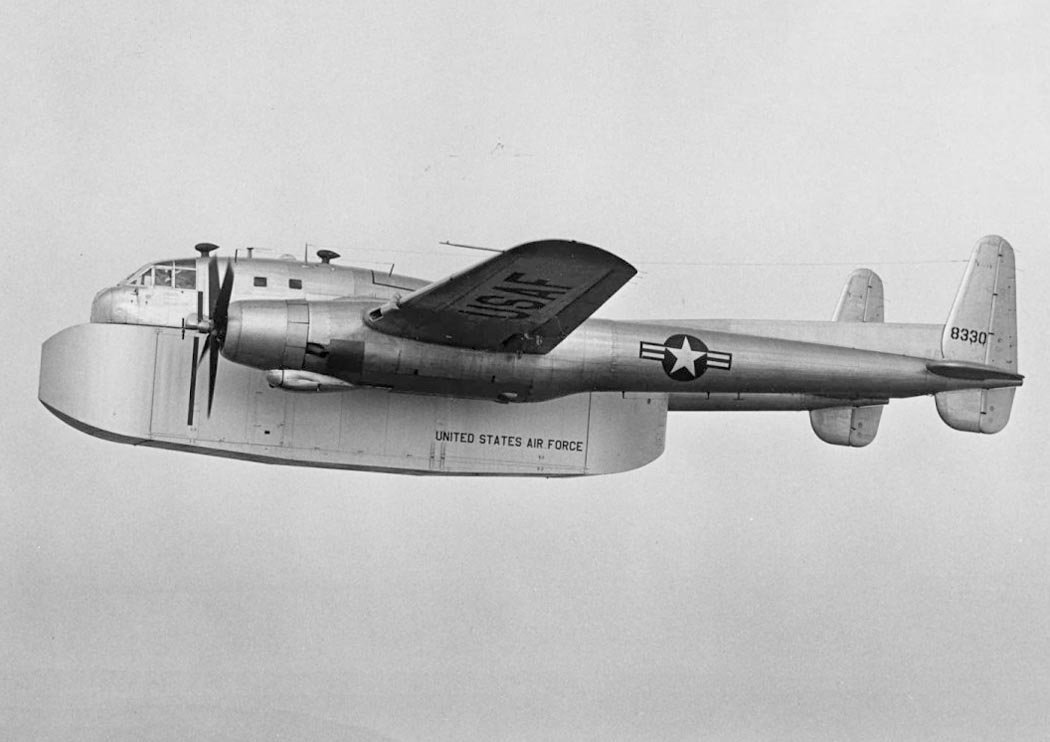
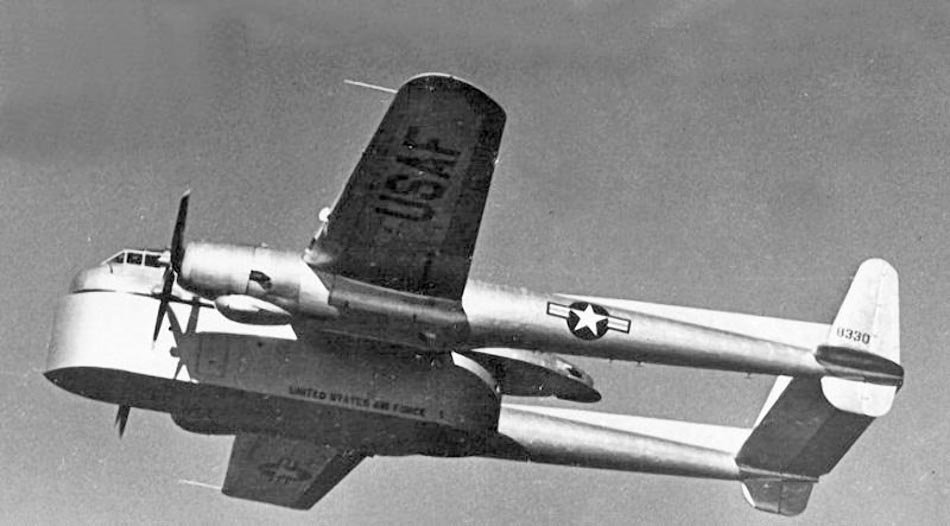
While based on C-119 fuselage components, their shape required significant modification. Consequently, for example, the nose section of the container only indirectly resembled the nose of the base aircraft. A new teardrop-shaped fuselage was developed, featuring a flat horizontal bottom, with the sides and roof forming a single curved surface.
The forward section of the fuselage accommodated the cockpit for a five-person crew. Other volumes were used for installing various equipment. For instance, at the level of the rear part of the cockpit and in the fuselage tail, electric hoists for the cargo container were placed, along with locks to secure the payload in the desired position.
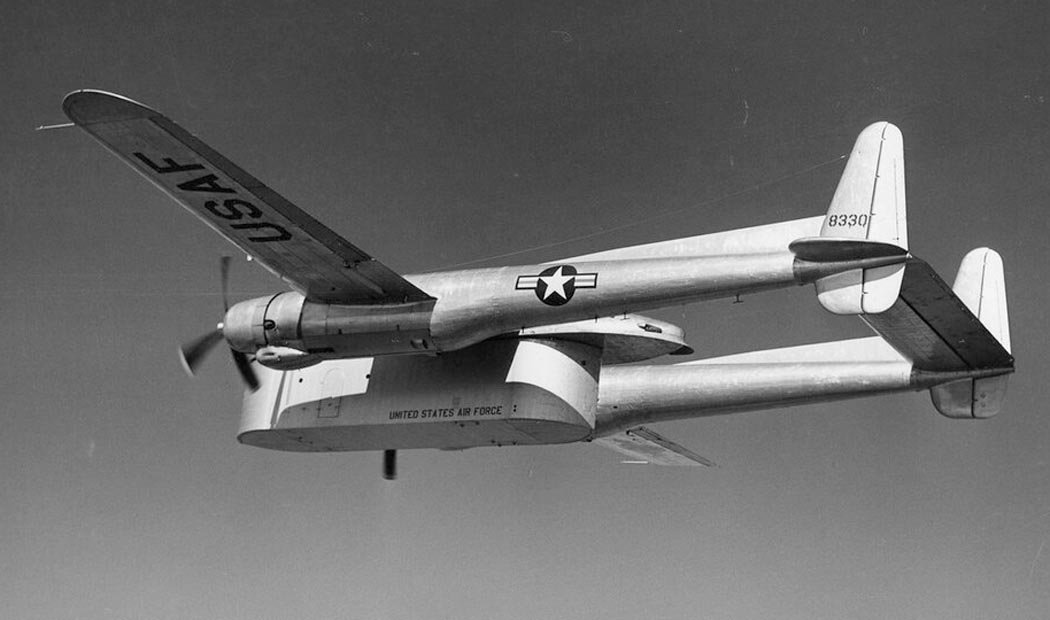
The wing center section components were attached to the central part of the fuselage. To increase the aircraft’s height, necessary for lifting the container to a safe altitude, the center wing received a negative dihedral angle. The angled wing roots connected to two booms, which housed the engines and formed the base of the tail unit. The outer wing panels were attached to the booms.
This new type of aircraft retained advanced wing mechanization, including flaps and ailerons. On the wing’s leading edge, there were several intake devices for supplying air to the power plant systems. Similar to the base “Flying Boxcar,” the new “Pack Plane” was to be built with a twin-boom layout.
Instead of an extended fuselage tail, it was proposed to use two separate booms positioned on either side of the fuselage. The engine was located in the forward part of the boom, integrated with the center wing. Adjacent to the power plant were the landing gear bays. The tail section of the boom featured a fin with a dorsal fillet and a ventral fin. A horizontal stabilizer with an elevator was positioned between the booms.
Small additional planes were placed on the outside of the booms. The tail unit received a standard set of control surfaces with trim tabs. The forward compartment of the booms housed two Pratt & Whitney R-4360 Wasp Major piston engines. These radial engines had 28 cylinders arranged in four rows. The power of each engine at takeoff reached 3250 hp.
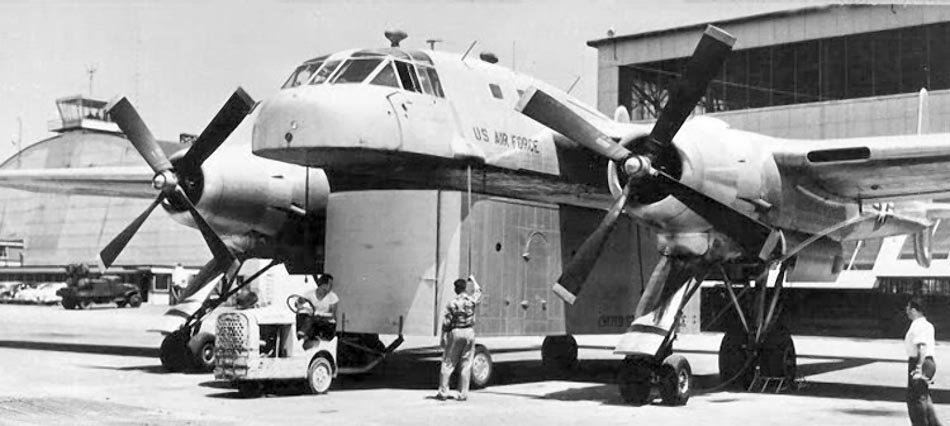
Cylinder block cooling was achieved by supplying air through a round front opening. The engines were equipped with four-bladed propellers. The proposed fuselage design with a suspended cargo container did not allow for traditional landing gear systems. Because of this, the XC-120 Pack Plane project featured an original strut arrangement.
Both booms of the base aircraft model had bays for retracting the main landing gear. In the new project, the dimensions of these compartments were increased due to changes in the landing device design. Two main struts with larger diameter dual wheels were retained. Additionally, a pair of front struts appeared on the booms. To increase the landing gear wheelbase, the front struts had a specific design that extended the small-diameter dual wheels to the level of the propeller plane. The design of each strut and its actuators allowed for changing the aircraft’s clearance to simplify container installation. Both struts of each boom retracted rearward in flight.
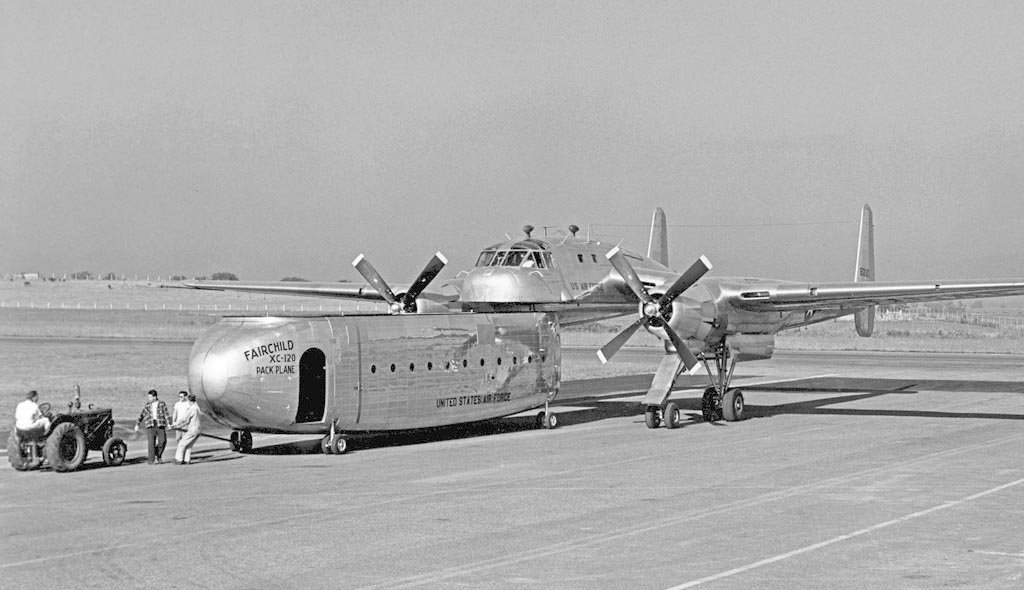
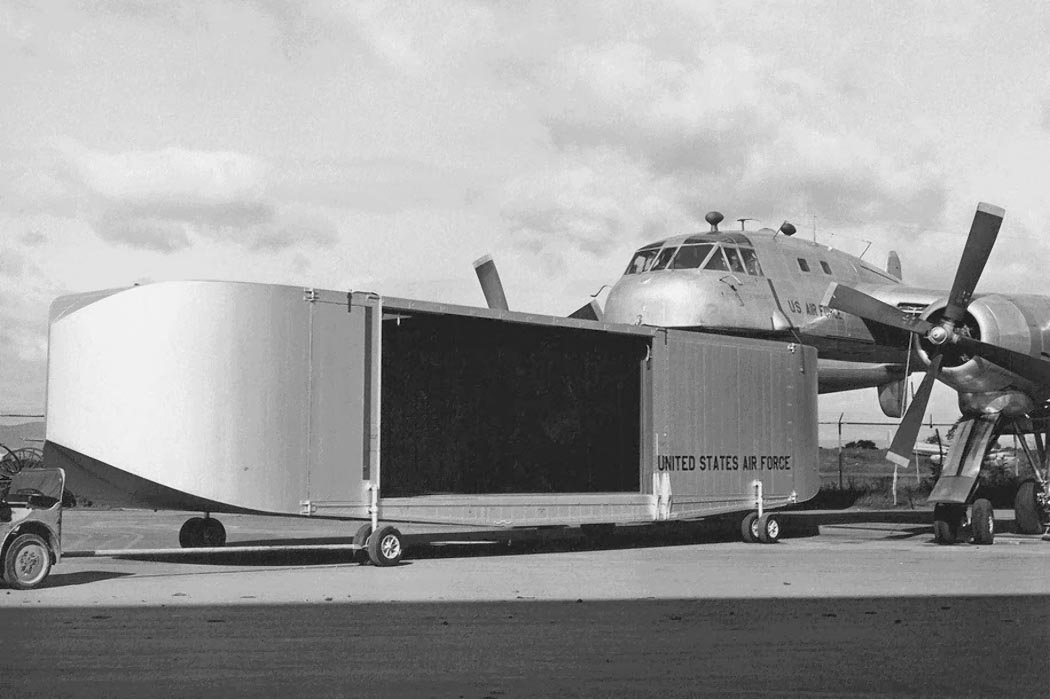
For cargo transport, a special detachable container, representing a multi-purpose cabin, was proposed. The container was designed as a long, rectangular section device, equipped with nose and tail fairings. The ogival nose fairing was made of two parts. For loading, the halves of the fairing swung open sideways, providing access to the internal volumes. A narrow door was located in the left half of the fairing.
The tail fairing had a similar construction but differed in shape: its upper part was straight, and the bottom was set at a slight angle. Another door was located in the left half of the tail fairing. The container’s basic structure consisted of a framework of rectangular bulkheads and numerous longitudinal stringers, covered by metal skinning. Reinforced sections were present in the flat roof and curved bottom of the container, necessary for both airborne and ground transport.
The XC-120 Pack Plane military transport aircraft was to take the container “on board” using a set of connectors. The container’s roof had several spherical protrusions-supports that were to engage with clamps on the fuselage bottom and be secured by locks. To lift the container to the fuselage and lower it to the ground, several remote-controlled electric winches were proposed. The interaction of the winch cables with the container was ensured by a set of fastenings on its sides. A rubber seal around the perimeter of the container’s roof protected the joint from external influences.
For ground movements, the container was to be equipped with its own wheels. Before “unloading” the aircraft, it was proposed to install two-wheeled self-steering dollies on the front and rear attachment points of the container. After that, the locks would be opened, and the container would be lowered onto its own wheels. In this form, the cargo compartment could be towed by any suitable tractor.
The prospective aircraft was to be operated by a five-person crew, housed in the forward cockpit of the fuselage. The crew included a commander and co-pilot, navigator, radio operator, and flight engineer. During loading and unloading operations, two crew members would become operators of the respective systems and be responsible for working with the container. All crew workstations were in a common cabin, accessed in an unusual way.
A hatch equipped with a ladder was located in the flat bottom of the fuselage. Without the container, the crew would climb into the cabin via the ladder. After the container was installed, the ladder was to be accessed through side doors and a corresponding hatch in its roof. The total length of the new aircraft with the suspended cargo container was 25.25 m, wingspan 32.46 m, and height 7.65 m. The wing area was 134.3 sq.m.
The empty aircraft with the container weighed 18.14 t, and the maximum takeoff weight reached 33.75 t. The separation of the fuselage into a main part and a removable container led to a slight reduction in payload parameters compared to the base C-119 aircraft. The new XC-120 could carry only 9 t of cargo, compared to 12.5 t for the production machine. For cargo accommodation, a large compartment with a volume of 76.45 cubic meters was proposed.
The proposed architecture of the prospective military transport aircraft allowed for effectively solving a wide range of transport and other tasks. The detachable container could carry various cargoes of appropriate sizes and weights. It could also accommodate seating for 65 paratroopers with parachutes and weapons. Stretchers for the wounded or even a compact medical post could be placed in the container body. The possibility of creating mobile headquarters and other systems for various purposes was not excluded. The container’s dimensions and payload capacity, as well as its ability to be dropped, gave the army extensive possibilities.
The XC-120 Pack Plane was expected to achieve a maximum speed of up to 476 km/h, with a cruising speed of about 340 km/h. The service ceiling was set at 6700 m, and the range at 3700 km. It should be noted that the aircraft’s exact characteristics depended on a number of factors, primarily the configuration. Thus, the presence of the container increased air resistance and, consequently, reduced actual performance. The absence of the container, accordingly, allowed the aircraft to fly faster and farther.
Testing and Final Rejection
Development of the Fairchild XC-120 Pack Plane project concluded in early 1950. Soon after, construction of the first prototype began. An unfinished serial C-119B Flying Boxcar aircraft with serial number 10312 was used as the basis for the prototype. The airframe of this machine lost most of its fuselage and underwent other changes stipulated by the new project. One of the experimental containers was assembled from the dismantled fuselage section. According to various sources, several such units in cargo configuration were built during construction.
The extensive use of components and assemblies from serial equipment maximally accelerated the construction of the experimental aircraft. The prototype was completed in early summer 1950, after which it entered testing. The first flight of the experimental “Pack Plane” took place on August 11 of the same year. The aircraft passed all necessary tests, during which both flight and operational characteristics, as well as operation with the cargo container, were checked. Overall, during these tests, the machine performed quite well.
Throughout 1950, the experimental XC-120 underwent ground and flight tests. Additionally, the aircraft was involved several times in various demonstration events. In 1951, the prototype was ferried to Eglin Air Force Base (Florida), where it was to be tested by Air Force specialists. At this stage of testing, it was also planned to determine the machine’s actual operational characteristics and, consequently, draw conclusions about the possibility of using such equipment in the military. Based on the results of these checks, the question of adopting the prospective aircraft into service was to be decided.
The military thoroughly studied the proposed transport aircraft and drew conclusions. It was established that the machine with its original architecture was almost indistinguishable from serial C-119 Flying Boxcar aircraft in terms of flight performance. Operational characteristics and cargo transport capabilities were also similar, although the new XC-120 had a lower maximum payload capacity. The possibility of quickly dropping the container, significantly accelerating the aircraft’s preparation for a new flight, was named an undisputed advantage.
The potential customer was also somewhat interested in the proposal to create specialized containers for various purposes. Nevertheless, there were claims. From the perspective of technical characteristics and flight data, the new XC-120 aircraft looked almost like a complete copy of the C-119 but with a lower payload capacity. Additionally, the aircraft’s design contained a significant number of entirely new devices that had not yet proven their functionality in difficult conditions.
Finally, doubts arose about the feasibility of serial production of promising and interesting, but excessively complex, aircraft. In 1952, the Pentagon announced its final decision. Despite all its advantages, the Fairchild XC-120 Pack Plane military transport aircraft had a number of characteristic drawbacks and ambiguous features. Weighing all the pros and cons, the potential customer decided to decline the acquisition of such equipment. Plans for serial production were canceled. The army decided to continue operating “Flying Boxcars” without supplementing or replacing them with “Pack Planes.”
After the official refusal to purchase serial equipment, the only built XC-120 was left idle. This machine was not needed by the customer nor by the manufacturer. Because of this, after some downtime, the prototype was sent for dismantling. According to some reports, it was rebuilt according to the original C-119B project and included in one of the serial batches supplied under army order. This marked the end of the original project’s history.
The goal of the Fairchild XC-120 Pack Plane project was to create a prospective military transport aircraft with a modular architecture, capable of performing main cargo operations as quickly as possible and transporting a wide variety of payloads. The design tasks set were successfully solved using several original ideas, but the aircraft nevertheless did not go into series production. Transports of traditional design were more convenient and cost-effective from the perspective of mass operation. Subsequently, the aviation industry of different countries repeatedly attempted to create similar projects, but none of them reached full operational use of serial equipment.
Technical Specifications
| Modification | KhS-120 |
| Wingspan, m | 33.30 |
| Aircraft length, m | 26.37 |
| Aircraft height, m | 8.40 |
| Wing area, m2 | 131.92 |
| Empty weight | 18136 |
| Maximum takeoff weight | 33747 |
| Engine type | 2 Piston engines Wright R-3350 Duplex Cyclone |
| Power, hp | 2 x 3500 |
| Maximum speed, km/h | 476 |
| Cruising speed, km/h | 342 |
| Practical range, km | 3700 |
| Practical ceiling, m | 6700 |
| Crew, crew members | 3 |
| Payload | 65 paratroopers or 9000 kg of cargo |
Image and diagram gallery of the Fairchild XC-120 Pack Plane
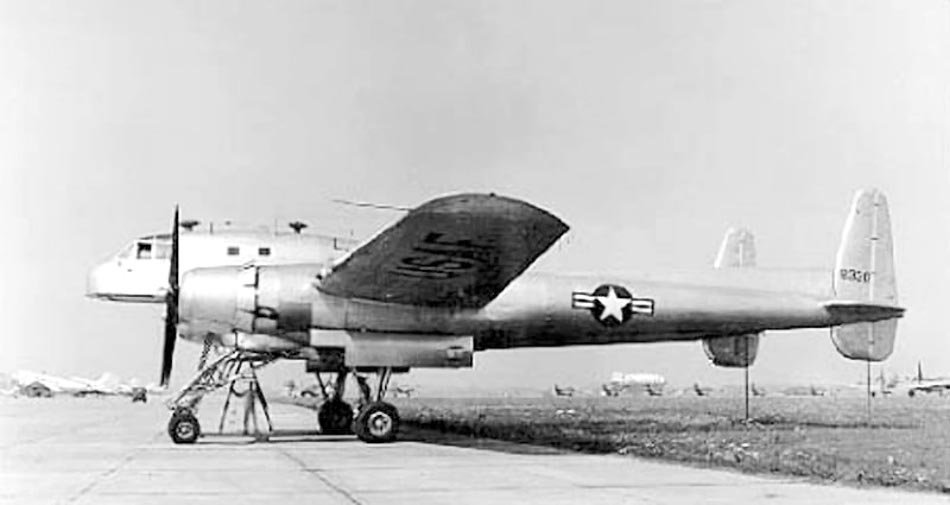 C-120 Packplane |
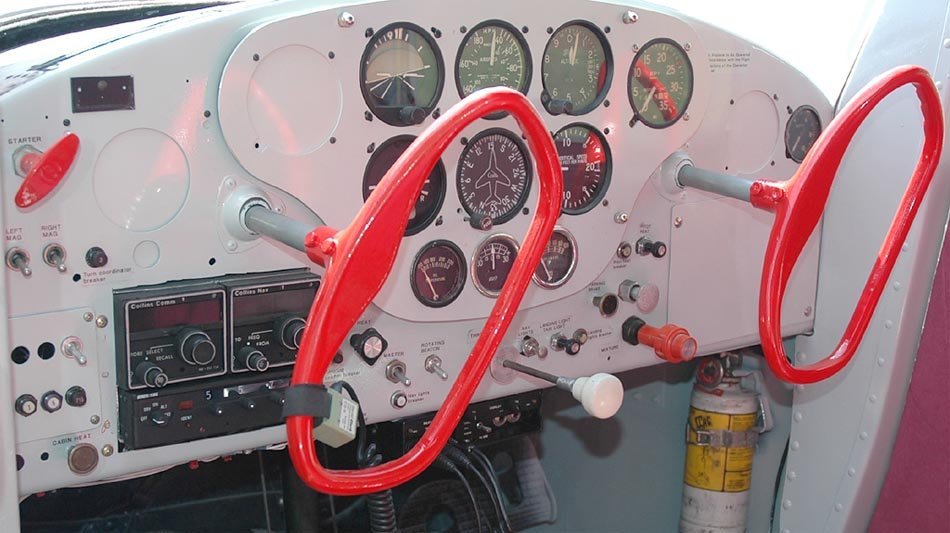 C-120 Packplane |
 C-120 Packplane |
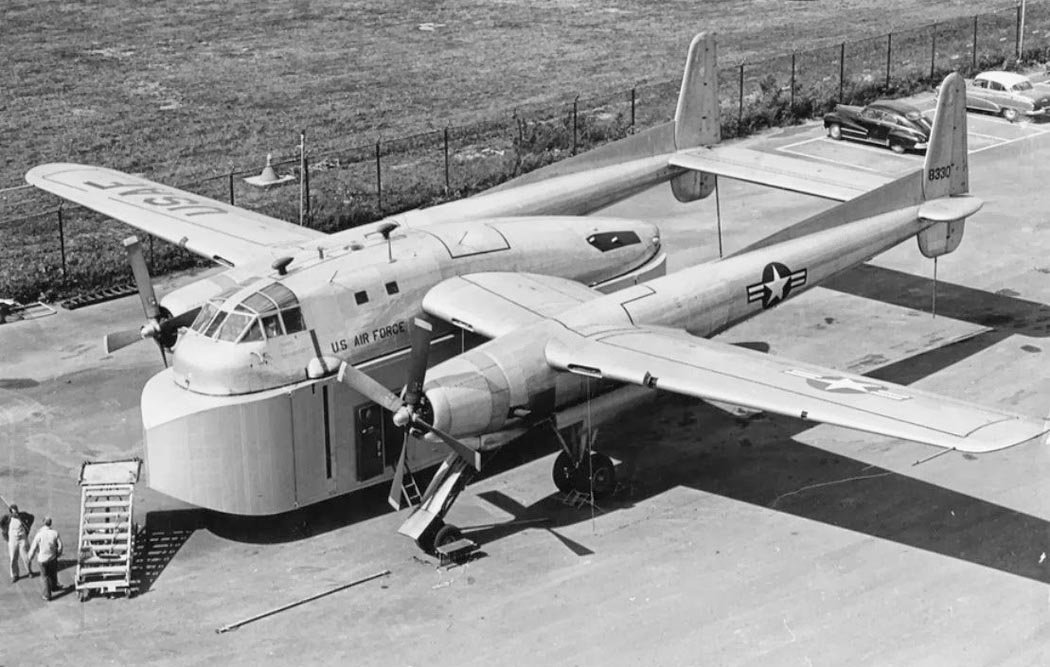 C-120 Packplane |
 C-120 Packplane |
 C-120 Packplane |
 C-120 Packplane |
 C-120 Packplane |
 C-120 Packplane |
 C-120 Packplane |
 C-120 Packplane |
 C-120 Packplane |
 C-120 Packplane |
 C-120 Packplane |
 C-120 Packplane |
ArchivoAéreo Editorial Team
A group of aviation researchers and enthusiasts dedicated to documenting and preserving global aeronautical history. All articles are reviewed to ensure historical accuracy.
Sources & Accuracy
The information presented in this technical sheet has been compiled from declassified flight manuals, historical archives, and specialized literature. While we strive for maximum accuracy, some performance data may vary depending on the specific variant or operational conditions.