Gayaz Islametdinovich Baimurzin
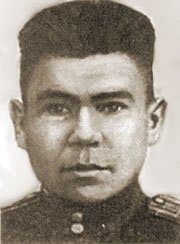
Gayaz Islametdinovich Baimurzin was born on January 1, 1913, in the village of Galikayevo, Argayashsky District, Chelyabinsk Region. Of Bashkir nationality, he pursued his education at the Beloretsk Metallurgical College before being called into the Red Army in August 1936. He subsequently graduated from the Engels Military School of Pilots in 1940, laying the foundation for his distinguished military career.
Heroic Service in World War II
Baimurzin began his active service on the front lines of the Great Patriotic War in June 1942. By October 14, 1944, he had completed an impressive 220 combat sorties, primarily targeting military-industrial facilities deep behind enemy lines. Notable missions included four bombing raids on Helsinki and two on Budapest.
Beyond strategic bombing, Baimurzin’s crew undertook six special assignments, delivering vital ammunition and weapons to partisan groups operating near the cities of Zvolen and Brozno. Throughout his combat career, his crew dropped a staggering 410 tons of bombs on enemy positions. His total flight time during these operations amounted to 320 hours during the day and 817 hours at night.
Post-War Recognition and Legacy
For his exceptional bravery and military achievements, Gayaz Islametdinovich Baimurzin was awarded the title of Hero of the Soviet Union on November 5, 1944. This prestigious honor came with the Order of Lenin and the Gold Star medal (No. 5110). After the war, he continued to serve in the Soviet Army, upholding his commitment to his country.
Tragically, Baimurzin died in an airplane crash on May 7, 1948, and was laid to rest in the city of Uman, Ukraine. His valor was further recognized with numerous other decorations, including the Orders of the Red Banner, Patriotic War 1st Class, and the Red Star, alongside various medals, cementing his place as a true Soviet hero.
ArchivoAéreo Editorial Team
A group of aviation researchers and enthusiasts dedicated to documenting and preserving global aeronautical history. All articles are reviewed to ensure historical accuracy.
Sources & Accuracy
The information presented in this technical sheet has been compiled from declassified flight manuals, historical archives, and specialized literature. While we strive for maximum accuracy, some performance data may vary depending on the specific variant or operational conditions.