Kaiser-Fleetwings XBTK-1
In 1943, the U.S. Navy decided to unify its deck-based aircraft, abandoning the separation between dive bombers and torpedo bombers with crews of two or three. Combat experience had shown that a single pilot could effectively manage both aircraft control and bomb/torpedo targeting.
Furthermore, it was determined that speed and cover from friendly fighters were the best defense against enemy interceptors. Reducing the types of deck-based attack aircraft to one promised increased flexibility and efficiency for air groups, allowing for a greater number of fighters on aircraft carriers.
The Birth of a New Concept
A competition was announced for a single-seat, multi-role bomber-torpedo aircraft. Four projects participated: the Curtiss XBTC-1, the Douglas XBT2D-1 Skyraider, the Martin XBTM-1 Mauler, and the Kaiser-Fleetwings XBTK-1. The latter project stood out somewhat from the list, with a history more convoluted than its competitors.
Initially, the U.S. Navy sought a small, inexpensive dive bomber to equip escort carriers. The aircraft’s design planned to use a large quantity of steel alloys instead of the more expensive and scarce aluminum. To avoid diverting larger firms from more critical projects, this task was assigned to the smaller Kaiser-Fleetwings company, which had previously only developed training aircraft.
The choice of Kaiser-Fleetwings was also influenced by its owner, shipbuilding magnate Henry J. Kaiser, who always had large stocks of steel at his disposal. In February 1944, a contract was signed for the construction of two prototypes, initially designated XBK.
Development and Technical Challenges
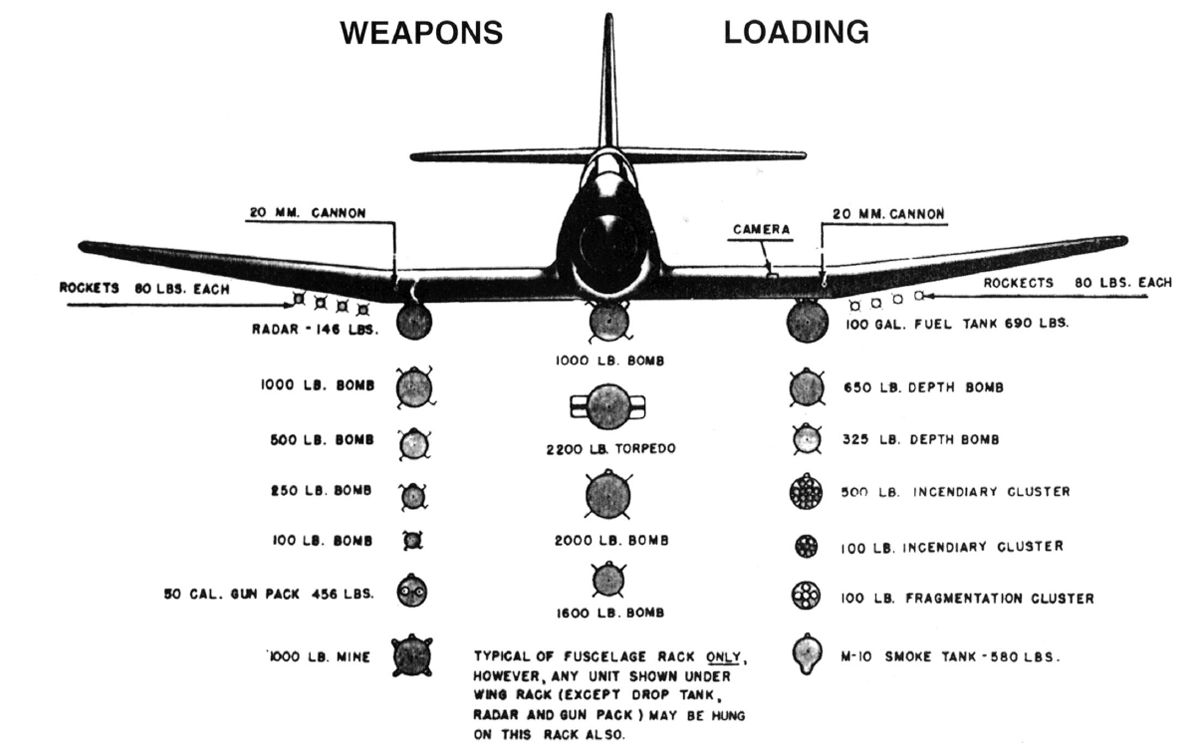
The light single-seater was to be equipped with a Pratt & Whitney R-2800-22W engine, armed with two 20 mm cannons mounted in the wings, and three bomb hardpoints (two under the wings, one under the fuselage), along with eight attachment points for unguided rockets. In March 1944, the contract was revised, requiring Kaiser-Fleetwings to build five aircraft for testing and evaluation.
By late 1944, Kaiser-Fleetwings presented its creation to the U.S. Navy. The Navy command was generally pleased but demanded modifications to allow the aircraft to carry a torpedo on the centerline hardpoint. As a result, the aircraft transformed from a dive bomber into a universal dive bomber-torpedo aircraft, leading to its designation change from XBK to XBTK in February 1945.
This change caused certain problems, as one of the three channels of the original engine’s exhaust system ran beneath the fuselage. A special torpedo holder mechanism had to be developed. Several months earlier, the production contract had been increased from five to twenty-two aircraft. The aircraft was built at the Kaiser-Fleetwings plant in Bristol, Pennsylvania.
The first prototype was fully ready by March 1945 and made its maiden flight on April 12, 1945. It became clear that the aircraft suffered from engine cooling problems and severe fuselage vibrations, and the Pratt & Whitney R-2800-22W engine had by then been discontinued. A new Pratt & Whitney R-2800-34W engine was installed, and in July 1945, the Kaiser-Fleetwings XBTK-1 prototype resumed test flights.
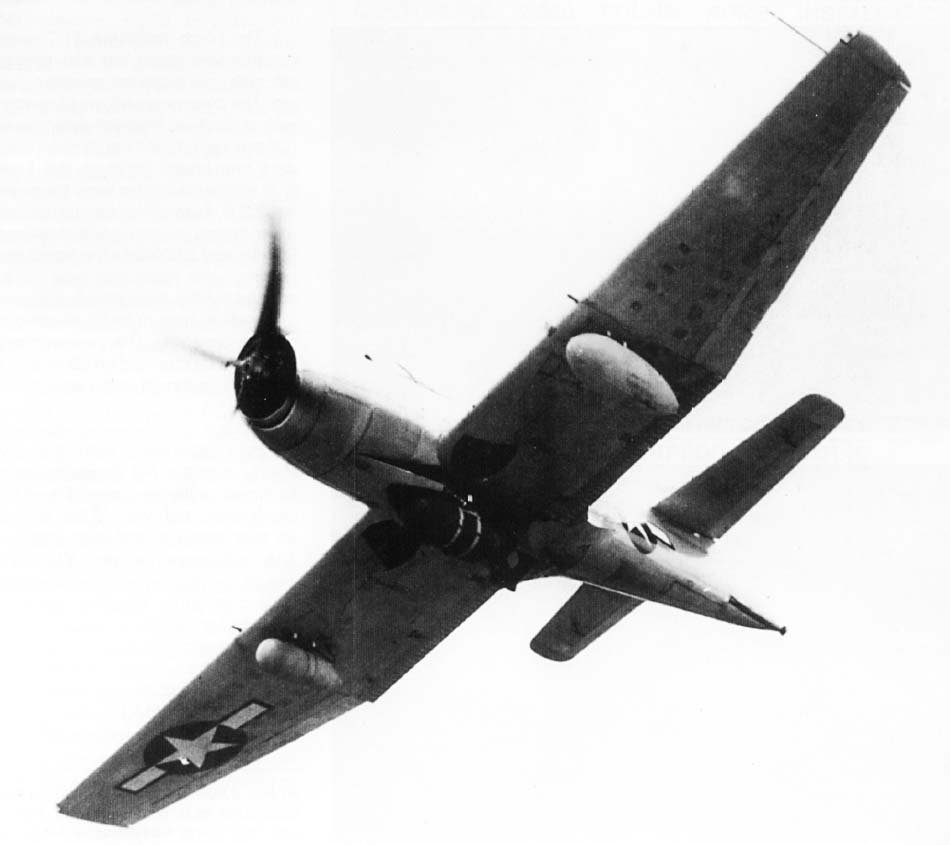
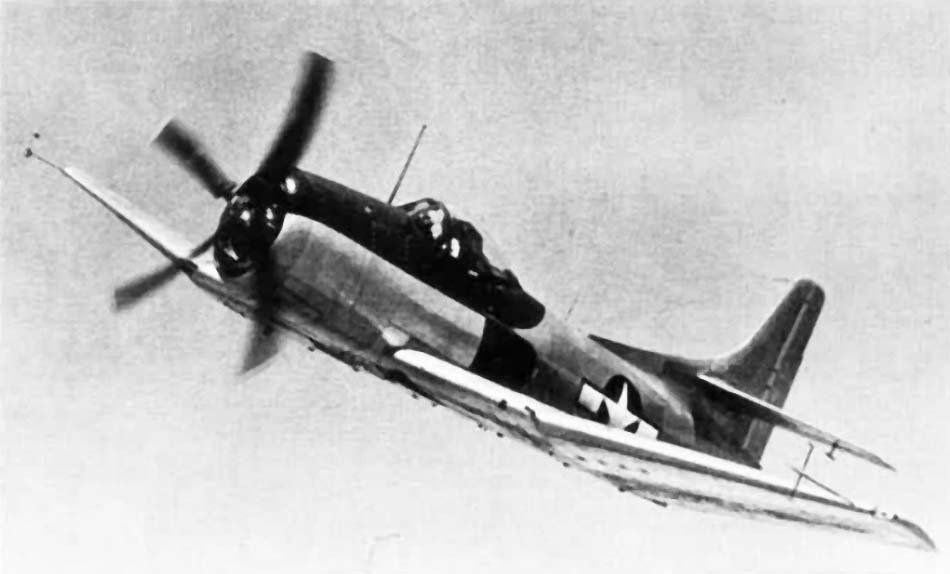
In August 1945, the aircraft was sent for testing to the Naval Air Test Center (NATC) in Patuxent River, Maryland. During testing, specialists identified a number of serious issues. Thanks to the original exhaust system, which routed exhaust gases through three channels along the fuselage sides and underneath, cockpit temperatures were very high. Exiting the cockpit after landing was also difficult due to the hot exhaust ducts. Furthermore, the aircraft’s low-speed handling was unsatisfactory, especially with the engine off. However, it was noted that the Kaiser-Fleetwings XBTK-1 excelled in dive performance over any aircraft then in U.S. service.
The aircraft was returned to the Kaiser-Fleetwings factory, where the second prototype was assembled and made its first flight in March 1946. Slotted leading-edge slats were implemented, which resolved the low-speed handling problem. Although the Naval Air Test Center recommended a complete redesign of the exhaust system to a more traditional one, Kaiser-Fleetwings designers only introduced heat-insulating shrouds, which did not fully achieve the desired effect. During tests, the second prototype also revealed issues with spin entry.
Armament and Key Specifications
Ultimately, several factors decided the aircraft’s fate. After the end of World War II, the U.S. Navy no longer needed a huge fleet of escort carriers. These were rapidly being scrapped or converted into auxiliary vessels and helicopter carriers. Consequently, a specialized aircraft for escort carriers became unnecessary.
Moreover, the AD-1 Skyraider and the AM-1 Mauler were already available and entering series production for conventional aircraft carriers, offering more outstanding performance characteristics compared to the XBTK-1. On September 3, 1946, the project was finally closed, and the contract with Kaiser-Fleetwings was terminated. A total of five aircraft were built, including two flying prototypes.
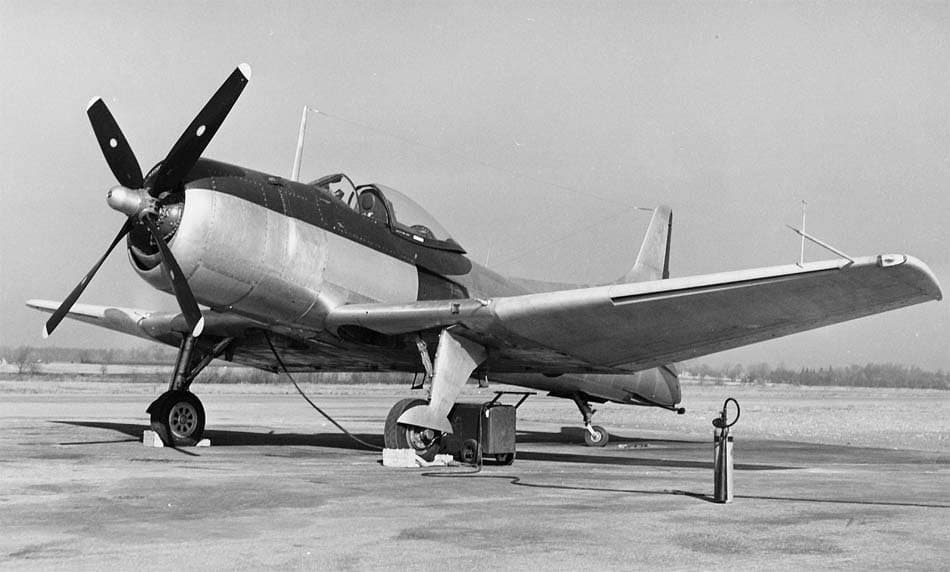
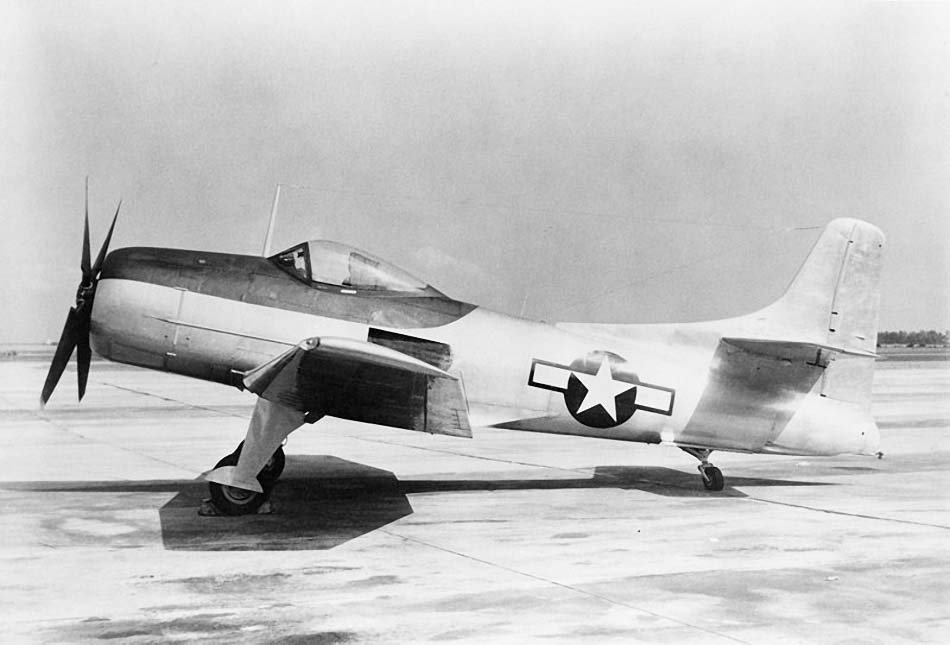
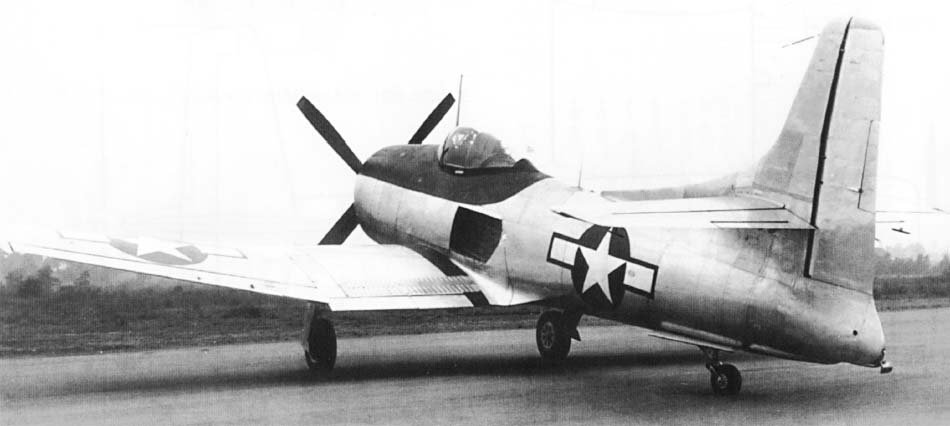
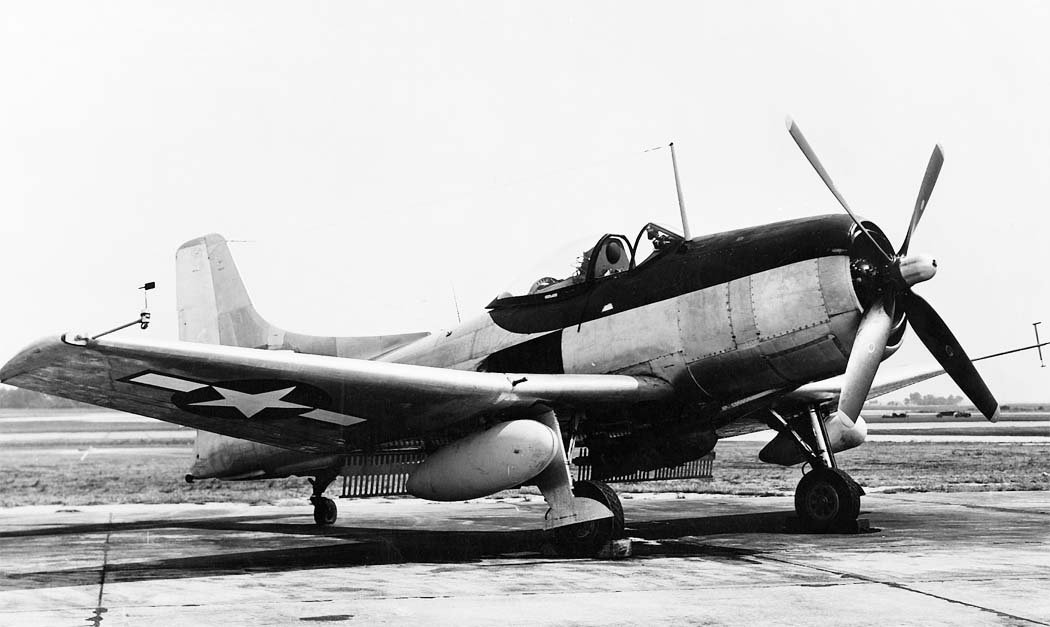
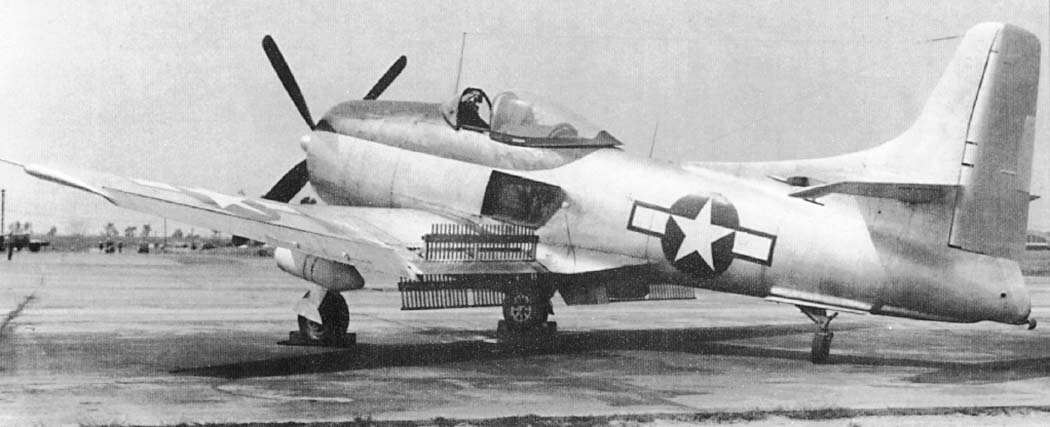
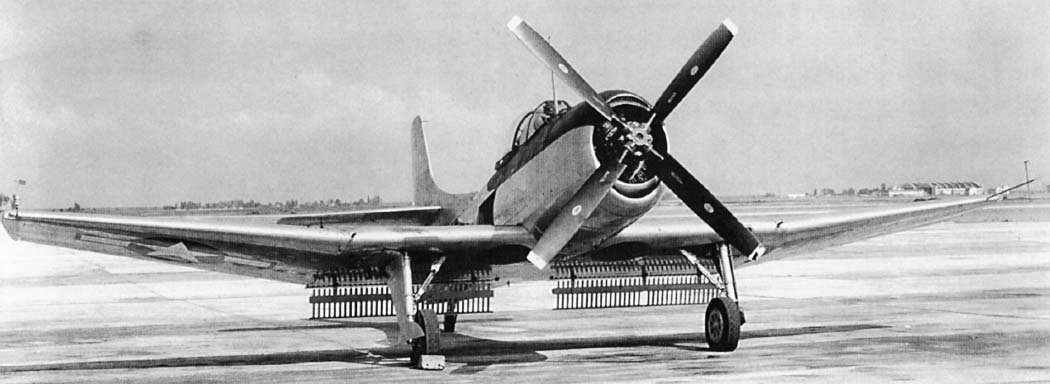
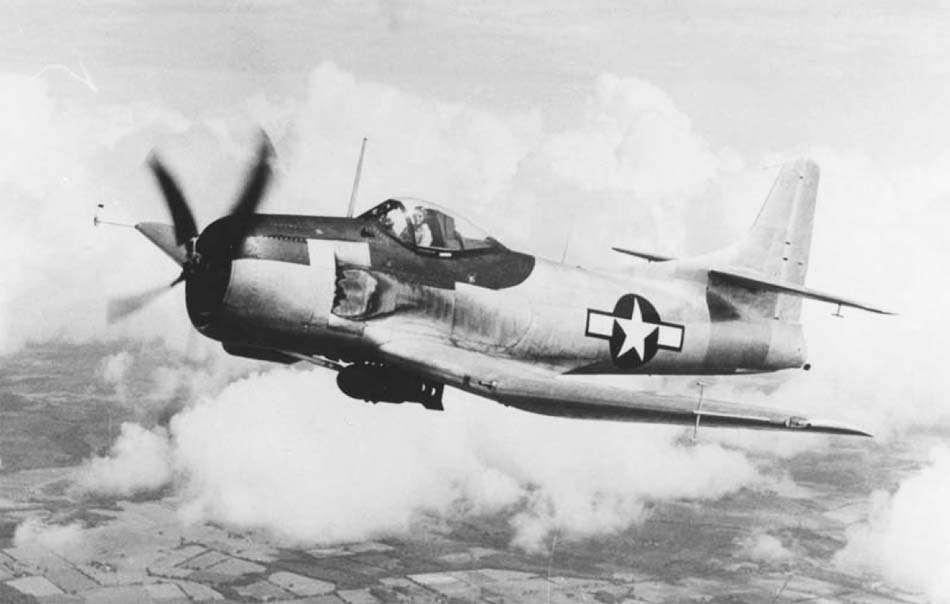
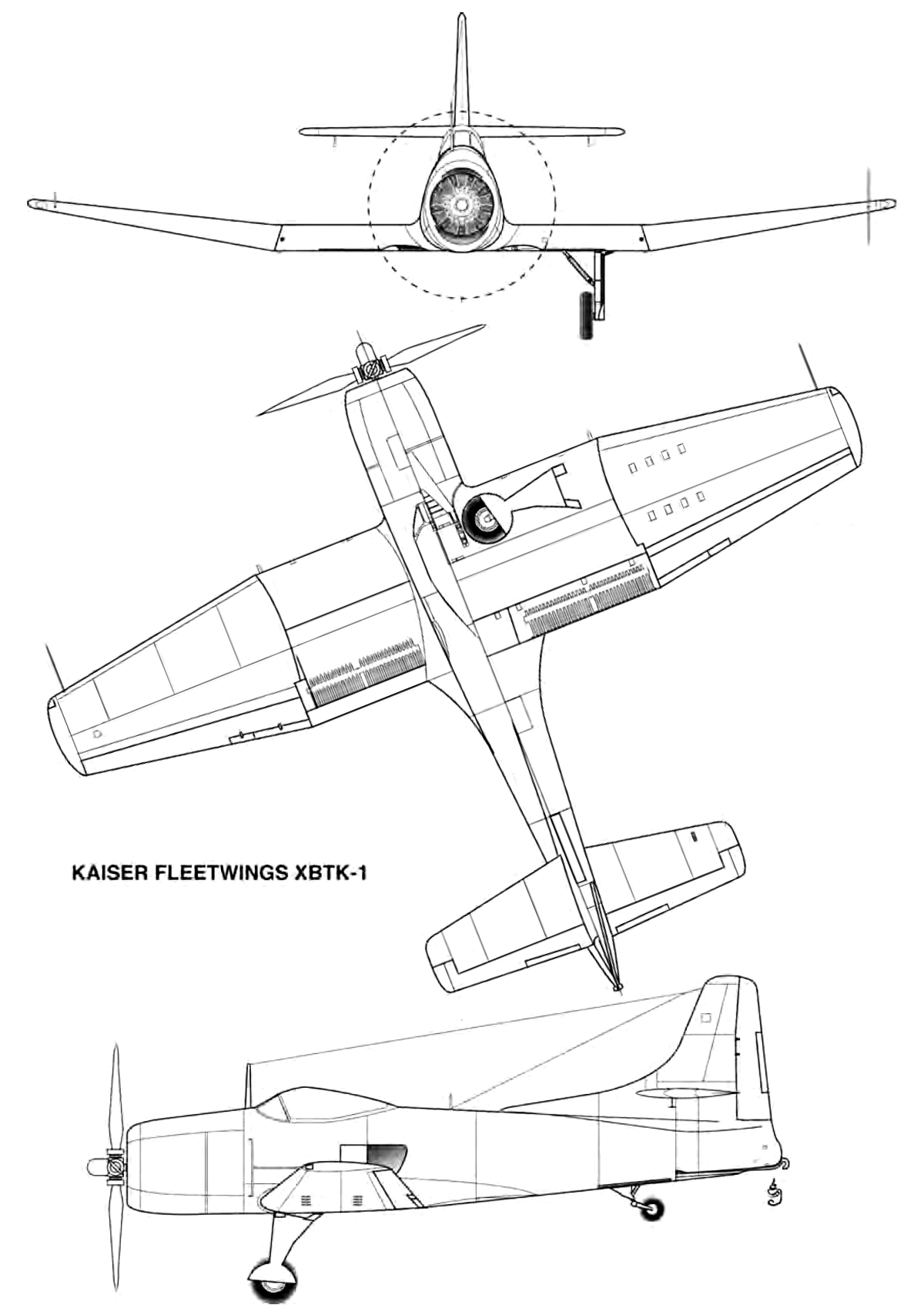
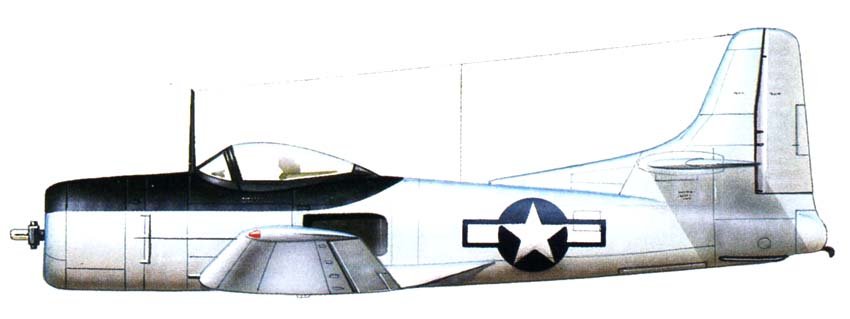
The Kaiser-Fleetwings XBTK-1 was a single-engine, all-metal, single-seat monoplane with a low-set folding wing and retractable landing gear. Air brakes were located on the rear surface of the wing, featuring two grilles on the upper and lower edges. It had a tricycle landing gear with a retractable tail wheel and a teardrop-shaped canopy.
Fuel tanks were self-sealing, and the pilot’s cockpit was armored. It was powered by a Pratt & Whitney R-2800-34W 18-cylinder, air-cooled engine. The aircraft had an original exhaust system consisting of three channels running from the engine along the sides and under the fuselage, terminating behind the pilot’s cockpit.
The armament consisted of two 20 mm cannons with 200 rounds per gun, located one in each wing. Three hardpoints — under the fuselage and under each wing — could carry bombs and external fuel tanks with a total weight of up to 2000 kg. A torpedo could only be suspended under the fuselage. An AN/APS-4 search radar could also be installed on one of the underwing bomb racks. Eight additional hardpoints (four under each wing) were designed for 127 mm HVAR unguided rockets.
Technical Specifications
| Modification | XBTK-1 |
| Wingspan, m | 14. 83 |
| Length, m | 11.86 |
| Height, m | 4. 78 |
| Wing area, m2 | 35. 00 |
| Empty weight | 4517 |
| Maximum takeoff weight | 7159 |
| Engine type | 1 Piston engine Pratt & Whitney R-2800-34W |
| Power, hp | 1 x 2000 |
| Maximum speed, km/h | 600 |
| Cruising speed, km/h | 445 |
| Practical range, km | 2253 |
| Maximum rate of climb, m/min | 1080 |
| Practical ceiling, m | 10200 |
| Crew | 1 crew member |
| Armament | two 20-mm cannons, bomb load – 1814 kg on three hardpoints, 8 x 127-mm HVAR unguided rockets |
Image and diagram gallery of the Kaiser-Fleetwings XBTK-1
 BTK |
 BTK |
 BTK |
 BTK |
 BTK |
 BTK |
 BTK |
 BTK |
 BTK |
 BTK |
 BTK |
 BTK |
 BTK |
ArchivoAéreo Editorial Team
A group of aviation researchers and enthusiasts dedicated to documenting and preserving global aeronautical history. All articles are reviewed to ensure historical accuracy.
Sources & Accuracy
The information presented in this technical sheet has been compiled from declassified flight manuals, historical archives, and specialized literature. While we strive for maximum accuracy, some performance data may vary depending on the specific variant or operational conditions.