Kawasaki C-1
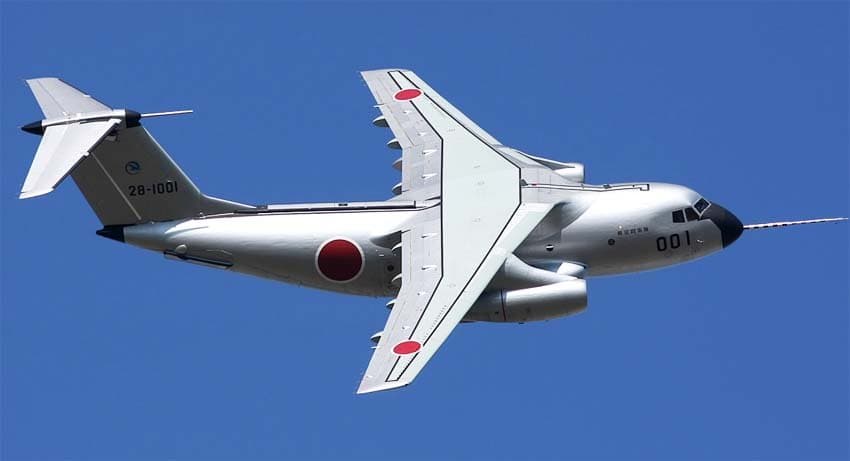
In 1966, Nihon Aeroplane Manufacturing Company (NAMC) began the development of a twin-engine jet military transport aircraft (MTA) based on the technical specifications of the Japan Air Self-Defense Force (JASDF). The aircraft, designated C-X, was intended to replace the outdated C-46 Commando piston transports.
Even before the full-scale mockup evaluation, NAMC received an order to build two XC-1 prototypes for flight tests, as well as one airframe for static tests. The first prototype, assembled by Kawasaki, took flight on November 12, 1970, and flight tests for both aircraft concluded in March 1973. Following the construction of two pre-series aircraft, an order was placed for 11 production models, designated Kawasaki C-1.
Production and Design
The aircraft’s production was a cooperative effort between Fuji (wing sections), Mitsubishi (central and rear fuselage sections), Nihon (control surfaces and engine nacelles), and Kawasaki (forward fuselage section and center wing, final assembly, and testing).
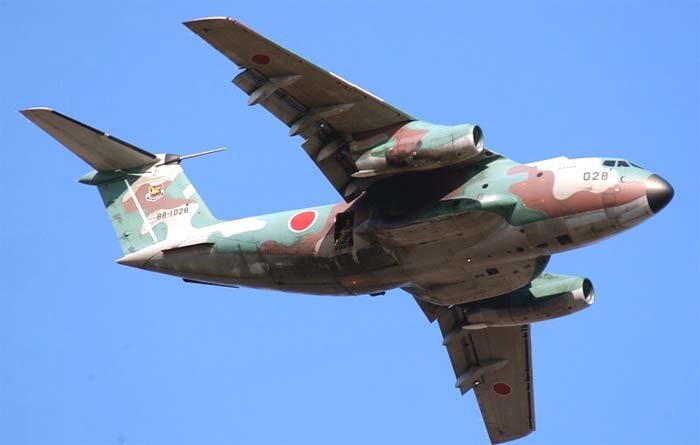
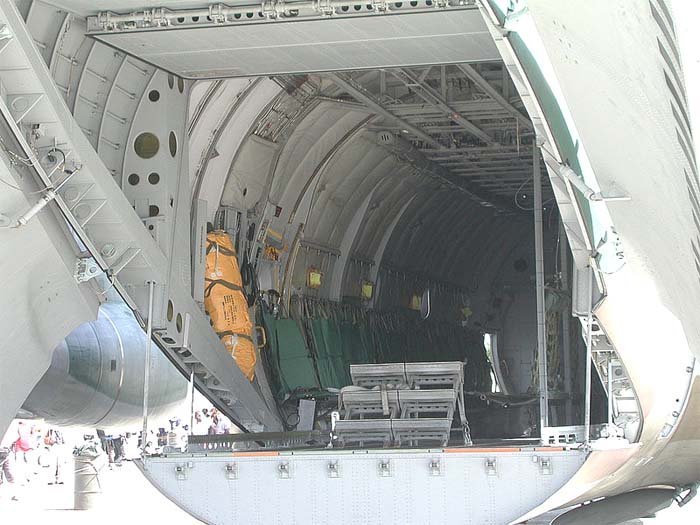
The C-1 features a design typical of modern military transport aircraft. Its cargo compartment is pressurized and air-conditioned, and the rear ramp can be opened in flight for parachute drops and cargo deployment. The C-1’s crew consists of five people, and a typical load includes either 60 fully equipped infantrymen, 45 paratroopers, up to 36 stretchers with accompanying personnel, or various equipment and palletized cargo.
Operational History and Variants
Only 31 aircraft were built, including four prototypes and one pre-production model; the last one was delivered on October 21, 1981. Although the C-1 was built to JASDF specifications, its small payload limited the aircraft’s operational capabilities. This was one reason for the decision not to develop other variants.
One C-1 was used as a flying laboratory to test the MITI/NAL FJR710 and Ishikawajima-Harima XF3 turbofan engines (the latter intended for the T-4 trainer aircraft). Recently, Kawasaki converted a C-1 into the C-1 Kai electronic warfare training variant. The aircraft received new radomes on the nose and tail, as well as an ALQ-5 EW system antenna under the fuselage. Another aircraft served as the basis for the NAL Asuka STOL aircraft, featuring engines over the wing and boundary layer blowing flaps.
Technical Specifications
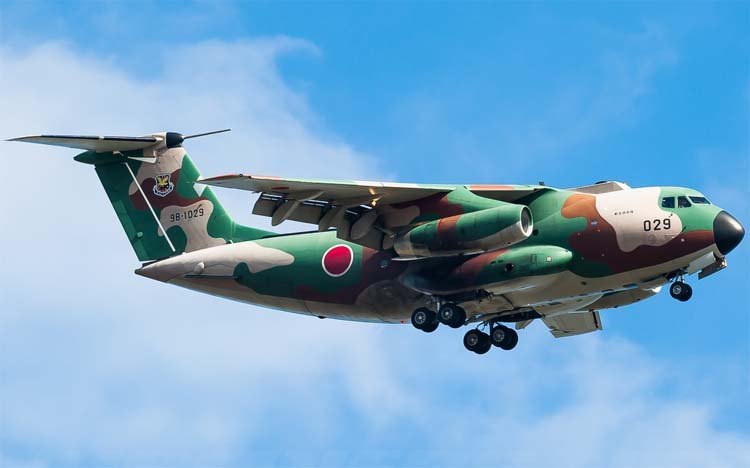
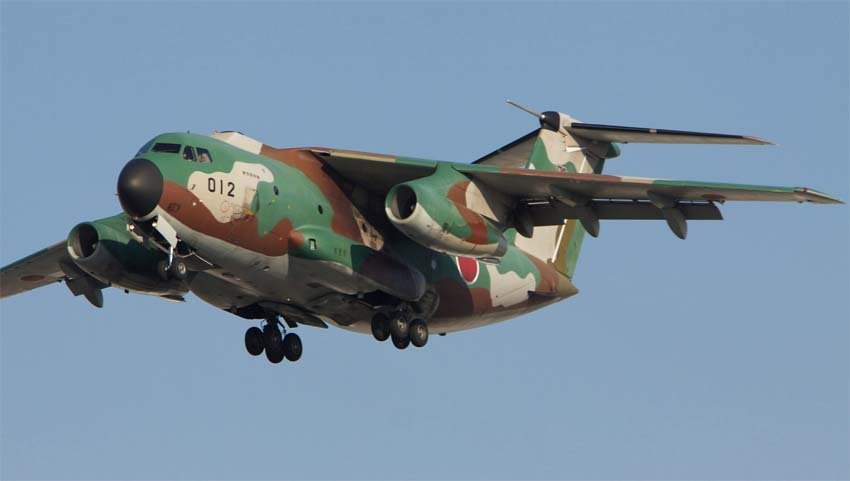
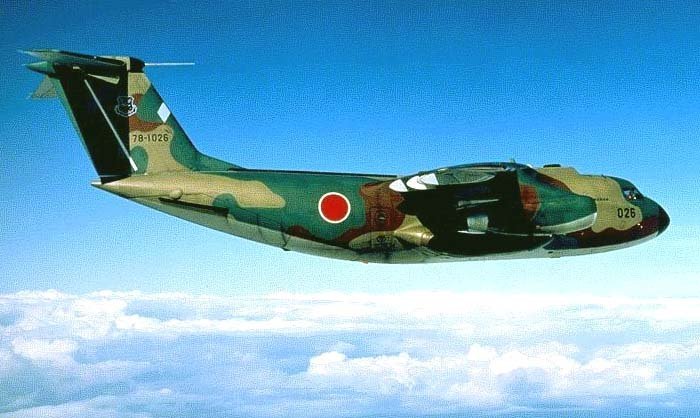
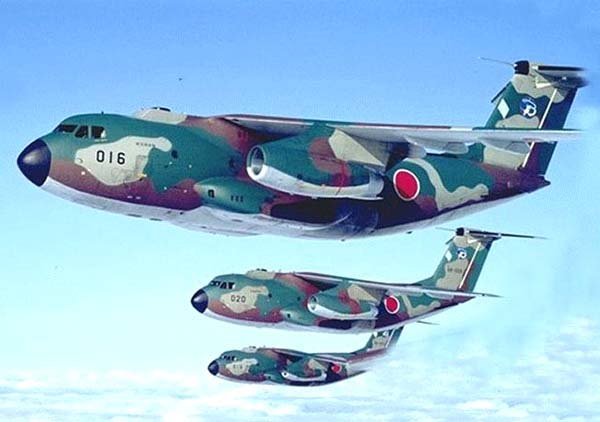
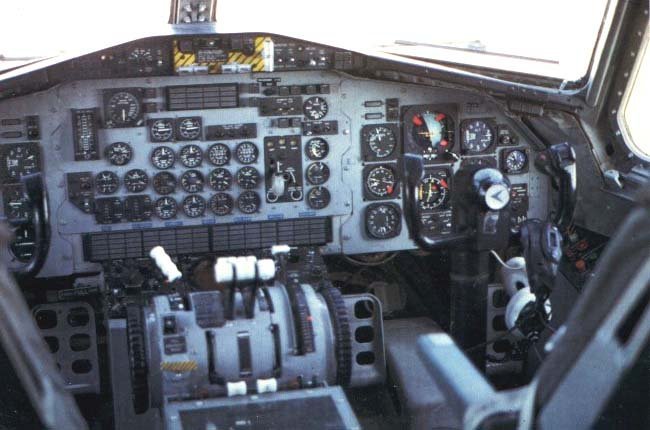
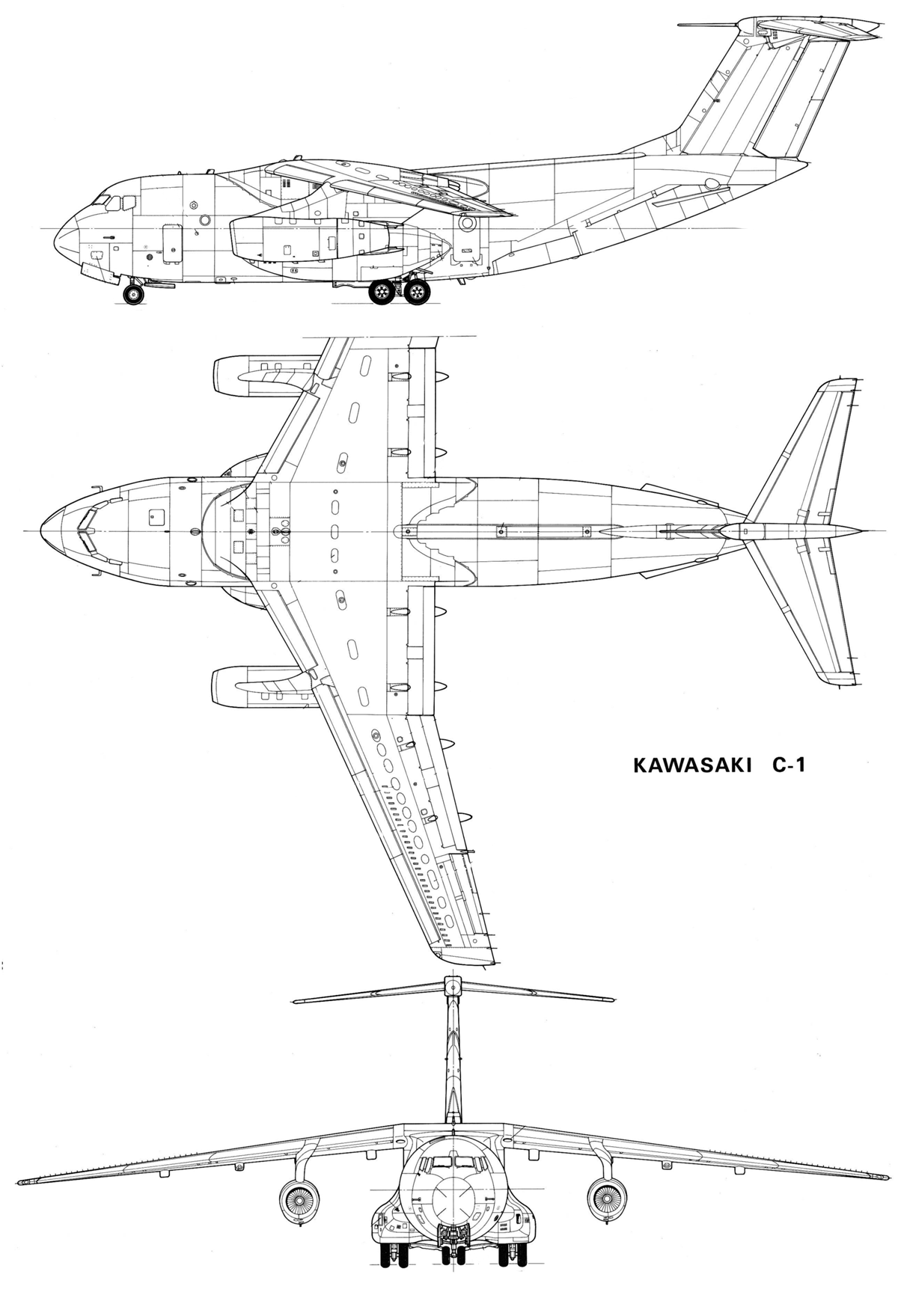
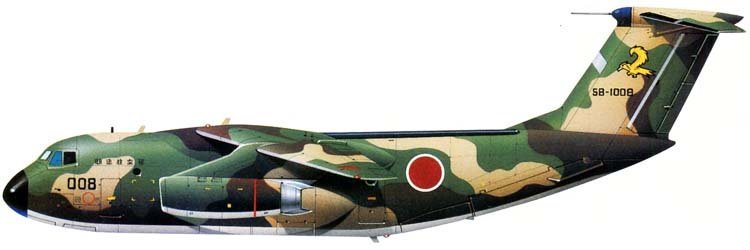
The C-1 aircraft features a high-mounted swept wing, a circular cross-section fuselage, a T-tail, and retractable tricycle landing gear. In the forward part of the fuselage is the five-person crew cockpit, followed by the cargo compartment, which is 10.8 m long, 3.6 m wide, and 2.25 m high. Both the crew cockpit and the cargo compartment are pressurized and connected to an air conditioning system.
The cargo compartment can transport 60 armed soldiers or 45 paratroopers. For transporting wounded, it can accommodate 36 stretcher-bound casualties and accompanying personnel. Through the rear cargo door, a 105-mm howitzer, a 2.5-ton truck, or three “jeep”-type vehicles can be loaded. The deployment of equipment and cargo occurs via this ramp, and paratroopers can also exit through the side doors in the rear of the fuselage.
The aircraft is equipped with two JT8D-M-9 turbofan engines from the American company Pratt & Whitney, located in nacelles under the wings and produced in Japan under license. The C-1’s onboard avionics allow it to perform flights in complex meteorological conditions at any time of day.
Technical Specifications
| Modification | С-1A |
| Wingspan, m | 30.60 |
| Length, m | 29.00 |
| Height, m | 9.99 |
| Wing area, m2 | 120.50 |
| Empty weight | 24300 |
| Normal takeoff weight | 38700 |
| Maximum takeoff weight | 45000 |
| Internal fuel, l | 15200 |
| Engine type | 2 Turbofan Mitsubishi (Pratt Whitney) JT8D-M-9A |
| Thrust, kN | 2 x 64.50 |
| Maximum speed, km/h | 806 |
| Cruising speed, km/h | 704 |
| Ferry range, km | 3353 |
| Range with maximum payload, km | 830 |
| Service ceiling, m | 11580 |
| Crew | 5 |
| Payload: | 60 soldiers or 45 paratroopers or 36 stretchers with attendants or 11900 kg of cargo |
Image and diagram gallery of the Kawasaki C-1
 S-1 |
 S-1 |
 S-1 |
 S-1 |
 S-1 |
 S-1 |
 S-1 |
 S-1 |
 S-1 |
 S-1 |
 S-1 |
 S-1 |
ArchivoAéreo Editorial Team
A group of aviation researchers and enthusiasts dedicated to documenting and preserving global aeronautical history. All articles are reviewed to ensure historical accuracy.
Sources & Accuracy
The information presented in this technical sheet has been compiled from declassified flight manuals, historical archives, and specialized literature. While we strive for maximum accuracy, some performance data may vary depending on the specific variant or operational conditions.