Messerschmitt Bf 110G/H
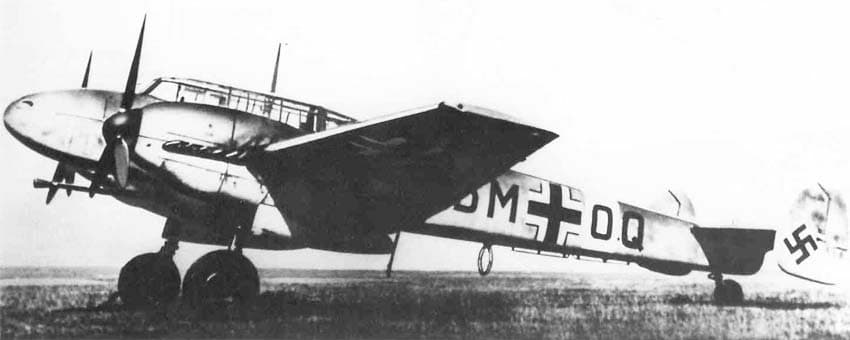
The resumption of full-scale Bf 110 production in 1942 led to the decision to develop a more powerful variant of the basic model, the Bf 110G. Work on the G-series machines began in the summer of 1941. Pre-production Bf 110G-0s differed from the Bf 110F primarily by the installation of DB 605B-1 engines.
These engines, while having the same dimensions as the DB 601F, developed 1475 hp at takeoff and 1355 hp in emergency mode at an altitude of 5700 m. This increased power allowed the takeoff weight to be raised to 9400 kg and the landing weight to 7890 kg.
The heavy day fighter Bf 110G-1, planned as the first production model (which differed from the pre-production Bf 110G-0 by replacing MG FF cannons with MG 151s and removing bomb racks), was rejected in favor of the Bf 110G-2. The latter could be used as a “hunter” and a heavy fighter-bomber with the installation of various “kits” – Rustsatze. It began rolling off the assembly line in May 1942.
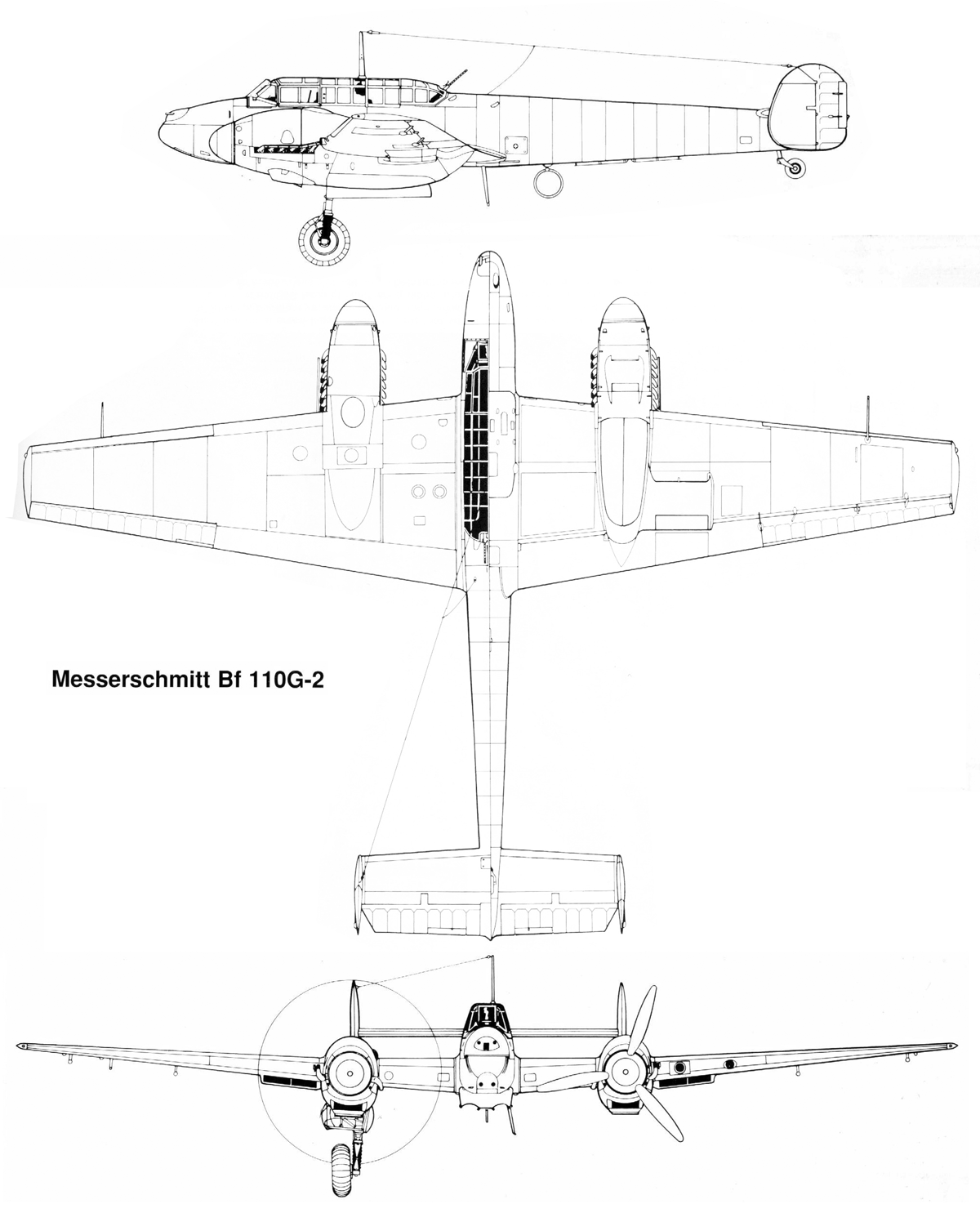
The Bf 110G-2 differed from the Bf 110G-0 by the installation of new tailfins, patterned after the Bf 110F-4, strengthened landing gear struts allowing the landing weight to be increased to 8290 kg, and a steel engine mount. Protection against tail attacks was enhanced by replacing the MG 15 machine gun with a twin MG 81Z with 800 rounds. There were also minor changes, including an additional 55-liter oil tank in the fuselage, improved cold-start equipment with increased starter fuel tank capacity, modifications to the oil radiator and cooling system, and the installation of additional equipment.
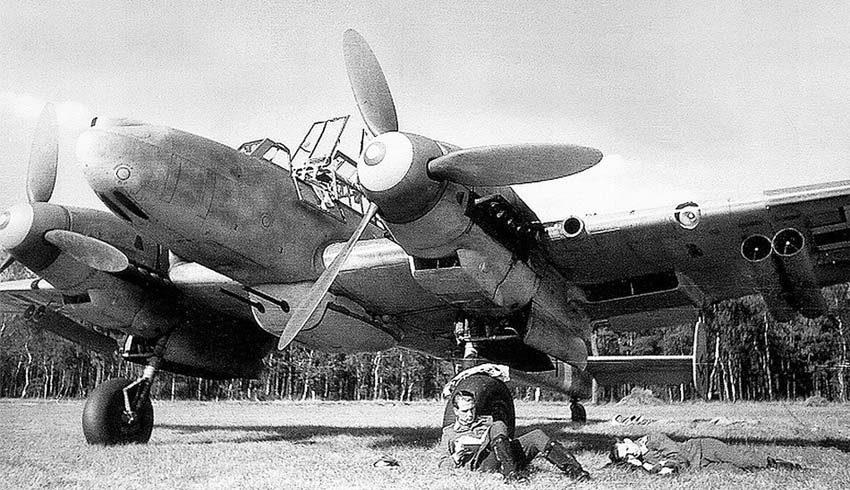
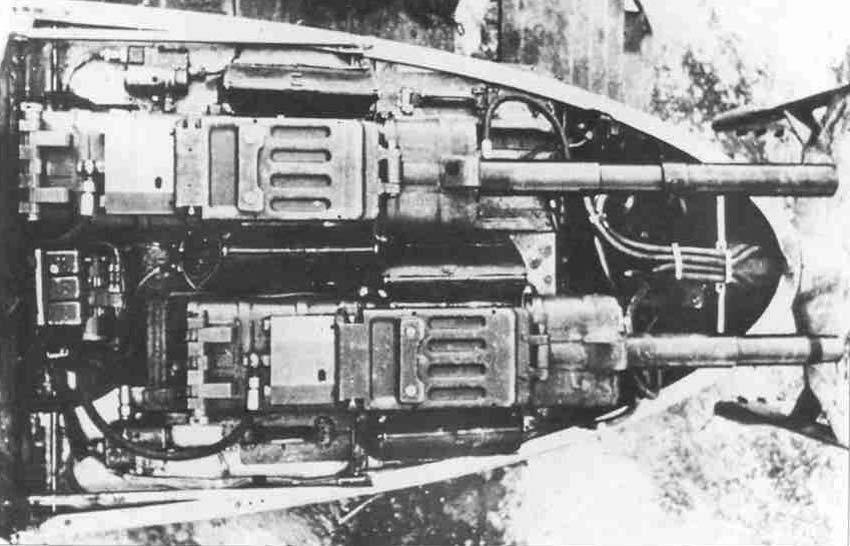
Offensive armament consisted of four 7.9 mm MG 17 machine guns with 1000 rounds per barrel and two 20 mm MG 151 cannons with 650 rounds. Under the fuselage were two ETC 500 bomb racks, but these could be replaced with two 20 mm MG 151 cannons, belt-fed from magazines in the nose, with 200 rounds per barrel. The mounts for two 300-liter tanks under the wings could be replaced with four ETC 50/VIII racks.
Armament and Variants
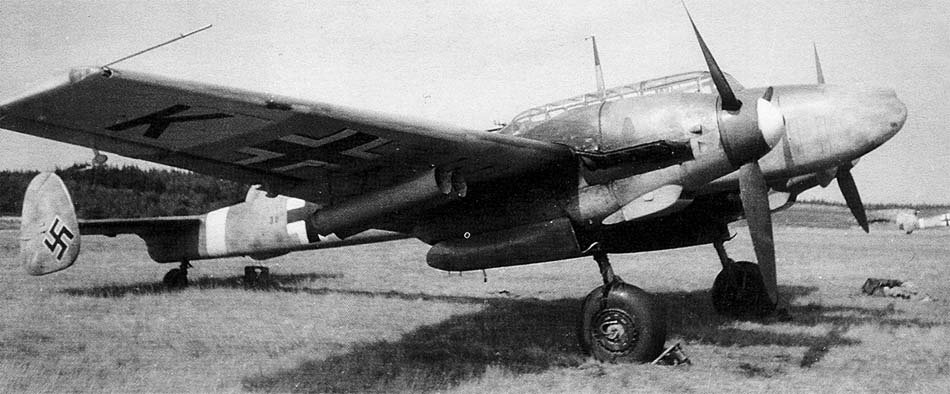
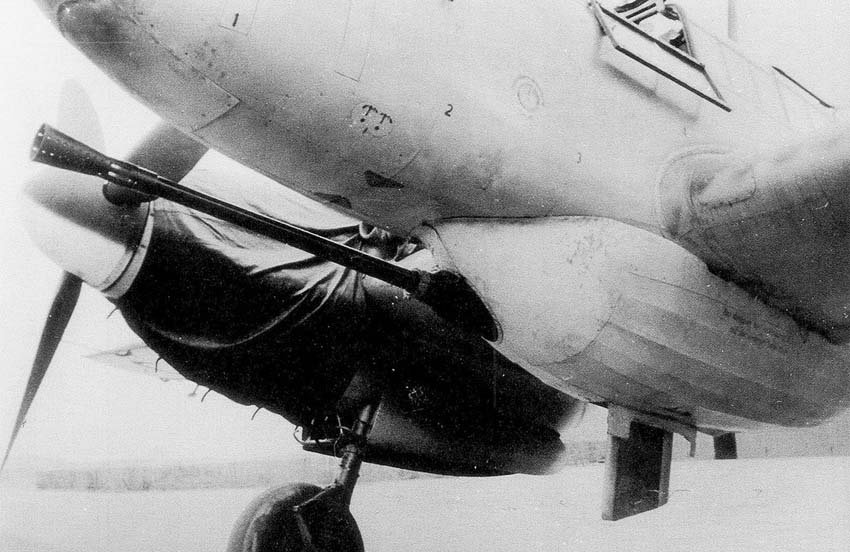
Several “field installation kits” were used on the Bf 110G-2. The first of these, the Bf 110G-2/R1, which enhanced the aircraft’s firepower, was developed in the autumn of 1942. This “kit” consisted of a 37 mm BK 3,7 cannon (Flak 18), mounted under the fuselage with the bomb racks removed, and enclosed by a fairing made of light alloy framework and plywood-fabric skin.
The BK 3,7 was fed from a magazine in the lower part of the cockpit with 72 rounds, which necessitated the removal of both 20 mm cannons. The BK 3,7 had an initial projectile velocity of 1170 m/s and proved effective when used against unescorted bombers; a single hit typically destroyed a B-17.
However, the weight of the cannon and the additional aerodynamic drag of the fairing made the Bf 110 extremely vulnerable when encountering escort fighters.
To improve flight characteristics with the BK 3,7 installed, the DB 605B engines were equipped with the GM 1 boosting system. A 440 kg tank for GM 1 was placed in the radio operator-gunner’s position.
The “normal” injection mode provided up to 45 minutes of boost, while the “emergency” mode offered up to 27 minutes. The total weight of the installation, including a high-pressure tank with an empty weight of 180 kg, was 615 kg.
This also involved removing all armor from the rear of the cockpit, as well as the bombsight and the MG 81Z machine gun. This “kit” received the designation R2.
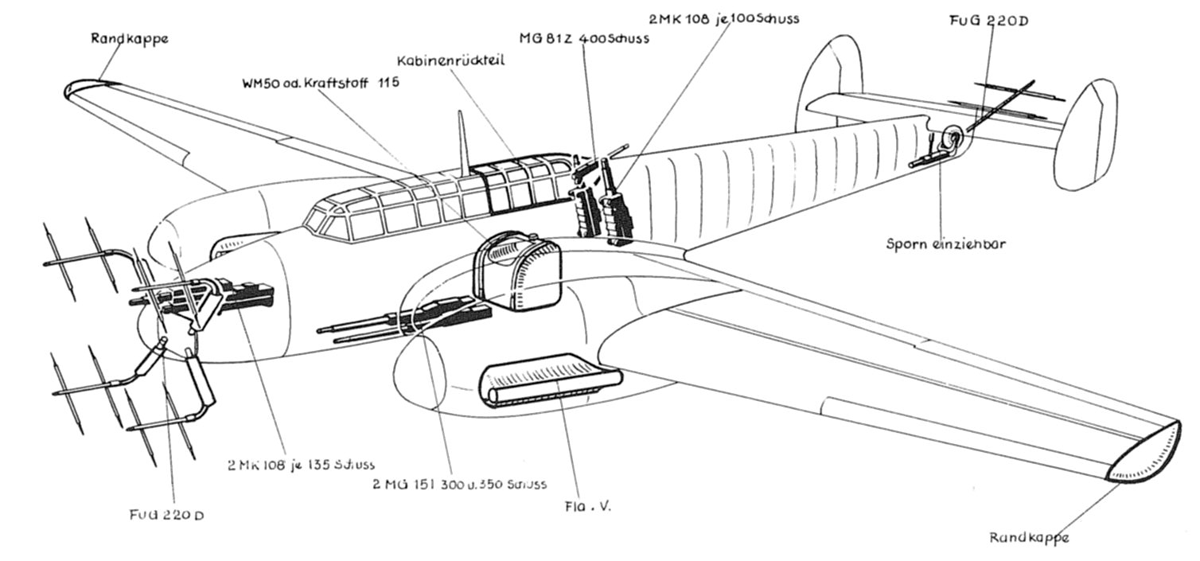
During 1943, the four nose-mounted MG 17 machine guns were replaced by the “kit” R3, consisting of a pair of 30 mm MK 108 cannons with 135 rounds per barrel. In other aspects, the Bf 110G-2/R3 was practically identical to the standard G-2, also featuring interchangeable under-fuselage ETC 500 bomb racks or MG 151 cannons. The Bf 110G-2/R4 received both “kits” R1 and R3 (i.e., a 37 mm Flak 18 cannon and two 30 mm MK 108s, with the removal of the fuselage-mounted MG 151s). The Bf 110G-2/R5 utilized “kits” R1, R2, and R3.
Concurrently with the Bf 110G-2, two other G-series modifications were developed: the long-range reconnaissance aircraft Bf 110G-3 and the night fighter Bf 110G-4. The Bf 110G-3, which entered series production only in early 1943 – later than the Bf 110G-4 – received one Rb 50/30 or 70/30 photo camera.
Its offensive armament consisted of four nose-mounted 7.9 mm MG 17 machine guns, and two 300-liter tanks could be suspended under the wings. Defensive armament comprised a single MG 81Z machine gun in the rear cockpit and a so-called “disposable armament” – a fixed, under-fuselage 20 mm MG 151 cannon with 350 rounds.
Without external stores, the Bf 110G-3 achieved a speed of 557 km/h at 5800 m. Its normal flight range was 900 km. Several reconnaissance aircraft received the “kit” R3 (i.e., two 30 mm MK 108 cannons were installed instead of machine guns) – designated Bf 110G-3/R3.
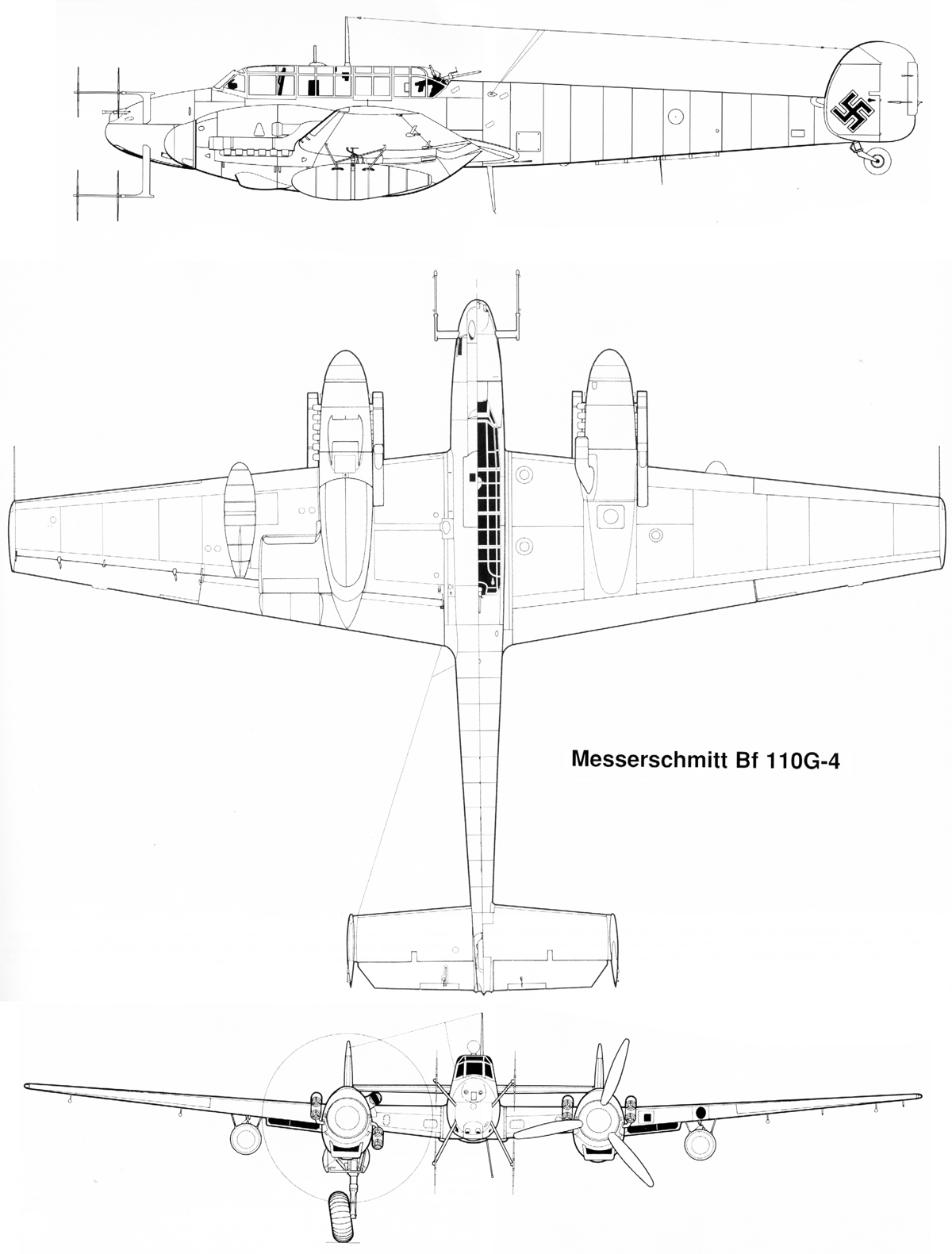
The Bf 110G-4 night fighter began rolling off assembly lines in the summer of 1942. From the outset, it was designed for radar installation, with equipment fitted depending on the specific “factory kit”.
The standard Bf 110G-4 featured armament consisting of four 7.9 mm MG 17 machine guns with 1000 rounds per barrel and two 20 mm MG 151 cannons. Defense was provided by an MG 81Z with 800 rounds. The cockpit was heavily armored, but no armor was installed on the underside.
In addition to the FuG 10P transmitter, a FuG 25 transponder and the FuBl 2F “blind landing” system were installed. From April 1943, the FuG 10P was replaced by the FuG 16zy, which solved the problem of radio communication interference between the “Himmelbett” guidance system and the fighter.
The Bf 110G-4/U1 received the same “factory installation kit” as the Bf 110F-4/U1: two 30 mm MK 108 “Schräge Musik” cannons, with the rear MG 81Z machine gun removed.
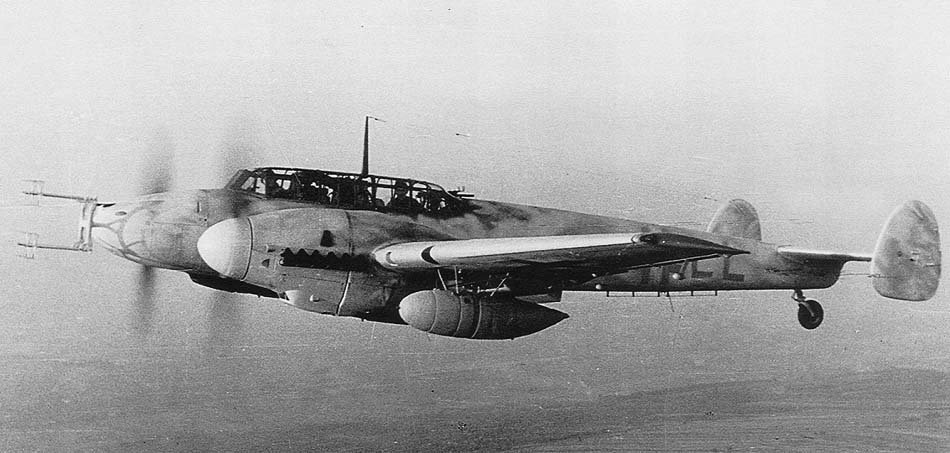
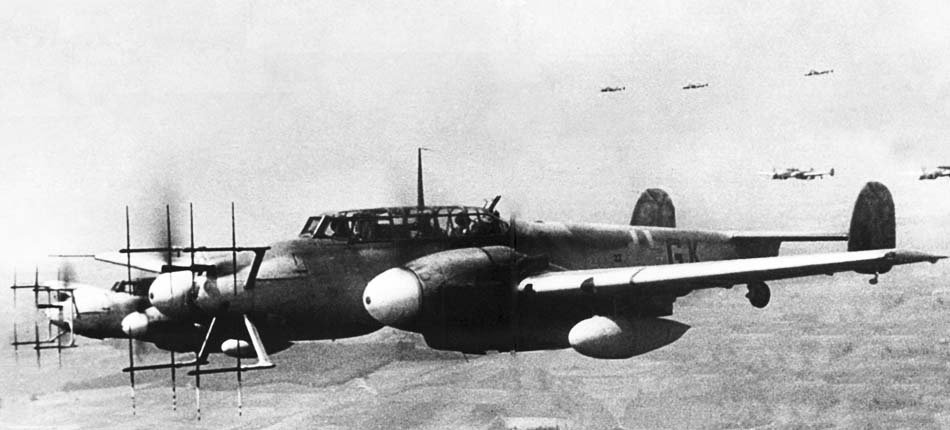
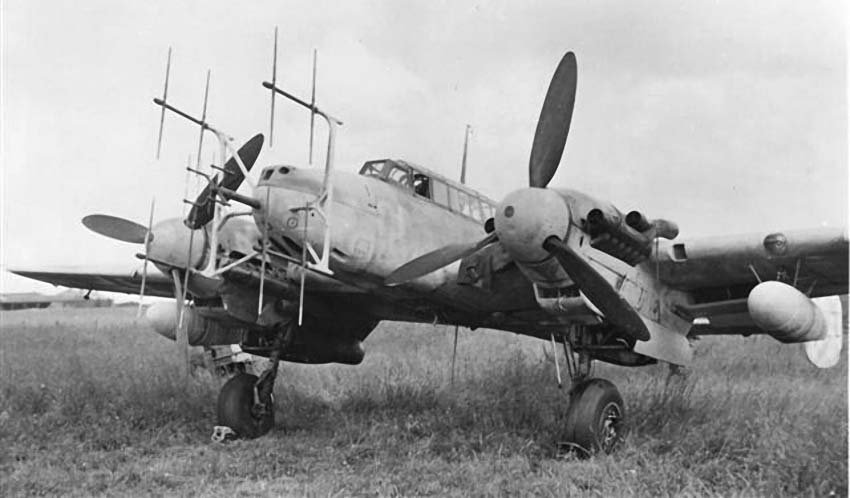
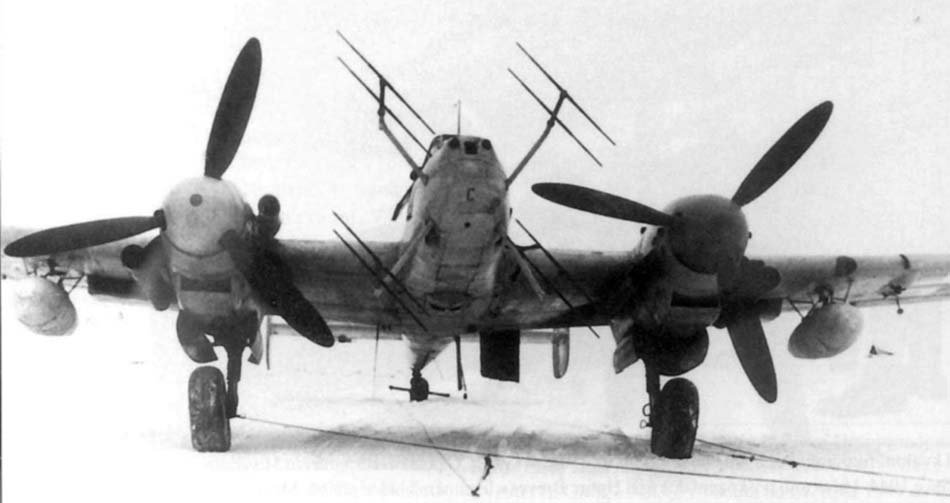
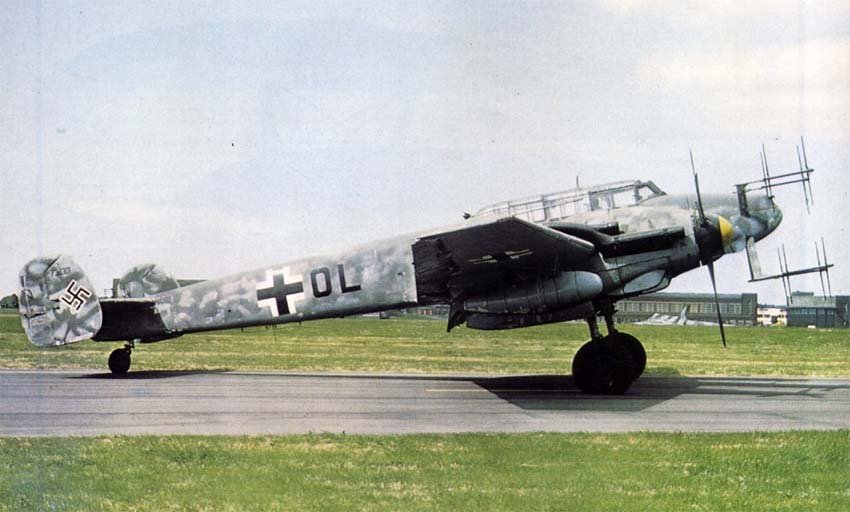
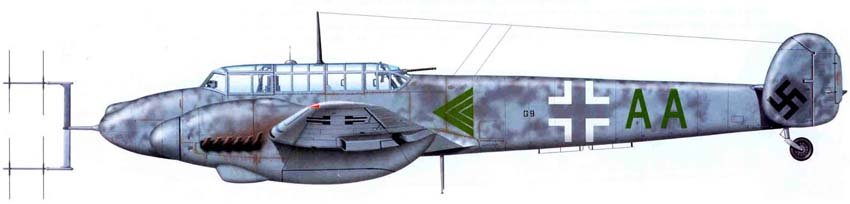
The first “factory installation kit” with radar involved the use of the FuG 212 “Lichtenstein” C-1, which differed from the FuG 202 by its simplicity of production. Aircraft equipped with it were designated Bf 110G-4/U5. Instead of the “mattress” of antennas on the Bf 110F-4a’s nose, only a single antenna was now installed, significantly reducing air resistance. The Bf 110G-4/U6 was similar to the G-4/U5 but also featured the FuG 221a “Rosenthal-Halbe” direction finder, tuned to the frequency of the British “Monica” warning system used on bombers. The “Rosenthal” antenna was also mounted in the nose.
Operational Challenges and Evolution
From February 1942, when MIAG and Gotha delivered only four Bf 110s, deliveries of the twin-engine Messerschmitt fighter once again soared. By the end of the year, 577 fighters had been delivered, with an average rate of 57-58 aircraft over 10 months. Production peaked in November when 84 aircraft were accepted.
In early 1943, Bf 110 production continued to grow, increasing by 100%, with a monthly output of 126 aircraft. By this time, the Bf 110 was used as a “hunter” only in ZG 1 and ZG 26, as well as in 13.(Z)/JG 5, but was more frequently used as a reconnaissance aircraft and became the primary aircraft of night fighter aviation.
It must be said that in night battles over Europe, the Bf 110 initially simply got lucky. Far from being an ideal night fighter, it was successfully used with the “Himmelbett” guidance system, which required neither long flight range nor extended airtime. However, its shortcomings soon became apparent.
By early 1943, the night fighter force had expanded to 15 groups, totaling 390 combat-ready fighters, most of which were Bf 110F and Bf 110G. Although the Ju 88C-6 gradually “infiltrated” night fighter squadrons, only two groups – I and II/NJG 2 – were fully re-equipped with it, and these were also used as “hunters” in the Mediterranean theater.
Apart from a small number of Do 217Js and Do 217Ns used in II and IV/NJG 1 and I and II/NJG 3 alongside the Bf 110, and Ju 88C-6s in IV/NJG 3, the remaining units were armed exclusively with Messerschmitt fighters. The latter, in addition to the aforementioned units, was used in I and III/NJG 1, III/NJG 3, I, II and III/NJG 4, and I and II/NJG 5.
Radar antennas, flame dampers, and external weapon racks significantly reduced the Bf 110’s flight performance. Despite high air resistance, even the under-fuselage ETC 500 bomb racks, which were completely unnecessary for a night fighter, were retained; furthermore, the bomb release mechanisms were dismantled!
Fortunately for night fighters, as long as the “Himmelbett” system was effective, high flight performance was not required. However, from July 1943, the British began using passive jamming – strips of aluminum foil – to suppress the guidance system’s radars. As a result, night fighters had to abandon the “Kammhuber Line” and adopt the “Wild Boar” (Wilde Sau) tactic, after which the insufficient tactical and technical characteristics of the Bf 110 became obvious.
The tasks facing Bf 110 night hunter groups became entirely unmanageable from the summer of 1943, as their complete unsuitability for daytime use against American Air Force bomber formations became apparent. Despite powerful armament, Bf 110s had limited success in daylight engagements.
For “night” pilots, the usual tactic was maximum close-range engagement, and in daylight, they suffered heavy losses from the defensive fire of bombers, lacking sufficient speed or necessary maneuverability at interception altitude. Losses were so severe that the most experienced “night” pilots were forbidden from participating in daytime combat.
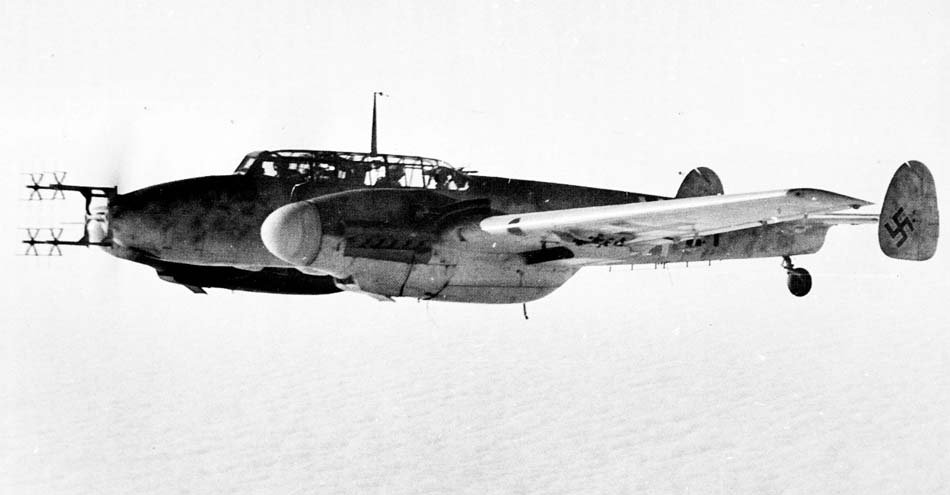
In an attempt to improve the fighter’s high-altitude performance, the Bf 110G-4/U7 variant was fitted with the GM 1 boosting system, based on the R2 “field installation kit.” The “Rosenthal” FuG 221 was removed from this modification, and a new, four-pole “Lichtenstein” C-1 antenna was installed.
After Kammhuber was replaced at the head of night fighters by Major General Schmid, the latter again showed interest in long-range night fighters. As a result, a new “factory kit” for the Bf 110G-4/U8 appeared, which included installing a 540-liter auxiliary tank in the gunner’s position.
The fuselage oil tank was increased from 55 to 110 liters. The ability to suspend 300-liter or 900-liter underwing tanks remained. After testing in the West Frisian Islands, the long-range night fighter was deemed uneconomical, and the design was rejected.
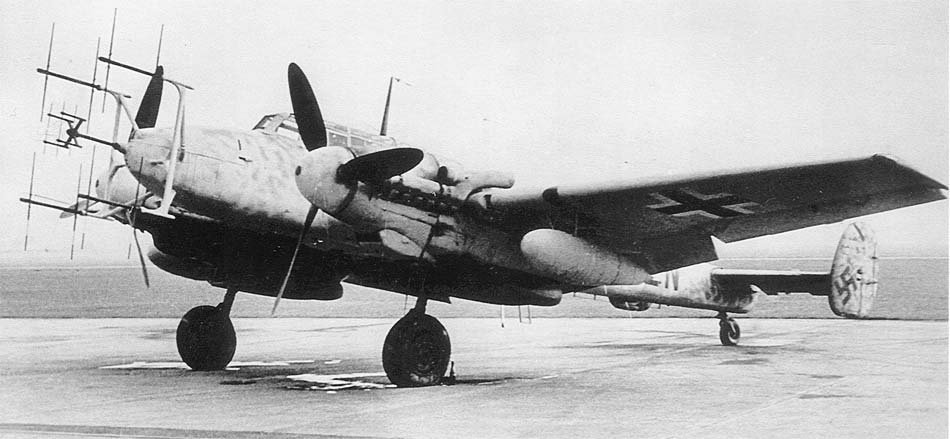
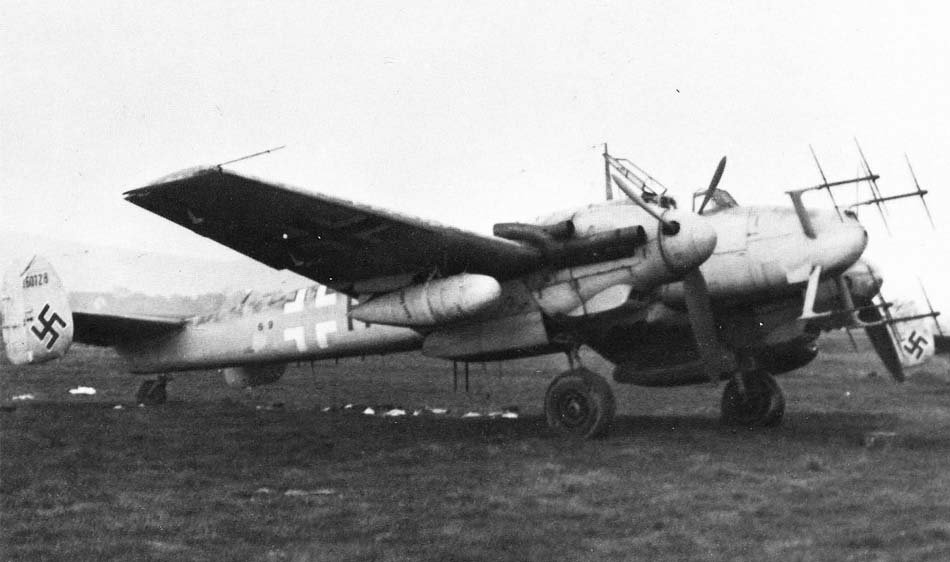
During the autumn of 1943, the installation of the “Lichtenstein” C-1 radar with four antennas in the nose was standardized on the assembly line, leading to the Bf 110G-4a modification. The installation of a 37 mm Flak 18 cannon, GM 1, and the replacement of MG 17 machine guns with two MK 108 cannons, respectively, gave rise to the Bf 110G-4a/R1, R2, and R3 variants.
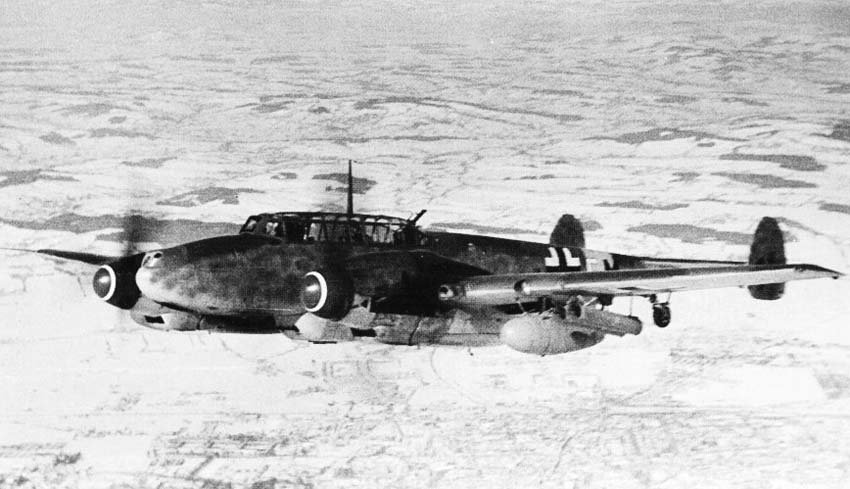
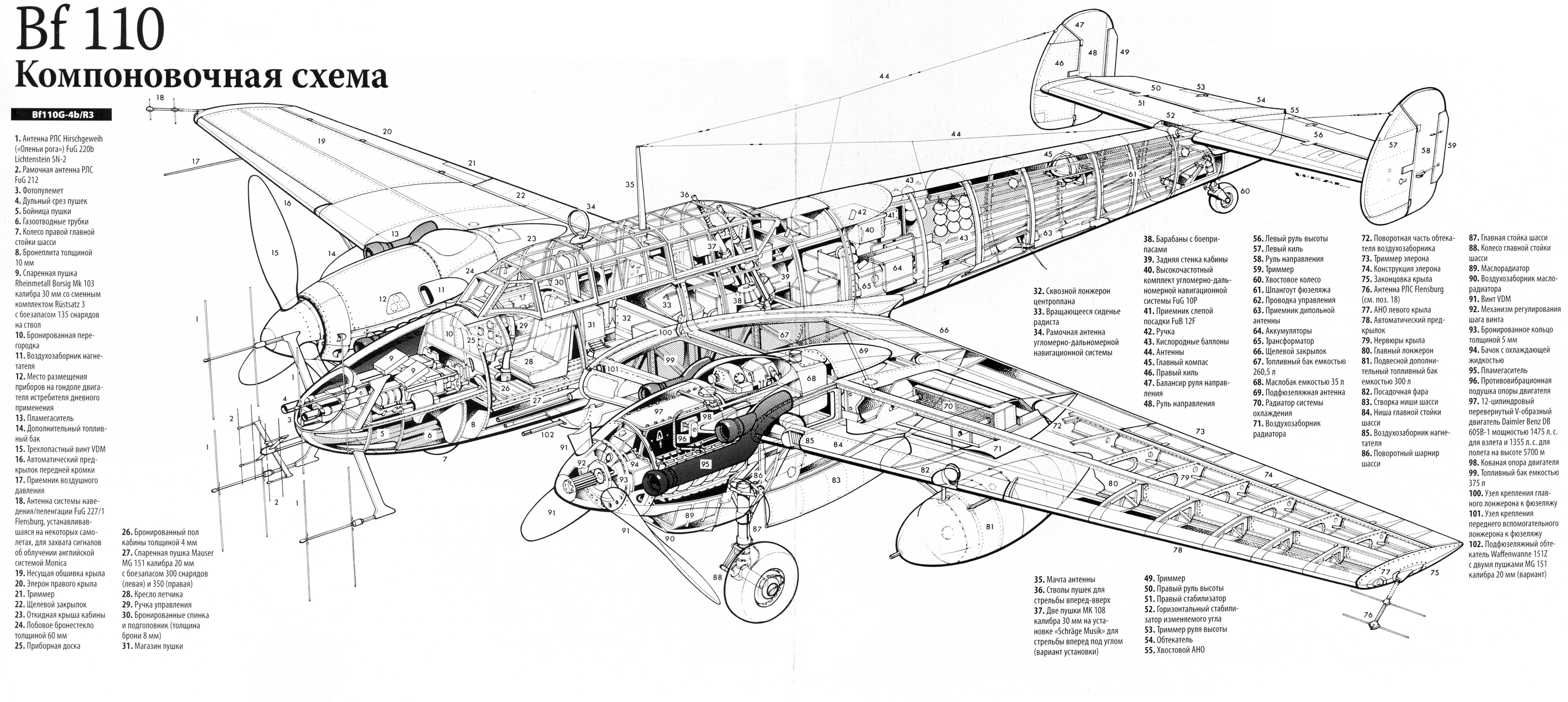
With the appearance of the “Lichtenstein” SN-2 radar, which was a response to the British use of “windows” passive jamming, the Bf 110G-4b was standardized. The “Lichtenstein” C-1 radar with a single antenna in the nose remained, along with the “deer antler” SN-2.
Although the latter operated on a frequency not covered by “windows,” it had a minimum range of 400 m, significantly more than necessary for visual contact with the target. This necessitated retaining the C-1 with its minimum range of 200 m.
In addition to the R3 “kit” (Bf 110G-4b/R3), the Bf 110G-4b was also equipped with R6 and R7 “kits.” The first, the Bf 110G-4b/R6, was a combination of R3 with the GM 1 boosting system (R2 “kit”), and the second, the Bf 110G-4b/R7, a combination of R3 with an additional 540-liter fuel tank, based on the Bf 110G-4/U8.
Bf 110 production during 1943 totaled 1509 aircraft, with approximately half being F-4s and G-4s. By early 1944, seven more groups had been formed within the night fighter force. Despite lagging behind the day’s requirements, Messerschmitt fighters constituted the majority of the fleet in 14 out of 22 groups.
This marked the peak of night fighter air power. The new “Wild Boar” (Wilde Sau) tactic made British bomber night raids very dangerous. The losses suffered by British Bomber Command over the “Third Reich” in early 1944 temporarily forced a halt to mass raids.
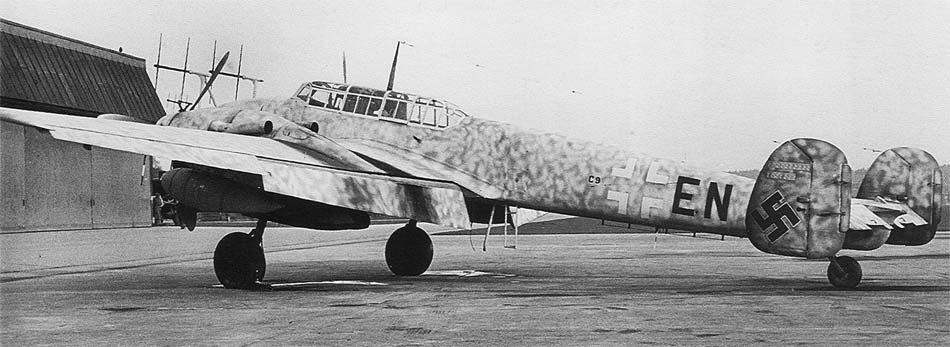
By early 1944, the problem of the “Lichtenstein” SN-2 radar’s minimum effective range was finally resolved. This allowed the removal of the C-1, slightly thinning the “forest” of antennas on the aircraft’s nose. With a single FuG 220b “Lichtenstein” SN-2 radar, the aircraft was designated Bf 110G-4c.
As with its predecessors, it was fitted with R3, R6, and R7 “armament kits,” though there was also a Bf 110G-4c/R4 variant with 30 mm MK 108 cannons replaced by a pair of 20 mm MG 151s.
The Bf 110G-4c was usually supplied with ETC fuselage racks, but on all fighter modifications, these could be replaced with a Waffenwanne 151Z with a pair of MG 151s. The last production G variant was the Bf 110G-4d/R3, which differed from the G-4c/R3 by having new radar antennas in the nose with lower air resistance.
Several aircraft of this subtype were supplied with FuG 227/1 “Flensburg” direction finders, tuned to the frequency of the British “Monica” warning system. The direction finder antennas were installed on the wingtips.
The Bf 110G-4 was operated by a crew of two or three, and the main drawback of the aircraft was the difficulty for the radio operator to parachute out of a damaged machine. The gunner had to jump first, but if he was wounded or killed, then abandoning the aircraft became impossible.
Bf 110 production continued at the same pace in 1944, reaching 1518 aircraft. The production peak was achieved in September, with 188 aircraft accepted.
Nevertheless, the aircraft’s days were numbered; by the autumn of 1944, the military situation forced the Bf 110 into ground attack and daytime interception roles, leading to heavy losses. Concurrently, a severe fuel shortage noticeably reduced the combat effectiveness of the “night fighters.” The number of Bf 110s in combat units was halved.
The Bf 110G-4 was also used in small numbers by Germany’s allies. A batch of machines was supplied to Italy in 1943, to the 59th and 60th Regiments. Several aircraft were in service with the 1st Romanian Night Fighter Squadron. Six aircraft were leased to the Hungarian Air Force.
By early 1945, according to a Luftwaffe headquarters report, in the night fighter aviation, with the exception of Norway, only II, III, and IV/NJG 1 and I/NJG 3 were fully armed with Bf 110s. A few Bf 110s were in II, III, and IV/NJG 5 and I, III, and IV/NJG 6, which were mainly armed with Ju 88s.
No Bf 110s remained in reconnaissance or “hunter” groups. The last Bf 110Gs rolled off the assembly line in March 1945 – with only 45 aircraft delivered in the first three months. The total production of all Bf 110 versions amounted to 6050 aircraft.
Even before the final decline of the Bf 110, another modification, the Bf 110H, was launched into production, running concurrently with the Bf 110G in 1942. Given the minor design changes, assigning a new modification letter to the Bf 110 was difficult to explain.
However, in 1941, when the H-series project was developed, it differed quite significantly from the previous variant. By the time mass production of the Bf 110 was restored, most features of the Bf 110H project had already been incorporated into the production variants of the Bf 110G.
As a result, the Bf 110H-2 differed from the Bf 110G-2 only by the installation of DB 605E engines, some strengthening of the rear fuselage, reinforced landing gear, a hydraulically retractable tailwheel, a new control stick, and so on.
Some of these modifications were later introduced into subsequent Bf 110G series in 1944, but before that, several more subtypes of the H-series were produced. These included the heavy fighters Bf 110H-2 with R1 and R2 “kits,” the reconnaissance bomber Bf 110H-3 patterned after the Bf 110G-3 but with the MG 17 machine guns replaced by a pair of 30 mm MK 108 cannons, and the night fighter Bf 110H-4 patterned after the Bf 110G-4 using “factory kits” U7 and U8 (i.e., Bf 110H-4/U7 and H-4/U8).
Technical Description of the Bf 110G-2
The Bf 110G-2 aircraft is a two-seat, twin-engine low-wing monoplane of all-metal construction, featuring a cantilever wing and retractable landing gear.
The oval-section fuselage is assembled from two halves of monocoque construction, joined along the aircraft’s symmetry line. Frames are made of omega-section profiles, stringers of Z-section profiles. The fuselage skin is flush-riveted duralumin.
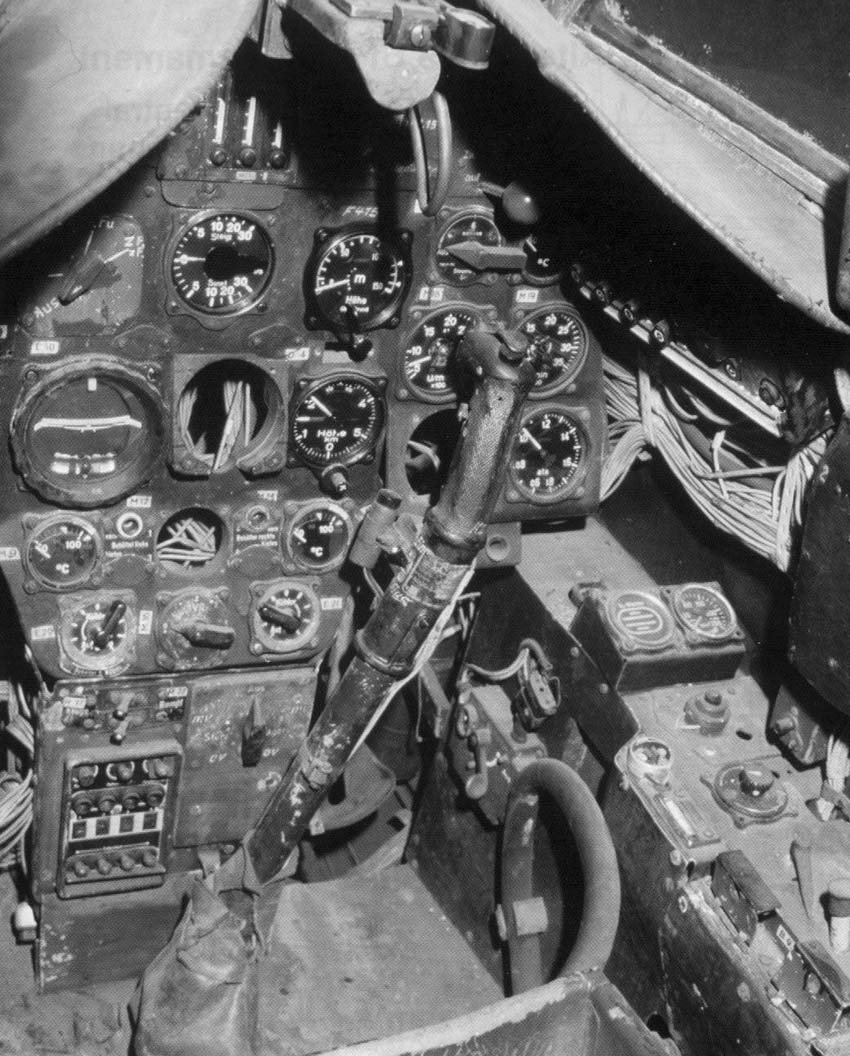
The nose section with offensive armament is detachable. Behind the armament compartment is the crew cockpit with a tandem arrangement (pilot in front, radio operator-gunner behind). Instruments and controls in the pilot’s cockpit are located on the instrument panel and two side consoles.
Aircraft control is traditional, using a stick and pedals. The pilot’s seat is stamped from duralumin sheet, protected from behind by an armored backrest with a headrest. The space behind the seat houses radio equipment, ammunition, or an auxiliary fuel tank of 540 liters.
The five-section cockpit canopy opens upwards and sideways above the pilot’s position, and hinges to the right above the radio operator-gunner’s position. The front part of the canopy consists of 57 mm thick armored glass. Behind the crew compartment in the fuselage are located some radio equipment, oxygen cylinders, and an emergency kit.
The wing is single-spar, with a working duralumin skin, flush-riveted. Between the engine and fuselage, the skin is additionally reinforced with omega-section stringers.
The ribs are truss-type, spaced at regular intervals. The ailerons are slotted, with horn balance and fabric covering. The flaps are slotted, with metal covering. The leading-edge slats are automatic, Handley-Page type.
In the leading edge of the left wing, there is a 500 W landing light, and at the wingtips, navigation lights. The wing panels are attached to the fuselage at four points.
The empennage is an all-metal, twin-fin construction. The stabilizer is adjustable, ranging from +3.0 to -0.9 degrees. The rudder and elevators are equipped with mass and aerodynamic compensation, and the covering is fabric.
The landing gear is of the conventional tailwheel type. The main struts retract hydraulically into the engine nacelles, rearward with a 90-degree rotation. The aircraft is equipped with an emergency landing gear extension mechanism (pneumatic drive).
The main wheels, sized 935×345 mm, are fitted with double hydraulic drum brakes. The main landing gear struts are VDM type with oleo-pneumatic shock absorption.
The tailwheel, sized 465×165 mm, is on a VDM-type strut with a spring damper and oil oscillation dampener. Tire pressure for the main wheels is 0.65 MPa, and for the tailwheel, 0.48 MPa.
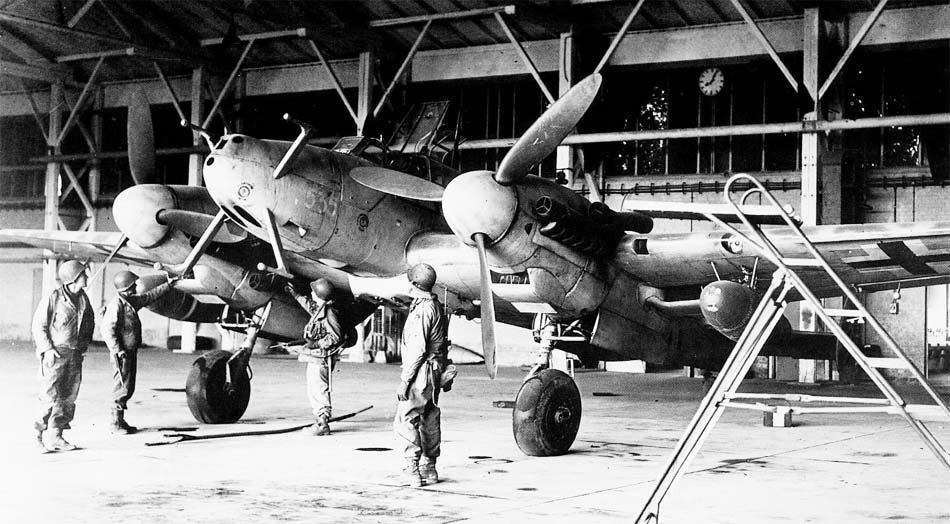
The power plant consists of two 12-cylinder Daimler-Benz DB 605B-1 engines, configured in an “inverted V” layout. The engine’s takeoff power is 1085 kW (1475 hp), and its nominal power is 963 kW (1310 hp). The dry weight of the engine is 728 kg. The propellers are variable-pitch, three-bladed, metallic VDM 9-12098 A/B type, with a diameter of 3375 mm. The cooling system for each engine consists of an expansion tank and a radiator installed under the wing. The radiator features electrically actuated shutters.
The fuel system comprises four self-sealing tanks in the wing: two with a capacity of 375 liters forward of the main spar and two with 205 liters behind the main spar. The fuel used was B4 gasoline with an octane rating of 87. For cold engine starts, a special starter fuel – a mixture of gasoline and ether – was injected (a tank with a hand pump was located in the pilot’s right cockpit console).
Two jettisonable Junkers-type external fuel tanks, each with a capacity of 300 liters, could be suspended under the wings. The fuel system also includes necessary fittings, fuel lines, and filter sets. In addition to the central fuel pumps on the engines, each tank is equipped with an auxiliary electrically driven pump.
The oil system consists of two toroidal tanks in the rear parts of the engine nacelles, each with a capacity of 50 liters (usually only 35 liters were filled), SKF So 802 (or 812) type oil radiators in the lower part of the nacelles, and gear pumps. The airflow through the oil radiators is automatically regulated by a thermostat and shutters. An additional 75-liter oil tank could be suspended under the fuselage.
The hydraulic system is used for retracting and extending the landing gear and flaps. The hydraulic pump is driven by the right engine. An expansion tank for the hydraulic system is located in the right wing above the engine nacelle. In case of a hydraulic system failure, the landing gear and flaps could be extended to the landing position by an emergency pneumatic drive.
The oxygen equipment consists of nine 2-liter cylinders, arranged in batteries of three units. Each battery has a common valve and regulator. The refueling nozzle is common to all three batteries. The nominal oxygen pressure in the cylinders is 1.5 MPa.
There was a possibility of installing a second set of oxygen equipment of similar composition, which was often done on Bf 110G-4 night fighters. Oxygen was supplied to the pilot’s and radio operator-gunner’s masks, with the composition of the breathing mixture automatically regulated depending on the flight altitude. At altitudes above 8000 m, pure oxygen was supplied to the masks.
The electrical equipment is single-wire, with a nominal voltage of 24 V. The power source consists of two Robert Bosch LK 2000/24 generators, each with a power of 2 kW, installed on the engines. There is also a 120 Ah storage battery, installed in the rear part of the fuselage. The main distribution panel is located on the console in the pilot’s cockpit. All electrical circuits are equipped with automatic fuses.
Radio equipment. The aircraft is equipped with the FuG 10P transceiver complex, which includes S 10K and S 10L transmitters, E 10K and EZG receivers, as well as the APZ 6 radio navigation unit. The complex uses an antenna stretched between the antenna mast above the cockpit and the top of the fin, as well as a linear antenna deployable under the fuselage.
A spherical PRE 6 antenna serves for radio navigation. Additionally, an EiV aircraft intercom is present. Some aircraft were equipped with a FuG 25a “friend-or-foe” identification device, complete with a self-destruct mechanism. Such machines had an additional whip antenna under the fuselage.
For landing in low visibility conditions, the FuBl 2 system with two dipole antennas under the rear fuselage was used. Furthermore, there was a Peil G V radio direction finder, a FuG 101a radio altimeter, a PFK 13 compass, and a Siemens K 4u-1 autopilot.
Additional equipment. The aircraft could be supplied with a tropical kit, which included engine air intake filters (most often manufactured by the Italian firm Marinelli), dustproof seals for hatches, as well as a “desert” emergency kit (which specifically included a hunting rifle and a supply of food and water). Aircraft operating in Norway were equipped with a different emergency kit (with skis and other necessary items for low-temperature conditions). For operations over the sea, aircraft were equipped with inflatable life rafts – either a two-seater or two single-seaters. All aircraft had a first-aid kit, as well as a 27 mm Walter LP signal pistol with a set of flares.
Armament. Standard small arms armament consisted of four 7.92 mm Rheinmetall-Borsig MG 17 machine guns with 1000 rounds per barrel in the nose section of the fuselage and two 20 mm Rheinmetall-Borsig (Oerlikon) MGFF/M cannons with 180 rounds (three 60-round magazines) per barrel, or Mauser MG 151/20 (400 rounds for the left cannon and 350 for the right) under the crew cockpit. Defensive armament was a twin 7.92 mm Mauser MG 81Z machine gun in the radio operator-gunner’s cockpit. Bomb armament consisted of two ETC 500/IXb bomb racks, installed under the fuselage and covered by a fairing. Additionally, four ETC 50/VIIId bomb racks could be installed under the wing. It was possible to change the armament composition by using various modification kits.
Technical Specifications
| Modification | Bf.110g-4c/R-3 |
| Wingspan, m | 16.20 |
| Length, m | 13.00 |
| Height, m | 4.20 |
| Wing area, m2 | 38.40 |
| Empty weight | 5100 |
| Normal takeoff weight | 9400 |
| Maximum takeoff weight | 9900 |
| Engine type | 2 Piston engine Daimler-Benz DB 601В-1 |
| Power, hp | 2 x 1475 |
| At sea level | 500 |
| At altitude | 550 |
| Cruising speed, km/h | 510 |
| Range without external tanks | 900 |
| Range with 2 x 900 L tanks | 2100 |
| Maximum rate of climb, m/min | 660 |
| Service ceiling, m | 11000 |
| Crew, crew members | 3 |
| Armament | two 30-mm MK 108 cannons with 135 rounds per gun and two 20-mm MG 151 cannons with 300 rounds (for the right gun) and 350 rounds (for the left), one 7.9-mm MG 81Z machine gun with 800 rounds. |
Image and diagram gallery of the Messerschmitt Bf 110G/H
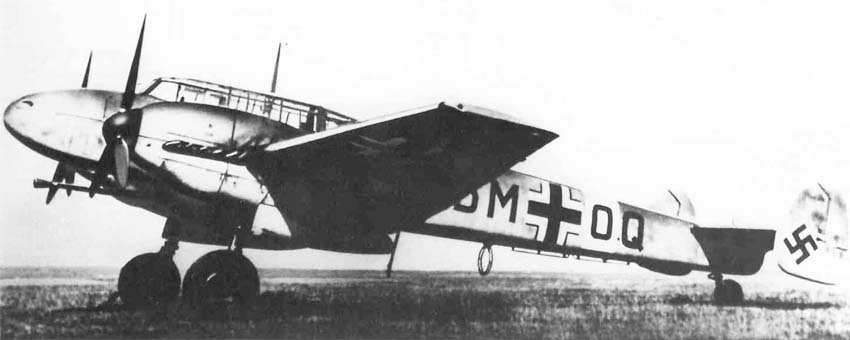 Bf.110G(H) |
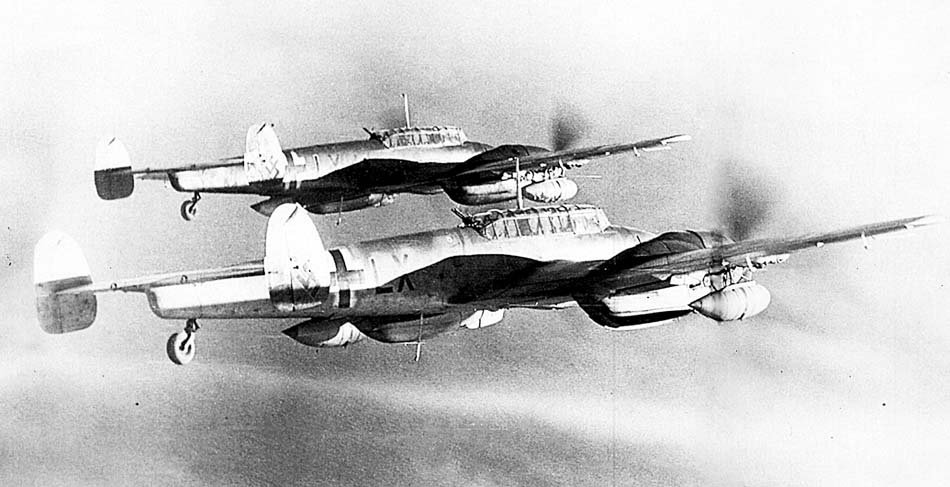 Bf.110G(H) |
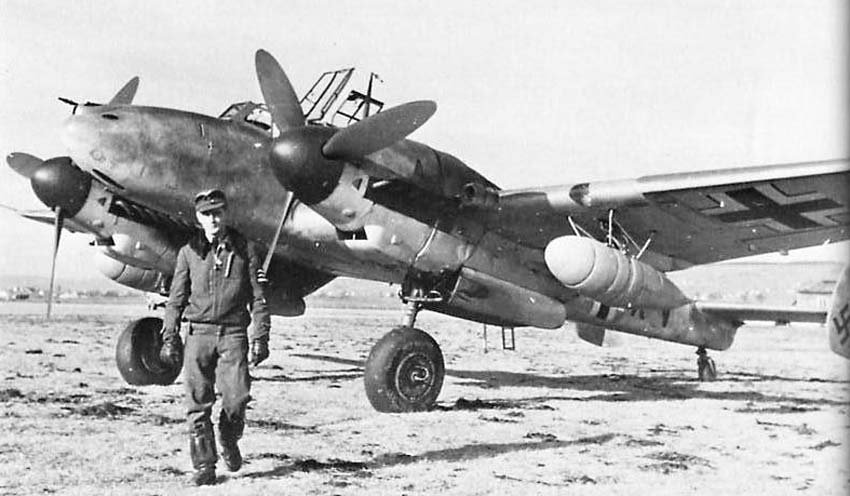 Bf.110G(H) |
 Bf.110G(H) |
 Bf.110G(H) |
 Bf.110G(H) |
 Bf.110G(H) |
 Bf.110G(H) |
 Bf.110G(H) |
 Bf.110G(H) |
 Bf.110G(H) |
 Bf.110G(H) |
 Bf.110G(H) |
 Bf.110G(H) |
 Bf.110G(H) |
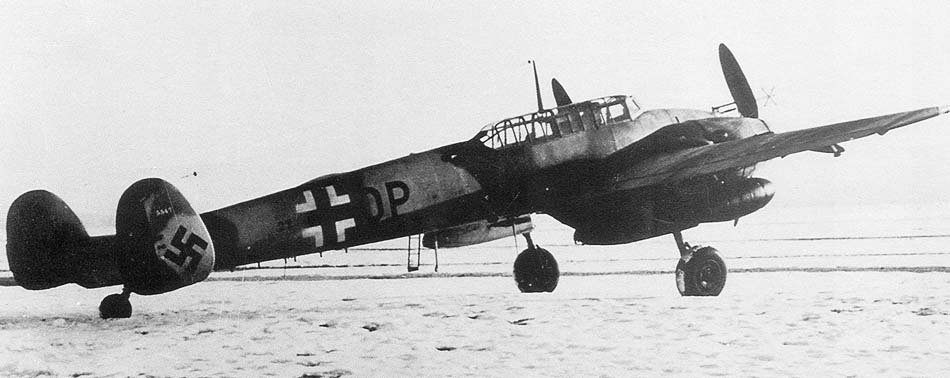 Bf.110G(H) |
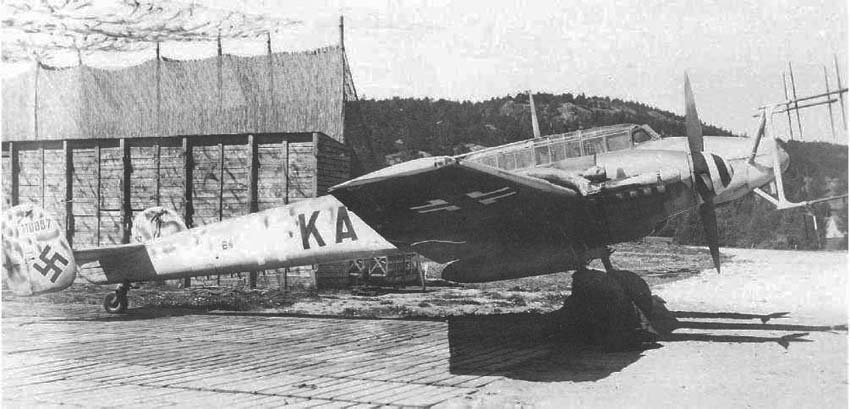 Bf.110G(H) |
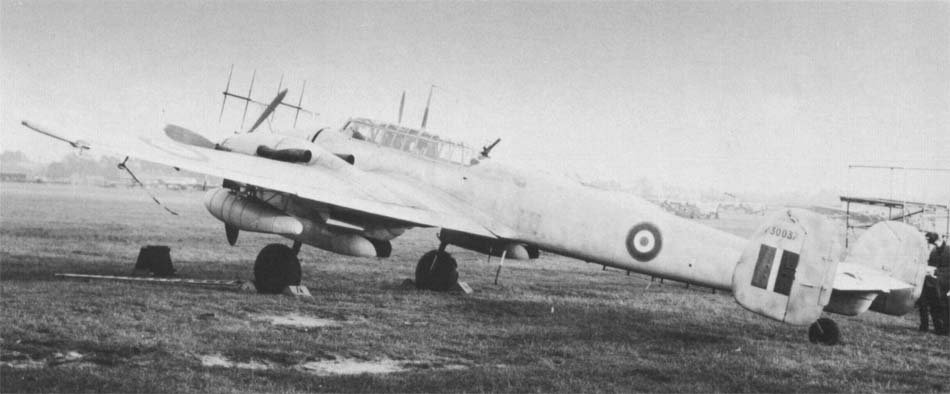 Bf.110G(H) |
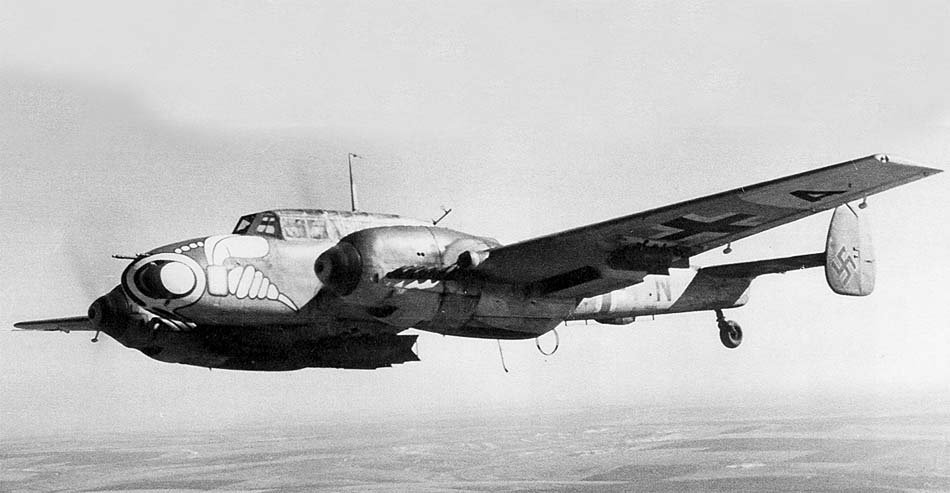 Bf.110G(H) |
 Bf.110G(H) |
 Bf.110G(H) |
 Bf.110G(H) |
 Bf.110G(H) |
 Bf.110G(H) |
 Bf.110G(H) |
 Bf.110G(H) |
 Bf.110G(H) |
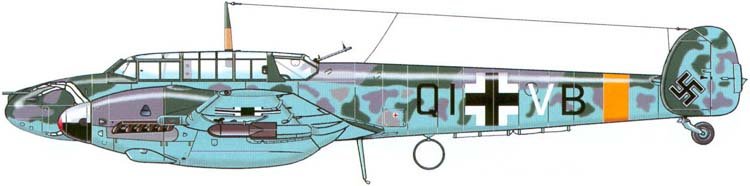 Bf.110G(H) |
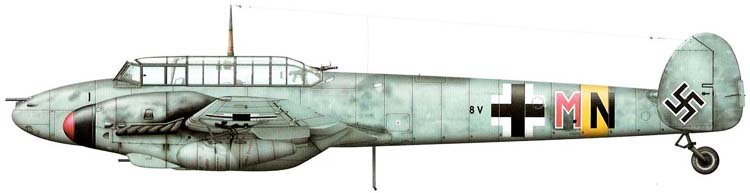 Bf.110G(H) |
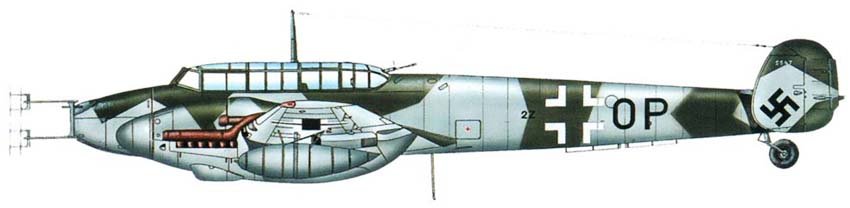 Bf.110G(H) |
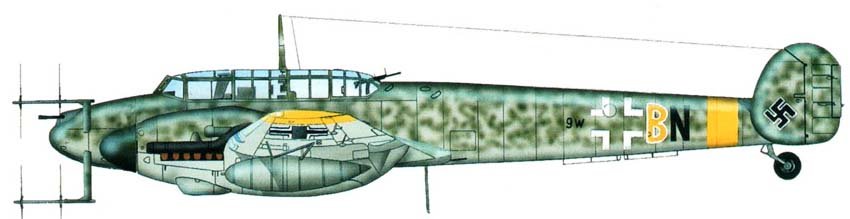 Bf.110G(H) |
 Bf.110G(H) |
ArchivoAéreo Editorial Team
A group of aviation researchers and enthusiasts dedicated to documenting and preserving global aeronautical history. All articles are reviewed to ensure historical accuracy.
Sources & Accuracy
The information presented in this technical sheet has been compiled from declassified flight manuals, historical archives, and specialized literature. While we strive for maximum accuracy, some performance data may vary depending on the specific variant or operational conditions.