Short SC.5 Belfast
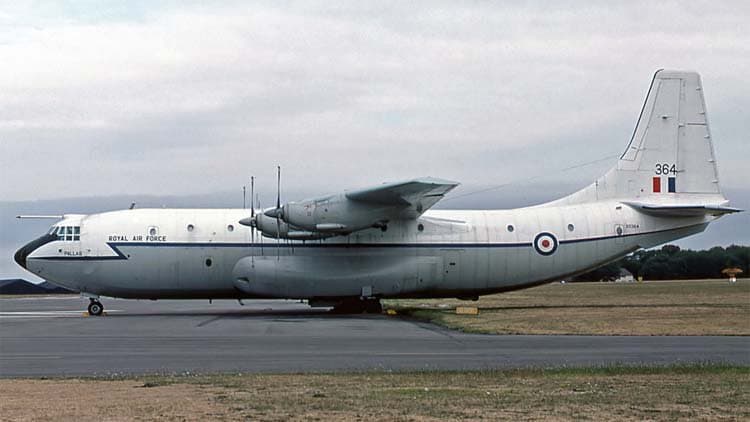
In the late 1950s, Short Brothers sought to establish a foothold in transport aviation with its large military transport aircraft, the Short S.C.5, a project initiated in February 1956. The aircraft was designed between 1956 and 1959 at the request of the UK Royal Air Force (RAF).
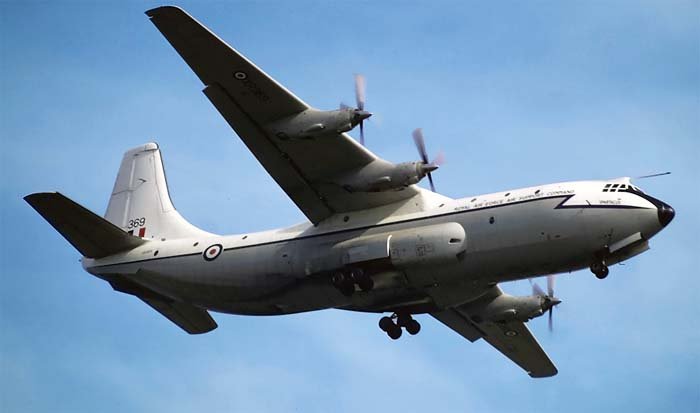
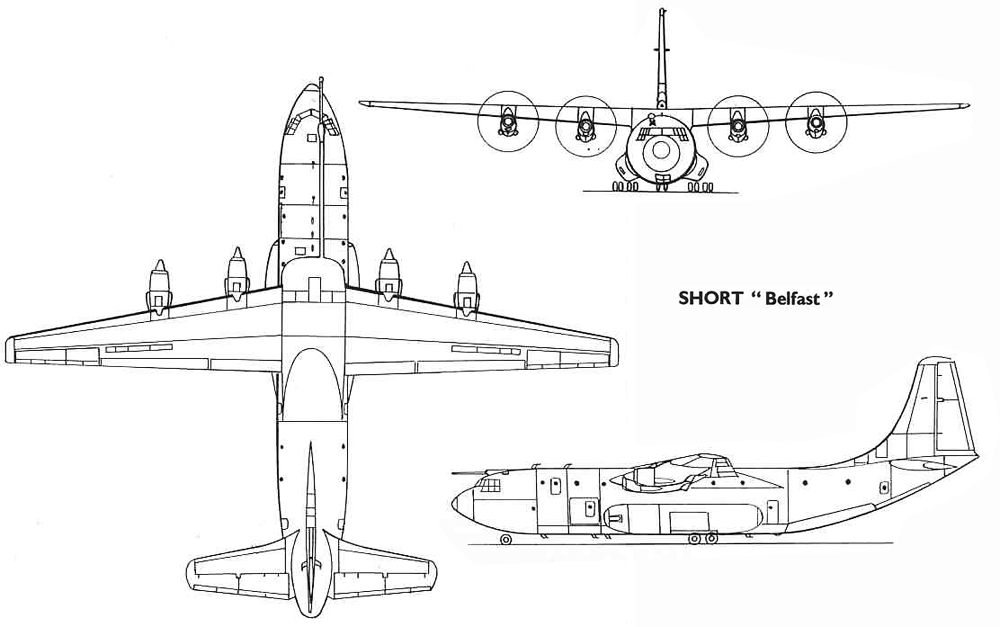
It became the first British wide-body turboprop military transport aircraft and ranked among the three heaviest military transport machines in the world. Construction of the prototype lasted from 1959 to 1963. It was a high-wing aircraft with a pressurized, circular-section fuselage.
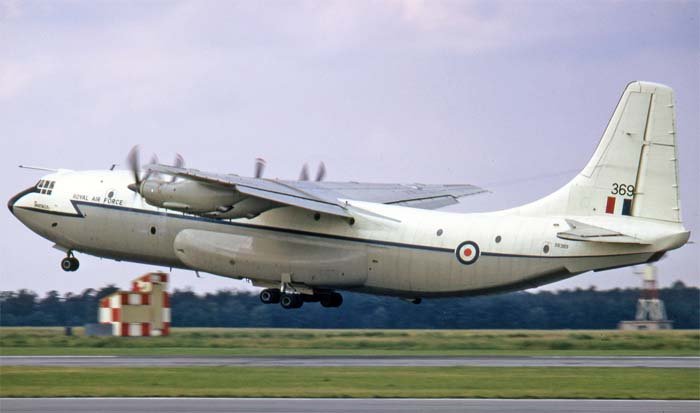
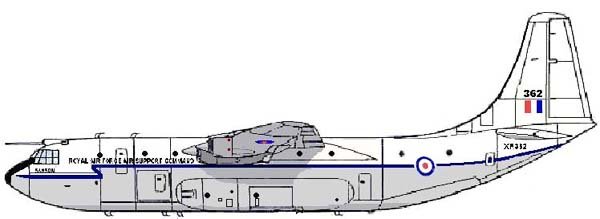
Its cargo hold had a usable volume of 311.49 cubic meters. The aircraft was capable of transporting the largest guided missiles, cannons, and vehicles for the British Army and RAF, and could be converted to carry between 150 and 250 troops. Loading options included six Wasp helicopters or two Polaris missiles. The first aircraft took to the air on January 5, 1964, but failed to attract interest from civilian buyers. Only 10 aircraft of this type were built for the RAF; the first entered service on January 20, 1966 (and the last in December of the same year). In the RAF, it received the designation Belfast C.Mk.1.
Operational History and Modernization
From 1965 to 1967, all Belfasts underwent modernization due to identified aerodynamic defects that prevented them from achieving their contractual range and cruising speed characteristics. The fuselage tail section and the wing-fuselage joint (fairings were installed) were modified. As a result, contractual parameters were met or exceeded, and the index of the modernized aircraft was changed from SC5 to SC10.
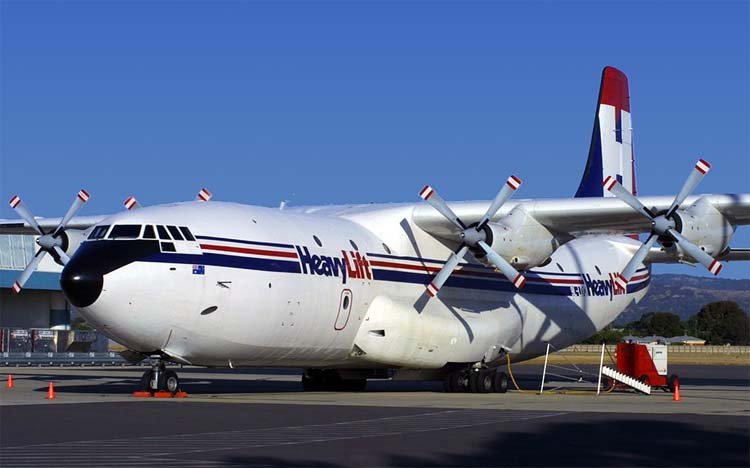
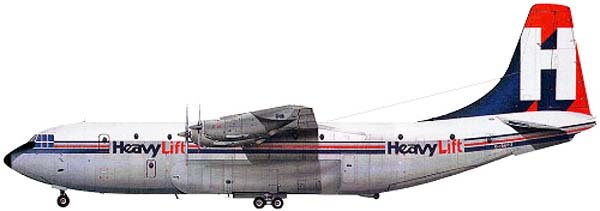
All aircraft operated successfully and without incident until the American Lockheed Martin C-130 Hercules military transport aircraft entered RAF service in 1984, after which they were retired. Belfast aircraft were primarily used for transporting oversized army cargo (such as helicopters) over long distances. After being withdrawn from service, eight aircraft were sold for scrap, and two joined the fleet of the Heavylift airline, where they operate to this day.
At the time of its entry into service, the Belfast was the largest aircraft used by the RAF. It was used to support British operations in the Middle and Far East, but its military career lasted only ten years. In September 1976, the Belfasts were withdrawn from service, despite the average flight time of each aircraft barely exceeding 8,000 hours.
Transition to Civilian Use
In 1977, Eurolatin Aviation decided to acquire these aircraft, recognizing the increased demand for air cargo transportation in the civilian market. In 1978, Eurolatin joined forces with Cunard, forming TAC Heavylift to operate the Belfast. However, the British Civil Aviation Authority required modifications to the aircraft so they could interact with the civilian air traffic control system.
In early 1980, after lengthy and costly modernization and testing, the Belfast was certified for civilian use. Initially, three Belfasts were selected for conversion to the civilian variant, with two aircraft kept in reserve, and the remaining five sold to Rolls-Royce Ltd.
The Tupé engines were removed from four of these, and the fifth aircraft was donated to the RAF Museum in Cosford. TAC Heavylift (later HeavyLift Cargo Airlines) was based in Stansted in eastern the UK, from where the Belfast made its first commercial flight in mid-March 1980. The technical base was located in Southend, where the aircraft underwent modifications.
After 22 years of service with HeavyLift in Britain, the last aircraft was placed in storage at Southend Airport. In 2003, this aircraft was transferred to Australia, where it began operating for HeavyLift Cargo Airlines, based at Cairns International Airport (Queensland). The aircraft received the Philippine registration number RP-C8020. Of the remaining five aircraft, four were scrapped, and one is preserved at the RAF Museum Cosford.
Detailed Design Features
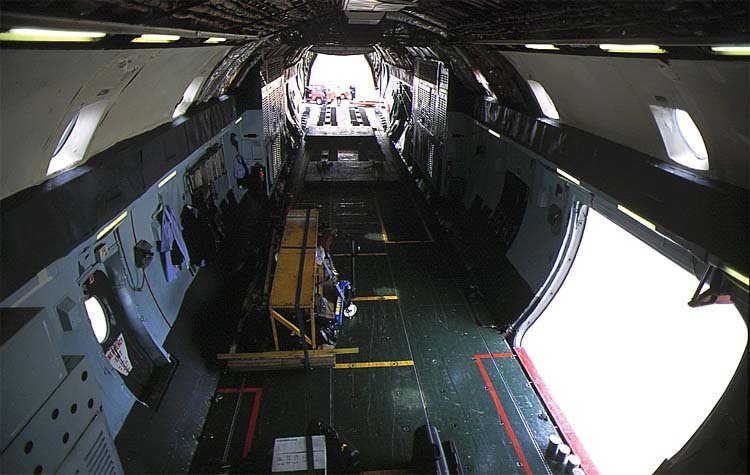
The fuselage is an all-metal semi-monocoque with a powerful aluminum reinforcing structure, measuring 5.37 meters in diameter. The cargo compartment (dimensions 25.7 x 4.9 x 4.2 m, volume 311.5 m³) could accommodate a second deck for troop transport, with a capacity of up to 250 personnel in this configuration. The cargo floor was equipped with a roller system, winches, and mooring points. The cargo compartment featured four doors: a tail door (3.6 x 3.05 m), a side door (in the forward part of the cabin on the port side, 2.44 x 1.98 m), and two doors for parachute deployment, located on the sides of the aft cabin. It had 12 portholes.
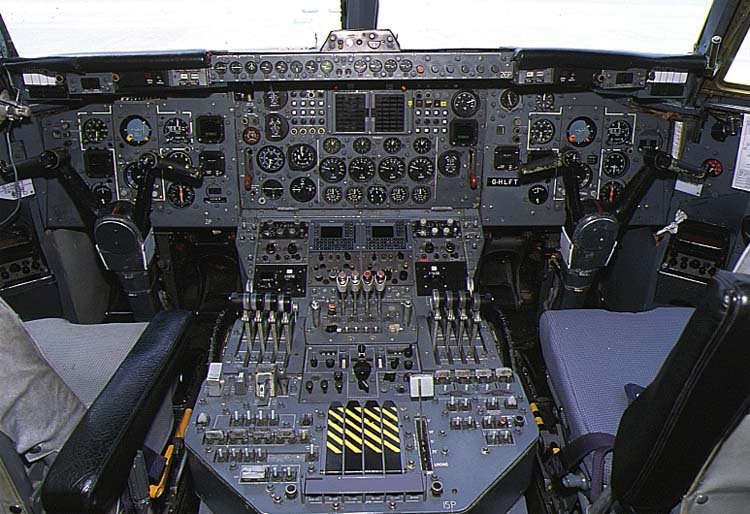
The cockpit was five-seater, with a large glazed area.
The wing was a box-spar design, with a NACA 4413 profile, an aspect ratio of 10.2, and a dihedral angle of +3 degrees. Structurally, the wing consisted of two detachable consoles with a junction point above the fuselage. The mechanization included double-slotted, three-section flaps and spoilers on the upper wing surface. The flaps were equipped with a boundary layer blowing system. The wing box spar housed six fuel tanks with a total capacity of 46,800 liters. The aircraft were equipped with a fixed refueling probe for in-flight refueling.
The vertical stabilizer was integral with the fuselage, featuring a two-spar construction. The horizontal stabilizer structurally consisted of two detachable consoles, also with a two-spar construction.
The landing gear was a tricycle type, with a nose gear, retractable in flight. All struts retracted into the fuselage by rotating forward. The main struts had eight-wheel bogies, while the nose gear had twin wheels. The braking system was hydraulic, with no differential braking. On the ground, the aircraft was steered by hydraulically rotating the nose gear within a range of +- 50 degrees.
The control system was power-boosted, based on the use of servo-controls in all control channels. All channels included trimmers. There was a spring-loaded loading mechanism with adjustment for flight modes.
The hydraulic system was duplicated, powered by four pumps on the engine accessory drive gearboxes. A standby pump was powered by the APU. The system’s operating pressure was 280 kgf/cm². It was used to actuate the landing gear, boosters, flaps, hatches, and doors.
The electrical system was AC, with two 50 kW generators. The onboard network voltage was 200 V.
The air conditioning system consisted of two independent subsystems, powered by blowers located in the landing gear fairings. Each system included one heat exchanger and one turbo-cooler. The wing leading edge anti-icing system comprised a heat exchanger heated by engine exhaust gases. The anti-icing systems for the leading edges of the vertical and horizontal stabilizers, propellers, engine air intakes, and cockpit glazing were electric.
Technical Specifications
| Modification | Belfast C.Mk.I |
| Wingspan, m | 48.10 |
| Length, m | 41.70 |
| Height, m | 14.33 |
| Wing area, m2 | 229.09 |
| Empty weight | 59020 |
| Maximum takeoff weight | 104300 |
| Internal fuel, l | 45869 |
| Engine type | 4 Rolls-Royce Tyne RTy.12 Mk.100 Turboprops |
| Power, ehp | 4 x 5730 |
| Maximum speed, km/h | 600 |
| Cruising speed, km/h | 576 |
| Practical range, km | 8524 |
| Range with max payload, km | 1621 |
| Service ceiling, m | 9100 |
| Crew | 4+1 crew |
| Payload | 250 paratroopers or 36288 kg of cargo |
Image and diagram gallery of the Short SC.5 Belfast
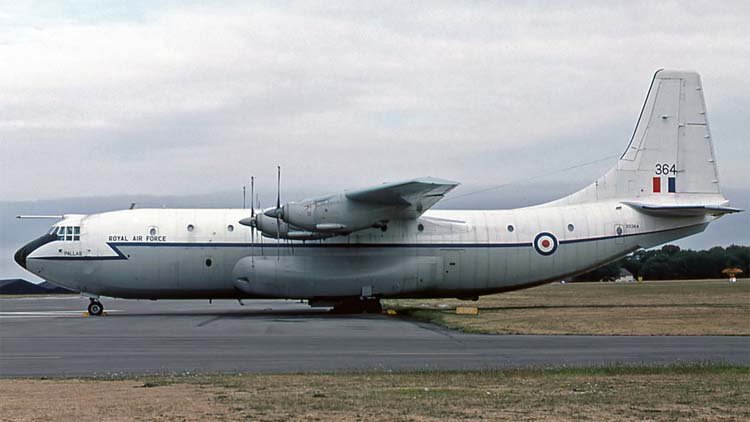 SC.5 Belfast |
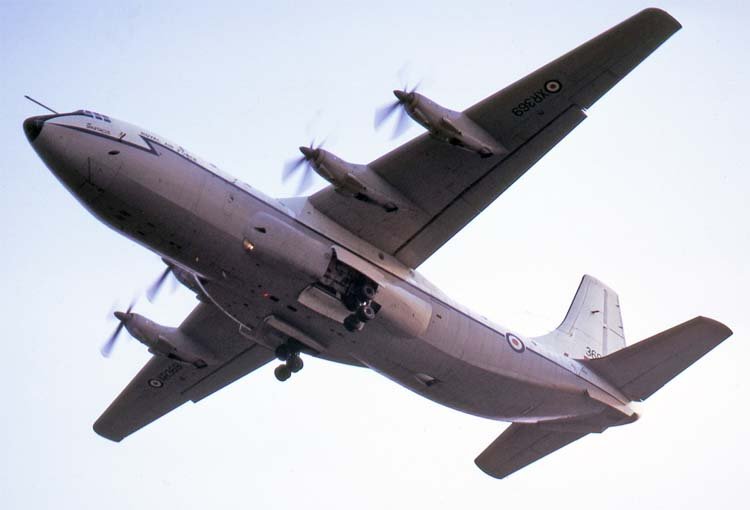 SC.5 Belfast |
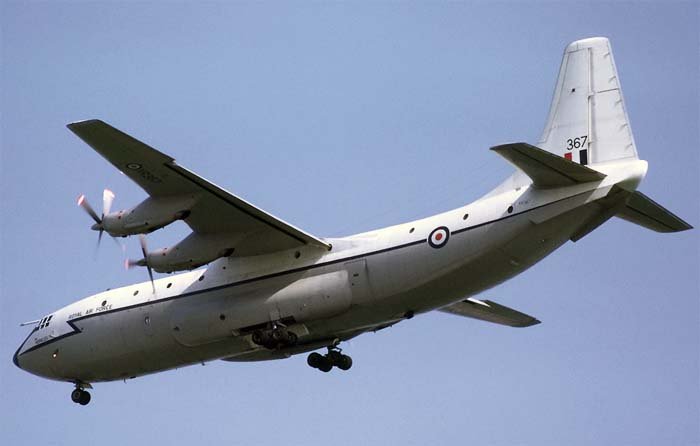 SC.5 Belfast |
 SC.5 Belfast |
 SC.5 Belfast |
 SC.5 Belfast |
 SC.5 Belfast |
 SC.5 Belfast |
 SC.5 Belfast |
 SC.5 Belfast |
 SC.5 Belfast |
ArchivoAéreo Editorial Team
A group of aviation researchers and enthusiasts dedicated to documenting and preserving global aeronautical history. All articles are reviewed to ensure historical accuracy.
Sources & Accuracy
The information presented in this technical sheet has been compiled from declassified flight manuals, historical archives, and specialized literature. While we strive for maximum accuracy, some performance data may vary depending on the specific variant or operational conditions.