SNECMA C.450 Coleoptere
Pioneering VTOL Development in France
Research into jet VTOL aircraft in France began in 1954. The new company BTZ (G. Zborowski’s technical bureau), in collaboration with the well-known engine manufacturer “SNECMA,” developed and proposed a VTOL project with an annular wing, named “Coleoptere” (ring-winged).
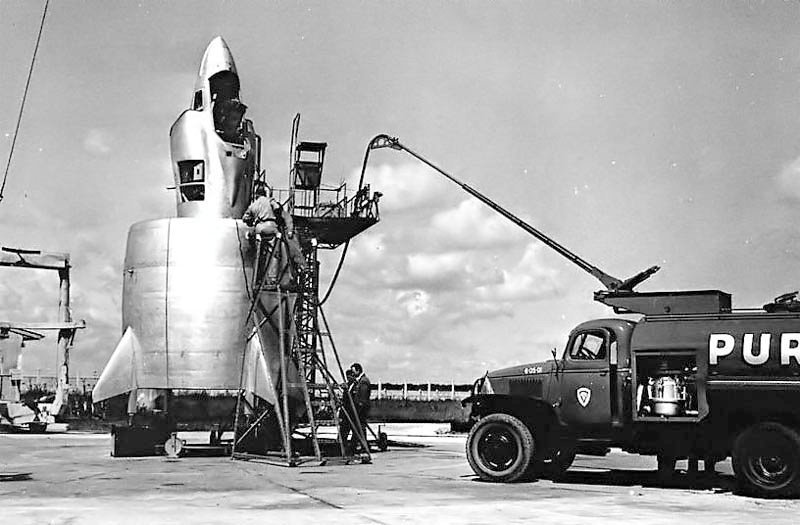
Similar to the American jet VTOL X-13, the “Coleoptere” VTOL was also designed to have a vertical fuselage position during takeoff and landing. This configuration was considered natural for a light combat aircraft, with the annular wing providing a sufficient base for housing the landing gear supports.
Studies on coleopteres were a major topic at the second congress of the German Aviation Society in 1954. It was argued that the use of an annular wing allowed the integration of the power plant with the wing, which could serve as the outer contour of a ramjet engine for supersonic aircraft, or as a channel for coaxial propellers for subsonic aircraft.
It was emphasized that the proposed coleoptere projects were a development of research and design work carried out in Germany during World War II. During that period, a number of original VTOL projects, including those with annular wings, had been developed.
Design and Testing of the C.450 Coleoptere
To investigate the operation of turbojet engine control systems in a vertical position, an unmanned flying testbed with a SNECMA “Atar” turbojet was first built and tether-tested. This testbed was designated SNECMA C.400 P1 “Atar Volant” (Flying Atar). Subsequently, a manned testbed, the C.400 P2, was tested, both tethered and in free flight. These testbeds were tested for three years, from 1955 to 1958.
The experimental C.450 “Coleoptere” VTOL with an annular wing was developed by SNECMA under a research program, initially with the company’s own funds. Later, it proceeded according to a contract concluded with the Ministry of Defense of the Federal Republic of Germany. The VTOL aircraft featured a powerplant and systems that had been tested on the C.400 P2 “Atar Volant” flying testbed.
Construction of the experimental C.450-01 was completed at the end of 1958. It began ground tests at the company’s airfield in Melun Villaroche, followed by flights. The initial flights involved hovering (the first free flight occurred on May 6, 1958), and later transitioned to horizontal flight. Test pilot August Morel was at the controls.
During one such flight on July 25, 1958, the aircraft lost control at an altitude of 75 m, crashed, and burned. The pilot managed to eject at an altitude of 18-22 m but suffered a spinal injury due to an unsuccessful landing. The accident investigation determined that neither the aerodynamics of the annular wing nor the jet control system caused the crash. Nevertheless, SNECMA decided not to continue the development program for this ambitious project.
By this time, SNECMA had already developed a number of original projects for combat jet VTOL aircraft with annular wings, including an attack aircraft and a supersonic interceptor. They also had a design for a passenger VTOL with turboprop engines and coaxial propellers.
The “Brush” subsonic attack aircraft project envisioned a prone pilot position in the cockpit. Both the “Brush” and the supersonic interceptor were designed for vertical takeoff and landing with the fuselage in a vertical position, utilizing turbojet engines equipped with gas rudders.
In the supersonic interceptor project, the annular wing formed the outer contour of a ramjet engine, generating thrust at high supersonic speeds (Mach 2.5) when the turbojet became inefficient and would be shut down. A range of other subsonic combat aircraft projects were also developed, which intended to use coaxial propellers within the annular wing as the powerplant. These were designed to operate effectively not only during vertical takeoff and landing but also in horizontal flight. Coaxial propellers were also proposed for the “Ganneton” multi-purpose VTOL project, which featured two turboprop engines. For pilot and passenger comfort, the seats were designed to swivel.
Structural Features and Advanced Concepts
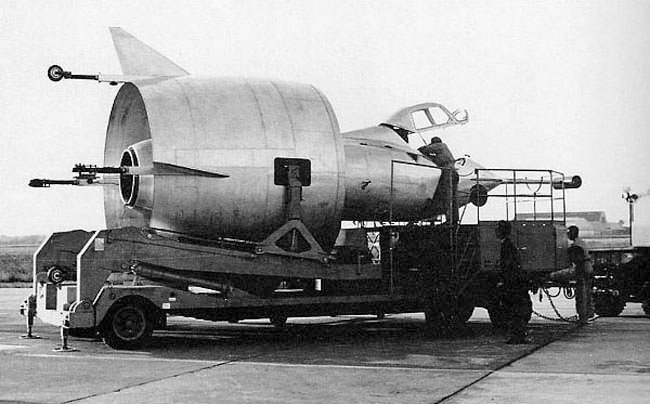
A distinctive design feature of the VTOL aircraft was the vertical position and placement of the fuselage within the annular wing during takeoff and landing. The aircraft was equipped with a single turbojet engine and a four-strut landing gear, with the airframe manufactured by the “Nord” company.
The fuselage was an all-metal, short-length structure with a circular cross-section where it joined the wing. The nose section housed a single-seat cockpit with a prominent canopy and side glazing to improve visibility. The cockpit was fitted with a Sud SE.120B ejection seat, capable of tilting 45° to accommodate changes in fuselage position. This seat ensured ejection even during hovering near the ground.
The annular wing, made of light alloys, featured a framed structure reinforcing the outer and inner skins. It had an outer diameter of 3.2 m, an inner diameter of 2.84 m, a wing chord of 3 m, and a relative airfoil thickness of 12%. The wing did not incorporate any mechanization.
The tail consisted of four triangular surfaces arranged cruciformly in the rear part of the wing. These surfaces were equipped with aerodynamic rudders, providing control in horizontal flight. Inside the annular wing, the external control surfaces were connected to four profiled, swept surfaces that joined the fuselage.
The landing gear was a non-retractable, four-strut type, installed on the wing at the root sections of the tail surfaces. The struts, featuring oleo-pneumatic shock absorbers, had a long travel and were equipped with self-aligning wheels fitted with solid rubber tires.
The powerplant comprised a single SNECMA “Atar” 101E turbojet engine with a static thrust of 3700 kgf, installed in the fuselage. It featured side, non-adjustable air intakes, and the nozzle was equipped with gas rudders. Compressed air, tapped from the turbojet compressor, was directed through channels in the profiled surfaces inside the wing to the nozzles of the jet control system.
The control system consisted of aerodynamic rudders for horizontal flight control and gas and jet rudders for vertical flight modes. This comprehensive control system had undergone extensive testing on the “Atar Volant” flying testbed.
Operation of the VTOL aircraft was intended to be supported by a special trolley with a tilting ramp. For transport, the VTOL was placed horizontally on supports on the trolley. For takeoff, the ramp would be set to a vertical position.
Technical Specifications
| Modification | C -450 |
| Wingspan, m | 4.51 |
| Length, m | 8.02 |
| Diameter, m | 3.20 |
| Normal takeoff weight | 3000 |
| Engine type | 1 Turbojet SNECMA Atar 101E |
| Thrust, kgf | 1 x 3700 |
| Crew, crew members | 1 |
Image and diagram gallery of the SNECMA C.450 Coleoptere
 C-450 Coleoptere |
 C-450 Coleoptere |
 C-450 Coleoptere |
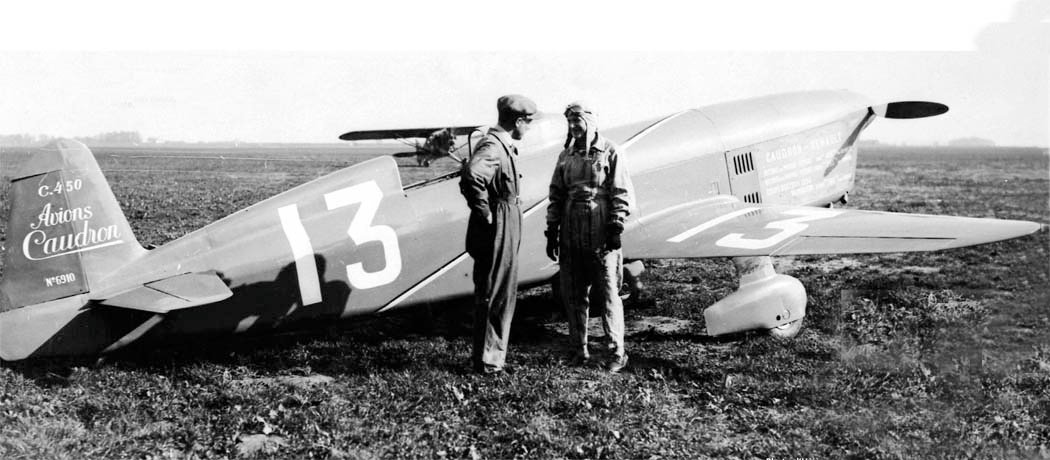 C-450 Coleoptere |
 C-450 Coleoptere |
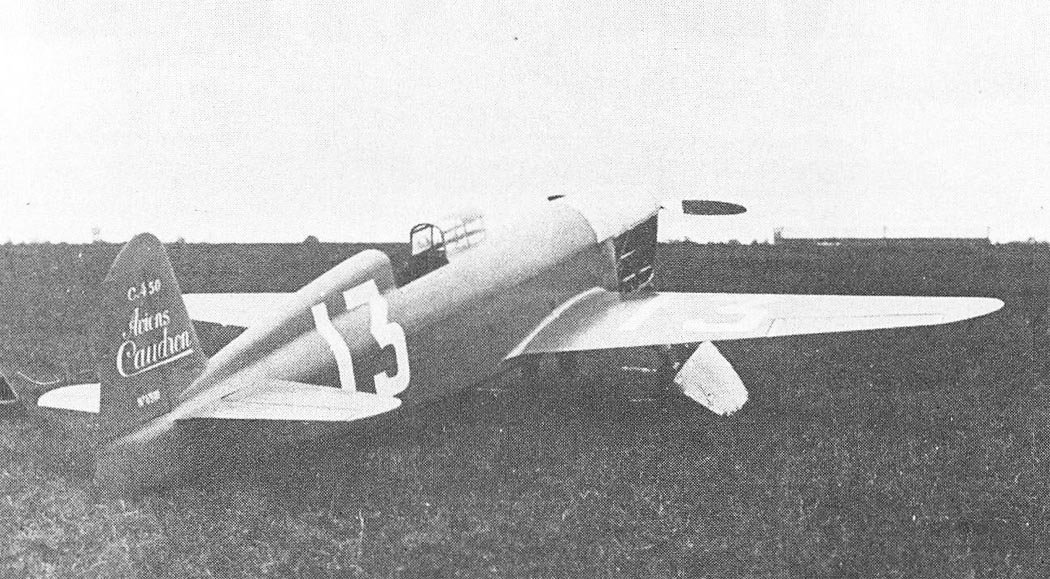 C-450 Coleoptere |
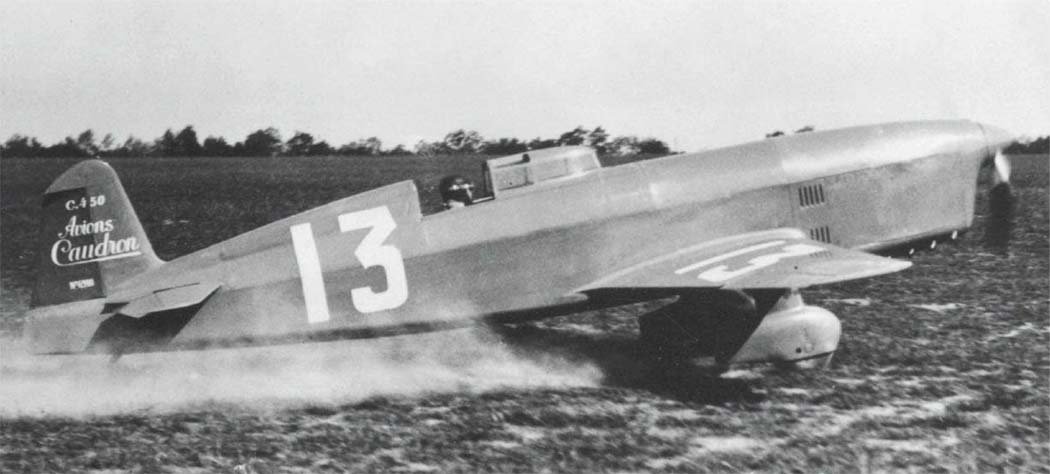 C-450 Coleoptere |
 C-450 Coleoptere |
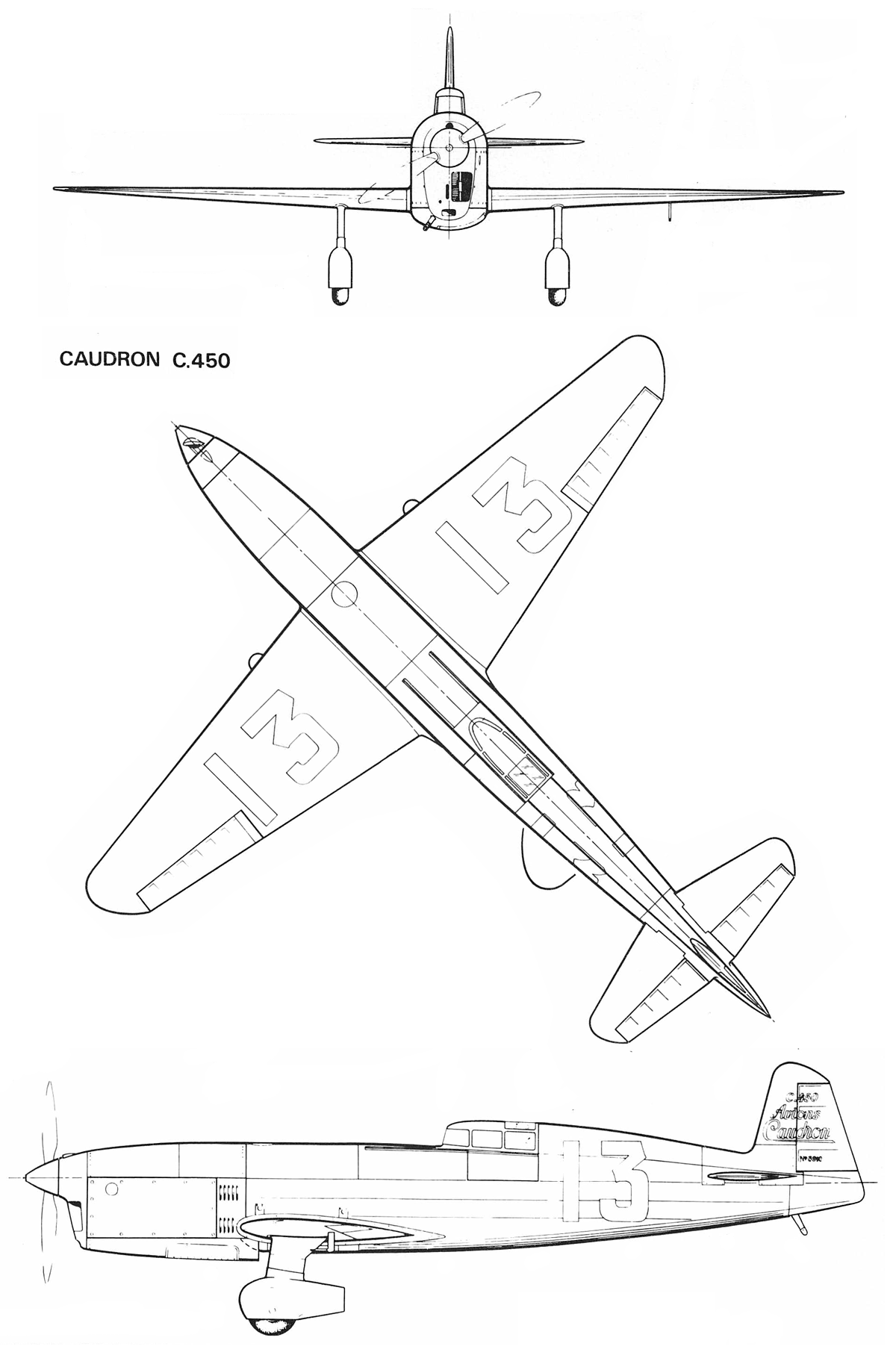 C-450 Coleoptere |
ArchivoAéreo Editorial Team
A group of aviation researchers and enthusiasts dedicated to documenting and preserving global aeronautical history. All articles are reviewed to ensure historical accuracy.
Sources & Accuracy
The information presented in this technical sheet has been compiled from declassified flight manuals, historical archives, and specialized literature. While we strive for maximum accuracy, some performance data may vary depending on the specific variant or operational conditions.