Ts-25 Glider
If Koktebel was the center of mountain gliding in the 1920s, Tula became the “capital” of plain gliding from the late 1930s. This city was chosen due to its flat terrain, allowing flights in any direction without fear of breaking or damaging the glider during landings on unprepared sites. Therefore, after the war, Tula automatically became the center of assault gliding.
Tula is rather remarkable as the city from which the only glider trains in world practice to the Arctic started and then finished. However, until the 1980s, only a narrow circle of people knew about them. The glider regiment based in Tula, whose crews made these flights, arose in a very peculiar way.
It began with the entire 1947 graduating class of the Voroshilovgrad School of Pilot-Navigators named after the Donbas Proletariat being immediately promoted to the rank of lieutenants instead of junior ranks. But that was not the end of it. Even those who graduated from the school with first-class honors (and there were seven of them), and had the right to choose their place of service and receive three officer salaries, were paid three cadet salaries and, without being asked their preference, were enrolled in the Pugachev Aviation Glider School.
The head of the Voroshilovgrad School, General Kartakov, told the graduates: “Go, you won’t regret it! Such equipment that you will be grateful for your whole life!” However, none of the lieutenants wanted to fly gliders. They began writing reports to the Minister of Defense demanding a transfer to another type of aviation.
Initially, they were told that they should fly where the Motherland required. Finally, the head of the school was ordered to impose a penalty. Approximately a year later, a Li-2 regiment flew from Tula for the lieutenants who had retrained on gliders, and with them, went to Orenburg to an aircraft factory, and from there in July 1948, to Tula with gliders in tow. The glider commanders were officers, and the right-seat pilots were conscripted sergeants who, upon completion of their service, remained for extended service.
They were trained at the glider school in Slavgorod (Altai Krai). A. Egorov was appointed inspector for glider piloting techniques in the division, and A.D. Starostin, as well as experienced glider pilots Lysenko and Peskov (who had flown behind enemy lines during the war), were assigned to the Tula glider regiment.
Design and Operational Challenges
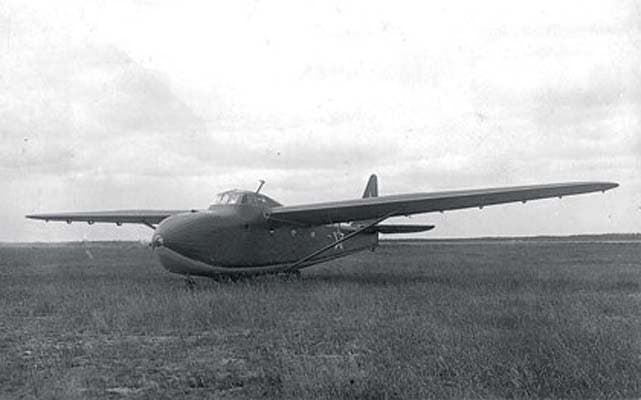
The task of designing the Ts-25 glider, designed for 25 paratroopers or 2200 kg of cargo, was given to P.V. Tsybin at the end of 1943. Its prototype was built (according to K.V. Gribovsky, at the end of 1944) at the Airborne Equipment Plant No. 468 in the Beskudnikovo settlement (now a district of Moscow). Due to a shortage of workers, VDV (Airborne Forces) glider pilots who lacked gliders and had carpentry and locksmith skills were recruited for its construction. Due to the small size of the assembly shop, the aircraft could only be accommodated diagonally.
The Ts-25 was mainly made of wood – a non-scarce and cheap structural material, most suitable for a machine designed for single-use. The Ts-25 had a high-wing configuration with a trapezoidal wing, inherited from its predecessor, the KC-20, developed by P.V. Tsybin jointly with D.I. Kolesnikov in 1941 and built for the VDV in 1942-1943. Major drawbacks of the KC-20 were the inability to fully utilize its payload capacity (lacking a larger cargo hatch) and the forward placement of the crew cabin, which led to crew fatalities when gliders collided with obstacles during combat landings.
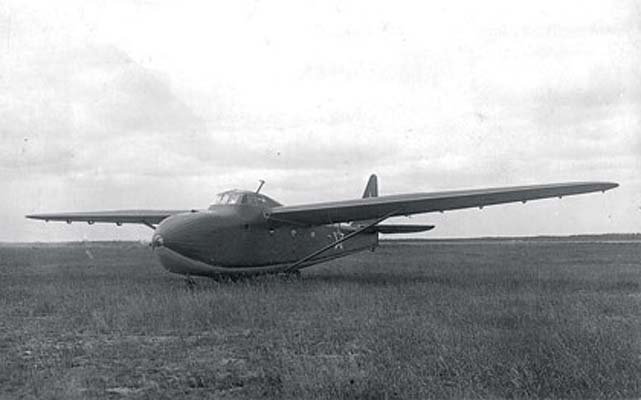
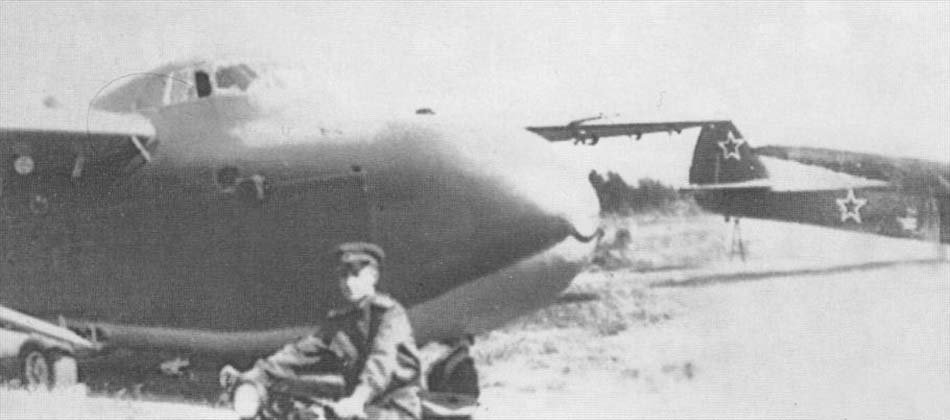
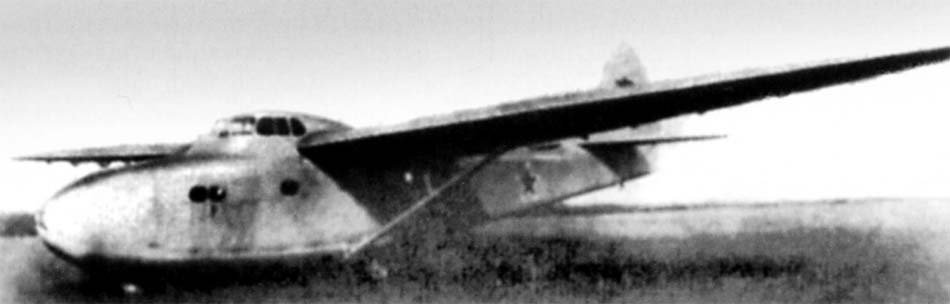
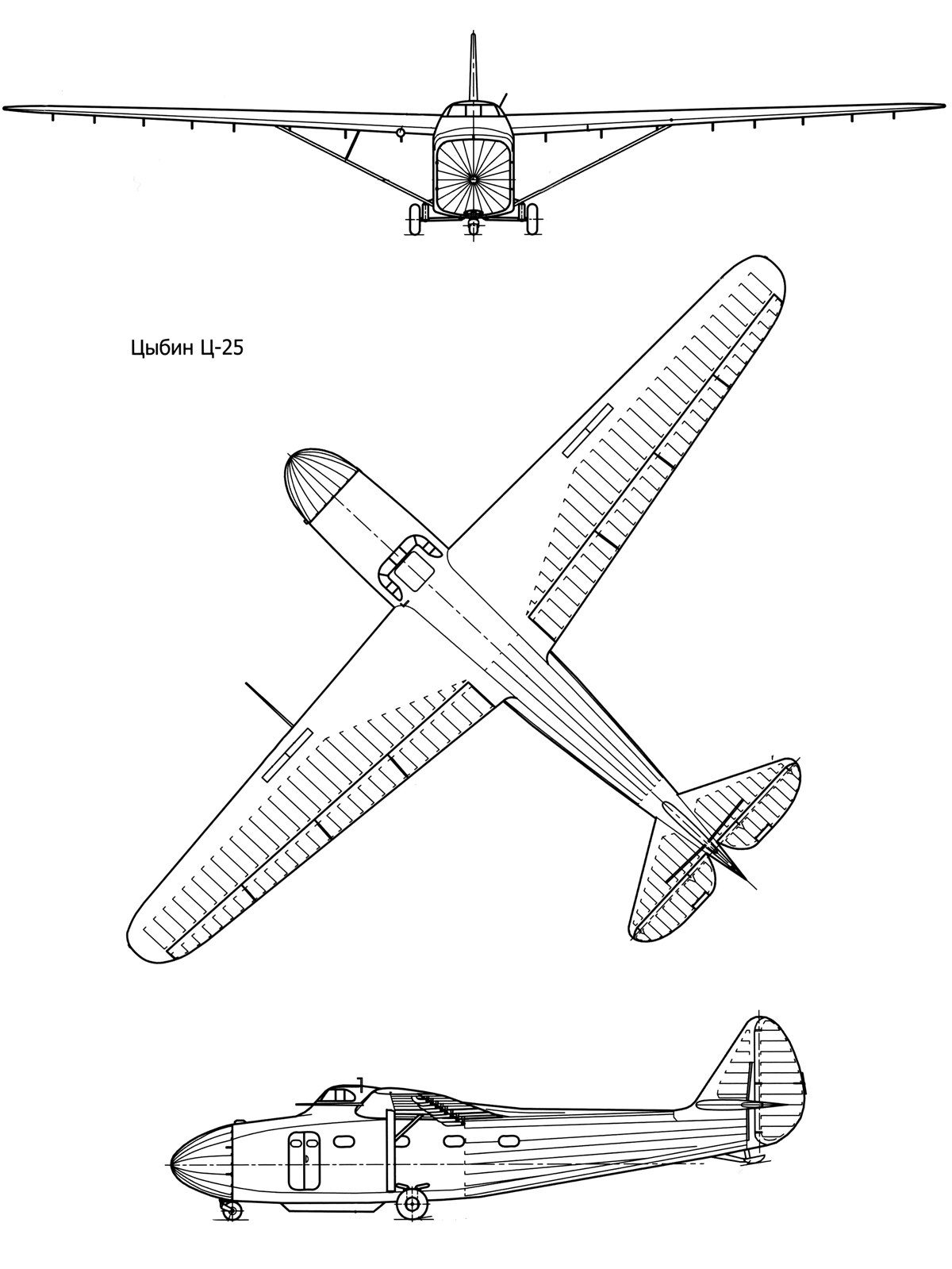
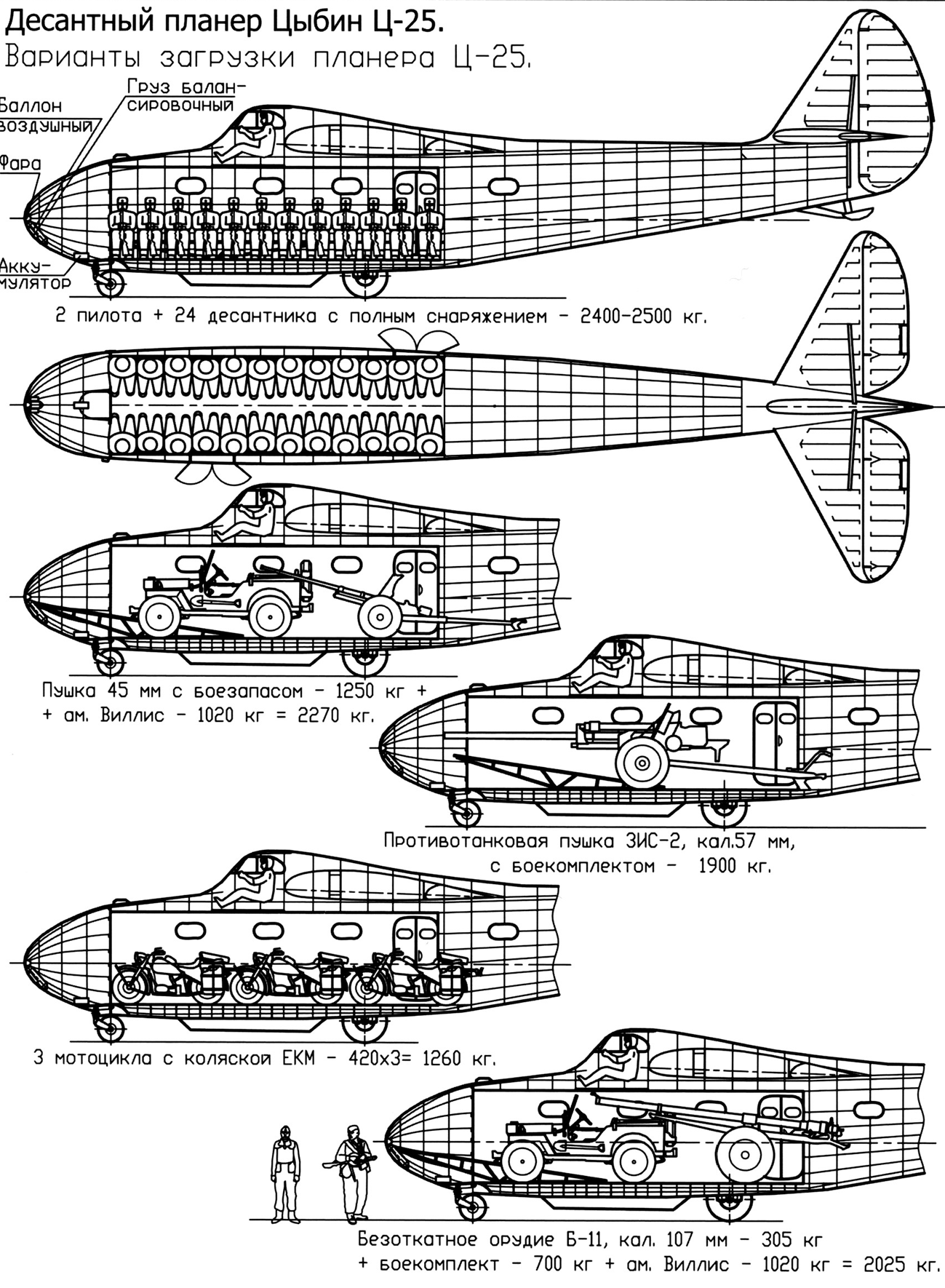
For example, Senior Sergeant Shutkin crashed at a partisan airfield, hitting trees due to incorrect placement of landing markers by an unqualified ground crew. On the Ts-25, the nose section was made hinged (to the right side). The cargo cabin was 6 m long, 1.8 m wide, and 1.7 m high. For loading equipment (a divisional cannon with a tractor) or 25 paratroopers, a two-track ramp was used, which served as seats during flight. Compared to the KC-20, the Ts-25’s aerodynamics deteriorated due to the cockpit’s relocation to the top of the fuselage.
The latter turned out to be “two-story” – under the pilot’s cabin, equipment or paratroopers were located, and above the pilots, there was an emergency escape hatch with a jettisonable glazed cover. The Ts-25’s aerodynamics were also worsened by the wing struts. In the area of the strut attachments, an R-11M profile was used with a relative thickness of 14%, and in the rest of the wing, 10%. The single-spar wing (wingspan – 25.2 m, wing area 70 sq. m) with slotted ailerons and flaps consisted of two detachable parts attached to the fuselage.
The front part of the wing was covered with plywood, and the rest with fabric. Flap deflection at 45 degrees reduced the maximum aerodynamic quality from 16 to 9, which increased the steepness of the glideslope. At the same time, the descent speed changed from 2-4 to 5-6 m/s, and horizontal speed from 140 to 130 km/h. Using flaps on the glider offered another advantage – it allowed for more precise landing calculations. For this, flaps were retracted in case of a clear undershoot to the calculated landing spot (but not below a 75-meter altitude).
Unlike the KC-20, the Ts-25 had spoilers on the wing. Their deployment along with the flaps increased the vertical descent speed to 8 m/s. They were also used to refine landing calculations, but only down to 50 m. The abandonment of the turret on the Ts-25 (which was planned for the KC-20, and a place reserved for it) led to a single-fin tail. The elevator had a controllable trim tab, and the rudder had a plate-type one. Control linkage to the rudder was cable-based, while to the ailerons and elevator, it used rigid rods.
Landing was performed on a skid with rubber shock absorption. The main landing gear supports had single wheels measuring 800×260 mm, with brakes driven by a pneumatic system. The transition to a landing gear with a nose support (wheel measuring 470×210 mm) was a forced decision, and the glider’s cross-country capability deteriorated as a result. To reduce the likelihood of the front support breaking on unprepared surfaces, it was fastened at the upper joint with a shear pin that cut off when excessive load was applied to the support. Flight tests at the NII VVS (Air Force Research Institute) were conducted by M.F. Romanov, who served in a regular glider unit.
The Ts-25 could not be called beautiful. Operational benefits came at the cost of the clean forms inherent to the KC-20. Additionally, another property of the KC-20 was lost – the ability to take off and land without landing gear devices (on the fuselage belly). Serial production of the gliders was mastered by the Orenburg Aviation Plant No. 47. A total of 251 Ts-25s were built. Of these, 24 were in 1947, when they were just put into production.
Maximum production occurred in 1948, with 127 aircraft. In the final year, 1949, 100 gliders were delivered to the customer, and the plant began mastering the Yak-14. Until August 1948, two modified Ts-25s were tested at the NII VVS. The heavier Il-12 with a Ts-25 in tow was inferior in horizontal flight speed to the aero-train with a Tu-2 – 286 km/h versus 321 km/h, respectively.
However, the aero-train with the Il-12 had a shorter takeoff run, 810 m versus 875 m with the Tu-2. For the aero-train with a Tu-2 to maintain the same takeoff distance of 2200 m as the Il-12 combination, afterburner engine mode was used instead of the nominal mode for the “Il.” The Il-12 also provided a greater speed margin for climbing to 2000 m – 80 km/h versus 15, a higher ceiling – 3860 m versus 3000 m, and a shorter time to climb to 3000 m – 28 instead of 30 minutes.
Maximum speed in free gliding reached 345 km/h, minimum 115-125 km/h, most efficient 155-160 km/h, landing speed 80 km/h. Landing roll was 355 m. Tests revealed the impossibility of flying the glider without a balancing weight, otherwise the glider had an aft center of gravity. A common defect of the Ts-25 was the breakage of the steel tow rope, which usually occurred before takeoff when taking up slack. It was never radically eliminated.
Ts-25s were based at airfields from Belarus to the Far East. The first glider exercises in Tula took place in the autumn of 1948 from Myasnovo airfield, where the glider regiment was based. In Belaya Tserkov, paratroopers were taken aboard and dropped in Western Ukraine. An episode involving four flight incidents is connected with these exercises. The first Ts-25 to take off was Yu.A. Fenster’s, with the command staff of a paratrooper battalion.
During the takeoff run, a jolt was felt, and the cargo compartment began to fill with smoke smelling of burnt rubber. The pilot guessed that the front strut pin had broken and the nose wheel was rubbing against the fuselage belly. The pilot wanted to release, but turning back, he saw that the next aero-train had already begun its takeoff run. The prospect of being chopped up by the glider’s propellers did not appeal to the pilot, so he pulled the control column towards him and lifted the glider off the runway, reporting the breakdown by radio and his intention to continue the flight along the route as part of the regiment.
However, the experienced regimental commander A. Erofeevsky decided otherwise, ordering the commander of the Li-2 tug, V. Rodin, to detach the glider and return to the airfield. The regimental commander considered that after landing at the drop zone, the Ts-25 with a broken support would not be able to taxi aside and would become an obstacle for incoming gliders. Ultimately, the Ts-25 and Li-2 landed at their airfield. The latter picked up the officers and left for the mission.
The second glider, piloted by Baikov, crashed its landing gear upon landing with a roll. According to existing flight rules, gliders of the 1st flight detached at an altitude of 400 m. The next approached at 500 m, and the third at 600 m. Above them flew the second squadron. An altitude difference of 100m allowed them to reach the landing T, then make the first turn, entering the “box” pattern.
However, with a large number of gliders in the air, this was not always the case. If one delayed completing the fourth turn, the following crews found themselves in a difficult situation – cutting the circuit was impossible to avoid proximity, and there was no longer enough altitude for a normal turn. Therefore, the most experienced pilots flew at the tail. Later, tactics changed – they did not fly the circuit, but performed an approach at a 120-degree angle to the runway. Alternately, at the same altitude, having previously spread out in the air, they approached the third turn. But experience accumulates gradually.
In 1948, the third glider lacked altitude and, without reaching the airfield boundary, landed in a potato field. The pilot tried to coast to the airfield by inertia and did not brake. When he saw a large ditch, the brakes could not help – it was too late. As a result, the front landing gear strut was broken. They returned home to Tula by railway. A year later, G-11 gliders were being decommissioned in one of the regiments. Six good ones were selected from them and ferried to Myasnovo, where they were used for training.
They were mainly flown by commanders and chief pilots of glider squadrons. The head of the Voroshilovgrad School, General Kartakov, was right in at least one thing – transport aviation had the highest flight time. If at that time fighters averaged 20 hours a year, bombers 40, then glider pilots averaged about 60. For chief pilots of glider squadrons, it reached 100-120 hours, of which almost half were instructional.
The Ts-25 was used as an analogue of the Il-32 glider in a program officially named “Fan” and unofficially “Swan, Crayfish, and Pike.” The loaded Il-32 glider was difficult to tow by Il-18 and Tu-4 tugs. At the suggestion of engineer-colonel Otilko, towing an Il-32 by a pair of Il-12s was attempted. Abroad, there was experience of towing the heavy Me-321 “Gigant” glider with three Me-110 fighters. The operation of such a combination was accompanied by frequent accidents.
As a result, it was abandoned, and the He-111Z tug was developed. Before undertaking the towing of the Il-32, the “Fan” combination consisting of a Ts-25 and two Li-2s was tested. The Ts-25 was piloted by E.S. Oleynikov, and the Li-2s by A.D. Alekseev and F.U. Kolesnichenko. The tugs flew in a right echelon formation.
The load on the pedals of the wingman aircraft, when deviating from the leader by one meter, reached 45 kg, and by 2-3 m, up to 90 kg. In flights, it was required to fly without interval and distance. As a result, in the ninth flight, Kolesnichenko’s aircraft deviated only 5 m to the side from the leader, which led to a huge load on the pedal and forced the wingman to detach the rope. The unexpected increase in load on the lead aircraft forced its crew to also detach the rope. Unexpectedly for the pilot, two ropes flew towards the glider at once. This boded nothing good – in such cases, the ropes often hit the cockpit and then sagged, making their jettison impossible. Ultimately, they could snag on anything during landing, with corresponding outcome. However, Oleynikov successfully landed the glider.
This was followed by flights of Il-12 with Ts-25, with Il-12s and Yak-14s, and subsequently with Il-32s. The transition to kapron ropes allowed smoothing out the inevitable jerks occurring in flight (however, their widespread implementation did not happen, as cargo gliders were nearing the end of their service life by then). As a result of the “Fan” tests, it was concluded that flying in formation without interval and distance was unsafe, and serial production of the Il-32 glider was abandoned.
Arctic Expeditions and Legacy
The swan song of Soviet assault gliders became the long-distance flights to the Arctic. The first of these took place in 1950 with two Ts-25s, towed by an Il-12 to the North Pole region. Both flights were performed from Myasnovo airfield and ended with a return to Tula. According to V.B. Kazakov, the idea of using gliders in the Arctic originated from the famous airborne equipment designer P.I. Grokhovsky in response to O.Yu. Schmidt’s proposal to think about reliable housing for polar explorers shortly after the Chelyuskin rescue. But it was not revisited until after the war, in the late 1940s.
The first flight was carried out to determine the possibility and conditions of glider operation in the Arctic. The preparation of the flight in Tula was led by A.A. Girko, who subsequently managed both flights. In regular flights, glider pilots did not enter clouds, but in the Arctic, this was unavoidable. In clouds, glider pilots lost sight of the tug, which could lead to an emergency situation. Towing gliders, especially heavy ones, is characterized by complex piloting techniques. For such flights, the “Strizh” radar system was created.
The expedition started on March 11, 1950. One after another, the Il-12 tugs, to which loaded gliders were attached, taxied onto the runway. The commander of the lead aircraft, A.N. Kharitoshkin, moved the engine throttle levers all the way forward, and the aero-train slowly began to accelerate. Then, the glider of A. Frolov and P. Vorobyov lifted off and rose behind the still-running aircraft. The elevation above the aircraft should not be more than 5 m, otherwise the “Tsybin” will hinder the tug’s takeoff attitude. It’s good if, in such a case, the runway dimensions allow for an aborted takeoff, but if not, such a takeoff could end tragically. The last train to take off was towed by V.D. Rodin’s Il-12 with V.F. Shmelev’s glider.
Aero-trains required great cohesion between tugs and glider pilots – not only exceeding, but also dropping below the tug aircraft was not allowed, as the glider could put the tug into a dive, or force the “Il” to pitch up, threatening speed loss and a stall. On April 5, after a multi-day exhausting flight, the aviators reached a previously surveyed ice floe, 300 km from the North Pole. In the sky, the Northern Lights flickered, the air was extremely electrified, the aircraft’s skin glowed, and luminous streams flowed from its wingtips. Kharitoshkin’s Il-12 landed first, then both gliders and Rodin’s “Il”.
In relative proximity to the glider pilots’ ice floe, the “North Pole-2” station was already drifting. At SP-2, the operation of piston fighters and bombers from an airfield on drifting ice in the North Pole region was being worked out. This equipment was disguised from the Americans, but was nevertheless discovered. Two days after the difficult takeoff, the aero-trains headed towards the geographic North Pole in conditions of exhausting turbulence.
After making three circles over the pole at an altitude of 400 m, the aero-trains returned to the ice floe and the next day departed for Tiksi Bay. During the flight to Khatanga, one of the trains encountered icing. The slipstream of the tug helped get rid of it, although this was prohibited by the flight operations manual. Flying out of Dudinka, the aero-trains encountered a snowfall, and one train, flying at low altitude, made it all the way to Krasnoyarsk.
Another aero-train, Kharitoshkin’s, landed on the softened runway of the Podkamennaya Tunguska airfield. But during towing, the tractor ripped out the fork of the Ts-25’s nose strut. Only by changing the center of gravity to the rear was it possible to take off, and on May 11, to land at Myasnovo airfield. The flight showed that gliders could be operated in the Arctic, and the commanders of the gliders and tugs were nominated for the title of Hero of the Soviet Union, but were only awarded Orders of Lenin (A.N. Kharitoshkin received the Gold Star of Hero during the war).
The 1937 flights in the Arctic, like the Chelyuskin rescue, were accompanied by a noisy propaganda campaign. However, the glider flights in the Arctic in the 1950s were completely silenced due to secrecy. As a consequence, they were not given such great importance, and they remained almost unnoticed, although the pilots displayed no less heroism than in the 1930s, participating in polar expeditions. Flying unpowered aircraft over unfrozen ocean polynyas and ice rubble is an intimidating task in itself, as in case of trouble, the gliders would have to be released, which threatened catastrophe.
The only Warsaw Pact country to operate Soviet assault gliders was Czechoslovakia. This, strangely enough, is connected with the country’s developed aviation industry and traditions of glider production. Even during the occupation, two factories produced over a hundred DFS-230 gliders for the “Luftwaffe.” Therefore, after the war, the military leadership, following the aviation trends of the time, decided to create their own glider units.
For this, it was decided to buy used gliders from the allies. The choice fell on the Waco CG-4 (NK-4 in Czechoslovakia). The first of three was delivered to Prague in tow by a “Stirling” bomber from England in August 1945. After that, it was decided to develop their own assault gliders, which both factories undertook. The projects were named LB-53 and XLD-605, the first of which strongly resembled the American Waco CG-4. Simultaneously, glider pilots were trained, and in July 1951, a balloon and glider squadron was created. To equip it, gliders were purchased from the USSR, stopping the construction of their own prototypes.
In 1952, a pair of Ts-25s, designated NK-25, were ferried by Soviet crews to Prague’s Kbely airfield. Due to the short runway of the intermediate airfield in Prešov, the aero-trains took off semi-empty and refueled in Košice. For towing in Czechoslovakia, 70-meter ropes made of synthetic silon material were used. Tested steel ropes, according to local specialists, were unsuitable for towing. In 1952, the balloon and glider squadrons were reorganized. The glider unit was transferred to the 4th Military Aviation Transport Regiment. Both aircraft received numbers D-41 and D-42. Li-2s were used for their towing, which determined the small payload. Two Il-12s, received later, were used for towing Yak-14s.
In January 1953, training flights began in Prague. Pilots who had previously flown sports gliders successfully soared in thermal currents in unloaded Ts-25s. One NK-25 carried three “EKM” motorcycles with sidecars or a recoilless gun with ammunition and crew during exercises. In 1955, two exercises were conducted, one of which in May ended with the landing of troops at the Seshcha airfield (Bryansk region).
Three years later, the squadron relocated to Prešov, and the gliders were put into storage. Military pilots, to maintain their skills, flew sports gliders at the aero club. But since the airfield was not intended for the operation of assault gliders, the squadron returned to Prague a year later. These were the last flights of cargo gliders in Czechoslovakia. In 1956, Mi-4 helicopters from the USSR arrived to replace the Ts-25 and Yak-14.
Gliders in combat conditions were designed for a single flight, and their return was not foreseen – it was irrational and economically disadvantageous. One way out of this situation was seen in the creation of motorgliders. In 1945, the Ts-25M was created with two M-11F engines. The thrust-to-weight ratio was barely enough for horizontal flight. The motorglider had limited maneuverability and slow speed, which made it very vulnerable in combat conditions and complicated piloting. The Ts-25M was tested by A.O. Dabakhov. The motorglider was not mass-produced.
In September 1947, the first domestic all-metal assault glider, the Ts-30, was built to replace the Ts-25. Its wing did not undergo significant changes compared to the Ts-25, only the area increased from 70 to 75 sq. m, but the flap area slightly decreased. The vertical tail empennage significantly increased and became trapezoidal. The fuselage layout resembled the KC-20 with a forward pilot’s cabin, hinged upwards for loading. The contours of the Ts-30 cabin were refined, removing the side “facets.”
The canopy glazing became multifaceted and provided a hemispherical view from above, as well as forward and to the sides downwards. The door on the left side of the fuselage was moved behind the wing, making it single-leaf. Abandoning the “two-story” design allowed for carrying taller cargo and also improved the glider’s aerodynamics. According to calculations, the maximum speed behind an Il-12 increased to 310 km/h at an altitude of 4000 m, with a landing speed of 82 km/h. The Ts-30 was designed to carry 3000 kg of cargo or 30 paratroopers.
In addition to the ZiS-3 divisional gun with a GAZ-67, the Ts-30 could carry a pair of GAZ-67 vehicles, and most importantly, GAZ-51 cargo trucks or the quite tall GAZ-63. Their loading was done through a nose hatch. A VU-9 turret with a 20mm cannon and 200 rounds of ammunition was provided at the top behind the wing. Below, closer to the tail, a pintle mount with a cannon of the same caliber and 150 rounds of ammunition was fitted. Therefore, the crew, in addition to two pilots, was to include gunners.
The landing gear struts were enclosed in fairings – “gills.” The main landing gear supports used 800×260 mm wheels, and the nose wheel was 470×210 mm. The glider had an RSI-6 radio station and an electric generator with a wind turbine and a battery. The Ts-30 was to be towed by a 100m long rope behind a Tu-2 or Il-12. The normal flight mass was 5600 kg, which is 600 kg more than the Ts-25, while the empty mass of 2400 kg was only 60 kg higher than the latter. Glider control was dual.
The glider could take off on wheels, and land either on wheels or on a skid with retracted wheels. Takeoff roll was 570 m, landing roll 173 m. It was supposed to climb to 4000 m in 23 minutes and reach a ceiling of 6150 m. The flight range with 3000 kg of cargo without the tug returning to base was 1650 km. The Ts-30 did not reach flight tests. Instead, the Yak-14, which had a slightly higher payload capacity, was put into series production.
Between 1951 and 1953, Ts-25s in glider regiments began to be replaced by Yak-14s. Ts-25s were ferried to the Noginsk airfield near Moscow. Then they were used for building dachas and as firewood. Thus ended the life of the only two gliders that reached the North Pole. To this day, no single Ts-25 specimen has been preserved. In 1947, the project for the heavy Ts-60 was developed to transport 6000 kg of cargo (including a light tank) or up to 60 soldiers. This was effectively an enlarged Ts-25.
Technical Specifications
| Modification | Ц-25 |
| Wingspan, m | 25.20 |
| Length, m | 16.55 |
| Aspect ratio | 9.10 |
| Height, m | 5.00 |
| Wing area, m2 | 70.00 |
| Empty weight | 2340 |
| Normal takeoff weight | 4200 |
| Maximum takeoff weight | 5000 |
| Max. aerodynamic quality | 15 |
| Landing speed, km/h | 90 |
| Crew, crew members | 2 |
| Payload | 25 paratroopers |
Image and diagram gallery of the Ts-25 Glider
 Ts-25 |
 Ts-25 |
 Ts-25 |
 Ts-25 |
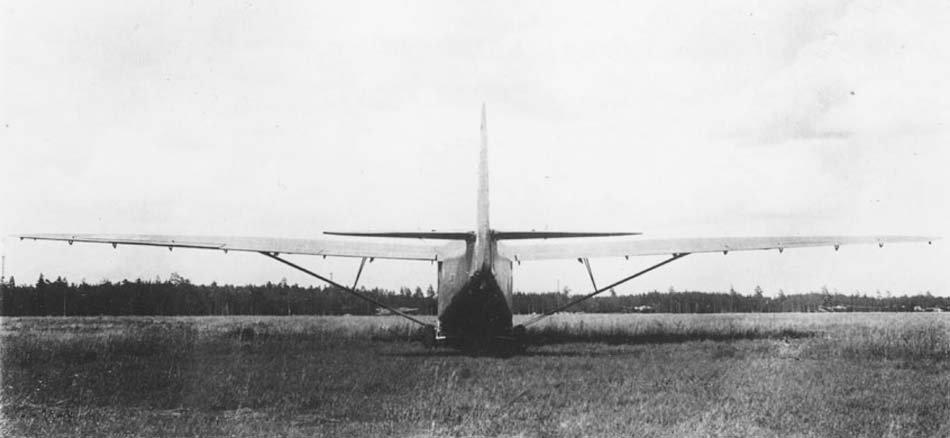 Ts-25 |
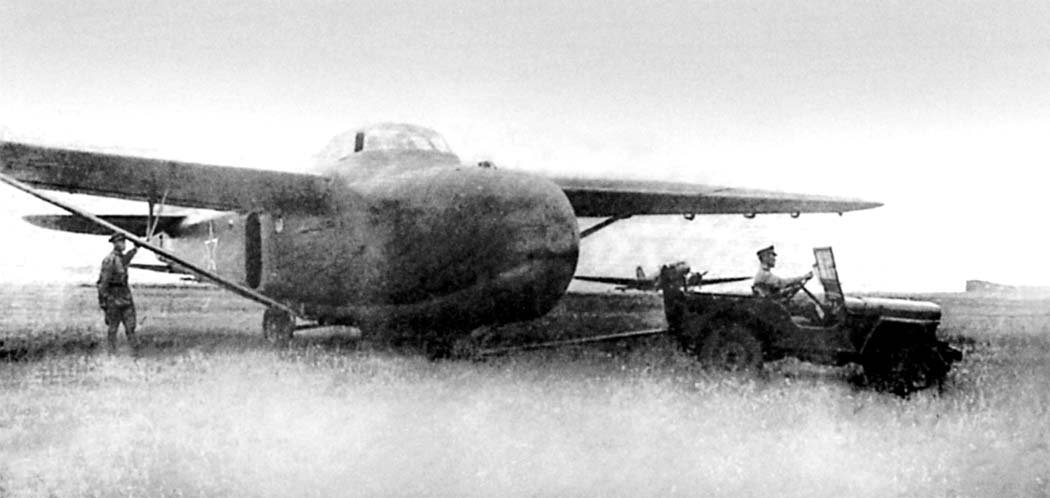 Ts-25 |
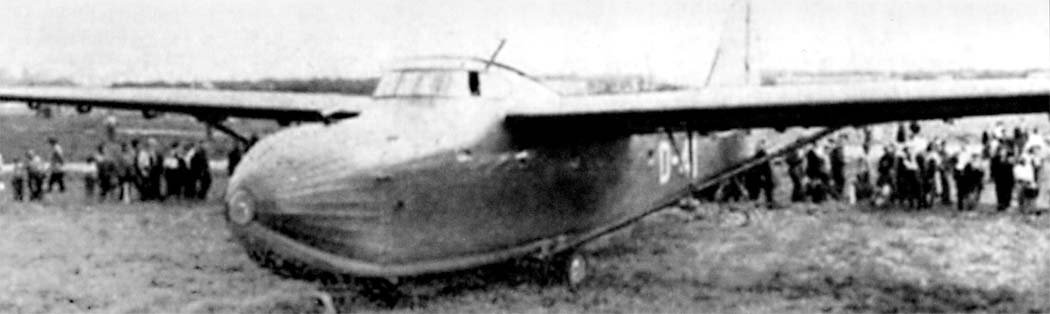 Ts-25 |
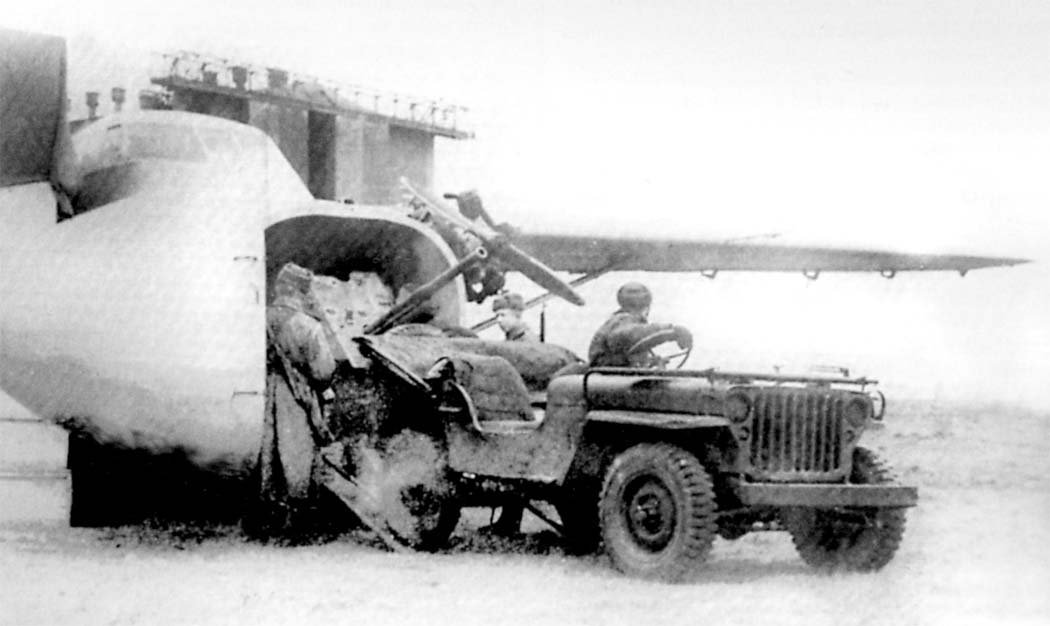 Ts-25 |
 Ts-25 |
 Ts-25 |
ArchivoAéreo Editorial Team
A group of aviation researchers and enthusiasts dedicated to documenting and preserving global aeronautical history. All articles are reviewed to ensure historical accuracy.
Sources & Accuracy
The information presented in this technical sheet has been compiled from declassified flight manuals, historical archives, and specialized literature. While we strive for maximum accuracy, some performance data may vary depending on the specific variant or operational conditions.