William Avery Bishop
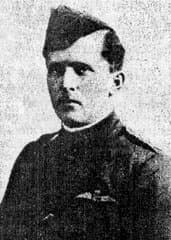
William Bishop was born on February 8, 1894, in the town of Owen Sound, Canadian province of Ontario. After graduating from military college, he served in the Royal Mounted Rifles battalion in Toronto. At the beginning of the First World War, the battalion was transferred to England, where William first saw an aeroplane up close. In July 1915, he submitted a report requesting a transfer to aviation. After several months of training, he took the place of an aerial gunner in the cockpit of a PAF RE-8 reconnaissance aircraft.
During one combat sortie, the aircraft was damaged and crashed on landing. Bishop suffered severe injuries and was hospitalized for several months. However, this did not deter him from flying service. On the contrary, upon recovery, William enrolled in fighter pilot school. In March 1917, he arrived at the 60th Fighter Squadron, which was fighting in Flanders. On March 25, he achieved his first victory, on the 31st his second, and by April 7, he had 4 downed aircraft and an observation balloon to his credit. From that day on, Bishop entered the list of English aces.
The Air Ace of Flanders
William was obsessed with flying. If the weather permitted, he would make 5-6 sorties a day, seemingly oblivious to fatigue. By the end of April, he had recorded 20 victories and had been prematurely promoted to the rank of captain. On June 2, during an attack on a German airfield, William single-handedly shot down three “Fokkers” that had managed to get airborne. For this engagement, he was awarded the Victoria Cross, which Bishop received on August 11, by then with the rank of major.
In September, the pilot went on leave to his homeland, where he was triumphantly welcomed as a national hero. In early 1918, Bishop returned to England to take up the post of chief instructor at the aerial gunnery school. But quiet teaching work was not for him. He took command of a fighter division and flew to the front on May 22. In 20 days of fighting, he shot down 25 enemy aircraft. Such a feat was unmatched even by Richthofen!
Combat Retirement and Leadership
With the approaching end of the war, the command of the British Air Force decided not to risk the life of the outstanding pilot any further. In late June, Bishop, who had already achieved 72 victories, was recalled to London for staff work. On August 5, he was tasked with leading the newly formed Canadian air forces.
During the Second World War, General William Avery Bishop commanded the Canadian fighter division based in the United Kingdom. He died at the Palm Beach resort in Florida, USA, in 1956.
ArchivoAéreo Editorial Team
A group of aviation researchers and enthusiasts dedicated to documenting and preserving global aeronautical history. All articles are reviewed to ensure historical accuracy.
Sources & Accuracy
The information presented in this technical sheet has been compiled from declassified flight manuals, historical archives, and specialized literature. While we strive for maximum accuracy, some performance data may vary depending on the specific variant or operational conditions.