XC-142A
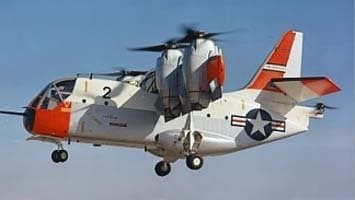
The unique four-engine XC-142A was jointly developed by the firms LTV (Vought), Ryan, and Hiller at the request of the U.S. Air Force (USAF) as a transport vehicle. It was the last in the “C” series of transport aircraft created for the USAF since 1945. The USAF decided to redefine this class of aircraft and, from 1962, begin a new series, assigning the designation C-1 to the first aircraft. The XC-142A was intended for rapid delivery of soldiers and cargo to unprepared landing zones in any weather.
Revolutionary Tilt-Wing Design
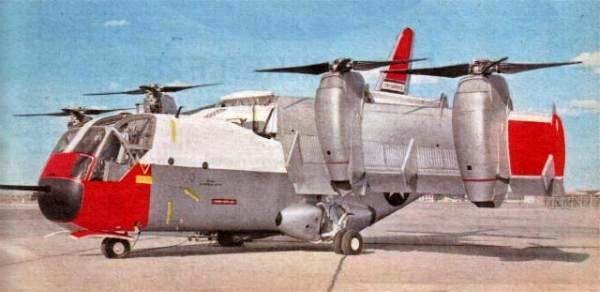
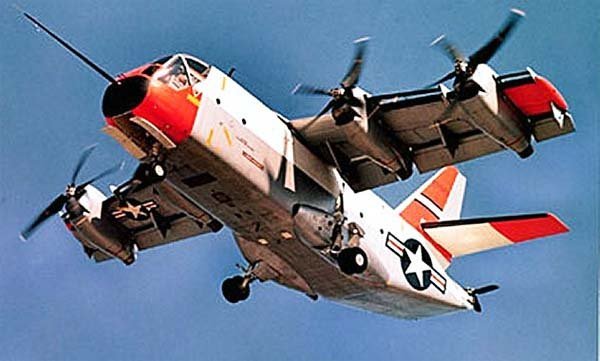
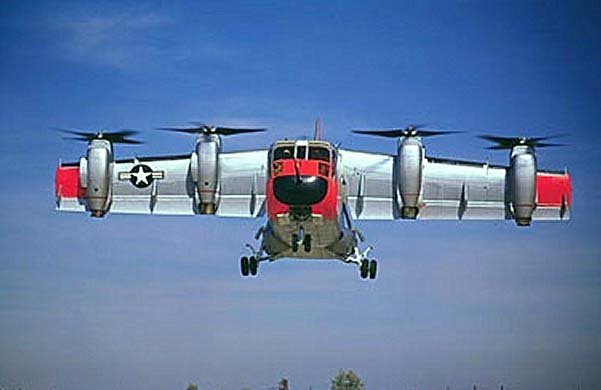
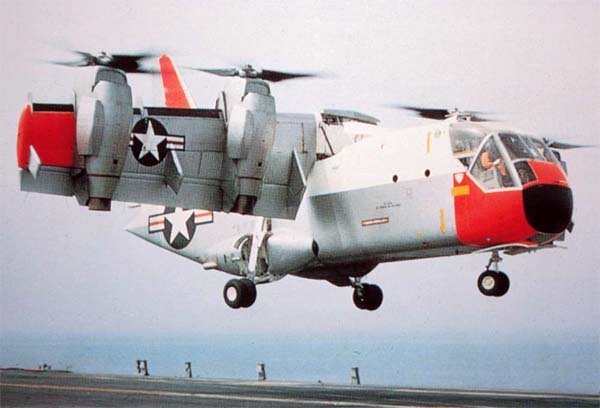
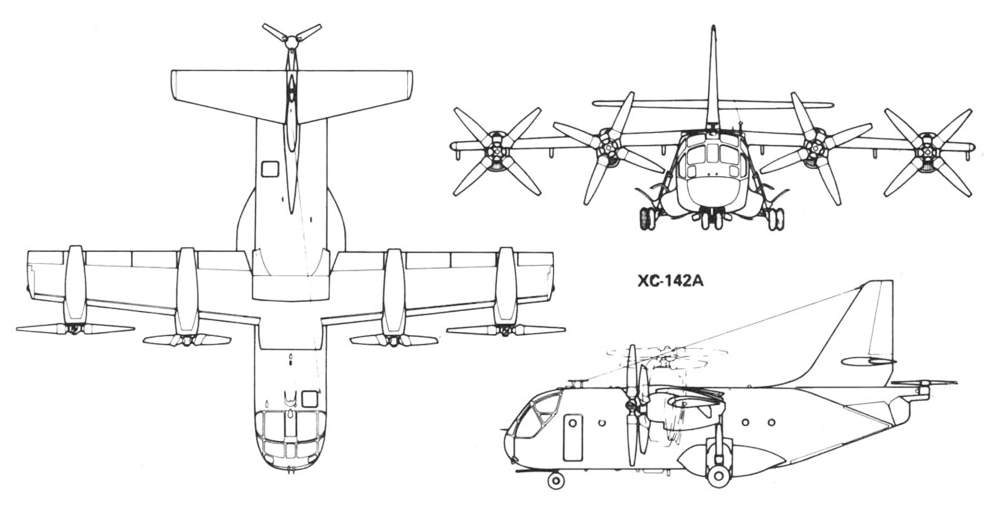
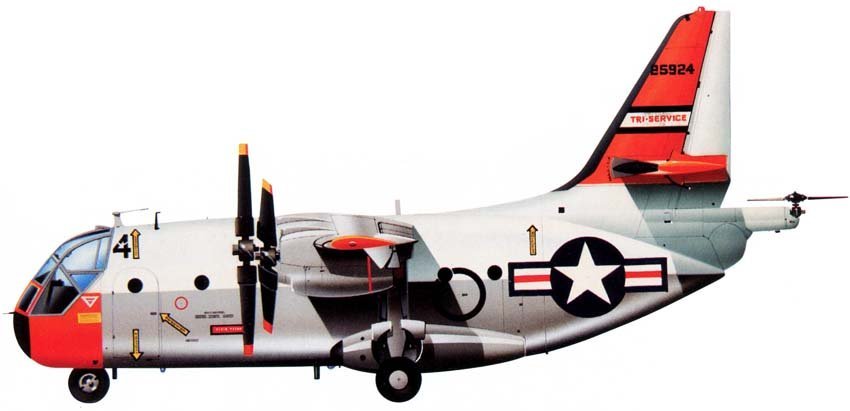
Despite its somewhat altered proportions compared to traditional aircraft, the XC-142A resembled a conventional transport plane. Its entire wing, which housed four General Electric T-64-1 turboprop engines (2850 hp/2094 kW each), could rotate from its normal horizontal position to a fully vertical position (90 degrees).
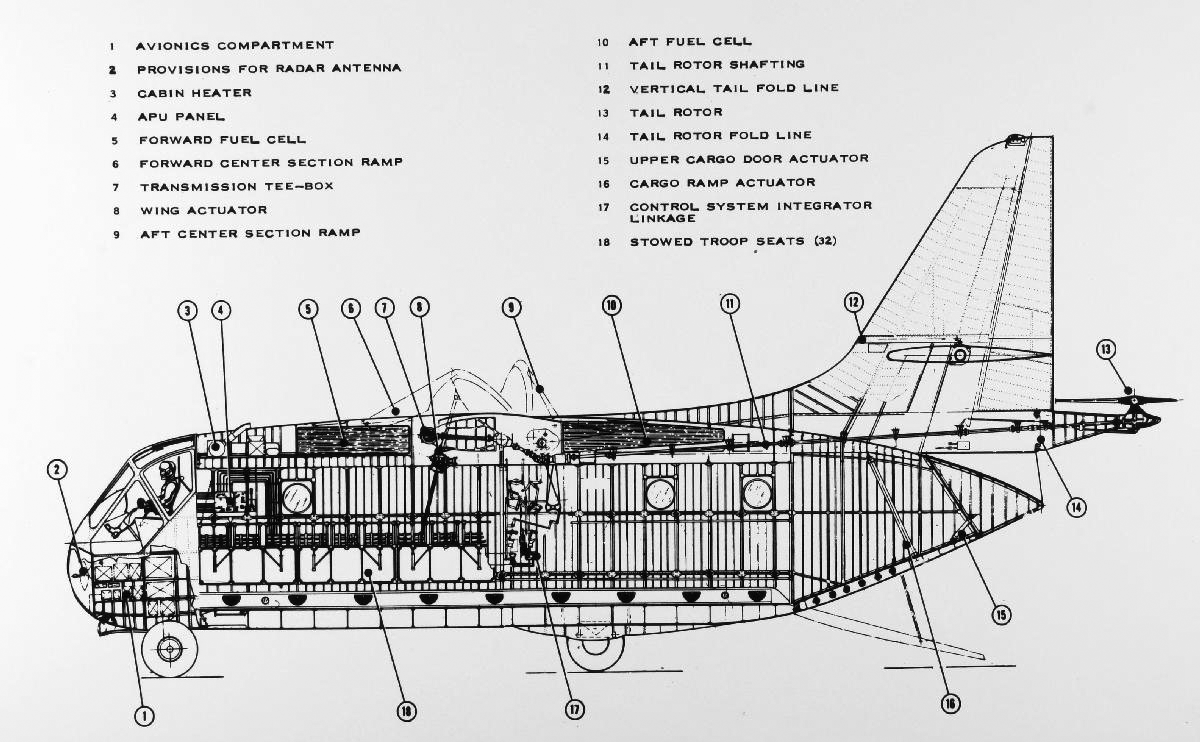
The engines were interconnected by a shaft, allowing all four main and one auxiliary propeller to rotate even if only one engine was operating. A synchronous mechanism ensured the wing could rotate up to a maximum of 106 degrees, and as the wing lifted, the horizontal stabilizer deflected downwards.
Balance and control of the aircraft at low speeds were managed by a tail rotor located in the horizontal plane. In horizontal flight, the middle engines could be deactivated. A special instrument provided data for the control system, depending on the wing’s angle. The machine’s nose featured a two-seater pilot’s cockpit equipped with ejection seats.
Flight Testing and Performance
The first flight of the XC-142A occurred on September 29, 1964, and was successful, performing much better than many other tiltrotors. During testing, the aircraft demonstrated impressive speed characteristics: a forward flight speed of 644 km/h and a reverse speed of 56 km/h.
Legacy and Future Applications
Although five of these aircraft were built, serial production was never launched. For such tasks, it proved more economical to develop heavier, high-speed helicopters. Subsequently, the aircraft prototype was utilized in NASA’s test programs.
Technical Specifications
| Modification | XC-142 |
| Wingspan, m | 20.57 |
| Length, m | 17.73 |
| Height, m | 7.82 |
| Wing area, m2 | 78.40 |
| Empty weight | 10984 |
| Maximum takeoff weight | 18824 |
| Engine type | 4 Turboprop General Electric T-64-1 |
| Power, hp | 4 x 2850 |
| Maximum speed, km/h | 694 |
| Cruising speed, km/h | 378 |
| Practical range, km | 1320 |
| Practical ceiling, m | 7620 |
| Crew | 3 |
| Payload | 32 soldiers or 3630 kg of cargo |
Image and diagram gallery of the XC-142A
 C-142 |
 C-142 |
 C-142 |
 C-142 |
 C-142 |
 C-142 |
 C-142 |
 C-142 |
ArchivoAéreo Editorial Team
A group of aviation researchers and enthusiasts dedicated to documenting and preserving global aeronautical history. All articles are reviewed to ensure historical accuracy.
Sources & Accuracy
The information presented in this technical sheet has been compiled from declassified flight manuals, historical archives, and specialized literature. While we strive for maximum accuracy, some performance data may vary depending on the specific variant or operational conditions.