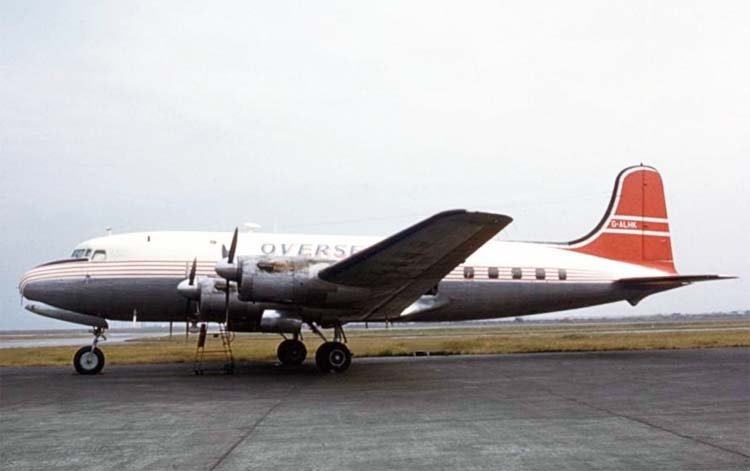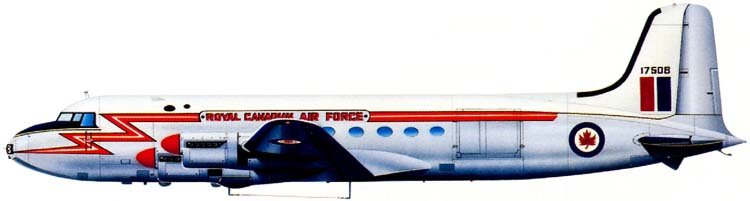
Even as World War II continued, Trans Canada Air Lines (TCA) was already seeking a suitable aircraft for long-range postwar routes. An interim solution, before a new generation of civil transport aircraft emerged, was chosen: a Douglas DC-4 variant powered by Rolls-Royce Merlin engines. In 1944, the development of the Canadair CL-2 was recognized as a top priority for the new aircraft manufacturing firm, Canadair Ltd, established by the Canadian government from the Canadian branch of Vickers Ltd.
Development and Early Service
In the summer of 1944, this company announced it would cease aircraft development in Canada. To evaluate the concept, a non-pressurized Douglas-built aircraft was used as a base, fitted with four Merlin 620 engines, each producing 1,725 hp (1,286 kW). This aircraft, named Canadair DC-4M-X, first took to the air on July 20, 1946, and was soon approved by Trans Canada.
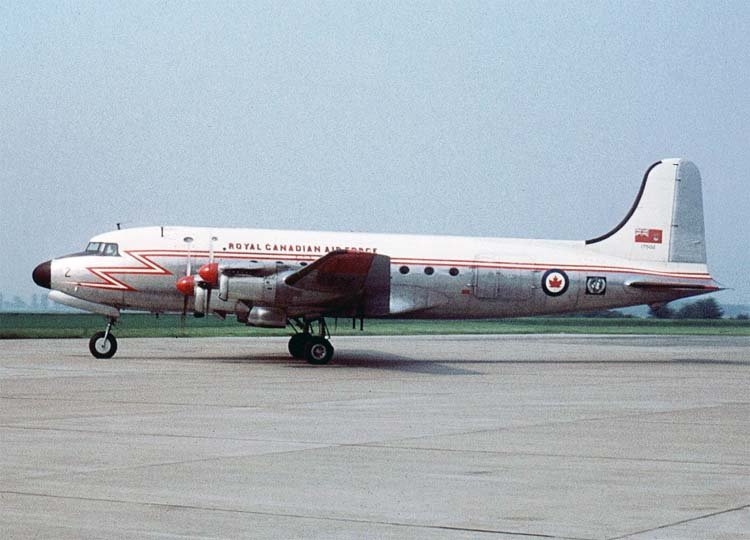
Serial production included 23 C-54GM units with non-pressurized cabins. The prototype, meanwhile, flew with the Royal Canadian Air Force (RCAF) as a North Star Mk 1 transport aircraft. Trans Canada then ordered 20 machines with pressurized cabins, designed to carry 40-62 passengers depending on the class configuration.
Civilian and Military Operations
While awaiting the special civilian variant, Trans Canada operated six non-pressurized aircraft leased from the RCAF, designated for civil use as DC-4M-1 or North Star M-1. TCA later returned these six machines to the RCAF as North Star Mk M1 transports. These aircraft were actively used for supply during the Korean War, and later converted into passenger liners, changing their designations to North Star Mk 1ST and North Star Mk M1 ST. The last of these was withdrawn from service in 1966.
Deliveries of aircraft specifically for Trans Canada began in October 1947. These were known as DC-4M-2/3 (or North Star M2-3) when fitted with Merlin 622 engines, or DC-4M-2/4 (or North Star M2-4, company designation CL-4) with Merlin 624 engines. Some of these later variants were adapted for cargo transport, changing their designation to DC-4M-2/4C (or North Star M2-4C).
International Adoption and Legacy
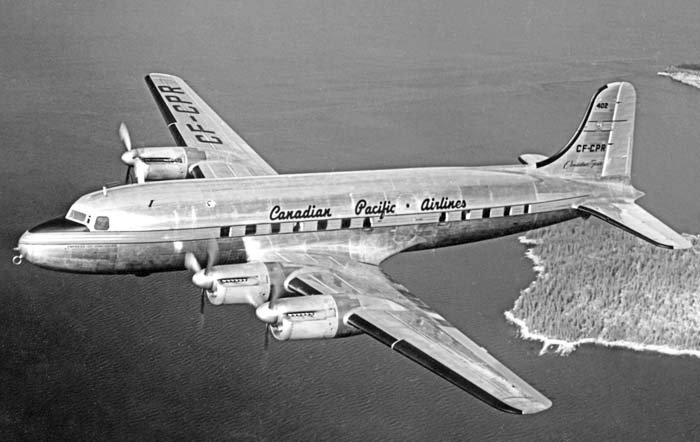
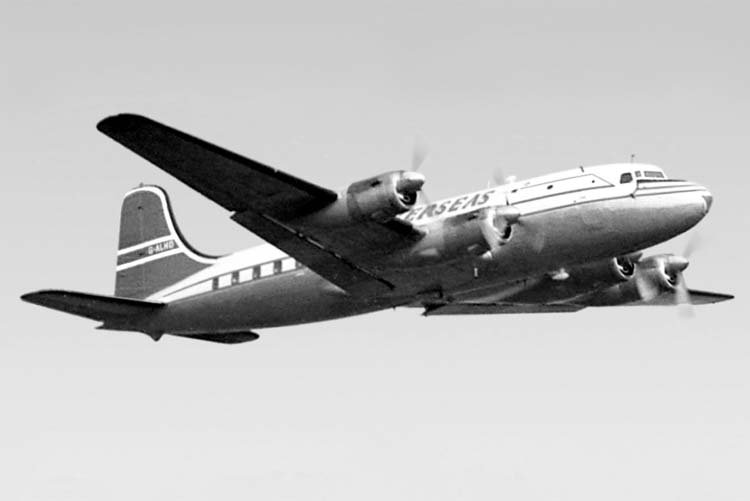
Another operator was BOAC, which purchased 22 CL-4 (or C-4) aircraft after the bankruptcy of Avro Tudor. These were used from 1949 to 1960 under the name Argonaut. Canadair also received an order for four aircraft for Canadian Pacific Air Lines, designated C-4-1 (or North Star C-4-1) and C-4-1C (after conversion to cargo transports).
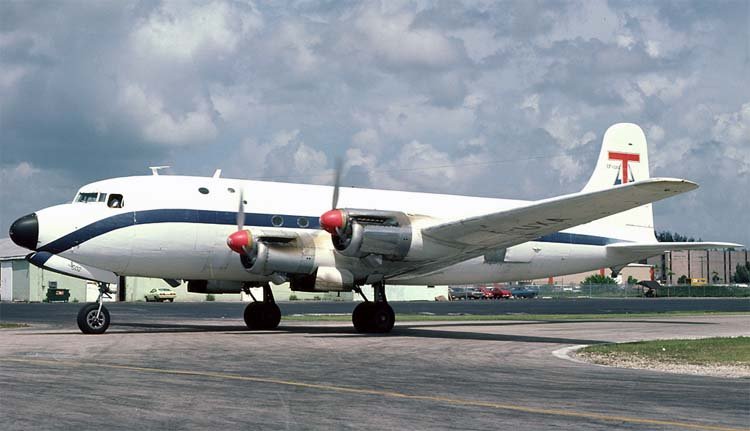
After being withdrawn from service by their primary users, these aircraft were sold to smaller companies, with some remaining in operation until the late 1960s. The final aircraft in the series was a single CL-5, also known as C-5, built for the RCAF; this was essentially a CL-4 fitted with Pratt & Whitney R-2800 radial engines.
Technical Specifications
| Модификация | CL-2 |
| Размах крыла, м | 35. 81 |
| Длина самолета, м | 28. 54 |
| Высота самолета, м | 8. 39 |
| Площадь крыла , м2 | 135. 63 |
| Пустого самолета | 21243 |
| Максимальная взлетная | 37331 |
| Тип двигателя | 4 ПД Rolls-Royce Merlin 626 |
| Мощность, л.с. | 4 х 1 760 |
| Максимальная скорость, км/ч | 523 |
| Крейсерская скорость, км/ч | 465 |
| Практическая дальность, км | 5150 |
| Практический потолок, м | 8990 |
| Экипаж, чел | 4-5 |
| Полезная нагрузка: | до 60 пассажиров |
Image and diagram gallery of the Canadair North Star