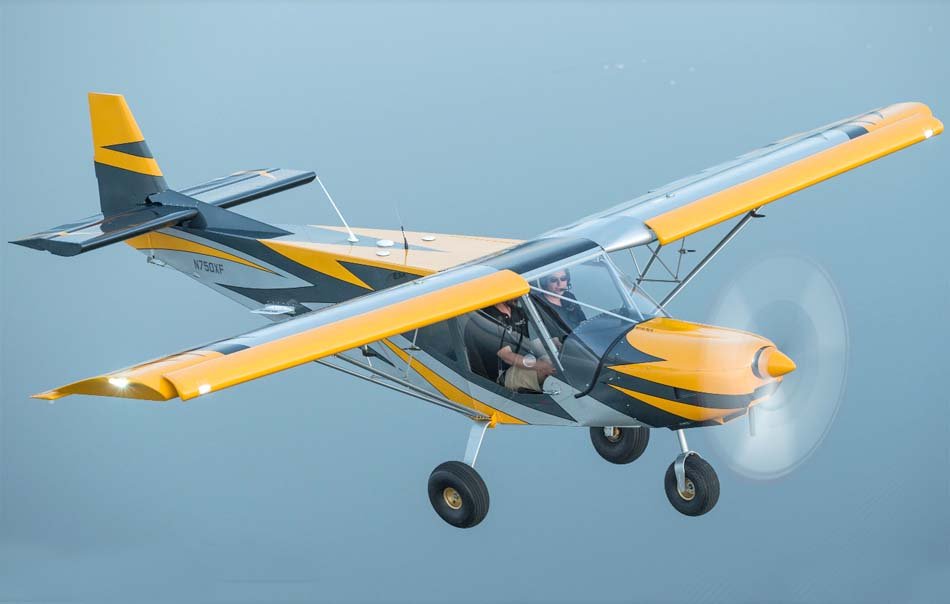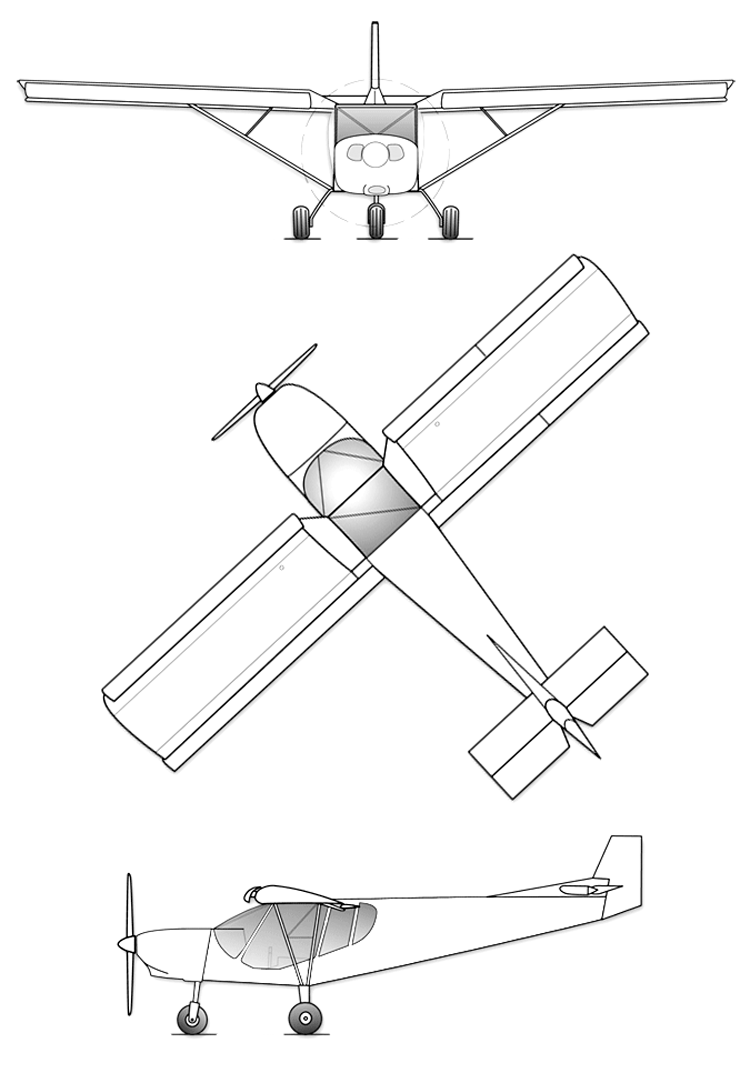
The STOL CH 750 aircraft has been produced since 2008 by Zenith Aircraft, building on the successful STOL CH 701 model from the same company. It differs from the base model with an enlarged cabin and increased payload, limited by the Sport Pilot / Light Sport Aircraft standard. It represents a middle ground between the CH 701 and CH 801, offering a two-seater configuration, a more spacious cabin, enhanced payload capacity, and a strengthened landing gear.
The Short Take Off and Landing (STOL) CH 750 is optimized for off-aerodrome operations, thanks to leading-edge slats, flaperons, and other aerodynamic enhancements that boost lift. This aircraft boasts a take-off roll of just 30 meters, a cruising speed of 185 km/h, and an exceptionally low stall speed (just over 30 knots). The aeroplace comes with a tricycle landing gear configuration featuring a steerable nose wheel.
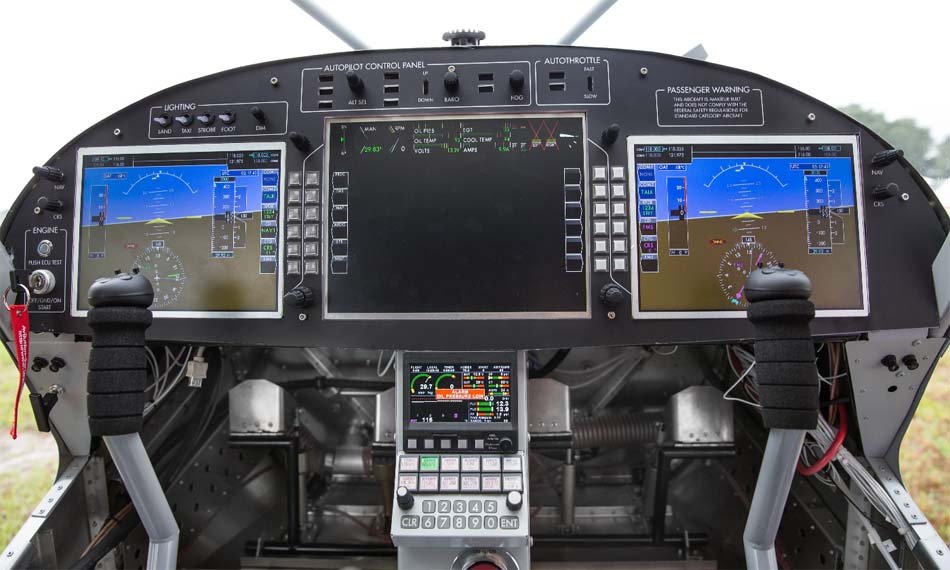
Its instrumentation includes an Engine Information System (EIS), a Garmin SL-40 radio, a radio altimeter, an Airspeed Indicator (ASI), a Vertical Speed Indicator (VSI), and a PM1000II Intercom system. For an additional fee, a full “glass” cockpit panel can be ordered as an option. The installation of LED strobes and landing lights, auxiliary fuel tanks, and a cabin heating system are also available.
Outstanding Performance and Design
The primary advantage of these aircraft is their unique efficiency in take-off and landing, which is reflected in the STOL (Short Take Off & Landing) acronym. Other notable advantages include an unexpectedly competitive cruising speed of 162 km/h at sea level.
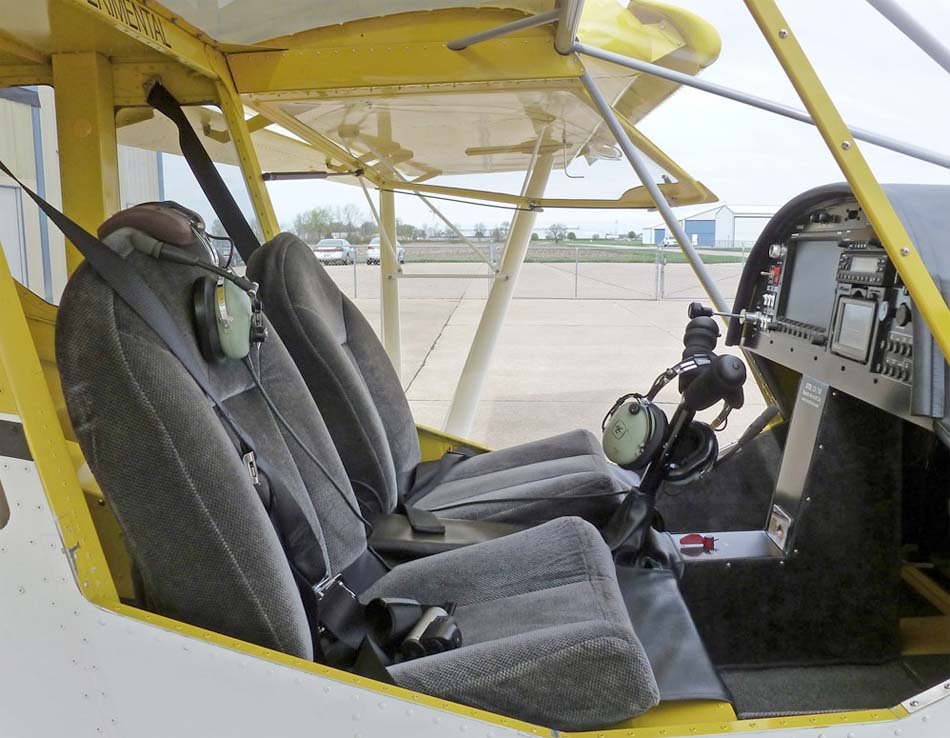
The spacious side-by-side two-seat cabin is designed for two large adults, featuring flexible seat and rudder pedal adjustments, an ergonomic design, and convenient entry from both sides. Pilots also benefit from easy access to controls and an impressive “all-round” visibility.
Excellent handling is achieved through full-sized flaperons (combined ailerons and flaps) and an all-moving rudder. The simple and reliable tricycle landing gear makes it superb for “countryside” flights, and a wide selection of engines is available.
Build-It-Yourself Kits and Costs
Zenith Aircraft supplies these planes as self-assembly kits, significantly reducing the final cost for buyers.
The Airframe Kit for the CH 750 is priced at $14,990.00. This kit includes all stamped metal parts for the fuselage and wings, factory pre-tinned fuel system components (two wing tanks), flight control system parts, and more. The kit also comes with detailed assembly instructions, blueprints, and a photo album showing various nodes at different assembly stages, simplifying the DIY process.
An additional $4,490.00 covers the “Finishing Kit,” which includes wheels, hydraulic brakes, canopy, doors, seats, seatbelts, and motors for flaps and trim. Optionally, customers can order kits for individual components like the fuselage, wings, or fuel system, allowing assembly at their own pace as funds and time permit.
Building a complete aircraft from the full kit requires approximately 400 working hours, or about 20 weeks at 20 hours per week. Zenith Aircraft offers various training courses and “open hangar days” to support its customers.
The engine accounts for a significant portion of the total cost. For example, a 97 hp ULPower UL260i engine in its basic configuration costs €13,100. The listed kit prices do not include packaging and delivery. Packaging for the “Complete Kit” (Airframe and Finishing Kits) is around $600. Delivery costs from Missouri, USA, must also be considered, varying depending on the buyer’s location. The total estimated cost for a complete aircraft is approximately $36,600.
Evolution: Cruzer and Super Duty Models
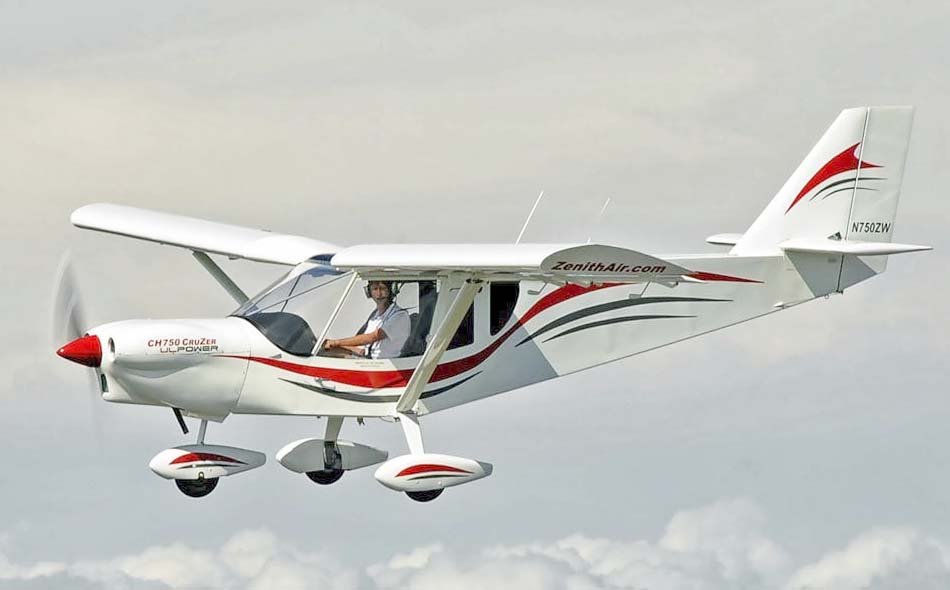
In 2013, Zenith Aircraft Company introduced its new model, the CH 750 Cruzer, classified as a Light Sport Aircraft (LSA). Despite its external resemblance to previous 2-seater all-metal aircraft in the company’s lineup, it is a new model optimized for cross-country flights.
Zenith’s aeronautical engineers based their designs on the market-proven STOL CH 701 “Sky Jeep”/750/801 models, designed by Chris Heintz and popular for nearly 30 years, ensuring easy cabin access and excellent in-flight comfort. The Cruzer features a high-wing design, a new wing, a symmetrical horizontal stabilizer, and a fin with a rudder. It is equipped with a tricycle landing gear featuring 5×5 sized wheels and new fairings, ensuring short take-off and landing distances. The instrument panel of the 2-seater Cruzer is larger and wider than that of the original STOL CH 750.
The CH 750 Cruzer’s base configuration includes a UL-Power UL350iS injected aero engine, capable of 130 horsepower, and a Dynon Skyview avionics system with synthetic vision. It can achieve a cruising speed of 190 km/h. The firewall design also allows for alternative engines such as Continental O-200, Rotax 912, Viking, Jabiru, and Corvai, ranging from 95 to 160 horsepower and weighing up to 280 kg. With a payload of 216 kg, the aircraft’s total weight is 530 kg, meeting LSA requirements. Sales of the Cruzer kit for self-assembly started in May 2013 in the USA and Canada, priced around $20,000.
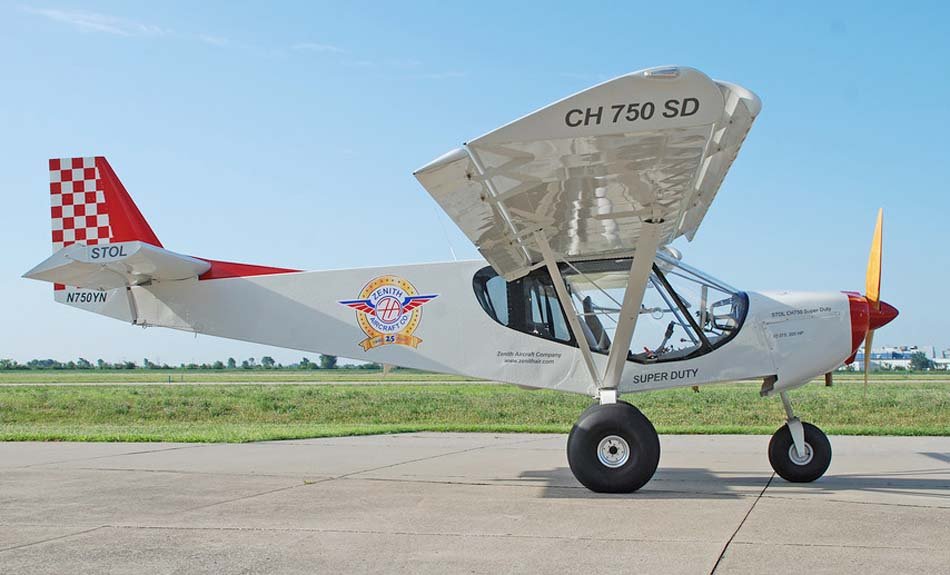
The latest modification, the STOL CH 750 Super Duty, was unveiled at EAA Oshkosh AirVenture 2017. This model further develops the popular two-seat light-sport STOL CH 750, with increased take-off weight and a payload capacity for up to three people. This was achieved through three key improvements. First, increased power: the Super Duty is equipped with an Aero Sport Power IO-375 engine, delivering 205 hp, with a 2082 mm Sensenich propeller. Like previous Zenith models, the CH 750 SD offers a wide range of engines from 150 to 205 hp.
Second, the wingspan of the CH 750 Super Duty was extended by over a meter to 10.2 m, increasing the wing area by 1.67 sq. m. to a total of 15.05 sq. m. Third, the operational load factor range was reduced to +3.8/-1.9, compared to +6/-3 for the standard STOL CH 750. These modifications boosted the take-off weight to 862 kg and the payload to 363 kg (compared to 653 kg and 247 kg for the prototype). The resulting flight performance characteristics are: maximum speed – 185 km/h, landing speed – 55 km/h, climb rate – 411 m/min, take-off roll – 35 m, and landing roll – 45 m.
Performance improvements aren’t the only novelties in this model. Upon entering the aircraft, it’s immediately apparent that the traditional instrument panel is gone, replaced by a single large, 17-inch Avilution Unpanel avionics display. This optional display, available to Zenith customers, consolidates traditional instruments and smaller displays into one massive screen. The monitor’s suspension system allows it to be repositioned within the cabin, making it comfortable for both the left and right pilots. This new display eliminates the need for a traditional instrument panel, further improving the already excellent visibility to near-helicopter standards.
The cabin width is 1067 mm, expanding to 1270 mm at shoulder height due to the blown glass doors. The front seats are length-adjustable, and the spacious rear cabin features a single seat for up to 90 kg of load: either a third passenger or a full set of touring equipment.
The CH 750 Super Duty model features traditional fixed leading-edge slats and flaperons along the entire wing’s trailing edge. It also sports large-diameter wheels, enabling take-offs and landings on unprepared, low-density ground surfaces. A float-equipped variant with an increased take-off weight of up to 1000 kg is planned.
The CH 750 Super Duty airframe, like all Zenith aircraft, uses a “match-hole” assembly technology, with parts manufactured by high-precision computerized equipment. For assembly, a flat rectangular table measuring 3.65×1.2 m, large enough to accommodate a wing or fuselage, is required. The kit for building this aircraft costs $26,000. As always, a set of blueprints can be purchased for $575.
Image and diagram gallery of the STOL CH-750