37mm Automatic Cannon BK 3.7
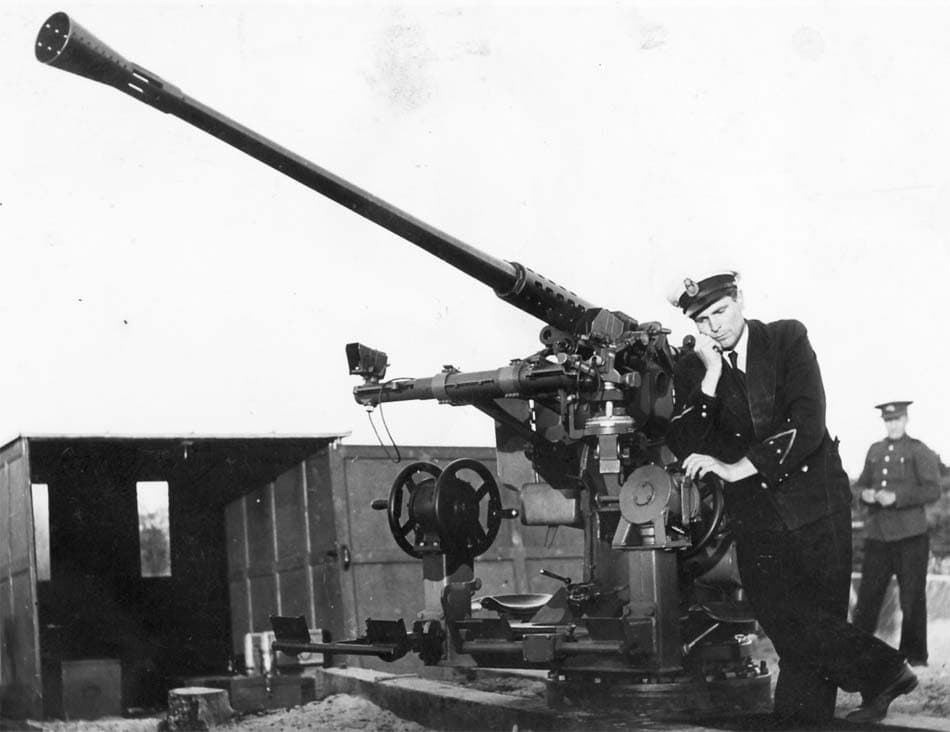
The 37mm automatic cannon BK 3.7 was the last of the serial artillery aviation systems born from the Rheinmetall-Borsig concern, possessing Swiss roots. This weapon gained considerable fame, largely thanks to Germany’s most renowned dive bomber ace, Hans-Ulrich Rudel.
The cannon was, to some extent, an improvisation. Its non-aviation origin is encoded in its designation — BK 3.7, where “BK” stood for “Bordkanonen,” meaning “onboard cannon.” In Germany, this designation was used for artillery systems initially developed for purposes other than aviation and later modified for aircraft installation, distinguishing them from purely aviation “MK” (Maschinenkanone) guns.
Origins and Development
The system’s history began in Switzerland at Waffenfabrik Solothurn A.G., a company acquired by the German concern Rheinmetall in the late 1920s. This acquisition was specifically for developing automatic artillery weapons, circumventing the Treaty of Versailles restrictions that prohibited Germany from producing automatic cannons.
By the mid-1930s, Swiss developers had several dozen completed projects for automatic cannons of various calibers and purposes. These designs shared a common operating principle based on short recoil of the barrel. The most powerful of these developed systems was the 37mm S10-100 anti-aircraft automatic cannon, model of 1934, or designated ST-10 under the German classification system.
The Swiss S10-100 system was sold to Greece, Romania, Bulgaria, Italy, China, and even France, but total sales volume remained low. This anti-aircraft gun was distinguished by its high complexity and considerable price. Before the war, the Japanese purchased a license to produce export variants of this anti-aircraft gun: the ST-22 with a cruciform carriage and the ST-24 with a three-legged carriage, designated Type 1 in Japan. Production was planned for 1944 but never materialized. It appears the Germans sold a license for the S10-100 to the USSR in the early 1930s. However, given the 1930-31 timeframe, the Swiss system likely existed only in imperfect prototypes then, and the Soviets were unable to refine it, producing only a limited batch of largely unsuitable 4-K automatic guns.
The Germans almost completely adopted the Solothurn automatic gun’s design and began its production with minor modifications in 1935 as the 3.7 cm FLAK 18. The numerical index “18” was used to mislead foreign attachés, creating the impression that the cannon was an old development from 1918. Compared to the Swiss prototype, modifications primarily affected the carriage design, while the gun’s mechanics remained virtually unchanged.
The cannon used a very powerful 37x263B unitary cartridge, which, coupled with its long 57-caliber (2106 mm) barrel, ensured a high muzzle velocity of 800-860 m/s, depending on the ammunition. It was fed from 6-round clips inserted from the left side of the receiver. The technical rate of fire was 180-240 rounds/min, though the actual firing rate did not exceed 80-100 rounds/min. The system was quite massive, exceeding 1750 kg in combat position and reaching 3560 kg in transport mode.
Overall, despite its advanced design and high power, the FLAK 18 automatic cannon was an exceptionally complex and expensive system. It was ill-suited for mass production, cumbersome, and lacked mobility, with its reliability also leaving much to be desired. This led the Germans to redesign the system as early as 1936. The result was the improved 3.7 cm FLAK 36 anti-aircraft variant, significantly lightened to 1550 kg compared to its predecessor. Additionally, the clip capacity was increased to 8 rounds, and a new, more advanced Sonderhänger 52 sight and a Flakvisier 40 analog rangefinder were introduced.
The next version was the FlaK 37 cannon, which differed from the previous variant only by increased vertical aiming angles, ranging from -8 to +85 degrees. The final version of this automatic cannon, the FlaK 43, appeared during the war and featured a more substantial redesign, including a change in its operating principle. Its short barrel recoil was combined with a gas-operated mechanism to open the breech. However, this version falls somewhat outside the scope of a discussion focused on the aviation variant of the gun.
Adaptation for Aviation
It is not precisely known when or by whom in the Reich the idea arose to adapt this anti-aircraft gun for aircraft. Work on the BK 3.7 likely began around spring 1942. This was probably driven by a desire to develop a more powerful weapon than the 30mm MK 101 aircraft cannon already in Luftwaffe service. Although their muzzle velocities were similar, the 37mm shell weighed one and a half to two times more than the 30mm shell (640-680g vs. 330-500g), resulting in a similarly significant increase in muzzle energy (215 kJ vs. 140 kJ). Such capabilities seemed highly desirable for combating Soviet armor. Moreover, the Allies, who were gradually intensifying aerial pressure on the Third Reich’s home territory, also demanded more effective means of engagement.
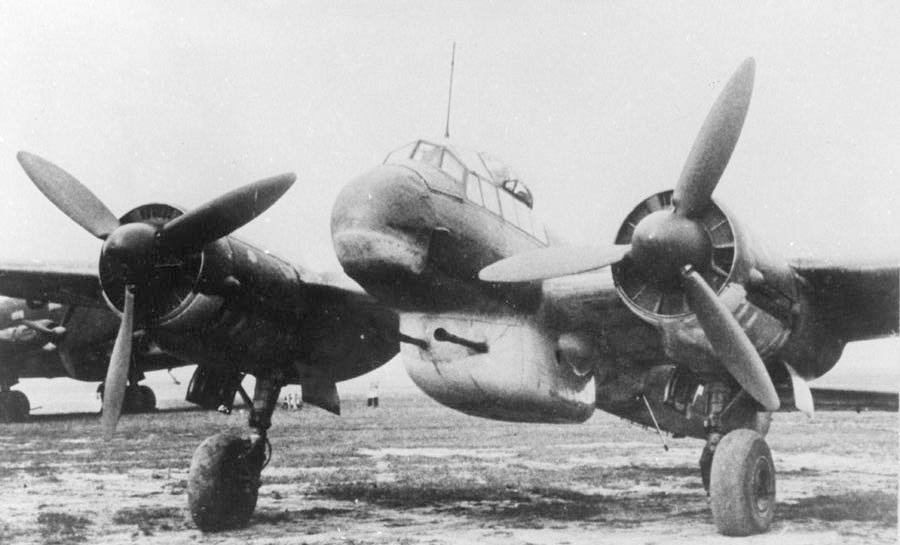
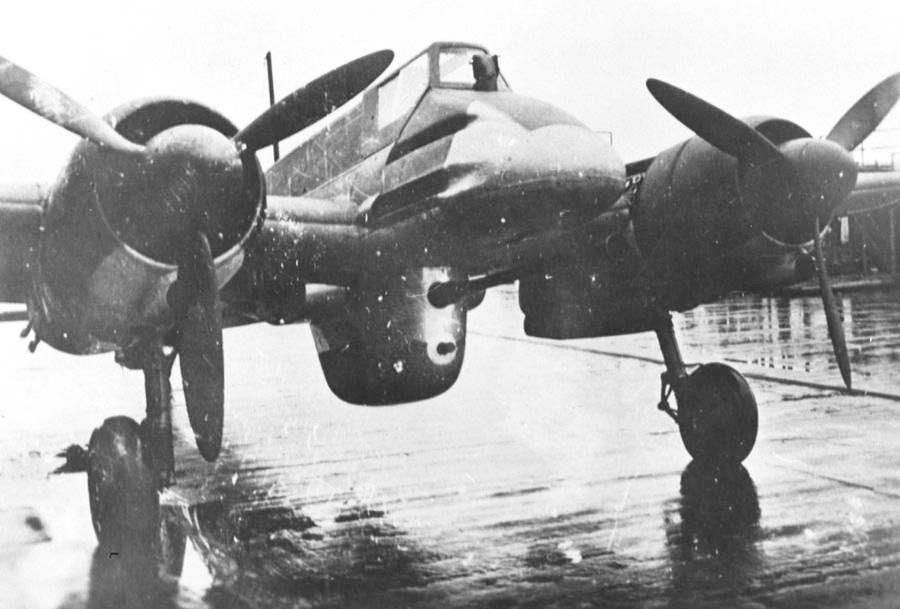
Notably, the first modified ersatz aircraft cannons were simple conversions of the rather unsuccessful 3.7 cm FLAK 18 anti-aircraft gun. These appeared in autumn 1942 and, from March 1943, were installed on Bf 110G-2/R1 heavy fighters, mounted beneath the fuselage and enclosed in a streamlined fairing made of an aluminum frame and plywood-fabric skin. The gun was positioned sideways so that the receiver window faced upwards, making it accessible to the crew. The BK 3.7’s ammunition consisted of ten 6-round clips stored in the lower part of the cockpit, which the aircraft’s rear gunner replaced. The loaded system weighed 275 kg, and its dimensions exceeded 3.5 meters, necessitating the removal of both 20mm cannons.
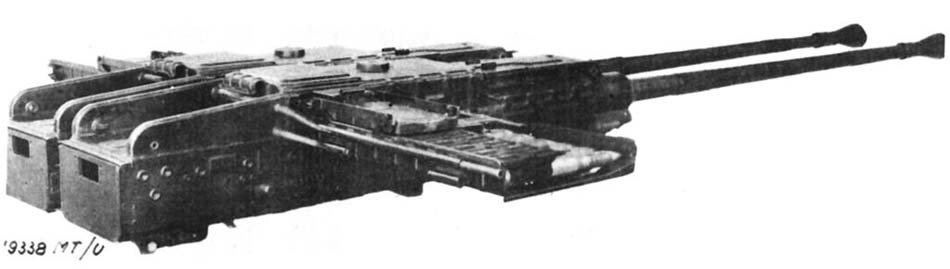
Subsequently, the more advanced FLAK 36 replaced the FLAK 18 as the base for the aircraft cannon. In German documents, the aircraft cannon based on the FLAK 36 was called the “3.7-cm BK 43,” and this version became the primary one for aircraft installations. It could use either standard 8-round clips, older 6-round clips, or even twin 2×6 rounds. The gun’s rate of fire and ballistic characteristics remained unchanged compared to its anti-aircraft counterpart.
The BK 3.7 was installed on the same Bf 110G-2 in sub-modifications R1, R4, R5, as well as the Bf 110G-4a/R1. The immense destructive power of the 37mm shell, capable of disabling any aircraft with a single hit, and a sighting range of up to 800 meters, allowing attacks on enemy bombers beyond the range of their defensive armament, was not offset by the system’s enormous weight and size, or its low rate of fire. Consequently, these interceptor variants did not see widespread adoption. Anti-tank Junkers Ju 88P-2 and P-3 versions, which mounted two BK 3.7 cannons in an under-fuselage gondola, also did not achieve widespread use. There is information that these Junkers were attempted as heavy interceptors, but they did not succeed in this role.
The majority of BK 3.7 cannons found their application on German anti-tank ground-attack aircraft. Almost simultaneously with the Henschel Hs 129B-2/R2 anti-tank ground-attack variant, which was very effective against tanks with its 30mm MK-103 cannons, an even more powerful anti-tank modification, the Hs 129B-2/R3, was released, featuring the 37mm BK 3.7 cannon.
Combat Performance and Limitations
Luftwaffe leadership initially feared that the armor-piercing capability of 30mm shells would be insufficient. However, the introduction of 30mm composite Hartkernmunition with tungsten carbide cores, capable of reliably penetrating all serial Soviet tanks of the time, temporarily alleviated this concern. Moreover, the BK 3.7’s small ammunition capacity and low rate of fire significantly reduced the mobility of ground-attack squadrons. The gun itself also proved less effective for anti-tank combat than expected, due to its “anti-aircraft” heritage. Furthermore, tests of the Hs 129B-2/R3 revealed significantly degraded stability during firing, making the already challenging handling of the Henschel truly a virtuoso task. The number of Hs 129B-2/R3s produced did not exceed fifteen, and there is no data on their deployment at the front.
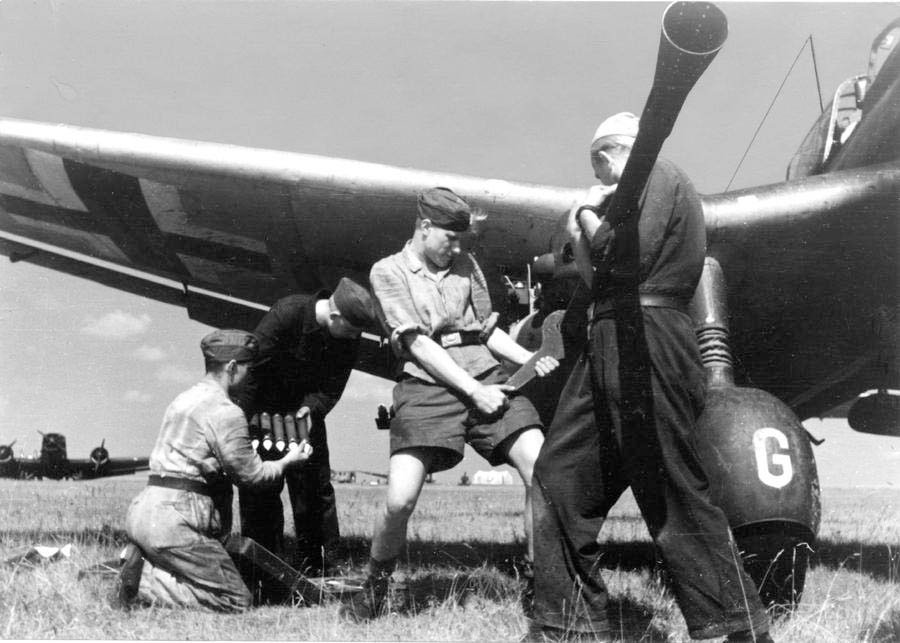
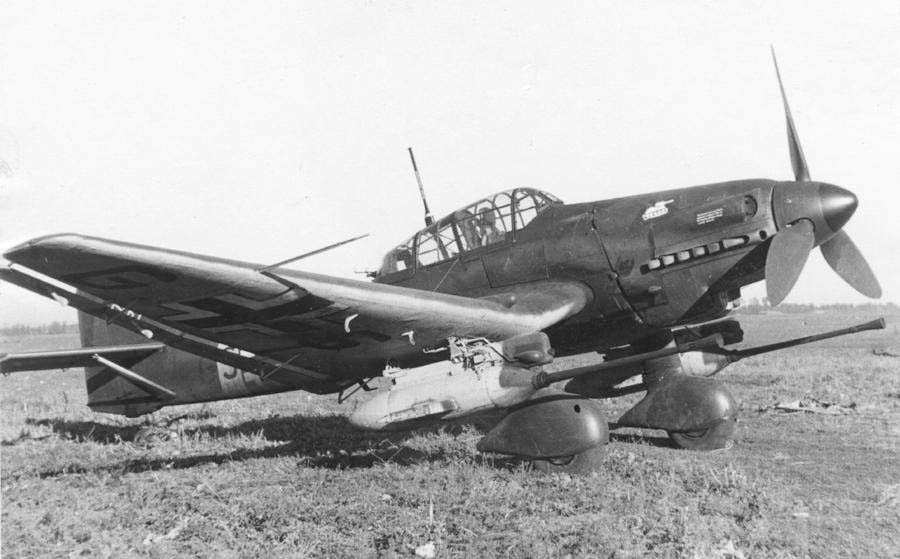
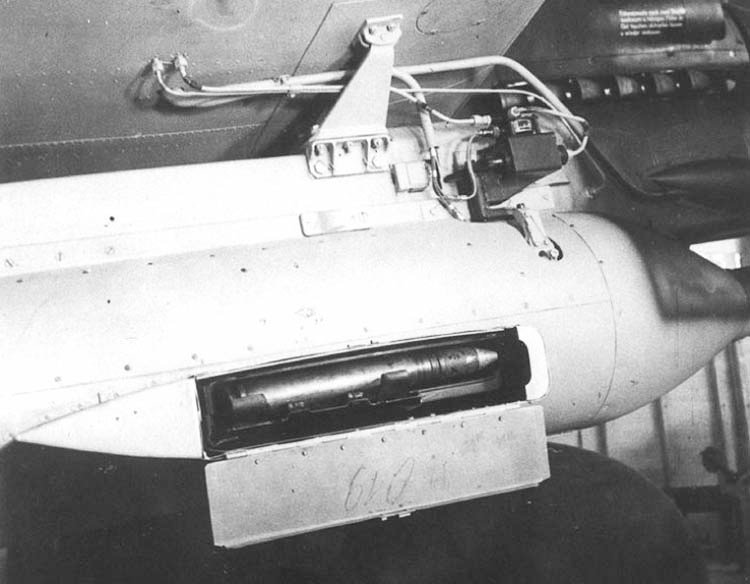
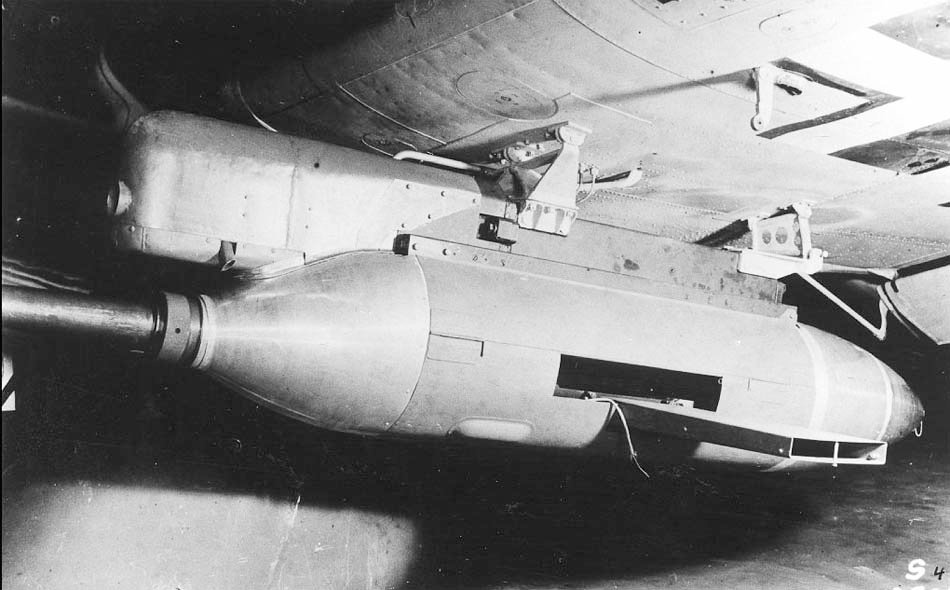
Concurrently with the anti-tank variant of the armored Henschel, another anti-tank ground-attack aircraft, based on the Junkers Ju 87D-3, was tested at Rechlin in 1942. Its main feature was the installation of two 37mm BK 3.7 cannons under the wings. Along with magazines for 6, 8, or 12 rounds, these were attached under the wing immediately behind the landing gear struts. The long-barreled anti-aircraft gun, with its high muzzle velocity composite projectile, promised to be even more effective against armor than the 30mm MK-103.
The gun pods, weighing over 300 kg each, were easily detachable and interchangeable with standard bomb racks. Wing-mounted machine guns and bomb armament were absent. The aircraft’s armor was weakened. Unlike the standard Ju 87D-3, the anti-tank Junkers lacked armor for the gunner, center-section fuel tanks, and the water radiator. Only the thickness of the pilot’s rear armor plate was increased to 20mm. Otherwise, the aircraft’s armor remained unchanged.
The ground-attack aircraft was designated Ju 87G-1. This machine, despite a rather modest production run (the total number of Ju 87G-1 and G-2 models produced was just over two hundred, including ground-attack aircraft converted from the Ju 87D bomber version), was widely publicized, mainly thanks to the commander of 10.(Pz)./StG2, Hauptmann Hans-Ulrich Rudel, the Luftwaffe’s most acclaimed dive bomber expert, credited with a record 519 tank kills. In reality, the cannon-equipped “Junkers” was by no means as good or effective as commonly believed.
The Ju 87G proved to be slow and very unmaneuverable, which, combined with reduced armor and weak defensive armament, made the aircraft an ideal target for fighters. Its maximum speed decreased by 30-40 km/h. The Ju 87G could no longer dive (although experimental machines undergoing trials had dive brakes), with attacks on targets conducted from glides at angles no more than 10-12 degrees. Furthermore, according to captured German pilots, initiating a glide was difficult. Aiming was also challenging due to the aircraft’s poor directional stability, caused by the aerodynamic influence of the gun installations, large separated masses (the weight of one gun with carriage, excluding magazine and shells, was 295 kg), and increased flying weight.
The BK-3.7 cannons had a rather low rate of fire and poor reliability of their automatic mechanism. According to German data, the gun had a rate of fire of up to 160 rounds per minute. However, according to data from the Red Army Air Force Research Institute, due to the immaturity of the gun’s automation, its practical rate of fire was limited to an average of one shot every two seconds. The low practical rate of fire of the guns themselves led to a very limited number of shots (no more than two) in a single attack. Even in polygon test firings, experienced pilots managed a maximum of four salvos in one pass.
The situation was exacerbated by the strong recoil of the cannons when firing in the air and their specific placement on the aircraft. These factors caused the ground-attack aircraft to experience a strong pitching moment, and the aircraft would oscillate longitudinally during air firing. Maintaining the sight line on the target while firing at ground targets and making aiming corrections was a very complex and practically impossible task. Therefore, only the first shot could be accurate. A malfunction in one of the cannons automatically made firing from the second impossible due to the strong turning moment. Some Ju 87Gs, converted from Ju 87D bombers, occasionally retained the standard wing-mounted 20mm MG 151 cannons, used for ranging shots or to provide the crew with some illusion of armament after expending their 37mm ammunition, the supply of which was only 6, 8, or 12 rounds per clip.
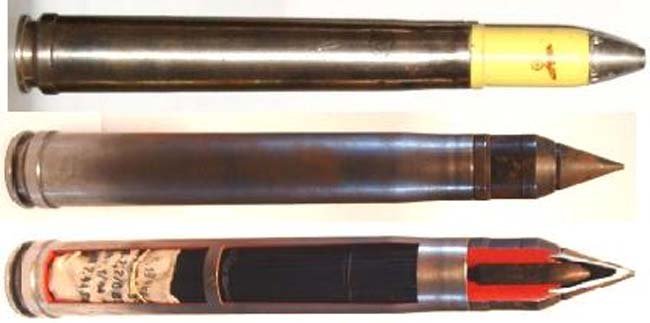
The characteristics of the BK-3.7 cannon itself were also not very high. The success of the 30mm composite Hartkernmunition rounds could not be replicated with the 37mm shell. The lighter 405-gram shell, also with a tungsten carbide core, had a very high muzzle velocity of 1140 m/s. However, due to the projectile’s unsuccessful shape—a legacy of its anti-aircraft origins—its external ballistics were much worse than those of the analogous 30mm shell, and its speed rapidly decreased with increased firing distance. For instance, its armor penetration at 600m was 95mm at normal incidence but only 47mm at a 60-degree angle, which was significantly worse than the performance of composite 30mm MK-103 shells and not much different from the conventional 680-gram HE-AP shell of the standard 37x263B cartridge, which had a significantly lower muzzle velocity of 800 m/s (50mm at normal incidence and 40mm at a 60-degree angle from 500 meters).
It is also worth noting that the effectiveness of 37mm composite Hartkernmunition shells depended heavily not only on the angle of impact on the target. Armor penetration sharply decreased when hitting tanks equipped with additional passive protection screens, which began to be actively used in the second half of the war to defend against HEAT ammunition. In such cases, it was recommended to use conventional high-explosive armor-piercing shells, which were less sensitive to such obstacles.
The use of BK-3.7 cannons on the cannon-equipped Junkers imposed considerable restrictions on opening fire distances. This was due to the gun mounts being 4.4m apart and the necessity of converging fire at a specific distance. Typically, the convergence point was between 270 and 750m, most often 400 meters, which was optimal for acceptable gun effectiveness. Furthermore, given the arcing trajectory of 37mm shells, the cannons on the Junkers were positioned at a slight upward angle, which also required aiming corrections and a precise firing distance. As the thickness of Soviet tank armor increased, the effectiveness of the Ju 87+BK 3.7 platform steadily declined, and the distance for more or less effective engagement decreased, demanding pinpoint skill from pilots. Unfortunately for the Germans, aces like Rudel became fewer and fewer in the Luftwaffe’s ground-attack squadrons. Even Rudel, if his enormous claims are to be believed, attacked Soviet tanks under the cover of groups of “regular” Ju 87 dive bombers, which diverted both anti-aircraft defenses and fighters.
During the Battle of Kursk, anti-tank Ju 87Gs were in service with only two squadrons: 10.(Pz)/StG2 and 10.(Pz)/StG1. According to German data, in the initial phase of the battle, German anti-tank Henschels and Junkers achieved significant successes. For example, the commander of 10.(Pz)./StG2, Hauptmann Rudel, claimed the destruction of 12 Soviet tanks on the very first day of the battle, July 5. According to him, 4 tanks were destroyed in his first combat sortie. Anti-tank ground-attack pilots reported dozens of tanks hit during the Battle of Kursk in just the first two days of the battle. It should be noted that German pilots’ claims of destroying large numbers of Soviet tanks, as well as other ground targets, were usually not corroborated by anything other than their own words. Most aircraft lacked gun cameras, and if present, they recorded hits on the tank rather than the outcome of the action.
As expected, the actual losses of Soviet tank crews to bombs and artillery fire from German aviation were significantly more modest than reflected in German pilot reports. According to the staff of the Soviet 1st Tank Army of the Voronezh Front, against which Hs 129 anti-tank squadrons operated, irreparable combat losses of T-34 tanks due to air action between July 5 and 20, 1943, amounted to only 7 vehicles, or 1.6% of all “thirty-four” losses. Additionally, the army lost about 30 light T-60 and T-70 tanks to Luftwaffe artillery fire and bombs. Combat losses of tank formations and units of the Central Front due to German air strikes in July-August 1943 amounted to 187 disabled tanks and self-propelled guns of all types, or 6.3% of all losses. Based on available statistics on the distribution of combat losses, it can be assumed that approximately 70 tanks from this number were irreparable losses. Subsequently, the Hs 129B and Ju 87G-1 continued to “smash” Soviet tanks and self-propelled guns while incurring significant losses themselves.
The situation in the dive bomber squadrons is vividly characterized by the admission of the commander of StG2, Oberstleutnant E. Kupfer, who wrote: “The Ju 87 can no longer be used on any front, even in the East. For example, my squadron lost 89 crews in eight months. Calculated annually, this equates to a 100% replacement of aircrews. If this continues for another year, the result will be the complete end of ground-attack units… I have squadrons with only one aircraft in service… We must, as soon as possible, I would say immediately, begin rearming units from Ju 87s to Fw 190s. The personnel situation in ground-attack units can be described as ‘the last parade.’ Since July 5, 1943, I have lost two squadron commanders, six flight commanders, and two group adjutants, each of whom completed over 600 combat sorties. Such experience cannot be replaced… We cannot afford to lose the few who remain…”
By autumn 1944, only Rudel’s III/SG2 group remained in the Luftwaffe, still flying Ju 87D and G during the day, along with two anti-tank squadrons, 10.(Pz)/SG2 and 10.(Pz)/SG77.
In conclusion, the BK 3.7 cannon was a characteristic product of wartime improvisation. Its initially good anti-aircraft characteristics became drawbacks when the weapon was used as an aircraft cannon. Structurally, as noted above, the BK 3.7 cannon was a weapon with an automatic system based on short barrel recoil. Cartridge locking was achieved by rotating the bolt, which moved along two helical grooves in the bolt carrier and, at the final point, engaged the locking lugs, securely locking the cartridge. Excess recoil energy was damped by a massive hydraulic cylinder installed parallel to the gun.
The BK 3.7 cannon used powerful 37x263B unitary cartridges weighing 1.46 kg, with a propellant charge of 218g.
Technical Specifications
| Modification | BK 3.7 |
| Caliber, mm | 37 |
| Type of action | Short recoil |
| Rate of fire, rounds/min | 140 – 160 |
| Muzzle velocity, m/sec | 820 (high-explosive) 800 (high-explosive armor-piercing) 860 (high-explosive incendiary) 1140 (armor-piercing composite Hartkernmunition) |
| Weight of weapon, kg | 275 (gun body) 295 (with mounting frame) |
| Barrel weight | 68 |
| Length of weapon, mm | 3750 |
| Length of barrel, mm | 2106 |
| Cartridge type | 37x263B |
| Magazine capacity | Clip of 6, 8 or 12 rounds |
| Projectile weight, g | 640 (high-explosive) 680 (high-explosive armor-piercing) 623 (high-explosive incendiary) 405 (armor-piercing composite Hartkernmunition) |
Image and diagram gallery of the 37mm Automatic Cannon BK 3.7
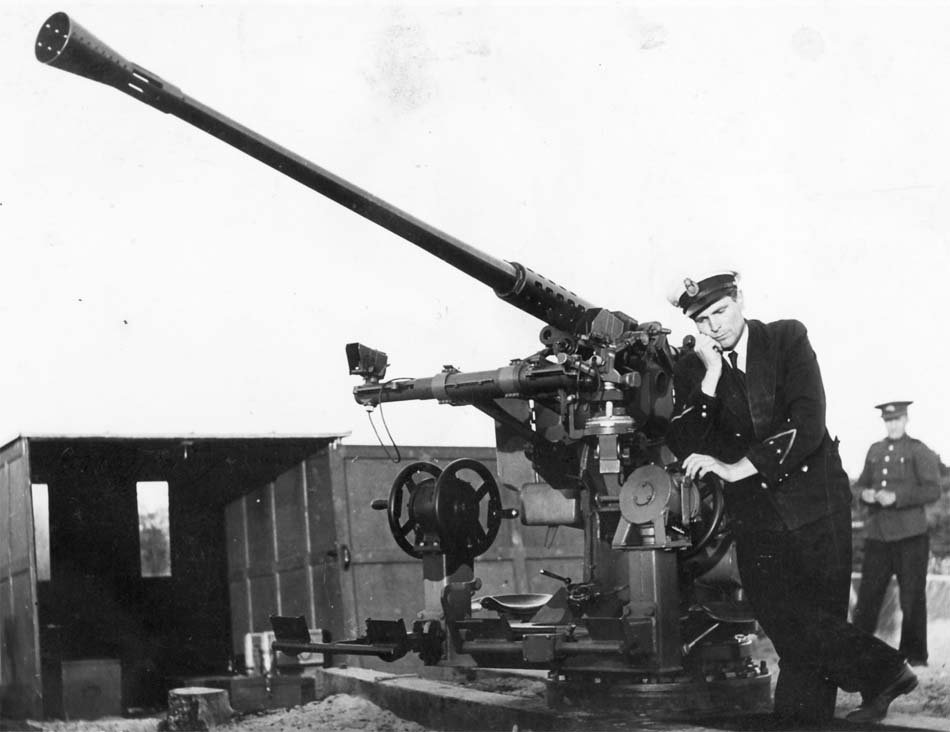 BK 3.7 |
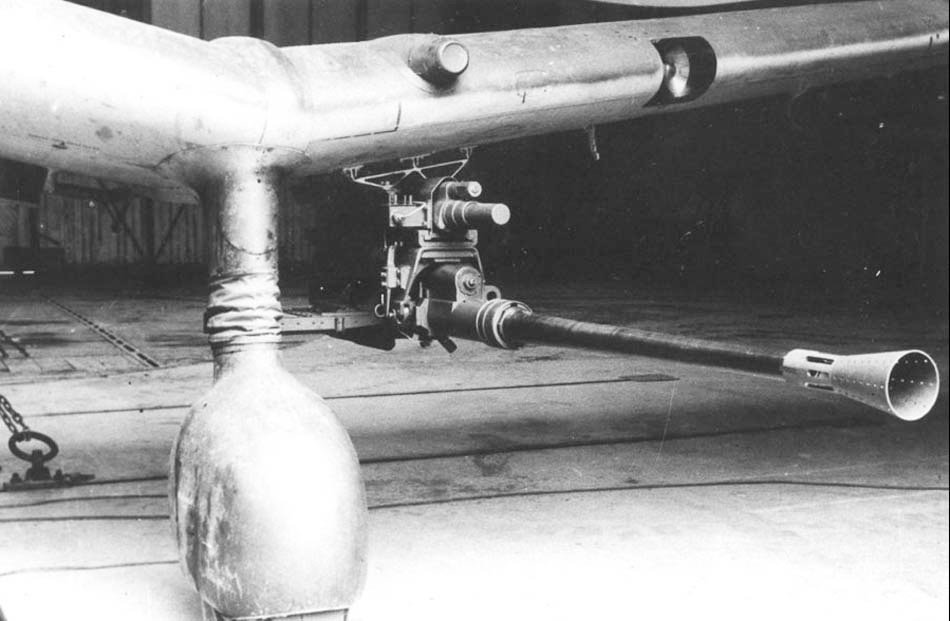 BK 3.7 |
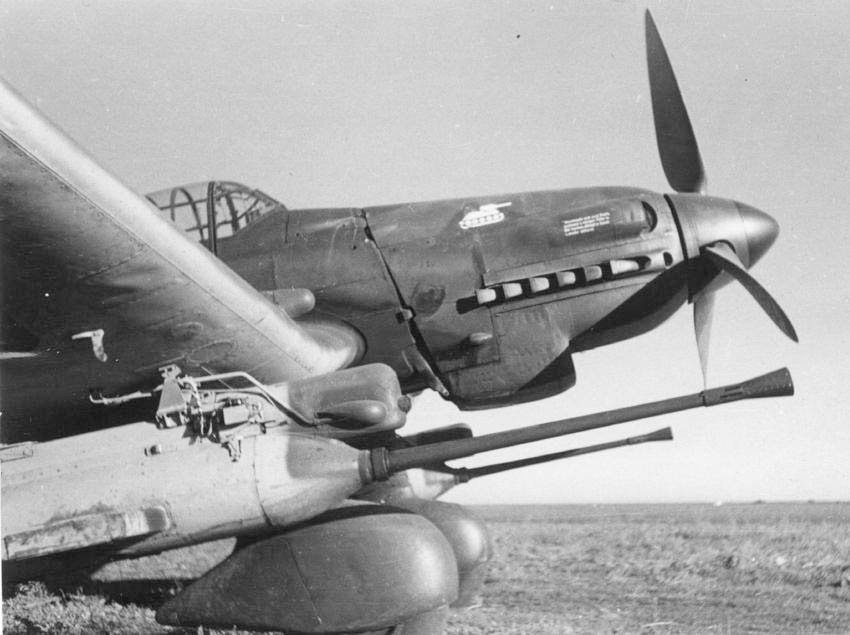 BK 3.7 |
 BK 3.7 |
 BK 3.7 |
 BK 3.7 |
 BK 3.7 |
 BK 3.7 |
 BK 3.7 |
 BK 3.7 |
 BK 3.7 |
Equipo Editorial de ArchivoAéreo
Grupo de investigadores y entusiastas de la aviación dedicados a documentar y preservar la historia aeronáutica mundial. Todos los artículos son revisados para garantizar precisión histórica.
Fuentes y Rigurosidad
La información presentada en esta ficha técnica ha sido compilada a partir de manuales de vuelo desclasificados, archivos históricos y bibliografía especializada. Aunque nos esforzamos por mantener la máxima precisión, algunos datos de rendimiento pueden variar según la variante específica o las condiciones operativas.