Aleksandr Matveevich Bryandinsky
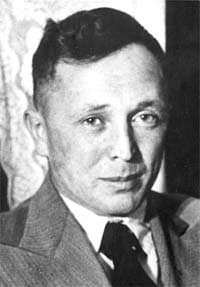
Aleksandr Matveevich Bryandinsky was born in 1904 in the village of Isakovo, now part of the Krasnogorsk district of the Moscow region. In 1919, he graduated from gymnasium and worked as a sailor on the Volga, as well as a medic in the Samara city hospital. In 1924, he completed his studies at the workers’ faculty of Moscow State University.
He joined the army in 1924, studying at the Leningrad Naval School before being transferred to the Sevastopol Military Aviation School. After graduating, he continued his training at the Air Force Special School and navigator courses at the N.E. Zhukovsky Air Force Academy.
Distinguished Test Navigator
From 1930, Bryandinsky served as a test navigator at the Scientific Test Institute of the Air Force. He actively participated in testing bombers such as the TB-3, Pe-8, and DB-3. In 1937, he undertook a series of long-distance flights on the DB-3 aircraft with pilot V.K. Kokkinaki. That same year, as a navigator, he set three world aviation speed records on the TsKB-26 aircraft.
On June 27-28, 1938, in the TsKB-30 “Moskva” aircraft, he completed a non-stop flight with pilot V.K. Kokkinaki. The route spanned from Moscow to the Far East (the city of Spassk-Dalny, Primorsky Krai), covering a direct distance of 7580 km.
Hero of the Soviet Union and Legacy
For the successful completion of this flight and the courage and heroism demonstrated, he was awarded the title of Hero of the Soviet Union on July 17, 1938. He resided in Moscow.
Tragically, Bryandinsky died in an aviation accident on October 4, 1938, while participating in the search for V.S. Grizodubova’s crew. He was buried in the city of Komsomolsk-on-Amur. He held the rank of Kombrig from 1938 and was awarded the Order of Lenin. A.M. Bryandinsky established a total of three world aviation speed records.
Equipo Editorial de ArchivoAéreo
Grupo de investigadores y entusiastas de la aviación dedicados a documentar y preservar la historia aeronáutica mundial. Todos los artículos son revisados para garantizar precisión histórica.
Fuentes y Rigurosidad
La información presentada en esta ficha técnica ha sido compilada a partir de manuales de vuelo desclasificados, archivos históricos y bibliografía especializada. Aunque nos esforzamos por mantener la máxima precisión, algunos datos de rendimiento pueden variar según la variante específica o las condiciones operativas.